Toroidal rotation velocity spatial profiles (r/a < 0.8) have been obtained from C-Mod over a wide range of operational conditions, including H-mode, I-mode, ICRF-heated L-mode and Ohmic L-mode (LOC and SOC), and in plasmas with ITBs, LH wave injection and MCFD. Peaked, flat and hollow rotation profiles have been observed. In H- and I-mode plasmas, generally with co-current peaked profiles, the peaking is correlated with temperature profile peaking, and both increase with toroidal magnetic field (decrease with rho & lowast;). Any dependence on density peaking is unclear. For Ohmic L-mode discharges, with LOC, the velocity profiles are usually flat and most often directed co-current, while with SOC the profiles are hollow, mostly co-current at the edge and counter-current in the core. Both of these Ohmic rotation states exist with matched density and temperature profiles (and gradients), indicating that neither gradient is relevant during rotation reversals. For plasmas with LH wave injection and discharges with ITBs, the velocity profiles are hollow while the density and temperature profiles exhibit substantial peaking. Broadly speaking for all operational regimes, there is no unifying ordering of the velocity gradient with plasma parameters.
Studies of core toroidal rotation reversal phenomenology in C-Mod deuterium L-mode plasmas have been expanded to include details of the dependences on plasma current and toroidal magnetic field. Rotation reversal occurs at a critical density, and universal scaling indicates that the product of ncritq95R ∼ BT/2, with ncrit in 1020/m3, R in m, and BT in T. Measurements in H and He plasmas exhibit similar behavior, including a connection with the linear Ohmic confinement/saturated Ohmic confinement transition and the cutoff for non-diffusive heat transport. Electron density and ion cyclotron range of frequencies power modulation experiments suggest that the collisionality ν* is a unifying parameter. Strong impurity puffing causes the critical density to increase, indicating that the situation is more complicated than only collisionality, perhaps involving the details of the effects of dilution on ion temperature gradient mode stability.
Core (r/a < 0.5) toroidal rotation from argon (Ar17+, 40 AMU) and molybdenum (Mo32+, 96 AMU) ions has been compared in C-Mod tokamak plasmas over a wide range of operating conditions and confinement schemes, including Ohmic L-mode in the linear and saturated regimes, ion cyclotron range of frequencies heated I-mode and H-mode, as well as in discharges with induced locked modes and with external current and rotation drive. In all cases the velocities of the two impurities are identical within about 5%, for a range between −60 and +80 km s−1. This is in general agreement with the predictions of neo-classical theory.
This book provides a comprehensive view of externally driven and self-generated rotation and momentum transport in tokamak plasmas.
A dimensionless parameter dependence study of intrinsic torque has been performed on a database of H- and I-mode plasmas from the Alcator C-Mod tokamak. The torque was determined by comparing intrinsic angular momentum density profiles just before and just after L–H and L–I transitions. The intrinsic torque has been found to scale as βN1.5ρ*−1.0ν*0.1 , with the parameter ranges 0.3 ⩽ β N ⩽ 1.5, 0.004 ⩽ ρ * ⩽ 0.011 and 0.04 ⩽ ν * ⩽ 0.9. Comparison with results from JET and DIII-D suggests that the intrinsic torque should be normalized by some measure of the device size. Depending upon this normalization, the estimated total intrinsic torques for ITER, SPARC and ARC are ∼20, ∼4 and ∼8 Nm, respectively.
As was shown in Eq. (2), the momentum flux consists of three terms, the momentum diffusivity, the momentum pinch and the residual stress. In this chapter will be presented how these transport coefficients are determined experimentally and how they are understood theoretically. The problem of obtaining these three is underdetermined since the observations consist of the time evolution of the velocity profile, which is not sufficient to fix three free parameters. In certain circumstances it is possible to isolate each of the three, or two of the three, and the results will be covered in Sects. 6.1, 6.2, and 6.3, respectively, with a comparison to theory in Sect. 6.4
Phenomenology of Ohmic energy confinement saturation in tokamaks is reviewed. Characteristics of the linear Ohmic confinement (LOC) and saturated Ohmic confinement (SOC) regimes are documented and transformations in all transport channels across the LOC/SOC transition are described, including rotation reversals, 'non-local' cut-off and density peaking, in addition to dramatic changes in fluctuation intensity. Unification of results from nearly 20 devices indicates that the LOC/SOC transition occurs at a critical value of the product of the density, edge safety factor and device major radius, and that this product increases with toroidal magnetic field. Comparison with gyro-kinetic simulations suggests that the effects of sub-dominant TEMs are important in the LOC regime while ITG mode turbulence dominates with SOC.
X-ray spectra in the wavelength range from 2.70 to 2.76 A from xenon (Z = 54) in near neon-like charge states have been observed in Alcator C-Mod tokamak plasmas. The 3D (2p(6) - (2p(5))(3/2)3d(5/2), 2720.4 mA) and 3F (2p(6) - (2p(5))(1/2)3s(1/2), 2729.0 mA) transitions from neon-like Xe44+ have been identified, along with nearby Na-, Mg- and Al-like satellites. The intensity ratio of 3D to the Mg-like satellite near 2.74 A increases strongly with electron temperature in the range from 3 to 4 keV.
We present an analysis which suggests that model selection is a critical ingredient for successful reconstruction of impurity transport coefficient profiles, D and V, from experimental data. Determining these quantities is a challenging nonlinear inverse problem. We use synthetic data to show that this problem is ill-posed, and hence D and V are not recommended for use in validation metrics unless the data analysis procedure goes to great lengths to account for the possibility that there are multiple possible solutions. In particular, inferred profiles which are very different from the true ones yield seemingly reasonable goodness-of-fit for synthetic x-ray spectrometer data. We present a Bayesian approach for inferring D and V which provides a rigorous means of selecting the level of complexity of the inferred profiles, thereby enabling successful reconstruction of the profiles.
Perturbative transport experiments in magnetically confined plasmas have shown, for more than 20 years, that the injection of cold pulses at the plasma edge can trigger the increase of core temperature. Predictive heat transport simulations with the trapped gyro Landau fluid (TGLF) quasilinear transport model demonstrate that the increase of core temperature in some regimes, and lack thereof in other regimes, can be explained by a change in dominant linear micro-instability in Alcator C-Mod. The effect of density and plasma current on the cold pulse are well captured by TGLF, including the relative change in position of the temperature flex point as current density changes. Linear stability analysis of simulated density and current scans reveals a competition between trapped electron and ion temperature gradient modes as the main driver of the core transient response. These results further demonstrate that cold-pulse propagation and associated phenomenology in the cases studied are well explained within the local transport paradigm, without resorting to non-local effects.
Analysis and modeling of a new set of rotation reversal hysteresis experiments unambiguously show that changes in turbulence are responsible for the intrinsic rotation reversal and the linear to saturated ohmic confinement (LOC/SOC) transition on Alcator C-Mod. Plasmas on either side of the reversal exhibit different toroidal rotation profiles and therefore different turbulence characteristics despite profiles of density and temperature that are indistinguishable within measurement uncertainty. The deactivation of subdominant (in linear growth rate and heat transport) ion-temperature gradient and trapped electron mode-like instabilities in a mixed-mode state is identified as the only possible change in turbulence within a quasilinear transport approximation across the reversal which is consistent with the measured profiles and the inferred heat and particle fluxes. This indicates an explanation for the LOC/SOC transition that provides a mechanism for hysteresis through the dynamics of subdominant modes and changes in their relative populations, and does not involve a change in most (linearly) unstable ion-scale drift-wave instability.
Changes in the core intrinsic toroidal rotation velocity fo llowing Lto Hand Lto I-mode transitions have been investigated in Alcator C-M od tokamak plasmas. The magnitude of the co-current rotation increments is found to increase with the pedestal temperature gradient and q 95, and to decrease with toroidal magnetic field. These results are captured quantitatively by a model of fluctuation e ntropy balance which gives the Mach number Mi ∼= ρ∗/2 Ls/LT ∼ ∇T q95/BT in an ITG turbulence dominant regime. The agreement between experiment and theory gives c onfidence for extrapolation to future devices in similar operational regimes. Co re thermal Mach numbers of ∼0.07 and∼0.2 are expected for ITER and ARC, respectively.
The dependence of energy confinement time on gyroradius, beta, and normalized collisionality in I-mode plasmas is investigated through dedicated C-Mod experiments scanning dimensionless parameters with constant safety factor. The gyroradius scaling is calculated to be Omega(tau E) proportional to rho(3.9 +/- 1.5)(*), which suggests core transport may scale with gyro-Bohm physics, indicating favorable extrapolation of the I-mode regime to future devices at low rho(*). The scaling exponent for nu(C) is calculated to be small, but positive (Omega(tau E) proportional to nu(0.44 +/- 0.24)(C)), and the exponent for beta is deemed inconclusive (Omega(tau E) proportional to beta(1.4 +/- 3.1)) due to high correlation with the other two dimensionless variables in the dataset, and therefore requires further investigation. The individual dimensionless parameter scaling is compared to calculations from larger C-Mod I-mode datasets as well as multi-machine scaling laws for ELMy H-mode and L-mode plasmas. Multiple regression techniques and principal component analysis are used to clarify the single parameter scalings and analyze parameter significance within the dataset.
Brightness profiles of x-ray emission from H-like Ar17+ exhibit a distinct up/down asymmetry under certain operating conditions in C-Mod plasmas, indicating that impurity densities are not constant on flux surfaces with r/a between similar to 0.8 and similar to 0.95. In L- and I-mode plasmas, there is an x-ray brightness excess, up to a factor of 8, on the side opposite to the ion B x del B drift direction. This effect is not observed in H-mode plasmas, presumably due to edge impurity transport being dominated by a strong inward pinch, which is absent in L- and I-mode. The magnitude of the asymmetry in L- and I-mode decreases with increasing plasma current, similar to the observed decrease in radial impurity diffusivity. In I-mode, where the codependence between electron density and temperature can be broken with ICRF heating power, the asymmetry magnitude is found to decrease with increasing density and with increasing edge temperature at fixed density. These measurements exhibit some qualitative features of neo-classical expectations but the observed asymmetry magnitude is much larger than predicted and some scalings with plasma parameters are not seen. The up/down asymmetry appears to be largest when the cross field impurity diffusivity is the highest.
 Matthew Reinke合作论文数Commonwealth Fusion Systems34
 Jerry Hughes合作论文数Plasma Science and Fusion Center, Massachusetts Institute of Technology27
 Martin Greenwald合作论文数Plasma Science and Fusion Center, Massachusetts Institute of Technology23Es Marmar合作论文数19
 N. M. Cao合作论文数PSFC, MIT17AE Hubbard合作论文数16J. Irby合作论文数14
 Stephen J. Wukitch合作论文数Plasma Science and Fusion Center, Massachusetts Institute of Technology13
 Miklos Porkolab合作论文数Department of Physics, Massachusetts Institute of Technology;Plasma Science and Fusion Center, Massachusetts Institute of Technology12Yuri Podpaly合作论文数DNN Sentinel, National Nuclear Security Administration11
 Paul Bonoli合作论文数Plasma Science and Fusion Center, Massachusetts Institute of Technology10
 Nathan Howard合作论文数Massachusetts Institute of Technology10
 Jim Terry合作论文数Plasma Science and Fusion Center, Massachusetts Institute of Technology9Sm Wolfe合作论文数8Paul Ennever合作论文数8
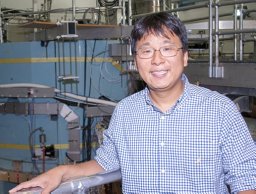 Baek S合作论文数Plasma Sci & Fus Ctr, MIT8
 Mark Chilenski合作论文数7
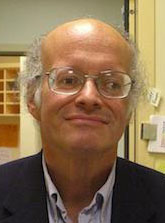 Patrick H. Diamond合作论文数Department of Physics, University of California, San Diego;Center for Energy Research, University of California, San Diego;Centerfor Astrophysics and Space Sciences, University of California, San Diego7
 Ian H. Hutchinson合作论文数Plasma Science and Fusion Center, Massachusetts Institute of Technology;Department of Nuclear Science and Engineering, Massachusetts Institute of Technology7A. Ince‐Cushman合作论文数6
 j r wilson合作论文数6
 Brian LaBombard合作论文数Plasma Science and Fusion Center, Massachusetts Institute of Technology6Cl Fiore合作论文数5yijun lin合作论文数5Manfred L. Bitter合作论文数5Gao C合作论文数5Alan E Hubbard合作论文数5
 Ronald R. Parker合作论文数Massachusetts Institute of Technology5Syun'Ichi Shiraiwa合作论文数Department of Physics;Graduate School of Science;University of Tokyo;Graduate School of Science, University of Tokyo5A. E. White合作论文数5
 Amanda Hubbard合作论文数Plasma Science and Fusion Center, Massachusetts Institute of Technology5
 Gavin Wallace合作论文数Massachusetts Institute of Technology5P. Rodriguez Fernandez合作论文数4John Walk合作论文数Plasma Science and Fusion Center, Massachusetts Institute of Technology4
 Kenneth Wayne Hill合作论文数4
 Anne White合作论文数Department of Nuclear Science & Engineering, Massachusetts Institute of Technology4D. Ernst合作论文数4G. Schilling合作论文数4
 Robert Granetz合作论文数Plasma Science and Fusion Center, Massachusetts Institute of Technology4
 Kevin B Fournier合作论文数4E. S. Marmar合作论文数4Rejean Boivin合作论文数4
 Ck Phillips合作论文数3
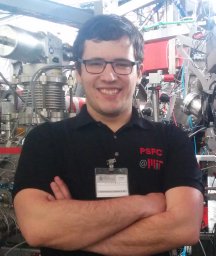 Pablo Rodriguez-Fernandez合作论文数Plasma Sci & Fus Ctr, MIT3
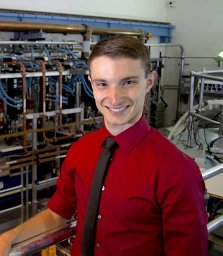 A. J. Creely合作论文数Commonwealth Fus Syst3
 Peter Beiersdorfer合作论文数Space Sciences Laboratory, University of California, Berkeley;Lawrence Livermore National Laboratory3
 Rachael McDermott合作论文数Max Planck Institute for Plasma Physics3
 Dennis G. Whyte合作论文数Plasma Science and Fusion Center, Massachusetts Institute of Technology, 77 Massachusetts Ave, Cambridge Massachusetts 02139, USA.3
 Gary M. Staebler合作论文数Oak Ridge National Laboratory3




