Polar cod (Boreogadus saida) is an endemic key species of the Arctic Ocean ecosystem. The ecology of this forage fish is well studied in Arctic shelf habitats where a large part of its population lives. However, knowledge about its ecology in the central Arctic Ocean (CAO), including its use of the sea-ice habitat, is hitherto very limited. To increase this knowledge, samples were collected at the under-ice surface during several expeditions to the CAO between 2012 and 2020, including the Multidisciplinary drifting Observatory for the Study of Arctic Climate (MOSAiC) expedition. The diet of immature B. saida and the taxonomic composition of their potential prey were analysed, showing that both sympagic and pelagic species were important prey items. Stomach contents included expected prey such as copepods and amphipods. Surprisingly, more rarely observed prey such as appendicularians, chaetognaths, and euphausiids were also found to be important. Comparisons of the fish stomach contents with prey distribution data suggests opportunistic feeding. However, relative prey density and catchability are important factors that determine which type of prey is ingested. Prey that ensures limited energy expenditure on hunting and feeding is often found in the stomach contents even though it is not the dominant species present in the environment. To investigate the importance of prey quality and quantity for the growth of B. saida in this area, we measured energy content of dominant prey species and used a bioenergetic model to quantify the effect of variations in diet on growth rate potential. The modeling results suggest that diet variability was largely explained by stomach fullness and, to a lesser degree, the energetic content of the prey. Our results suggest that under climate change, immature B. saida may be at least equally sensitive to a loss in the number of efficiently hunted prey than to a reduction in the prey's energy content. Consequences for the growth and survival of B. saida will not depend on prey presence alone, but also on prey catchability, digestibility, and energy content.
The Svalbard region faces drastic environmental changes, including sea-ice loss and “Atlantification” of Arctic waters, caused primarily by climate warming. These changes result in shifts in the sea-ice-associated (sympagic) community structure, with consequences for the sympagic food web and carbon cycling. To evaluate the role of sympagic biota as a source, sink, and transmitter of carbon, we sampled pack ice and under-ice water (0–2 m) north of Svalbard in spring 2015 by sea-ice coring and under-ice trawling. We estimated biomass and primary production of ice algae and under-ice phytoplankton as well as biomass, carbon demand, and secondary production of sea-ice meiofauna (>10 µm) and under-ice fauna (>300 µm). Sea-ice meiofauna biomass (0.1–2.8 mg C m–2) was dominated by harpacticoid copepods (92%), nauplii (4%), and Ciliophora (3%). Under-ice fauna biomass (3.2–62.7 mg C m–2) was dominated by Calanus copepods (54%). Appendicularia contributed 23% through their high abundance at one station. Herbivorous sympagic fauna dominated the carbon demand across the study area, estimated at 2 mg C m–2 day–1 for ice algae and 4 mg C m–2 day–1 for phytoplankton. This demand was covered by the mean primary production of ice algae (11 mg C m–2 day–1) and phytoplankton (30 mg C m–2 day–1). Hence, potentially 35 mg C m–2 day–1 of algal material could sink from the sympagic realm to deeper layers. The demand of carnivorous under-ice fauna (0.3 mg C m–2 day–1) was barely covered by sympagic secondary production (0.3 mg C m–2 day–1). Our study emphasizes the importance of under-ice fauna for the carbon flux from sea ice to pelagic and benthic habitats and provides a baseline for future comparisons in the context of climate change.
In this study, we present unique data collected with a Surface and Under-Ice Trawl (SUIT) during five campaigns between 2012 and 2017, covering the spring to summer and autumn transition in the Arctic Ocean, and the seasons of winter and summer in the Southern Ocean. The SUIT was equipped with a sensor array from which we retrieved: sea-ice thickness, the light field at the underside of sea ice, chlorophyll a concentration in the ice (in-ice chl a), and the salinity, temperature, and chl a concentration of the under-ice water. With an average trawl distance of about 2 km, and a global transect length of more than 117 km in both polar regions, the present work represents the first multi-seasonal habitat characterization based on kilometer-scale profiles. The present data highlight regional and seasonal patterns in sea-ice properties in the Polar Ocean. Light transmittance through Arctic sea ice reached almost 100% in summer, when the ice was thinner and melt ponds spread over the ice surface. However, the daily integrated amount of light under sea ice was maximum in spring. Compared to the Arctic, Antarctic sea-ice was thinner, snow depth was thicker, and sea-ice properties were more uniform between seasons. Light transmittance was low in winter with maximum transmittance of 73%. Despite thicker snow depth, the overall under-ice light was considerably higher during Antarctic summer than during Arctic summer. Spatial autocorrelation analysis shows that Arctic sea ice was characterized by larger floes compared to the Antarctic. In both Polar regions, the patch size of the transmittance followed the spatial variability of sea-ice thickness. In-ice chl a in the Arctic Ocean remained below 0.39mg chl am(-2), whereas it exceeded 7mg chl am(-2) during Antarctic winter, when water chl a concentrations remained below 1.5mg chl am(-2), thus highlighting its potential as an important carbon source for overwintering organisms. The data analyzed in this study can improve large-scale physical and ecosystem models, habitat mapping studies and time series analyzed in the context of climate change effects and marine management.
A strong decline and thinning of the Arctic sea-ice cover over the past five decades has been documented. The former multiyear sea-ice system has largely changed to an annual system and with it the dynamics of sea-ice transport across the Arctic Ocean. Less sea ice is reaching the Fram Strait and more ice and ice-transported material is released in the northern Laptev Sea and the central Arctic Ocean. This trend is expected to have a decisive impact on ice associated (“sympagic”) communities. As sympagic fauna plays an important role in transmitting carbon from the ice-water interface to the pelagic and benthic food webs, it is important to monitor its community composition under the changing environmental conditions. We investigated the taxonomic composition, abundance and distribution of sea-ice meiofauna (here heterotrophs >10 μm; eight stations) and under-ice fauna (here metazoans >300 μm; fourteen stations) in Arctic 1.5 year-old pack ice north of Svalbard. Sampling was conducted during spring 2015 by sea-ice coring and trawling with a Surface and Under-Ice Trawl. We identified 42 taxa associated with the sea ice. The total abundance of sea-ice meiofauna ranged between 580 and 17,156 ind.m–2 and was dominated by Ciliophora (46%), Copepoda nauplii (29%), and Harpacticoida (20%). In contrast to earlier studies in this region, we found no Nematoda and few flatworms in our sea-ice samples. Under-ice fauna abundance ranged between 15 and 6,785 ind.m–2 and was dominated by Appendicularia (58%), caused by exceptionally high abundance at one station. Copepoda nauplii (23%), Calanus finmarchicus (9%), and Calanus glacialis (6%) were also very abundant while sympagic Amphipoda were comparatively rare (0.35%). Both sympagic communities showed regional differences in community composition and abundance between shelf and offshore stations, but only for the under-ice fauna those differences were statistically significant. Selected environmental variables moderately explained variations in abundances of both faunas. The results of this study are consistent with predictions of diversity shifts in the new Arctic.
In the Arctic Ocean, sea-ice decline will significantly change the structure of biological communities. At the same time, changing nutrient dynamics can have similarly strong and potentially interacting effects. To investigate the response of the taxonomic and trophic structure of planktonic and ice-associated communities to varying sea-ice properties and nutrient concentrations, we analysed four different communities sampled in the Eurasian Basin in summer 2012: (1) protists and (2) metazoans from the under-ice habitat, and (3) protists and (4) metazoans from the epipelagic habitat. The taxonomic composition of protist communities was characterised with 18S meta-barcoding. The taxonomic composition of metazoan communities was determined based on morphology. The analysis of environmental parameters identified (i) a shelf-influenced' regime with melting sea ice, high-silicate concentrations and low NOx (nitrate+nitrite) concentrations; (ii) a Polar' regime with low silicate concentrations and low NOx concentrations; and (iii) an Atlantic' regime with low silicate concentrations and high NOx concentrations. Multivariate analyses of combined bio-environmental datasets showed that taxonomic community structure primarily responded to the variability of sea-ice properties and hydrography across all four communities. Trophic community structure, however, responded significantly to NOx concentrations. In three of the four communities, the most heterotrophic trophic group significantly dominated in the NOx-poor shelf-influenced and Polar regimes compared to the NOx-rich Atlantic regime. The more heterotrophic, NOx-poor regimes were associated with lower productivity and carbon export than the NOx-rich Atlantic regime. For modelling future Arctic ecosystems, it is important to consider that taxonomic diversity can respond to different drivers than trophic diversity.
S SUBMITTED TO THE (CANCELLED) SCAR 2020 OSC IN HOBART SESSION 25 SCAR OPEN SCIENCE CONFERENCE 2020
 Hauke Flores合作论文数Institute for Marine Resources and Ecosystem Studies (IMARES), P.O. Box 167, 1790 AD Den Burg, The Netherlands12
 Fokje Schaafsma合作论文数11
 Giulia Castellani合作论文数Dipartimento di Morfofisiologia e Produzioni Animali (DIMORFIPA),, Università di Bologna7
 Benjamin A. Lange合作论文数Polar Biological Oceanography, Alfred-Wegener-Institut Helmholtz-Zentrum für Polar- und Meeresforschung;Biocenter Grindel, University of Hamburg;Department of Earth and Atmospheric Sciences, University of Alberta;University of Hamburg, University of Alberta5dorssen van m合作论文数4
 Carmen L. David合作论文数Alfred Wegener Inst, Helmholtz Ctr Polar & Marine Res4
 Andre Meijboom合作论文数4
 Ilka Peeken合作论文数Leibniz-Institut für Meereswissenschaften4
 Doreen Kohlbach合作论文数Corresponding author.3
 Jan Andries Van Franeker合作论文数Institute for Marine Resources and Ecosystem Studies (IMARES), P.O. Box 167, 1790 AD Den Burg, The Netherlands3
 Bodil Bluhm合作论文数University of Alaska Fairbanks School of Fisheries and Ocean Sciences, Institute of Marine Science3Philippe Massicotte合作论文数Visual Information Technology
NRC Institute for Information Technology3Martina Vortkamp合作论文数2
Bodil Bluhm合作论文数University of Alaska Fairbanks School of Fisheries and Ocean Sciences, Institute of Marine Science3Philippe Massicotte合作论文数Visual Information Technology
NRC Institute for Information Technology3Martina Vortkamp合作论文数2 Brandon Hassett合作论文数Dept Arctic & Marine Biol, UiT Arctic Univ Norway2
 Nicole Hildebrandt合作论文数2
 Robert Ricker合作论文数2
 Stefan Hendricks合作论文数Alfred Wegener Inst Polar & Marine Res2
 Angelika Brandt合作论文数Division of Marine Zoology, Senckenberg Research Institute and Natural History Museum2
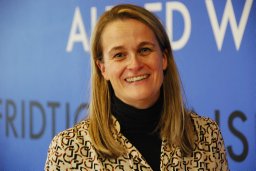 Katja Metfies合作论文数Alfred Wegener Institute for Polar and Marine Research2
 Anton Pieter Van de Putte合作论文数2
 Thomas Krumpen合作论文数Alfred Wegener Institute for Polar and Marine Research2
 Barbara Niehoff合作论文数Department of Biology, Woods Hole Oceanographic Institution2
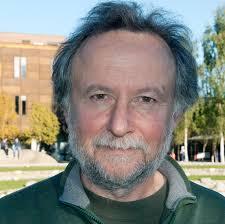 Rolf Rudolf Gradinger (Rolf Gradinger)合作论文数Department of Arctic and Marine Biology, Arctic University of Norway2
 Martin Graeve合作论文数Alfred Wegener Institute for Polar and Marine Research Am Handelshafen2Elisa Bravo Rebolledo合作论文数1B. Feij合作论文数1André Meijboom合作论文数1
 Sandra Schwegmann合作论文数1
 Katrin Schmidt合作论文数1Kristin Hardge合作论文数1
 e kunisch合作论文数Dept Arctic & Marine Biol, UiT Arctic Univ Norway1
 Stephan Wietkamp合作论文数1
 Josefa Verdugo合作论文数1
 Stefanie Arndt合作论文数Helmholtz Zentrum Polar & Meeresforsch, Alfred Wegener Inst1
 Serdar Sakinan合作论文数1
 Kühn Susanne合作论文数IMARES Wageningen UR1
 Evamaria Nothig合作论文数Alfred Wegener Institute for Polar and Marine Research1
 Astrid Cornils合作论文数Alfred-Wegener-Institut für Polar-und Meeresforschung1Pauline Snoeijs合作论文数1Klaus M. Meiners合作论文数Antarctic Climate & Ecosystems CRC, University of Tasmania1
 Marcel Nicolaus合作论文数Norwegian Polar Institute1Carin J. Ashjian合作论文数Biology Department, Woods Hole Oceanographic Institution1
 Ellen Damm合作论文数1




