Earthquake engineers have traditionally investigated the behavior of structures with either computational simulations or physical experiments. Recently, a new hybrid approach has been proposed that allows tests to be decomposed into independent substructures that can be located at different test facilities, tested separately, and integrated via a computational simulation. We describe a grid-based architecture for performing such novel distributed hybrid computational/physical experiments. We discuss the requirements that underlie this extremely challenging application of grid technologies, describe our architecture and implementation, and discuss our experiences with the application of this architecture within an unprecedented earthquake engineering test that coupled large-scale physical experiments in Illinois and Colorado with a computational simulation. Our results point to the remarkable impacts that grid technologies can have on the practice of engineering, and also contribute to our understanding of how to build and deploy effective grid applications.
A project supported by the PEER-Lifelines Program is currently finalizing a pilot system architecture supporting web-based interfaces capable of providing access to publicly available geotechnical data sets. This paper describes the pilot system architecture design developed by the project's Virtual Data Center Work Group (VDCWG). The design is based on the results of a geotechnical data use and user scenario survey and a data dictionary developed by the project's User Scenario Work Group (USWG) and Data Dictionary Work Group (DDWG) respectively. The design allows multiple data providers to make their data available through a uniform web interface, while each retains possession and control of their data. A user is able to view and download data from multiple organizations in a uniform file format. Over the long-term, the main objective is to extend the pilot system and link multiple databases of government agencies, universities and private companies. A workshop planned for June 21 - 23, 2004, will review the system to obtain input and consensus from the geotechnical community. The workshop proceedings will serve as a future implementation plan for expansion into a large-scale web portal.
Abstract: this paper, variousNEESgrid components are introduced and their roles in NEESgrid are identified. Subsequently, the MultiSiteOnline Simulation Testbed (MOST) experiment, which was conducted on July 30, 2003 to showcasethe NEESgrid software capabilities, will be discussed. The MOST experiment coupled two large-scalephysical experiments in Illinois and Colorado with a computational simulation. This paper also describesthe Mini-MOST experiment, which is a tool for NEESgrid education, training ...
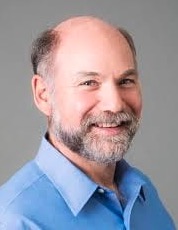 Carl F Kesselman合作论文数Daniel J Epstein Department of Industrial and Systems Engineering, Viterbi School of Engineering, University of Southern California;Biomedical Data Center, Information Sciences Institute, University of Southern California4
 Ian Foster合作论文数Department of Computer Science, University of Chicago;Data Science and Learning Division, Argonne National Laboratory4
 Thomas Finholt合作论文数School of Information, University of Michigan2
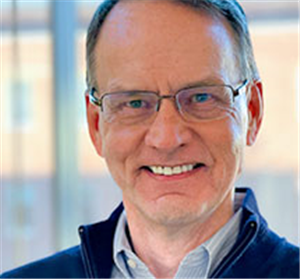 B F Spencer, Jr合作论文数Newmark Structural Engineering Laboratory, Department of Civil and Environmental Engineering, The Grainger College of Engineering Civil & Environmental Engineering, University of Illinois at Urbana-Champaign2
 j bobbitt合作论文数1tom prudhomme合作论文数1annekathrin peters合作论文数1
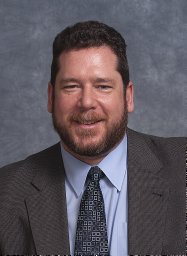 John Towns合作论文数National Center for Supercomputing Applications, University of Illinois at Urbana-Champaign1
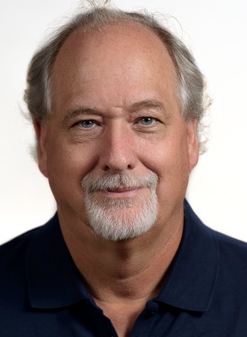 Charles R. Severance合作论文数School of Information, University of Michigan1Nestor J Zaluzec合作论文数1
 Jean Pierre Bardet合作论文数Department of Civil Engineering, University of Texas at Arlington1
 Jennifer N. Swift合作论文数University of Southern California1Laura Pearlman合作论文数Information Science Institute;University of Southern California;Information Science Institute, University of Southern California1Paul Hubbard合作论文数1Sridhar Gullapalli合作论文数1




