This article features the official announcement of the 2024 edition of the IEEE Computer Society biennial competition of AI's 10 to Watch focusing on identifying the rising stars in various areas of the broad AI communities. The 10 awardees are introduced in this article.
We present the 16th edition of the Multi-Agent Programming Contest, an annual competition designed to increase interest and further research in the area of Multi-Agent Systems development. This is the third version of the Agents Assemble scenario in which the agents inhabit a grid and must build specific shapes out of blocks scattered in the environment to win a match. Six teams from five different countries were involved in the contest. Each team has shown a solid performance. Given the current state of the Multi-Agent Programming Contest, we envision the matches in the next edition to be run in a more automated fashion. This way, decentralized agents can be enforced, and network latency avoided, while simulations can run for a longer time and with various different parameters.
IEEE Intelligent Systems is promoting young and aspiring artificial intelligence (AI) scientists and recognizing the rising stars as “AI‘s 10 Watch.” This biennial 2022 edition is slightly different from the previous editions: We solicited submissions from individuals who had obtained their Ph.D. up to 10 years prior (as opposed to 5 years in all of the previous editions). This led to more applications of the highest quality. The selection committee finally had to select 10 outstanding contributors from a pool of 30+ highly competitive and strong nominations, which made the selection decisions rather difficult. After a careful and detailed selection process through many rounds of discussions via e-mails and live meetings, the committee voted unanimously on a short list of 10 top candidates who have all demonstrated outstanding achievements in different areas of AI. The selection was based solely on scientific quality, reputation, impact, and expert endorsements accumulated since their Ph.D. It is our honor and privilege to announce the following 2022 class of “AI’s 10 to Watch.”• Bo Li. She is working on trustworthy machine learning (ML) at the intersection of ML, security and privacy, and game theory. She was able to integrate domain knowledge and logical reasoning abilities into data-driven statistical ML models to improve learning robustness with guarantees, and she has designed scalable privacy-preserving data-publishing frameworks for high-dimensional data. Her work has provided rigorous guarantees for the trustworthiness of learning systems and been deployed in industrial applications. She is an assistant professor with the University of Illinois at Urbana-Champaign.• Tongliang Liu. He is working in the fields of trustworthy ML. His work in theories and algorithms of ML with noisy labels has led to significant contributions and influence in the fields of ML, computer vision, natural language processing (NLP), and data mining, as large-scale datasets in those fields are prone to suffering severe label errors. He is a senior lecturer at the School of Computer Science, University of Sydney, and a visiting associate professor at the Department of Machine Learning, Mohamed bin Zayed University of Artificial Intelligence.• Liqiang Nie. He is the dean of and a professor with the School of Computer Science and Technology, Harbin Institute of Technology (Shenzhen). He works on multimedia content analysis and search, with a particular emphasis on data-driven multimodal learning and knowledge-guided multimodal reasoning. He pioneered the explicit modeling of consistent, complementary, and partial alignment relationships among modalities.• Soujanya Poria. He is an assistant professor at Singapore University of Technology and Design (SUTD). His seminal research on fusing information from textual, audio, and visual modalities for diverse behavioral and affective tasks significantly improved systems reliant on multimodal data, paving the way to various novel research avenues. His latest works are on information extraction, vision–language reasoning, and understanding human conversations in terms of common sense-based, context-grounded causal explanations.• Deqing Sun. He is a staff research scientist at Google. He has made significant contributions to computer vision, in particular in motion estimation. His work on optical flow (“Classic+NL” and “PWC-Net”) has been very influential and has been powering commercial applications such as Super SloMo in NVIDIA’s RTX platform, Face Unblur, and Fusion Zoom on Google’s Pixel phone.• Yizhou Sun. She is a pioneer in heterogeneous information network (HIN) mining, with a recent focus on deep graph learning, neural symbolic reasoning, and providing neural solutions to multiagent dynamical systems. Her work has a wide spectrum of applications, ranging from e-commerce, health care, and material science to hardware design. She is currently an associate professor at the University of California, Los Angeles (UCLA).• Jiliang Tang. He is a University Foundation Professor at Michigan State University. He works on graph ML and trustworthy AI and their applications in education and biology. His contributions to these fields include highly cited algorithms, well-received systems, and popular books.• Zhangyang “Atlas” Wang. He works on efficient and reliable ML. Recently, his core research theme is to leverage, understand, and expand the role of sparsity, from classical optimization to modern neural networks (NNs), whose impacts span the efficient training/inference of large-foundation models, robustness and trustworthiness, generative AI, graph learning, and more.• Hongzhi Yin. He has worked on trustworthy data intelligence to turn data into privacy-preserving, robust, explainable, and fair intelligent services in various industries and scenarios. He is also a leading expert researching and developing next-generation intelligent systems and algorithms for lightweight on-device predictive analytics as well as recommendation and decentralized ML on massive and heterogeneous data. He is an associate professor and ARC Future Fellow at the University of Queensland.• Liang Zheng. He is a senior lecturer at the Australian National University and works on data-centric computer vision, where he seeks to improve the quality of training and validation data, predict test data difficulty without labels, and more. These efforts provide a complementary perspective to model-centric developments. He has also made significant contributions to object re-identification and the broader smart city initiative through the introduction of widely used benchmarks and baseline methods.
Disaster response is a major challenge given the social and economic impact on the communities affected by disaster incidents. We investigate how coalition formation can be used for the problem of forming a hierarchy of resources (e.g., personnel responding to the incident). As a case study, we consider the roaring river flood scenario and model the Incident Command System (ICS) framework—providing guidelines on cooperatively responding to disaster incidents. Our approach is based on sequential characteristic-function games induced by size-based valuation structures. We show that this approach can deliver a hierarchy as required by the Operations Section of the ICS and provides a promising way to generate practical solutions for some realistic disaster scenarios.
IEEE Intelligent Systems is promoting young and aspiring artificial intelligence (AI) scientists and recognizing the rising stars as “AI‘s 10 Watch.” This biennial 2022 edition is slightly different from the previous editions: We solicited submissions from individuals who had obtained their Ph.D. up to 10 years prior (as opposed to 5 years in all of the previous editions). This led to more applications of the highest quality. The selection committee finally had to select 10 outstanding contributors from a pool of 30+ highly competitive and strong nominations, which made the selection decisions rather difficult. After a careful and detailed selection process through many rounds of discussions via e-mails and live meetings, the committee voted unanimously on a short list of 10 top candidates who have all demonstrated outstanding achievements in different areas of AI. The selection was based solely on scientific quality, reputation, impact, and expert endorsements accumulated since their Ph.D. It is our honor and privilege to announce the following 2022 class of “AI’s 10 to Watch.”• Bo Li. She is working on trustworthy machine learning (ML) at the intersection of ML, security and privacy, and game theory. She was able to integrate domain knowledge and logical reasoning abilities into data-driven statistical ML models to improve learning robustness with guarantees, and she has designed scalable privacy-preserving data-publishing frameworks for high-dimensional data. Her work has provided rigorous guarantees for the trustworthiness of learning systems and been deployed in industrial applications. She is an assistant professor with the University of Illinois at Urbana-Champaign.• Tongliang Liu. He is working in the fields of trustworthy ML. His work in theories and algorithms of ML with noisy labels has led to significant contributions and influence in the fields of ML, computer vision, natural language processing (NLP), and data mining, as large-scale datasets in those fields are prone to suffering severe label errors. He is a senior lecturer at the School of Computer Science, University of Sydney, and a visiting associate professor at the Department of Machine Learning, Mohamed bin Zayed University of Artificial Intelligence.• Liqiang Nie. He is the dean of and a professor with the School of Computer Science and Technology, Harbin Institute of Technology (Shenzhen). He works on multimedia content analysis and search, with a particular emphasis on data-driven multimodal learning and knowledge-guided multimodal reasoning. He pioneered the explicit modeling of consistent, complementary, and partial alignment relationships among modalities.• Soujanya Poria. He is an assistant professor at Singapore University of Technology and Design (SUTD). His seminal research on fusing information from textual, audio, and visual modalities for diverse behavioral and affective tasks significantly improved systems reliant on multimodal data, paving the way to various novel research avenues. His latest works are on information extraction, vision–language reasoning, and understanding human conversations in terms of common sense-based, context-grounded causal explanations.• Deqing Sun. He is a staff research scientist at Google. He has made significant contributions to computer vision, in particular in motion estimation. His work on optical flow (“Classic+NL” and “PWC-Net”) has been very influential and has been powering commercial applications such as Super SloMo in NVIDIA’s RTX platform, Face Unblur, and Fusion Zoom on Google’s Pixel phone.• Yizhou Sun. She is a pioneer in heterogeneous information network (HIN) mining, with a recent focus on deep graph learning, neural symbolic reasoning, and providing neural solutions to multiagent dynamical systems. Her work has a wide spectrum of applications, ranging from e-commerce, health care, and material science to hardware design. She is currently an associate professor at the University of California, Los Angeles (UCLA).• Jiliang Tang. He is a University Foundation Professor at Michigan State University. He works on graph ML and trustworthy AI and their applications in education and biology. His contributions to these fields include highly cited algorithms, well-received systems, and popular books.• Zhangyang “Atlas” Wang. He works on efficient and reliable ML. Recently, his core research theme is to leverage, understand, and expand the role of sparsity, from classical optimization to modern neural networks (NNs), whose impacts span the efficient training/inference of large-foundation models, robustness and trustworthiness, generative AI, graph learning, and more.• Hongzhi Yin. He has worked on trustworthy data intelligence to turn data into privacy-preserving, robust, explainable, and fair intelligent services in various industries and scenarios. He is also a leading expert researching and developing next-generation intelligent systems and algorithms for lightweight on-device predictive analytics as well as recommendation and decentralized ML on massive and heterogeneous data. He is an associate professor and ARC Future Fellow at the University of Queensland.• Liang Zheng. He is a senior lecturer at the Australian National University and works on data-centric computer vision, where he seeks to improve the quality of training and validation data, predict test data difficulty without labels, and more. These efforts provide a complementary perspective to model-centric developments. He has also made significant contributions to object re-identification and the broader smart city initiative through the introduction of widely used benchmarks and baseline methods.
Drone based terrorist attacks are increasing daily. It is not expected to be long before drones are used to carry out terror attacks in urban areas. We have developed the DUCK multi-agent testbed that security agencies can use to simulate drone-based attacks by diverse actors and develop a combination of surveillance camera, drone, and cyber defenses against them.
In recent work, a generalised form of characteristic function games has been introduced, where certain sequences of coalition structures (and not a single one) are considered as solutions. Such games have later been extended to allow valuation structures to be used to restrict the allowed solutions for each game in the sequence; the resulting game is called SEQVS. This paper introduces an algorithm to solve instances of SEQVS based on Monte Carlo Tree Search. We experimentally evaluate the algorithm by comparing its performance against a heuristic algorithm appearing in the literature. We show that in settings containing many constraints, our algorithm outperforms the existing heuristic approach.
We consider the problem of finding optimal sequences of coalition-structures in realistic applications where organisational structure is an important factor. In particular, we analyse sequential characteristic-function games induced by valuation structures, and define feasible coalition structure sequences as a solution concept for such games. Besides the restrictions on feasible sequences, the valuation structures allow us to express further constraints on the formation of coalitions. We present a new dynamic-programming algorithm for the computation of sequences of feasible coalition structures and evaluate it on several scenarios. Although this is a hard problem, we show that constraints inspired by real-world applications reduce the size of the search space significantly.
The Multi-Agent Programming Contest, MAPC, is an (almost) annual competition with international participants. The contestants develop a multi-agent system that has to compete against each other team in a series of games, requiring cooperation, collaboration, planning capabilities and much more. The contest goals are twofold: We try to find scenarios, where it pays off to use the tools of agent-oriented software engineering, and we try to encourage people to learn about or even refine those tools. We present the contest’s 15th edition, its participants and results.
We introduce the idea of a finite sequence of coalition formation games over a set of agents, and we call it Sequential CharacteristicFunction Game (SCFG). We define the solution of such a game as a corresponding sequence of coalition structures that must be related by a given feasibility relation, so no coalition structure can be evaluated in isolation. A sequence satisfying this condition is called Feasible Coalition-Structure Sequence (FCSS). Such games can be a useful abstraction for modelling various scenarios, in particular those for real-world disaster management that we consider in this paper. We give an algorithm for computing an FCSS and evaluate it experimentally. Our results show that an SCFG can represent various classical variations of characteristic-function games, and our algorithm solves instances with a reasonable number of agents.
The multi-agent programming contest (MAPC), is an annual attempt to motivate people to learn about and develop multi-agent systems to solve a complex challenge. We try to find scenarios, in which multi-agent systems can be suitably applied. These scenarios and the competition in general also often serve researchers as a testbed for their systems and frameworks. We analyze the results and solutions of the contest of 2019 and take a broader look at the agent technology that has been used to solve the competition’s challenges since its inception in 2005, and how it has been applied.
The intention of this seminar is to bring together the leading researchers in these areas and to foster interaction between the various groups and thus get a better understanding of the ways in which multi-agent systems may be programmed in the future. As well as targeting logical approaches, a key element is to consider the requirements for efficient systems scaling within real world applications.
We present the thirteenth edition of the annual Multi-Agent Programming Contest, a community-serving competition that attracts participants from all over the world. Participants have to design a program that controls entities in a specifically designed scenario. This challenge is interesting in itself and also well-suited to be used in educational environments. Usage of multi-agent technology is encouraged and allows for comparison of different multi-agent systems and also conventional approaches. This time, five teams competed using strictly agent-based as well as traditional programming approaches.
The Multi-Agent Programming Contest, MAPC, is an annual event organized since 2005 out of Clausthal University of Technology. Its aim is to investigate the potential of using decentralized, autonomously acting intelligent agents, by providing a complex scenario to be solved in a competitive environment. For this we need suitable benchmarks where agent-based systems can shine. We present previous editions of the contest and also its current scenario and results from its use in the 2019 MAPCwith a special focus on its suitability. We conclude with lessons learned over the years.
The Multi-Agent Programming Contest, MAPC, is an annual event organized since 2005 out of Clausthal University of Technology. Its aim is to investigate the potential of using decentralized, autonomously acting intelligent agents, by providing a complex scenario to be solved in a competitive environment. For this we need suitable benchmarks where agent-based systems can shine. We present previous editions of the contest and also its current scenario and results from its use in the 2019 MAPC with a special focus on its suitability. We conclude with lessons learned over the years.
In the original version of chapter 1 the authors stated that TUBDAI’s opponents did not “think of” TUBDAI’s strategy, which they now think was a poor choice of words to relay the message. The text has now been updated to clarify that some teams were aware of this strategy but did not expect it to be used.
 Tobias Ahlbrecht合作论文数18
 V.S. Subrahmanian合作论文数Roberta Buffett Institute of Global Affairs, Northwestern University;Department of Computer Science, McCormick School of Engineering, Northwestern University17
 M.M. (Mehdi) Dastani合作论文数Department of Information and Computing Sciences, Utrecht University17
 Teodor C. Przymusinski合作论文数Department of Computer Science and Engineering, College of Engineering, University of California at Riverside15Niklas Fiekas合作论文数14
 Stefan Brass合作论文数Institut fur Informatik14Michael Köster合作论文数13Tristan M. Behrens合作论文数Clausthal University of Technology13Peter Nov'Ak合作论文数Agent Technology Center, Department of Cybernetics, Faculty of Electrical Engineering, Czech Technical University12
 Tabajara Krausburg合作论文数Sch Technol, Pontificia Univ Catolica Rio Grande do Sul11
 Sarit Kraus合作论文数Department of Computer Science, Bar Ilan University11
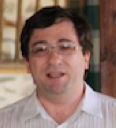 Rafael H. Bordini合作论文数School of Technology, Pontifícia Universidade Católica Do Rio Grande Do Sul11
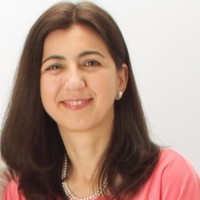 Fatma Ozcan合作论文数Google11
 Nils Bulling合作论文数Avaloq10
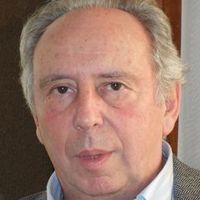 Luís Moniz Pereira合作论文数Departamento de Informatica Faculdade de Ciencias e Tecnologia Universidade Nova de Lisboa9
 Frieder Stolzenburg合作论文数Hochschule Harz;Hochschule Anhalt;Hochschule Merseburg8
 Wojciech Jamroga合作论文数Department of Theoretical Foundations of Computer Science, Polish Academy of Sciences;Nicolaus Copernicus University8Piero A. Bonatti合作论文数Dipartimento di Ing. Elettrica e Tecnologie dell'Informazione, Università di Napoli Federico II8
 Dana S. Nau合作论文数Department of Computer Science, University of Maryland;Institute for Systems Research, University of Maryland;Maryland Robotics Center, University of Maryland7
 Ilkka Niemelä合作论文数Department of Computer Science, School of Science, Aalto University7
 Guillermo R. Simari合作论文数Department of Computer Science & Engineering, Universidad Nacional del Sur7
 Ulrich Furbach合作论文数Institut für Informatik, Universität Koblenz;Vellore Institute of Technology;CADE Inc.7
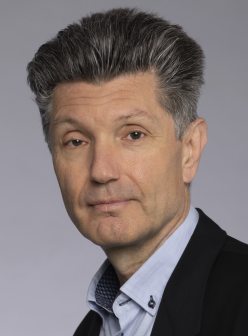 Thomas Eiter合作论文数Institute of Logic and Computation, Fakultät für Informatik, Technischen Universität Wien7
 Federico Schlesinger合作论文数6Wojtek Jamroga合作论文数6
 Jomi Fred Hubner合作论文数Department of Automation and Systems Engineering, Federal University of Santa Catarina6
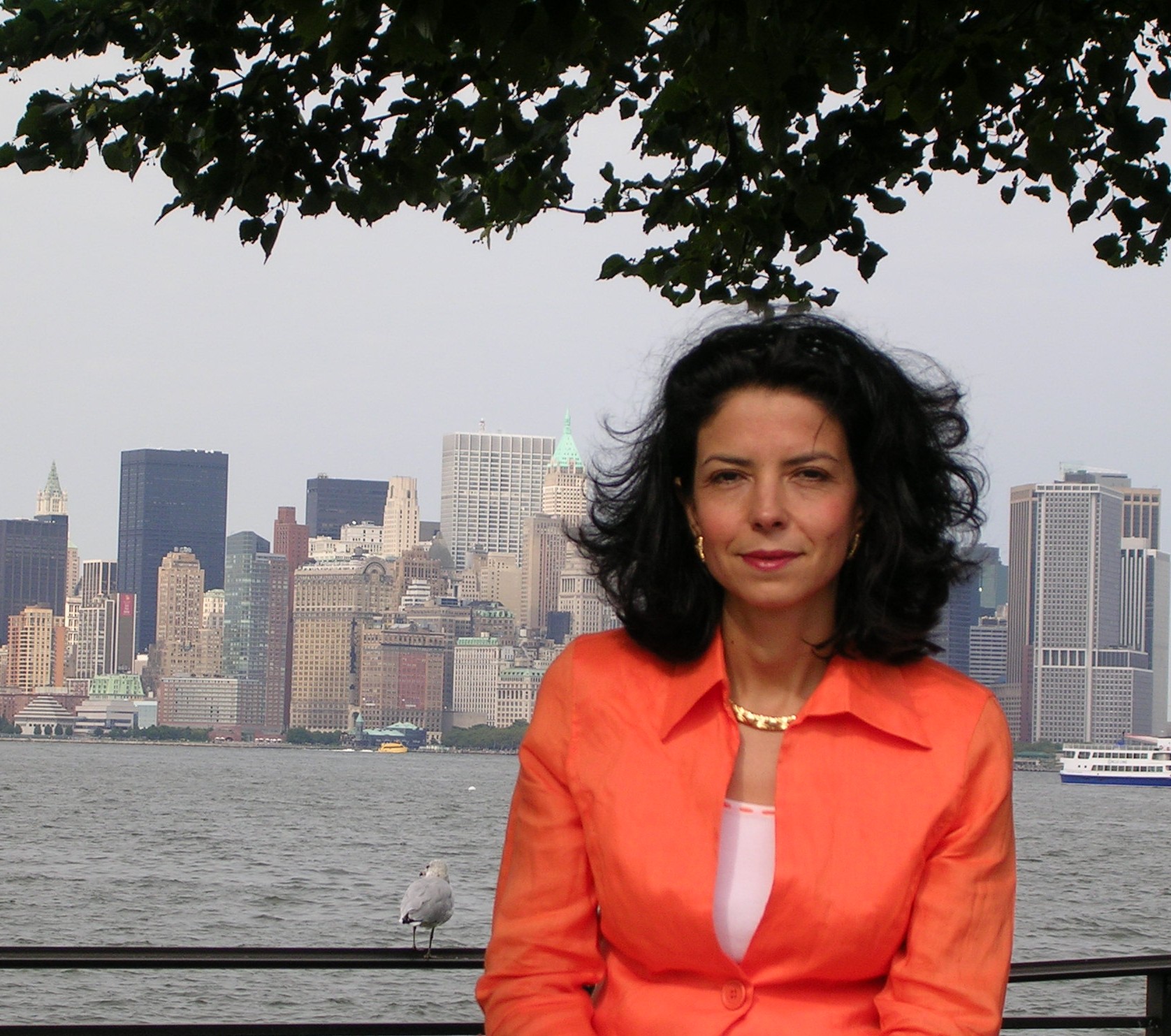 Amal El Fallah Seghrouchni合作论文数LIP6 laboratory;University Paris VI6
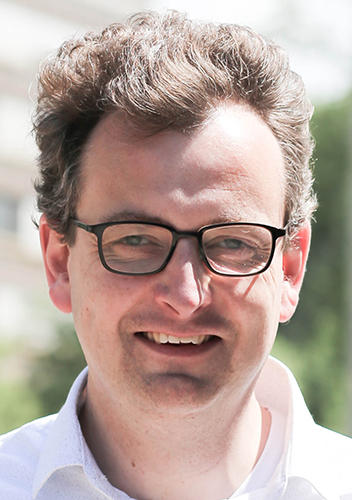 Koen V. Hindriks合作论文数Department of Intelligent Systems, Delft University of Technology;Department of Artificial Intelligence, Vrije Universiteit Amsterdam5
 Cees Witteveen合作论文数Department of Software Technology, Faculty of Electrical Engineering, Mathematics and Computer Science, Delft University of Technology4
 Mauricio Osorio合作论文数Universidad de las Américas, Puebla4
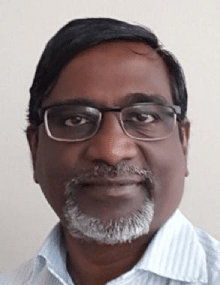 Chandrabose Aravindan合作论文数department of Information Technology, SSN College of Engineering4
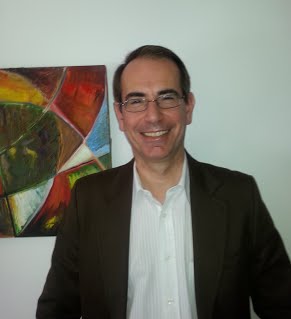 Carlos Iván Chesñevar合作论文数Institute for Researcher in Computer Science (ICIC Conicet-UNS), Universidad Nacional del Sur4
 Hector Muñoz-Avila合作论文数Computer Science & Engineering,Lehigh University4Martin Müller合作论文数3Marlon Welter合作论文数3
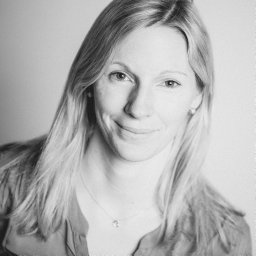 Verena Herbold合作论文数Inst Comp Sci, Univ Gottingen3Robert B. Ross合作论文数3Daniel Honsel合作论文数3
 Stephan Waack合作论文数Institut für Informatik, Universität Göttingen3
 Ugur Kuter合作论文数University of Maryland College Park3
 Edmund H. Durfee合作论文数Department of Electrical Engineering and Computer Science, University of Michigan3
 Jens Grabowski合作论文数Institute for Computer Science, University of Goettingen3Francisco Jose Arrazola Mendez合作论文数Shiprepairs SL3
 Peter Baumgartner合作论文数Data61, CSIRO3
 Brian Logan合作论文数School of Computer Science and Information Technology
University of Nottingham3
Brian Logan合作论文数School of Computer Science and Information Technology
University of Nottingham3 Rafael Bordini合作论文数University of Durham;Department of Computer Science3Gerd Neugebauer合作论文数2Vinicius Chrisosthemos合作论文数2




