1,1-Difluoroallenes underwent regioselective [2 + 2] and [3 + 2] cycloadditions with aldehydes using Au(I) catalysts. An AuCl catalyst enabled an α,β-selective [2 + 2] cycloaddition of 1,1-difluoroallenes, yielding (E)-3-alkylidene-2,2-difluorooxetanes. Conversely, an AuCl(IPr)-AgSbF6 catalyst facilitated an α,γ-selective [3 + 2] cycloaddition, followed by dehydrofluorination to produce aromatized 2-fluorofurans. DFT calculations (B3LYP level) suggested that the former reaction proceeded through Au(III)-containing metallacycles, while the latter involved cyclic Au(I) carbenoids.
1,1-Difluoroallenes underwent regioselective [2+4] cycloaddition with alpha,beta-unsaturated ketones (enones) in the presence of an AuCl(IPr)-AgSbF6 catalyst. beta-Aurated, charge-localized difluoroallylic carbocations, formed from 1,1-difluoroallenes and the cationic Au catalyst, were stabilised by the two fluorine substituents. This facilitated alpha-selective nucleophilic attack by the enone oxygen, followed by six-membered ring closure, leading to the formation of ring-difluorinated dihydro-2H-pyrans with (E)-alkylidene groups in high yields.
Upon heating in the presence of molecular sieves 4A, β,β‐difluoro‐α‐silylstyrenes bearing an ortho ‐amido group readily underwent nucleophilic 5‐ endo ‐ trig cyclization, affording 2‐fluoro‐3‐silylindoles in high yields. The silicon‐ and fluorine‐stabilized zwitterionic intermediates formed during an addition–elimination process likely promoted nucleophilic vinylic substitution (S N V) in a 5‐ endo ‐ trig fashion even under base‐free conditions. Furthermore, the silyl group in the formed 2‐fluoro‐3‐silylindoles was employed for further transformation.
2‐Fluoropyrroles are synthesized via the [4 + 1] cycloaddition of α,β‐unsaturated imines with difluorocarbene (:CF 2 ), which is generated in situ from trimethylsilyl 2,2‐difluoro‐2‐(fluorosulfonyl)acetate (TFDA). The α,β‐unsaturated imines are treated with TFDA in the presence of a Proton Sponge catalyst, facilitating the catalytic generation of: CF 2 . The resulting carbene underwent [4 + 1] cycloaddition with imines through azomethine ylide intermediates, yielding 5,5‐difluoropyrrolines. Subsequent dehydrofluorination with 1,8‐diazabicyclo[5.4.0]‐7‐undecene produced the targeted 2‐fluoropyrroles.
Monofluoroalkene-based dipeptide bioisosteres were synthesized via (I) difluorocyclopropane ring opening and (II) S(N)2 '-type de- fluorination. (2,2-Difluorocyclopropyl)methyl acetates were treated with acetonitrile in the presence of trifluoromethanesulfonic acid (triflic acid, TfOH). Elimination of acetic acid resulted in regioselective cleavage of the C-C bond distal to the CF(2 )moiety (ring opening), and then a Ritter-type N-terminal introduction afforded N-(2,2-difluorohomoal- lyl)acetamides. The obtained difluoroacetamides underwent allylic substitution of bromine for fluorine in an AlBr3/CuBr system to generate 3fluoroallylic bromides, whose substitution with n-Bu4NCN facilitated Cterminal introduction. Conversion of the cyano group into a carbamoyl group afforded the desired monofluoroalkene-based dipeptide bioisosteres.
Functionalized monofluoroalkenes (3‐arylated and 5‐oxygenated 1‐aryloxy‐2‐fluoro‐1‐alkenes) are synthesized via selective activation of the CF bonds in 2‐aryloxy‐1,1‐difluorocyclopropanes that are readily prepared from aryl vinyl ethers. Treatment of these difluorocyclopropanes with Me2AlCl promotes fluoride abstraction followed by cyclopropane ring opening to generate α,β‐unsaturated oxocarbenium ions. These cations are subsequently trapped with nucleophiles, such as arenes and silyl enol ethers (Friedel–Crafts‐ and aldol‐type reactions), to provide functionalized 2‐fluoro‐1‐alkenes. Because of the instability of vinyl cations, further fluoride abstraction is suppressed, resulting in completely selective CF bond activation.
2-Fluorobenzofurans underwent efficient nickel-catalyzed coupling with arylboronic acids through the activation of aromatic C–F bonds. This method allowed us to successfully synthesize a range of 2-arylbenzofurans with various substituents. The reaction, which proceeded under mild conditions, involved β-fluorine elimination from nickelacyclopropanes formed by the interaction of 2-fluorobenzofurans with zero-valent nickel species. This protocol facilitates orthogonal coupling reactions of aromatic C–F and C–Br bonds with arylboronic acids.
The synthesis of indoles with a trifluoromethyl group has attracted a lot of attention because they are promising structural subunits for pharmaceuticals and agrochemicals. As part of our project aimed toward the upcycling of hydrofluoroolefins (HFOs), we developed a method to construct a CF3‐bearing indole ring system through the Suzuki–Miyaura cross‐coupling of a brominated HFO‐1234ze(E) (CF3CH=CHF) with N‐tosylated o‐borylanilines, followed by nucleophilic 5‐endo‐trig cyclization at the vinylic position of the generated fluorostyrenes. We found that the Pd2(dba)3/SPhos catalyst system in the presence of K2CO3 and water in toluene afforded the corresponding 3‐CF3‐indoles in high yields in a one‐pot operation.
The synthesis of (trifluoromethyl)alkenes, including fully substituted variants, was achieved from thioketones with in situ-generated (trifluoromethyl)diazoalkanes [CF3C(R)=N2] (the Barton–Kellogg reaction). In the presence of sodium methoxide and a catalytic amount of tetrabutylammonium chloride, trifluoromethylated N-tosylhydrazones [CF3C(R)=NNHTs] derived from trifluoroacetaldehyde hemiacetal (R = H) or trifluoromethyl ketones (R = aryl or alkyl) were employed in the reactions with thioketones. The resulting (trifluoromethyl)diazoalkanes reacted with thioketones, forming (trifluoromethyl)thiirane intermediates. Treatment of these intermediates with trimethyl phosphite readily afforded the substituted (trifluoromethyl)alkenes. Theoretical calculations (DFT, B3LYP/6-31G*) showed that (trifluoromethyl)thiiranes, with less distortion than 2,2-difluorothiiranes, exhibited lower reactivity. Consequently, the involvement of a reducing agent was deemed necessary for the desulfurization step.
The synthesis of indoles with a trifluoromethyl group has attracted a lot of attention because they are promising structural subunits for pharmaceuticals and agrochemicals. As part of our project aimed toward the upcycling of hydrofluoroolefins (HFOs), we developed a method to construct a CF3-bearing indole ring system through the Suzuki-Miyaura cross-coupling of a brominated HFO-1234ze(E) (CF3CH=CHF) with N-tosylated o-borylanilines, followed by nucleophilic 5-endo-trig cyclization at the vinylic position of the generated fluorostyrenes. We found that the Pd-2(dba)(3)/SPhos catalyst system in the presence of K2CO3 and water in toluene afforded the corresponding 3-CF3-indoles in high yields in a one-pot operation.
Pinpoint-fluorinated polycyclic aromatic hydrocarbons (F-PAHs) and their heteroaromatic analogs, which are regioselectively substituted by one or two fluorine atoms, were systematically synthesized by Friedel-Crafts cyclization of fluoroalkenes (2-trifluoromethyl-1-alkenes, 1,1-difluoro-1-alkenes, 1,1,2-trifluoro-1-alkenes, and 1,1-difluoroallenes) that were Al(III)-mediated, Pd(II)-catalyzed, and In(III)-catalyzed. The key feature of these reactions is ring closures that proceed via alpha-fluorine-stabilized CF2 cations and related species. Using an array of synthesized F-PAHs and their heteroaromatic analogs, their chemical reactivities and physical properties were investigated. (i) The reactivities of F-PAHs and their heteroaromatic analogs were used for further ring construction. (ii) The crystal structures of F-PAHs revealed that the planarity of their pi-conjugated systems was not compromised because of the low steric demand of fluorine atoms. (iii) The introduction of fluorine atom(s) into PAH molecules increased their solubility in organic solvents, which was best exemplified by the high solubility of 6-fluoropicene (5.3 wt%) and 6,7-difluoropicene (5.4 wt%) in THF. (iv) One of the F-PAHs, 13-fluoropicene exhibited p-type semiconducting behavior (mobility 6.6 x 10⁻² cm2/Vs by vacuum deposition; 1.3 x 10⁻⁴ cm2/Vs by spin casting using toluene as a solvent). (v) The HOMO-LUMO energy gaps of the F-PAHs were smaller than those of the corresponding fluorine-free PAH (i.e. picene) by 0.02 to 0.26 eV, and the HOMO and LUMO energy levels were lowered by 0.10 to 0.22 and 0.12 to 0.41 eV, respectively. F-PAHs and their heteroaromatic analogs were synthesized via alpha-fluorine-stabilized CF2 cations and related species. (i) The ring construction based on F-PAHs and heteroaromatic analogs, (ii) the planarity of F-PAHs, (iii) the solubility of F-PAHs in organic solvents, (iv) the semiconducting behavior of F-PAHs, and (v) the HOMO-LUMO energy gaps and the HOMO and LUMO energy levels of F-PAHs are also presented.
An entry from the Cambridge Structural Database, the world’s repository for small molecule crystal structures. The entry contains experimental data from a crystal diffraction study. The deposited dataset for this entry is freely available from the CCDC and typically includes 3D coordinates, cell parameters, space group, experimental conditions and quality measures.
1. 驚いたフッ素置換基の特性 最初の感動は, 実験結果にではなく, 初めて学んだフッ 素の特性 (置換基効果) に対してであった
An entry from the Cambridge Structural Database, the world’s repository for small molecule crystal structures. The entry contains experimental data from a crystal diffraction study. The deposited dataset for this entry is freely available from the CCDC and typically includes 3D coordinates, cell parameters, space group, experimental conditions and quality measures.
Difluorocarbene is a simple and versatile one-carbon unit for synthesizing acyclic and cyclic organofluorine compounds. However, the use of difluorocarbene in organic synthesis has been relatively limited because of the harsh conditions required for its generation, the toxicity of the precursors, and undesired dimerization. This feature article provides an account of (i) the generation of free and metal difluorocarbenes from trimethylsilyl 2,2-difluoro-2-(fluorosulfonyl)acetate (TFDA) or BrCF2CO2Li/Na and (ii) their application to the facile synthesis of valuable organofluorine compounds. The difluorocarbenes thus generated react with (thio)carbonyl compounds and silyl dienol ethers to provide a wide variety of products such as (a) difluoromethyl (thio)ethers, (b) fluorinated thiophenes, (c) fluorinated thia/oxazoles, (d) fluorinated cyclopentanones and (e) difluoroalkenes.
In this study, 1,1-difluoroallenes underwent a regioselective [2+3] cycloaddition with nitrile oxides and imine oxides in the presence of a AuCl catalyst. (E)-4-Alkylidene-5,5-difluoroisoxazolines and -isoxazolidines were obtained in regioselective and diastereoselective manners by employing aurated difluoroallylic cation intermediates. The synthesized 5,5-difluoroisoxazolines were readily aromatized through dehydrofluorination or allylic fluorine substitution to provide 5-fluoroisoxazoles.
2-(1,1-Difluoroethyl)-2H-1,3-benzoxazines were synthesized by (i) the regioselective ring opening of 1,1-difluorocyclopropanes bearing an aryloxy group and (ii) the Ritter reaction followed by a Friedel-Crafts-type ring closure. When 2-aryloxy-1,1-difluorocyclopropanes were treated with triflic acid, the C-C bond distal to the CF2 moiety was cleaved regioselectively via protonation to generate the corresponding oxocarbenium ions. These intermediates readily underwent nucleophilic attack by nitriles, followed by a carbocationic cyclization to afford the 2-difluoroethylated benzoxazines.
The synthesis of fused polycyclic heteroaromatics was achieved via successive vinylic/aromatic carbon-fluorine (C-F) bond activation. The Suzuki-Miyaura coupling of (1-bromo-2,2-difluorovinyl)biaryls with 2-hydroxy- or 2-aminophenylboronic acids (esters) followed by defluorinative 5-endo-trig cyclization yielded 2-fluorobenzofurans (indoles) with a biaryl moiety in one-pot operation. The obtained 2-fluorobenzoheteroles underwent acid-mediated intramolecular C-F/C-H coupling to yield tetra-, penta-, and hexacyclic heteroaromatics. This protocol allowed the synthesis of various substituted benzo-fused dibenzofurans and carbazoles.
When treated with difluorocarbene, which was generated from FSO2CF2CO2SiMe3 with a 1,8-bis(dimethylamino)naphthalene catalyst, N-(thioacyl)amidines underwent [4 + 1] cycloaddition to afford the corresponding amino-substituted 5,5-difluorothiazolines. Both dehydrofluorination and a Hofmann elimination/S(N)2'-type reaction sequence enabled the aromatization of the obtained products, affording 5-fluorothiazoles. The [4 + 1] cycloaddition strategy was also applied to N-acylamidines, affording the corresponding 5-fluorooxazole derivatives.
This chapter covers the recent advances on CF bond activation reactions mediated by metals and metalloids from a synthetic point of view. Section 12.11.1 describes the principal modes of CF bond activation. Section 12.11.1.2 discusses the activation of C(sp3)F bonds, such as allylic, benzylic, propargylic, and alkyl CF bonds. 12.11.1.3 Overview of alkene C(sp, 12.11.1.4 Overview of arene C(sp cover the activation of C(sp2)F bonds in alkenes and arenes, such as vinylic, allenylic, acyl, and aromatic CF bonds. A comprehensive set of examples of CF bond activation are provided in 12.11.2 Survey of C(sp, 12.11.3 Survey of alkene C(sp, 12.11.4 Survey of arene C(sp, according to the above classifications. Section 12.11.5 presents forward-looking conclusions.
 Kohei Fuchibe合作论文数62
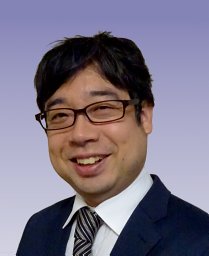 Takeshi Fujita合作论文数58
 Toru Minami合作论文数37Tatsuo Okauchi合作论文数Department of Applied Chemistry, Kyushu Institute of Technology20
 Katsukiyo Miura合作论文数15
 Akira Hosomi合作论文数National Institution for Academic Degrees and University Evaluation14Ryo Nadano合作论文数13Kotaro Sakoda合作论文数12
 Tomohiro Ichitsuka (市塚知宏)合作论文数Research Institute for Chemical Process Technology, National Institute of Advanced Industrial Science and Technology12
 Takaaki Sonoda合作论文数12Yukinori Wada合作论文数11Misaki Yokota合作论文数11Ryutaro Morioka合作论文数9Hidenori Kinoshita合作论文数9
 Masahiro Ikeda合作论文数8Ryo Takayama合作论文数8
 Naoto Suzuki合作论文数8Hisashi Sasagawa合作论文数8Terunobu Saitoh合作论文数7
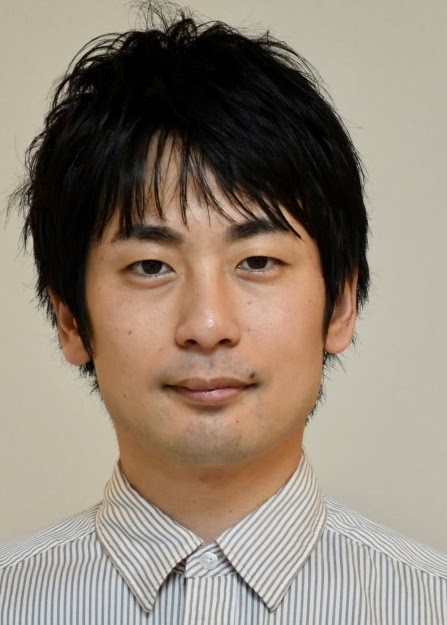 Takashi Mori合作论文数Center for Emergent Matter Science, Riken7Gen Inoue合作论文数7Masaki Fujiwara合作论文数7Tatsuya Aono合作论文数6
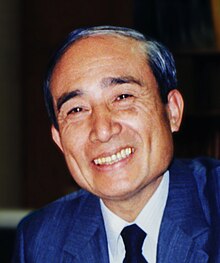 Teruaki Mukaiyama (向山光昭)合作论文数東京化成工業株式会社基礎研究所6Yota Watabe合作论文数5Jun Mihara合作论文数5Yu Iwai合作论文数5Tomohiro Arita合作论文数5Tanabe Hiroyuki合作论文数5Hiroyuki Miyazaki合作论文数5Ikko Takahashi合作论文数4Hiroyuki Kuroki合作论文数4Tomoya Nojima合作论文数4Masatoshi Asami合作论文数4ken oh合作论文数4masahiro hattori合作论文数4Morikawa Toshiyuki合作论文数4Hiroshi Kobayashi合作论文数4Tomohisa Utsunomiya合作论文数4Yuka Mayumi合作论文数4Yuichiro Ishibashi合作论文数4hiromichi aihara合作论文数3Naoyuki Yokota合作论文数3Takao Kudo合作论文数3Takaharu Kawai合作论文数3Go Takao合作论文数3yuta koseki合作论文数3Masashi Abe合作论文数3Atsushi Yamada合作论文数3




