The jet cross section and jet-substructure observables in p +p collisions at root s =200 GeV were measured by the PHENIX Collaboration at the Relativistic Heavy Ion Collider (RHIC). Jets are reconstructed from charged-particle tracks and electromagnetic-calorimeter clusters using the anti-k(t) algorithm with a jet radius of R =0.3 for jets with transverse momentum within 8.0 < p(T) <40.0 GeV/c and pseudorapidity |eta| <0.15. Measurements include the jet cross section, as well as distributions of SoftDrop-groomed momentum fraction (z(g)), charged-particle transverse momentum with respect to jet axis (j(T)), and radial distributions of charged particles within jets (r). Also measured was the distribution of xi =-ln(z), where z is the fraction of the jet momentum carried by the charged particle. The measurements are compared to theoretical next-to and next-to-next-to-leading-order calculations, the pythia and herwig event generators, and to other existing experimental results. Indicated from these measurements is a lower particle multiplicity in jets at RHIC energies when compared to models. Also noted are implications for future jet measurements with sPHENIX at RHIC as well as at the future Electron-Ion Collider.
High-momentum two-particle correlations are a useful tool for studying jet-quenching effects in the quark-gluon plasma. Angular correlations between neutral-pion triggers and charged hadrons with transverse momenta in the range 4–12 GeV/c and 0.5–7 GeV/c, respectively, have been measured by the PHENIX experiment in 2014 for Au+Au collisions at √(s__NN)=200 GeV. Suppression is observed in the yield of high-momentum jet fragments opposite the trigger particle, which indicates jet suppression stemming from in-medium partonic energy loss, while enhancement is observed for low-momentum particles. The ratio and differences between the yield in Au+Au collisions and p+p collisions, I_AA and Δ_AA, as a function of the trigger-hadron azimuthal separation, Δϕ, are measured for the first time at the Relativistic Heavy Ion Collider. These results better quantify how the yield of low-p_T associated hadrons is enhanced at wide angle, which is crucial for studying energy loss as well as medium-response effects.
The PHENIX experiment measured the centrality dependence of two-pion Bose-Einstein correlation functions in root sNN = 200 GeV Au + Au collisions at the Relativistic Heavy Ion Collider at Brookhaven National Laboratory. The data are well represented by Levy-stable source distributions. The extracted source parameters are the correlation-strength parameter lambda, the Levy index of stability a, and the Levy-scale parameter R as a function of transverse mass m(T) and centrality. The lambda(m(T)) parameter is constant at larger values of m(T), but decreases as m(T) decreases. The Levy-scale parameter R(m(T)) decreases with mT and exhibits proportionality to the length scale of the nuclear overlap region. The Levy exponent alpha(m(T)) is independent of m(T) within uncertainties in each investigated centrality bin, but shows a clear centrality dependence. At all centralities, the Levy exponent a is significantly different from that of Gaussian ( alpha= 2) or Cauchy ( alpha = 1) source distributions. Comparisons to the predictions of Monte-Carlo simulations of resonance-decay chains show that, in all but the most peripheral centrality class (50%-60%), the obtained results are inconsistent with the measurements, unless a significant reduction of the in-medium mass of the eta meson is included. In each centrality class, the best value of the in-medium eta mass is compared to the mass of the. meson, as well as to several theoretical predictions that consider restoration of U-A(1) symmetry in hot hadronic matter.
High-momentum two-particle correlations are a useful tool for studying jet-quenching effects in the quarkgluon plasma. Angular correlations between neutral-pion triggers and charged hadrons with transverse momenta in the range 4-12 GeV/c and 0.5-7 GeV/c, respectively, have been measured by the PHENIX experiment in 2014 for Au + Au collisions at root sNN = 200 GeV. Suppression is observed in the yield of high-momentum jet fragments opposite the trigger particle, which indicates jet suppression stemming from in-medium partonic energy loss, while enhancement is observed for low-momentum particles. The ratio and differences between the yield in Au + Au collisions and p + p collisions, I-AA and Delta(AA), as a function of the trigger-hadron azimuthal separation, Delta phi, are measured for the first time at the BNL Relativistic Heavy Ion Collider. These results better quantify how the yield of low-pT associated hadrons is enhanced at wide angle, which is crucial for studying energy loss as well as medium-response effects.
The PHENIX experiment has performed a systematic study of identified charged-hadron $({\ensuremath{\pi}}^{\ifmmode\pm\else\textpm\fi{}},$ ${K}^{\ifmmode\pm\else\textpm\fi{}},$ $p,$ $\overline{p})$ production at midrapidity in $p+\mathrm{Al}$, $^{3}\mathrm{He}+\mathrm{Au}$, and $\mathrm{Cu}+\mathrm{Au}$ collisions at $\sqrt{{s}_{{}_{NN}}}=200\phantom{\rule{0.16em}{0ex}}\mathrm{GeV}$ and $\mathrm{U}+\mathrm{U}$ collisions at $\sqrt{{s}_{{}_{NN}}}=193\phantom{\rule{0.16em}{0ex}}\mathrm{GeV}$. Identified charged-hadron invariant transverse-momentum $({p}_{T})$ and transverse-mass $({m}_{T})$ spectra are presented and interpreted in terms of radially expanding thermalized systems. The particle ratios of $K/\ensuremath{\pi}$ and $p/\ensuremath{\pi}$ have been measured in different centrality ranges of large ($\mathrm{Cu}+\mathrm{Au}$ and $\mathrm{U}+\mathrm{U}$) and small ($p+\mathrm{Al}$ and $^{3}\mathrm{He}+\mathrm{Au}$) collision systems. The values of $K/\ensuremath{\pi}$ ratios measured in all considered collision systems were found to be consistent with those measured in $p+p$ collisions. However, the values of $p/\ensuremath{\pi}$ ratios measured in large collision systems reach the values of $\ensuremath{\approx}0.6$, which is a factor of $\ensuremath{\approx}2$ larger than in $p+p$ collisions. These results can be qualitatively understood in terms of the baryon enhancement expected from hadronization by recombination. Identified charged-hadron nuclear-modification factors (${R}_{AB}$) are also presented. Enhancement of proton ${R}_{AB}$ values over meson ${R}_{AB}$ values was observed in central $^{3}\mathrm{He}+\mathrm{Au}$, $\mathrm{Cu}+\mathrm{Au}$, and $\mathrm{U}+\mathrm{U}$ collisions. The proton ${R}_{AB}$ values measured in the $p+\mathrm{Al}$ collision system were found to be consistent with ${R}_{AB}$ values of $\ensuremath{\phi}$, ${\ensuremath{\pi}}^{\ifmmode\pm\else\textpm\fi{}}$, ${K}^{\ifmmode\pm\else\textpm\fi{}}$, and ${\ensuremath{\pi}}^{0}$ mesons, which may indicate that the size of the system produced in $p+\mathrm{Al}$ collisions is too small for recombination to cause a noticeable increase in proton production.
The PHENIX experiment has performed a systematic study of identified charged-hadron ( p +/-, K +/-, p, p) production at midrapidity in p + Al, He-3+Au, and Cu + Au collisions at root s(NN) = 200 GeV and U + U collisions at root s(NN) = 193 GeV. Identified charged-hadron invariant transverse-momentum (p(T)) and transverse-mass (m(T)) spectra are presented and interpreted in terms of radially expanding thermalized systems. The particle ratios of K/ p and p/ p have been measured in different centrality ranges of large (Cu + Au and U + U) and small ( p + Al and He-3+Au) collision systems. The values of K/pi ratios measured in all considered collision systems were found to be consistent with those measured in p + p collisions. However, the values of p/pi ratios measured in large collision systems reach the values of approximate to 0.6, which is a factor of approximate to 2 larger than in p + p collisions. These results can be qualitatively understood in terms of the baryon enhancement expected from hadronization by recombination. Identified charged-hadron nuclear-modification factors (R-AB) are also presented. Enhancement of proton R-AB values over meson RAB values was observed in central He-3+Au, Cu + Au, and U + U collisions. The proton R-AB values measured in the p + Al collision system were found to be consistent with R-AB phi values of phi, pi(+/-), K-+/-, and pi(0) mesons, which may indicate that the size of the system produced in p + Al collisions is too small for recombination to cause a noticeable increase in proton production.
A. Adare,12 C. Aidala,39,45 N. N. Ajitanand,63,* Y. Akiba,57,58,† R. Akimoto,11 J. Alexander,63 M. Alfred,24 H. Al-Ta’ani,52 A. Angerami,13 K. Aoki,32,57 N. Apadula,29,64 Y. Aramaki,11,57 H. Asano,35,57 E. C. Aschenauer,7 E. T. Atomssa,64 T. C. Awes,54 B. Azmoun,7 V. Babintsev,25 A. Bagoly,17 M. Bai,6 B. Bannier,64 K. N. Barish,8 B. Bassalleck,51 S. Bathe,5,58 V. Baublis,56 S. Baumgart,57 A. Bazilevsky,7 R. Belmont,12,69 A. Berdnikov,60 Y. Berdnikov,60 D. S. Blau,34,50 M. Boer,39 J. S. Bok,51,52,72 K. Boyle,58 M. L. Brooks,39 J. Bryslawskyj,5,8 H. Buesching,7 V. Bumazhnov,25 S. Butsyk,51 S. Campbell,13,64 V. Canoa Roman,64 P. Castera,64 C.-H. Chen,58,64 C. Y. Chi,13 M. Chiu,7 I. J. Choi,26 J. B. Choi,10,* S. Choi,62 R. K. Choudhury,4 P. Christiansen,41 T. Chujo,68 O. Chvala,8 V. Cianciolo,54 Z. Citron,64,70 B. A. Cole,13 M. Connors,21,58,64 M. Csanád,17 T. Csörgő,18,71 S. Dairaku,35,57 T. W. Danley,53 A. Datta,44 M. S. Daugherity,1 G. David,7,64 K. DeBlasio,51 K. Dehmelt,64 A. Denisov,25 A. Deshpande,58,64 E. J. Desmond,7 K. V. Dharmawardane,52 O. Dietzsch,61 L. Ding,29 A. Dion,29,64 J. H. Do,72 M. Donadelli,61 L. D’Orazio,43 O. Drapier,36 A. Drees,64 K. A. Drees,6 J. M. Durham,39,64 A. Durum,25 S. Edwards,6 Y. V. Efremenko,54 T. Engelmore,13 A. Enokizono,54,57,59 S. Esumi,68 K. O. Eyser,7,8 B. Fadem,46 W. Fan,64 N. Feege,64 D. E. Fields,51 M. Finger,9 M. Finger, Jr.,9 F. Fleuret,36 S. L. Fokin,34 J. E. Frantz,53 A. Franz,7 A. D. Frawley,20 Y. Fukao,57 Y. Fukuda,68 T. Fusayasu,48 K. Gainey,1 C. Gal,64 P. Gallus,14 P. Garg,3,64 A. Garishvili,66 I. Garishvili,38 H. Ge,64 A. Glenn,38 X. Gong,63 M. Gonin,36 Y. Goto,57,58 R. Granier de Cassagnac,36 N. Grau,2 S. V. Greene,69 M. Grosse Perdekamp,26 T. Gunji,11 L. Guo,39 H.-Å. Gustafsson,41,* T. Hachiya,57,58 J. S. Haggerty,7 K. I. Hahn,19 H. Hamagaki,11 S. Y. Han,19 J. Hanks,13,64 S. Hasegawa,30 T. O. S. Haseler,21 K. Hashimoto,57,59 E. Haslum,41 R. Hayano,11 X. He,21 T. K. Hemmick,64 T. Hester,8 J. C. Hill,29 K. Hill,12 A. Hodges,21 R. S. Hollis,8 K. Homma,23 B. Hong,33 T. Horaguchi,68 Y. Hori,11 T. Hoshino,23 N. Hotvedt,29 J. Huang,7 S. Huang,69 T. Ichihara,57,58 H. Iinuma,32 Y. Ikeda,57,68 J. Imrek,16 M. Inaba,68 A. Iordanova,8 D. Isenhower,1 M. Issah,69 D. Ivanishchev,56 B. V. Jacak,64 M. Javani,21 Z. Ji,64 J. Jia,7,63 X. Jiang,39 B. M. Johnson,7,21 K. S. Joo,47 V. Jorjadze,64 D. Jouan,55 D. S. Jumper,26 J. Kamin,64 S. Kaneti,64 B. H. Kang,22 J. H. Kang,72 J. S. Kang,22 J. Kapustinsky,39 K. Karatsu,35,57 S. Karthas,64 M. Kasai,57,59 G. Kasza,17,18 D. Kawall,44,58 A. V. Kazantsev,34 T. Kempel,29 V. Khachatryan,64 A. Khanzadeev,56 K. M. Kijima,23 B. I. Kim,33 C. Kim,8,33 D. J. Kim,31 E.-J. Kim,10 H. J. Kim,72 K.-B. Kim,10 M. Kim,62 M. H. Kim,33 Y.-J. Kim,26 Y. K. Kim,22 D. Kincses,17 E. Kinney,12 Á. Kiss,17 E. Kistenev,7 J. Klatsky,20 D. Kleinjan,8 P. Kline,64 T. Koblesky,12 Y. Komatsu,11,32 B. Komkov,56 J. Koster,26 D. Kotchetkov,53 D. Kotov,56,60 A. Král,14 F. Krizek,31 S. Kudo,68 G. J. Kunde,39 B. Kurgyis,17 K. Kurita,57,59 M. Kurosawa,57,58 Y. Kwon,72 G. S. Kyle,52 R. Lacey,63 Y. S. Lai,13 J. G. Lajoie,29 A. Lebedev,29 B. Lee,22 D. M. Lee,39 J. Lee,19,65 K. B. Lee,33 K. S. Lee,33 S. H. Lee,29,64 S. R. Lee,10 M. J. Leitch,39 M. A. L. Leite,61 M. Leitgab,26 Y. H. Leung,64 B. Lewis,64 N. A. Lewis,45 X. Li,39 S. H. Lim,39,72 L. A. Linden Levy,12 M. X. Liu,39 S. Lökös,17,18 B. Love,69 D. Lynch,7 C. F. Maguire,69 Y. I. Makdisi,6 M. Makek,70,73 A. Manion,64 V. I. Manko,34 E. Mannel,7,13 H. Masuda,59 S. Masumoto,11,32 M. McCumber,12,39 P. L. McGaughey,39 D. McGlinchey,12,20,39 C. McKinney,26 M. Mendoza,8 B. Meredith,26 W. J. Metzger,18 Y. Miake,68 T. Mibe,32 A. C. Mignerey,43 D. E. Mihalik,64 A. Milov,70 D. K. Mishra,4 J. T. Mitchell,7 G. Mitsuka,58 Y. Miyachi,57,67 S. Miyasaka,57,67 A. K. Mohanty,4 S. Mohapatra,63 H. J. Moon,47 T. Moon,72 D. P. Morrison,7 S. I. Morrow,69 S. Motschwiller,46 T. V. Moukhanova,34 T. Murakami,35,57 J. Murata,57,59 A. Mwai,63 T. Nagae,35 K. Nagai,67 S. Nagamiya,32,57 K. Nagashima,23 J. L. Nagle,12 M. I. Nagy,17,71 I. Nakagawa,57,58 H. Nakagomi,57,68 Y. Nakamiya,23 K. R. Nakamura,35,57 T. Nakamura,57 K. Nakano,57,67 C. Nattrass,66 A. Nederlof,46 M. Nihashi,23,57 R. Nouicer,7,58 T. Novák,18,71 N. Novitzky,31,64 A. S. Nyanin,34 E. O’Brien,7 C. A. Ogilvie,29 K. Okada,58 J. D. Orjuela Koop,12 J. D. Osborn,45 A. Oskarsson,41 M. Ouchida,23,57 K. Ozawa,11,32,68 R. Pak,7 V. Pantuev,27 V. Papavassiliou,52 B. H. Park,22 I. H. Park,19,65 J. S. Park,62 S. Park,57,62,64 S. K. Park,33 S. F. Pate,52 L. Patel,21 M. Patel,29 H. Pei,29 J.-C. Peng,26 W. Peng,69 H. Pereira,15 D. V. Perepelitsa,7,12,13 G. D. N. Perera,52 D.Yu. Peressounko,34 C. E. PerezLara,64 R. Petti,7,64 C. Pinkenburg,7 R. P. Pisani,7 M. Proissl,64 A. Pun,53 M. L. Purschke,7 H. Qu,1 P. V. Radzevich,60 J. Rak,31 I. Ravinovich,70 K. F. Read,54,66 D. Reynolds,63 V. Riabov,50,56 Y. Riabov,56,60 E. Richardson,43 D. Richford,5 T. Rinn,29 D. Roach,69 G. Roche,40,* S. D. Rolnick,8 M. Rosati,29 Z. Rowan,5 J. Runchey,29 B. Sahlmueller,64 N. Saito,32 T. Sakaguchi,7 H. Sako,30 V. Samsonov,50,56 M. Sano,68 M. Sarsour,21 K. Sato,68 S. Sato,30 S. Sawada,32 B. K. Schmoll,66 K. Sedgwick,8 R. Seidl,57,58 A. Sen,21,29,66 R. Seto,8 A. Sexton,43 D. Sharma,64,70 I. Shein,25 T.-A. Shibata,57,67 K. Shigaki,23 M. Shimomura,29,49,68 K. Shoji,35,57 P. Shukla,4 A. Sickles,7,26 C. L. Silva,29,39 D. Silvermyr,41,54 K. S. Sim,33 B. K. Singh,3 C. P. Singh,3 V. Singh,3 M. J. Skoby,45 M. Slunečka,9 R. A. Soltz,38 W. E. Sondheim,39 S. P. Sorensen,66 I. V. Sourikova,7 P. W. Stankus,54 E. Stenlund,41 M. Stepanov,44,* A. Ster,71 S. P. Stoll,7 T. Sugitate,23 A. Sukhanov,7 J. Sun,64 J. Sziklai,71 E. M. Takagui,61 A. Takahara,11 A Takeda,49 A. Taketani,57,58 Y. Tanaka,48 S. Taneja,64 K. Tanida,30,58,62 M. J. Tannenbaum,7 S. Tarafdar,3,69 A. Taranenko,50,63 G. Tarnai,16 E. Tennant,52 H. Themann,64 R. Tieulent,42 A. Timilsina,29 T. Todoroki,57,68 L. Tomášek,28 M. Tomášek,14,28 H. Torii,23 C. L. Towell,1 R. S. Towell,1 I. Tserruya,70 Y. Tsuchimoto,11 T. Tsuji,11 Y. Ueda,23 B. Ujvari,16 C. Vale,7 H. W. van Hecke,39 M. Vargyas,17,71 S. Vazquez-Carson,12 E. Vazquez-Zambrano,13 A. Veicht,13 J. Velkovska,69 R. Vértesi,71 M. Virius,14 A. Vossen,26 V. Vrba,14,28 E. Vznuzdaev,56 X. R. Wang,52,58 Z. Wang,5 D. Watanabe,23 K. Watanabe,68 Y. Watanabe,57,58 Y. S. Watanabe,11 F. Wei,29,52 R. Wei,63 S. N. White,7 D. Winter,13 S. Wolin,26 C. L. Woody,7 M. Wysocki,12,54 B. Xia,53 C. Xu,52 Q. Xu,69
Received 2 October 2023DOI:https://doi.org/10.1103/PhysRevC.108.049905©2023 American Physical SocietyPhysics Subject Headings (PhySH)Research AreasParticle correlations & fluctuationsQuark-gluon plasmaRelativistic heavy-ion collisionsPhysical SystemsBose-Einstein condensatesPionsNuclear Physics
The measurement of direct photons from Au$+$Au collisions at $\sqrt{s_{_{NN}}}=39$ and 62.4 GeV in the transverse-momentum range $0.4<p_T<3$ Gev/$c$ is presented by the PHENIX collaboration at the Relativistic Heavy Ion Collider. A significant direct-photon yield is observed in both collision systems. A universal scaling is observed when the direct-photon $p_T$ spectra for different center-of-mass energies and for different centrality selections at $\sqrt{s_{_{NN}}}=62.4$ GeV is scaled with $(dN_{\rm ch}/d\eta)^{\alpha}$ for $\alpha=1.21{\pm}0.04$. This scaling also holds true for direct-photon spectra from Au$+$Au collisions at $\sqrt{s_{_{NN}}}=200$ GeV measured earlier by PHENIX, as well as the spectra from Pb$+$Pb at $\sqrt{s_{_{NN}}}=2760$ GeV published by ALICE. The scaling power $\alpha$ seems to be independent of $p_T$, center of mass energy, and collision centrality. The spectra from different collision energies have a similar shape up to $p_T$ of 2 GeV/$c$. The spectra have a local inverse slope $T_{\rm eff}$ increasing with $p_T$ of $0.174\pm0.018$ GeV/$c$ in the range $0.4<p_T<1.3$ GeV/$c$ and increasing to $0.289\pm0.024$ GeV/$c$ for $0.9<p_T<2.1$ GeV/$c$. The observed similarity of low-$p_T$ direct-photon production from $\sqrt{s_{_{NN}}}= 39$ to 2760 GeV suggests a common source of direct photons for the different collision energies and event centrality selections, and suggests a comparable space-time evolution of direct-photon emission.
The PHENIX experiment reports systematic measurements at the Relativistic Heavy Ion Collider of phi-meson production in asymmetric Cu + Au collisions at root sNN = 200 GeV and in U + U collisions at root sNN = 193 GeV. Measurements were performed via the phi -> K+K- decay channel at midrapidity |n| < 0.35. Features of phi -meson production measured in Cu + Cu, Cu + Au, Au + Au, and U + U collisions were found to not depend on the collision geometry, which was expected because the yields are averaged over the azimuthal angle and follow the expected scaling with nuclear-overlap size. The elliptic flow of the 0 meson in Cu + Au, Au + Au, and U + U collisions scales with second-order-participant eccentricity and the length scale of the nuclear -overlap region (estimated with the number of participating nucleons). At moderate pT, phi-meson production measured in Cu + Au and U + U collisions is consistent with coalescence-model predictions, whereas at high p(T) the production is in agreement with expectations for in-medium energy loss of parent partons prior to their fragmentation. The elliptic flow for 0 mesons measured in Cu + Au and U + U collisions is well described by a (2+1)-dimensional viscous-hydrodynamic model with specific-shear viscosity eta/s = 1/4 pi.
The measurement of direct photons from Au+Au collisions at √sNN=39 and 62.4 GeV in the transverse-momentum range 0.4
The PHENIX experiment reports systematic measurements at the Relativistic Heavy Ion Collider of ϕ-meson production in asymmetric Cu+Au collisions at √(s__NN)=200 GeV and in U+U collisions at √(s__NN)=193 GeV. Measurements were performed via the ϕ→ K^+K^- decay channel at midrapidity |η|<0.35. Features of ϕ-meson production measured in Cu+Cu, Cu+Au, Au+Au, and U+U collisions were found to not depend on the collision geometry, which was expected because the yields are averaged over the azimuthal angle and follow the expected scaling with nuclear-overlap size. The elliptic flow of the ϕ meson in Cu+Au, Au+Au, and U+U collisions scales with second-order-participant eccentricity and the length scale of the nuclear-overlap region (estimated with the number of participating nucleons). At moderate p_T, ϕ-meson production measured in Cu+Au and U+U collisions is consistent with coalescence-model predictions, whereas at high p_T the production is in agreement with expectations for in-medium energy loss of parent partons prior to their fragmentation. The elliptic flow for ϕ mesons measured in Cu+Au and U+U collisions is well described by a (2+1)D viscous-hydrodynamic model with specific-shear viscosity η/s=1/4π.
Fast and heavy inorganic scintillators with suitable radiation tolerance are required to face the challenges presented at future hadron colliders of high energy and intensity. Up to 5 GGy and 5 × 10¹⁸ neq/cm2 of one-MeV-equivalent neutron fluence is expected by the forward calorimeter at the Future Hadron Circular Collider. This paper reports the results of an investigation of proton- and neutron-induced radiation damage in various fast and heavy inorganic scintillators, such as LYSO:Ce crystals, LuAG:Ce ceramics, and BaF2 crystals. The experiments were carried out at the Blue Room with 800 MeV proton fluence up to 3.0 × 10¹⁵ p/cm2 and at the East Port with one MeV equivalent neutron fluence up to 9.2 × 10¹⁵ neq/cm2, respectively, at the Los Alamos Neutron Science Center. Experiments were also carried out at the CERN PS-IRRAD proton facility with 24 GeV proton fluence up to 8.2 × 10¹⁵ p/cm2. Research and development will continue to develop LuAG:Ce ceramics and BaF2:Y crystals with improved optical quality, F/T ratio, and radiation hardness.
A. Adare, C. Aidala, 41 N.N. Ajitanand, Y. Akiba, 53 R. Akimoto, H. Al-Ta’ani, J. Alexander, A. Angerami, K. Aoki, N. Apadula, Y. Aramaki, 52 H. Asano, 52 E.C. Aschenauer, E.T. Atomssa, T.C. Awes, B. Azmoun, V. Babintsev, M. Bai, B. Bannier, K.N. Barish, B. Bassalleck, S. Bathe, 53 V. Baublis, S. Baumgart, A. Bazilevsky, R. Belmont, A. Berdnikov, Y. Berdnikov, X. Bing, D.S. Blau, J.S. Bok, K. Boyle, M.L. Brooks, H. Buesching, V. Bumazhnov, S. Butsyk, S. Campbell, P. Castera, C.-H. Chen, C.Y. Chi, M. Chiu, I.J. Choi, J.B. Choi, S. Choi, R.K. Choudhury, P. Christiansen, T. Chujo, O. Chvala, V. Cianciolo, Z. Citron, B.A. Cole, M. Connors, M. Csanád, T. Csörgő, S. Dairaku, 52 A. Datta, M.S. Daugherity, G. David, A. Denisov, A. Deshpande, 59 E.J. Desmond, K.V. Dharmawardane, O. Dietzsch, L. Ding, A. Dion, 59 M. Donadelli, O. Drapier, A. Drees, K.A. Drees, J.M. Durham, 59 A. Durum, L. D’Orazio, S. Edwards, Y.V. Efremenko, T. Engelmore, A. Enokizono, S. Esumi, K.O. Eyser, B. Fadem, D.E. Fields, M. Finger, M. Finger, Jr., F. Fleuret, S.L. Fokin, J.E. Frantz, A. Franz, A.D. Frawley, Y. Fukao, T. Fusayasu, K. Gainey, C. Gal, A. Garishvili, I. Garishvili, A. Glenn, X. Gong, M. Gonin, Y. Goto, 53 R. Granier de Cassagnac, N. Grau, S.V. Greene, M. Grosse Perdekamp, T. Gunji, L. Guo, H.-Å. Gustafsson, ∗ T. Hachiya, J.S. Haggerty, K.I. Hahn, H. Hamagaki, J. Hanks, K. Hashimoto, 54 E. Haslum, R. Hayano, X. He, T.K. Hemmick, T. Hester, J.C. Hill, R.S. Hollis, K. Homma, B. Hong, T. Horaguchi, Y. Hori, S. Huang, T. Ichihara, 53 H. Iinuma, Y. Ikeda, 62 J. Imrek, M. Inaba, A. Iordanova, D. Isenhower, M. Issah, D. Ivanishchev, B.V. Jacak, M. Javani, J. Jia, 58 X. Jiang, B.M. Johnson, K.S. Joo, D. Jouan, D.S. Jumper, J. Kamin, S. Kaneti, B.H. Kang, J.H. Kang, J.S. Kang, J. Kapustinsky, K. Karatsu, 52 M. Kasai, 54 D. Kawall, 53 A.V. Kazantsev, T. Kempel, A. Khanzadeev, K.M. Kijima, B.I. Kim, C. Kim, D.J. Kim, E.-J. Kim, H.J. Kim, K.-B. Kim, Y.-J. Kim, Y.K. Kim, E. Kinney, Á. Kiss, E. Kistenev, J. Klatsky, D. Kleinjan, P. Kline, Y. Komatsu, B. Komkov, J. Koster, D. Kotchetkov, D. Kotov, 55 A. Král, F. Krizek, G.J. Kunde, K. Kurita, 54 M. Kurosawa, Y. Kwon, G.S. Kyle, R. Lacey, Y.S. Lai, J.G. Lajoie, A. Lebedev, B. Lee, D.M. Lee, J. Lee, K.B. Lee, K.S. Lee, S.H. Lee, S.R. Lee, M.J. Leitch, M.A.L. Leite, M. Leitgab, B. Lewis, S.H. Lim, L.A. Linden Levy, M.X. Liu, B. Love, C.F. Maguire, Y.I. Makdisi, M. Makek, 67 A. Manion, V.I. Manko, E. Mannel, S. Masumoto, M. McCumber, P.L. McGaughey, D. McGlinchey, 19 C. McKinney, M. Mendoza, B. Meredith, Y. Miake, T. Mibe, A.C. Mignerey, A. Milov, D.K. Mishra, J.T. Mitchell, Y. Miyachi, 61 S. Miyasaka, 61 A.K. Mohanty, H.J. Moon, D.P. Morrison, † S. Motschwiller, T.V. Moukhanova, T. Murakami, 52 J. Murata, 54 T. Nagae, S. Nagamiya, 52 J.L. Nagle, ‡ M.I. Nagy, I. Nakagawa, 53 Y. Nakamiya, K.R. Nakamura, 52 T. Nakamura, K. Nakano, 61 C. Nattrass, A. Nederlof, M. Nihashi, 52 R. Nouicer, 53 N. Novitzky, A.S. Nyanin, E. O’Brien, C.A. Ogilvie, K. Okada, A. Oskarsson, M. Ouchida, 52 K. Ozawa, R. Pak, V. Pantuev, V. Papavassiliou, B.H. Park, I.H. Park, S.K. Park, S.F. Pate, L. Patel, H. Pei, J.-C. Peng, H. Pereira, D.Yu. Peressounko, R. Petti, 59 C. Pinkenburg, R.P. Pisani, M. Proissl, M.L. Purschke, H. Qu, J. Rak, I. Ravinovich, K.F. Read, 60 D. Reynolds, V. Riabov, Y. Riabov, E. Richardson, N. Riveli, D. Roach, G. Roche, ∗ S.D. Rolnick, M. Rosati, B. Sahlmueller, N. Saito, T. Sakaguchi, V. Samsonov, 51 M. Sano, M. Sarsour, S. Sawada, K. Sedgwick, R. Seidl, 53 A. Sen, R. Seto, D. Sharma, I. Shein, T.-A. Shibata, 61 K. Shigaki, M. Shimomura, K. Shoji, 52 P. Shukla, A. Sickles, C.L. Silva, D. Silvermyr, K.S. Sim, B.K. Singh, C.P. Singh, V. Singh, M. Slunečka, R.A. Soltz, W.E. Sondheim, S.P. Sorensen, M. Soumya, I.V. Sourikova, P.W. Stankus, E. Stenlund, M. Stepanov, A. Ster, S.P. Stoll, T. Sugitate, A. Sukhanov, J. Sun, J. Sziklai, E.M. Takagui, A. Takahara, A. Taketani, 53 Y. Tanaka, S. Taneja, K. Tanida, 57 M.J. Tannenbaum, S. Tarafdar, A. Taranenko, 58 E. Tennant, H. Themann, T. Todoroki, 62 L. Tomášek, M. Tomášek, H. Torii, R.S. Towell, I. Tserruya, Y. Tsuchimoto, T. Tsuji, C. Vale, H.W. van Hecke, M. Vargyas, E. Vazquez-Zambrano, A. Veicht, J. Velkovska, R. Vértesi, M. Virius, A. Vossen, V. Vrba, 26 E. Vznuzdaev, X.R. Wang, D. Watanabe, K. Watanabe, Y. Watanabe, 53 Y.S. Watanabe, F. Wei, R. Wei, S. Whitaker, S.N. White, D. Winter, S. Wolin, C.L. Woody, M. Wysocki, Y.L. Yamaguchi, 52 R. Yang, A. Yanovich, J. Ying, S. Yokkaichi, 53 Z. You, I. Younus, 46 I.E. Yushmanov, W.A. Zajc, and A. Zelenski
Because of their potential low cost, bright light, and fast decay time, LuAG:Ce ceramic scintillators have attracted a broad interest in the high-energy physics community. One crucial issue for their application in future high-energy physics experiments is their radiation hardness against neutrons and protons expected at future hadron colliders. We report optical and scintillation performance of 1-mm LuAG:Ce ceramic samples doped with Mg2+ (and Ca2+) and their radiation damage induced by hadrons. While Mg2+ co-doping improves their light output, Ca2+ co-doping improves their fast to total (F/T) ratio. LuAG:Ce ceramic samples were irradiated at the Los Alamos Neutron Science Center (LANSCE), Los Alamos, NM, USA, by neutrons up to $6.7\times 10^{15}\,\,\text{n}_{\mathrm {eq}}$ /cm2 and by 24-GeV and 800-MeV protons at CERN PS-IRRAD up to $1.2\times 10^{15}$ p/cm2 and at LANSCE up to $2.3\times 10^{14}$ p/cm2, respectively. All samples show excellent radiation hardness with more than 90% of light after irradiation. The RIAC values induced by neutrons are found to be a factor of 2 smaller than lutetium–yttrium oxyorthosilicate (LYSO:Ce) crystals. The RIAC values induced by protons are also found a factor of 2 smaller than LYSO:Ce crystals in LuAG:Ce ceramic samples with good optical quality. Research and development will continue to develop LuAG:Ce scintillating ceramics with improved optical quality for future investigation.
The PHENIX experiment at the Relativistic Heavy Ion Collider measured pi(0) and eta mesons at midrapidity in U + U collisions at root S-NN = 192 GeV in a wide transverse momentum range. Measurements were performed in the pi(0)(eta) -> gamma gamma decay modes. A strong suppression of pi(0) and eta meson production at high transverse momentum was observed in central U + U collisions relative to binary scaled p + p results. Yields of pi(0) and eta mesons measured in U + U collisions show similar suppression pattern to those measured in Au + Au collisions at root S-NN = 200 GeV for similar numbers of participant nucleons. The eta/pi(0) ratios do not show dependence on centrality or transverse momentum and are consistent with previously measured values in hadron-hadron, hadron-nucleus, nucleus-nucleus, and e(+)e(-) collisions.
One crucial issue for applications of inorganic scintillators in future HEP experiments is radiation damage in a severe radiation environment, such as the HL-LHC. While radiation damage induced by ionization dose is well understood, investigations are on-going to understand radiation damage induced by hadrons, including both charged hadrons and neutrons. Aiming at understanding neutron induced radiation damage in fast inorganic scintillators, BaF2, LYSO/LFS and PWO crystals were irradiated at LANSCE by a combination of particles, including neutrons, protons and gamma-rays. The results indicate that LYSO/LFS and BaF2 crystal plates are radiation hard up to 4 x 10(15) fast neutrons/cm(2).
The PHENIX experiment at the Relativistic Heavy Ion Collider measured π^0 and η mesons at midrapidity in U+U collisions at √(s__NN)=192 GeV in a wide transverse momentum range. Measurements were performed in the π^0(η)→γγ decay modes. A strong suppression of π^0 and η meson production at high transverse momentum was observed in central U+U collisions relative to binary scaled p+p results. Yields of π^0 and η mesons measured in U+U collisions show similar suppression pattern to the ones measured in Au+Au collisions at √(s__NN)=200 GeV for similar numbers of participant nucleons. The η/π^0 ratios do not show dependence on centrality or transverse momentum, and are consistent with previously measured values in hadron-hadron, hadron-nucleus, nucleus-nucleus, and e^+e^- collisions.
 Kenneth F Read Jr合作论文数Physics Division, Oak Ridge National Laboratory;University of Tennessee279
 Alexei Lebedev合作论文数Physics Department, Brookhaven National Laboratory261L. Baksay合作论文数256
 Tatsuya Chujo合作论文数Institute of Physics, University of Tsukuba;Division of Physics, Faculty of Pure and Applied Sciences, University of Tsukuba232P. L. McGaughey合作论文数Los Alamos National Laboratory212
 Jen-Chieh Peng合作论文数Department of Physics, The Grainger College of Engineering, University of Illinois Urbana-Champaign206
 Melvin L. Brooks合作论文数Los Alamos National Laboratory202
 Donald Isenhower合作论文数Department of Engineering and Physics, Abilene Christian University200D.M. Lee合作论文数200Y. V. Efremenko合作论文数Oak Ridge National Laboratory198Walter Sondheim合作论文数Los Alamos National Laboratory196Olivier Drapier合作论文数CNRS194
 Ryugo Hayano合作论文数University of Tokyo194
 Bob Azmoun合作论文数Physics Department, Brookhaven National Laboratory194Vv Baublis合作论文数194V. Bumazhnov合作论文数193A. Enokizono合作论文数193
 John Haggerty合作论文数Physics Department, Brookhaven National Laboratory193
 Axel Drees合作论文数Department of Physics and Astronomy, Stony Brook University;College of Arts and Sciences, Stony Brook University193
 Yasuyuki Akiba合作论文数RHIC Physics Research Laboratory, Nishina Center for Accelerator-Based Science, RIKEN193A. Bazilevsky合作论文数192S. Bathe合作论文数192
 Yasuo Miake (三明康郎)合作论文数Institute of Physics, University of Tsukuba;Department of Pure and Applied Sciences, University of Tsukuba192V. Papavassiliou合作论文数192M. Grosse Perdekamp合作论文数Department of Physics, University of California192
 Kazuyoshi Kurita (栗田和好)合作论文数Department of Physics, College of Science, Rikkyo University;Center for Development and Support of Higher Education, Rikkyo University192A. Glenn合作论文数191
 Taku Gunji (郡司卓)合作论文数Center for Nuclear Study, Graduate School of Science, The University of Tokyo191Anders Oskarsson合作论文数Division of Particle and Nuclear Physics, Department of Physics, Faculty of Science, Lund University191Abhay Deshpande合作论文数Brookhaven National Laboratory191
 Achim Franz合作论文数Physics Department, Brookhaven National Laboratory191
 Michael John Leitch合作论文数Los Alamos National Laboratory191M. Bai合作论文数191S. Butsyk合作论文数Department of Physics and Astronomy, State University of New York — Stony Brook191S. F. Pate合作论文数190S. D. Rolnick合作论文数Univ Calif Riverside190B. Meredith合作论文数190
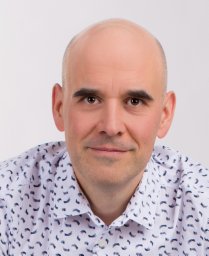 Mate Csanad合作论文数Faculty of Natural Sciences, Eötvös Loránd University;Department of Atomic Physics, Eötvös Loránd University190
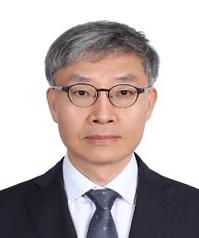 Byung-Sik Hong合作论文数Department of Physics, College of Science, Korea University190
 Edouard Kistenev合作论文数Brookhaven National Laboratory190M. Mccumber合作论文数190
 Artur Durum合作论文数189
 Hideki Hamagaki (浜垣秀樹)合作论文数Division of Fundamental Science, Institute for Innovative Science and Technology, Nagasaki Institute of Applied Science189
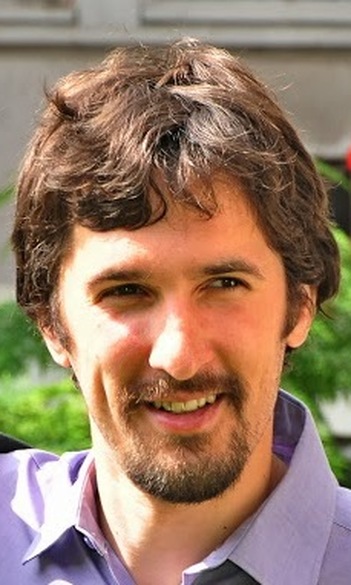 Márton Nagy合作论文数Department of Atomic Physics, ELTE Institute of Physics and Astronomy, Faculty of Natural Sciences, Eötvös Loránd University189
 Alexander Milov合作论文数Department of Particle Physics and Astrophysics, Faculty of Physics, Weizmann Institute of Science189T. Engelmore合作论文数188
 Denis Jouan合作论文数French National Centre for Scientific Research, CNRS188A. S. Nyanin合作论文数188
 Toru Sugitate (杉立徹)合作论文数Hiroshima University188




