This paper hypothesizes that knowledge sharing and collaboration among procurers can positively impact markets for circular products and services. To test this hypothesis, this paper evaluates an urban-scale experiment conducted in the Amsterdam Metropolitan Area (AMA) from 2015 to 2024, involving 48 organizations. The circular procurement experiment was analyzed as a transition process facilitated by intermediaries. Detailed documentation was collected, including meeting minutes and individual interviews. No previous empirical studies cover a nine-year period and address all three levels: the micro-level of individual organizations, the meso-level (supply chain), and the macro-level (national), while also describing the transition process in detail. The qualitative analysis reveals the limitations of achieving significant impact by individual procurers, as well as the potential to fundamentally transform product chains at the meso-level (supply chain) and the macro-level (national) through a collective approach. The findings include a systematic overview of the scope of circular procurement, as well as the preconditions and enablers at the micro-, meso-, and macro-levels necessary to foster innovation and markets for circular products and services. Only a limited number of barriers are key to accelerating circular procurement. Based on the findings, a structured, practical guide for implementing circular procurement is provided.
The building sector can address pressing environmental problems by leveraging two major trends: circular economy and digital technologies. Circular building practices emphasize restorative design principles, which can significantly reduce the amount of virgin material used and the environmental footprint of buildings. When combined with digital technologies, circular practices can achieve even higher environmental benefits. Such technologies enable visualization of the environmental impact along the entire value chain, facilitating smart design, production, and use to increase material- and eco-efficiency. However, realizing the full potential of these trends requires more than just technological advancements. Institutional, behavioral, and socio-economic system changes are essential to effect a transition towards a circular and digital economy. To facilitate such a transition, a new form of governance is needed, in which network governance complements conventional public governance. Network governance fosters the formation of coalitions of willing partners that jointly strive towards the goal of system change, creating a fertile ground for a new economic paradigm, behavioral change, government regulation and innovation. The effectiveness of network governance in supporting public governance depends on the specific socio-cultural and political context of a country. However, a thoughtful application of this governance model can facilitate the building sector’s journey towards greater material- and environmental efficiency.
In response to the alarming environmental problems, there is a pressing need for a fundamental shift towards sustainable construction. However, limited attention has been given in the literature to the governance of this transformative change. The paper aims to address this research gap by investigating how the transition to sustainable construction can be realized despite the barriers encountered. The analysis focuses on the Dutch Building Agreement Steel as an illustrative case. By examining the governance structure of the Agreement and evaluating its results thus far, the study concludes that a collaborative network of partners has effectively developed a roadmap and performed accompanying activities to achieve the intended objectives. Nonetheless, a key challenge lies in mobilizing the entire construction steel chain and the government during the upcoming scale-up phase to actively adhere to the Agreement. This new form of network governance, facilitated by an independent intermediary, does not replace traditional public governance; rather, it complements it. The approach tested in the Netherlands holds potential for application in other contexts as well.
In response to the alarming environmental problems, there is a pressing need for a fundamental shift towards sustainable construction. However, limited attention has been given in the literature to the governance of this transformative change. The paper aims to address this research gap by investigating how the transition to sustainable construction can be realized despite the barriers encountered. The analysis focuses on the Dutch Building Agreement Steel as an illustrative case. By examining the governance structure of the Agreement and evaluating its results thus far, the study concludes that a collaborative network of partners has effectively developed a roadmap and performed accompanying activities to achieve the intended objectives. Nonetheless, a key challenge lies in mobilizing the entire construction steel chain and the government during the upcoming scale‐up phase to actively adhere to the Agreement. This new form of network governance, facilitated by an independent intermediary, does not replace traditional public governance; rather, it complements it. The approach tested in the Netherlands holds potential for application in other contexts as well.
This paper focuses on a comparative study of the governance of Circular Economy (CE) in sixteen different countries. The analysis rests on a theoretical framework of insights gained in transition management literature and public administration, particularly network governance. It is assumed that two forms of governance are needed to cope with the complex circular economy transition process: public and network governance. The hypothesis was that in order to implement CE effectively, strong leadership of government, active involvement of stakeholders and receptivity to network governance are crucial. Based on the analysis described in this paper, two models have been designed that refine the original hypothesis: a model on the effectiveness of CE governance and a model that presents four main avenues for developing CE in different socio-cultural and political contexts. It is recommended to continue exploring this area of research, which is underexamined in the literature.
This paper analyses the interplay between regime and niche actors in implementing the circular economy through mediation by transition brokers. The study is based on 'action research' carried out in the Amsterdam Metropolitan Area. Innovation science is adopted as theoretical approach. First, the analysis shows that more ambitious initiatives could be taken than by individual market actors. Whether these circular initiatives represent just incremental change-as other studies suggest-cannot be concluded. Rather, it is plausible to conceptualise the transition process as a continuous transformational change. Second, in creating circular initiatives, the interplay between regime and niche actors was evident but varied. Actors could team up more easily where their interests aligned. This conclusion corresponds with recent innovation literature, which emphasises the importance of linkages between processes at niche, regime and landscape levels. Before generalising the results, similar studies in other regional contexts would be valuable. Short informative In moving to a circular economy, the willingness of market actors to innovate is crucial. Real-life experiments on the implementation of circular initiatives built by market actors at local level through the mediation of independent intermediaries (here called 'transition brokers') are scarce. This study aims to bridge this knowledge gap by focussing on the interplay between niche and regime actors. Action research on implementing the circular economy programme in the Amsterdam Metropolitan Area (2015-2020) represents an example. Innovation science is adopted as leading theoretical approach. The case shows that more advanced ambitions could be achieved than through individual market actors by themselves. Whether the circular initiatives built represent just incremental change-as suggested in the few other studies-is considered too simplistic. It is concluded to conceptualise the CE transition rather as a continuous, transformational change which takes time. The interplay between niche and regime actors was evident in the case but varied. Niche actors could team up more easily with regime actors where their interests coincided. Niche CE innovations did not necessarily develop in protected environments, as suggested by early MLP studies. They could diffuse more widely if they link up with ongoing processes at regime and landscape level. This conclusion corresponds with the more recent innovation literature.
This paper questions how the implementation of the circular economy actually takes place and evolves over time, using the geographical example of the Amsterdam Metropolitan Area. This particular practiceoriented, regional focus is underexposed in the literature. Relying upon transition management literature, the analysis shows through five years' action-research that a pipeline of tailor-made circular initiatives, all at varying speeds, was created and when successful, scaled up. This is visualised in a 'practicebased model for implementing circular economy', which specifies the four-phase model by Rotmans et al. (2001). By developing a scheme which represents the activities needed in each phase of the implementation process, Loorbach's transition management cycle (2010) could be refined. Contrary to what Loorbach suggests, these activities largely follow not only a sequential order, but are also cyclic. Studies on similar initiatives in other regional contexts will allow for generalisation of the results gained in the study presented here. (C) 2020 Elsevier Ltd. All rights reserved.
This paper addresses the question of which function systemic intermediaries (here called ‘transition brokers’) can fulfil in the regional governance of implementing a circular economy (CE). Empirical research on this issue is scarce. The conclusion, based on a comparative case study of six Dutch regions, is that transition brokers fulfil the function of system orchestration. They can enhance processes of change, build alliances, help create the necessary preconditions, and develop impactful circular initiatives from a neutral standpoint. In a multi-stakeholder setting, transition brokers fulfil a variety of roles, depending on time period, content, and context. Executing these roles requires a number of specific competencies, varying from being entrepreneurially minded to daring to leave one’s comfort zone and being able to get the idea of CE accepted in a variety of businesses and organisations. From interviews held with key transition brokers in the six regions, it transpired that there is a clear division of labour between transition brokers vis-à-vis other key actors, among which the local government is included. These findings allow the design of a new model of regional governance in implementing CE from a system level perspective. It is recommended to perform similar case studies in other countries to generalise the results presented here.
This paper aims to contribute to a better understanding of the legal conditions that ideally should be fulfilled to support the transition towards a circular economy in the European Union. More specifically, the paper examines how the current legal framework can be improved and how coherence within and between the relevant laws can be established in view of life-cycle thinking. This topic is underexposed in the literature. Three key laws are analysed separately: the Ecodesign Framework Directive, the Waste Framework Directive and the Registration, Evaluation, Authorisation and Restriction of Chemicals Regulation. Besides the identification of specific improvements for each key law, common challenges are formulated. Based on this analysis, the following conclusions are drawn. Firstly, as the concept of life-cycle thinking lies at the heart of the circular economy, it should be explicitly referred to as an environmental principle in EU primary and secondary legislation, or in any case be recognised as such by the EU institutions. Secondly, the acknowledgement of the existence of 'EU materials law' as a branch of EU environmental law could further strengthen the legal transition to a circular economy. Thirdly, product passports and the launch of an online product registration database could also facilitate the transition through the gathering and supply of information.
This paper is amongst the first to examine coopetition strategy for sustainable development at the network level. Companies who want to successfully implement complex innovative technologies that support sustainable development need to collaborate with other actors of the innovation ecosystem, including their competitors, so that they can develop standards, interoperable products, pool knowledge, and resources and bundle forces to compete against other technologies. Collaboration with competitors brings benefits, but also many risks. We investigated how firms cope with these risks when establishing an innovation ecosystem to implement a new technology in society. We conducted research in the Dutch smart grids sector and explored how these firms minimize inherent risks of coopetition. We found that system-building actors in the Dutch smart grid field not only minimize inherent risks, but from the start of their collaboration they implement so-called enablers to prevent these risks upfront.
Various tools have been developed to support companies integrating corporate sustainability (CS) into their organisational system. Research on the use of these tools does not clearly show how these tools support the integration process of CS. This paper focuses on the CS integration support of three tools most often mentioned in the literature. We will question the contribution each tool can make in supporting CS integration, based on six integration process elements. The analysis shows a potential complementarity between the tools. Moreover, companies should be critical on where within the organisation the interventions for CS integration are needed and what improvement should be generated before choosing tools.
Various authors have analyzed the fundamental barriers that hamper the transition towards a circular economy, e.g., economic and business, regulatory and legal, and social. This analysis questions how, under these constrained conditions, high-grade recycling can still be implemented successfully in the Netherlands. The study compares five Dutch material flows: paper and cardboard, plastics, non-wearable textiles, building and demolition waste and mattresses. It is concluded that the following four key conditions should be in place, but need a tailor-made approach for each material flow: (1) adequate collection system/logistics; (2) guaranteed volumes of material supply; (3) clear market demand for and (4) quality guarantee of recycled materials. Moreover, the following five key drivers help circumvent the fundamental barriers and realize the four key conditions: (1) mobilizing power by change agents; (2) cooperation within the material chain; (3) well-attuned financial arrangement; (4) circular procurement; and (5) technological innovation (including redesign). These drivers follow a certain sequence in implementation and circumvent the fundamental barriers each in their own way. This empirical analysis complements the mostly conceptual or theoretical literature on the transition towards high-grade recycling and the circular economy in general. Based on this analysis a conceptual model is developed, in which the key conditions, the key drivers and fundamental barriers are linked. Whether the results also hold true for other countries than the Netherlands needs additional research.
Although companies have shown a growing awareness of the importance of Corporate Sustainability (CS), integration of CS into their business activities is still problematic. Most of the CS research focuses on large corporations, with limited discussions of Small and Medium Sized Enterprises (SMEs). Research on SMEs has shown that most CS activities have been developed in isolation, and have not yet been totally integrated into the business activities. This research aims to understand how SMEs integrate CS into their business activities. Eighteen SMEs were analysed. These SMEs were, on their explicit request, supported in enhancing the integration of CS into their business activities. The external change agents connected to this consultancy firm applied four CS integration tools, which was based on their own experience in supporting the integration of CS in companies. The data generated through the application of these tools gives this research a specific, external change agent perspective that contributes to the understanding of CS integration. Tables including the tool data of all companies were used to analyse all eighteen cases as well as to enable a cross case comparison. The data showed that a balance proved to be necessary between a physical and social focus in the SMEs' vision on CS, the CS integration activities, the conditions for the CS change agent and the CS assessment. The research also found that although companies in a more advanced CS growth stage have more management system certifications, the management system itself is not used to ensure CS integration. (C) 2016 Elsevier Ltd. All rights reserved.
Academic research on sustainability issues in supply chain collaboration has recently begun to focus more on a network-oriented view. Both horizontal and vertical relationships are being explored, which has led to recognition of the significance of the active participation of change agents in this process. This paper provides a practical example of how change agents shifted an entire chain (pig farming) towards sustainability over 17 years. The longitudinal study examined the mechanics of how change agents in a chain successfully engage others on sustainability issues. A sensemaking approach was used that focussed on three aspects: communication, action, and building relationships. The findings show that the change agents worked on different levels of supply chain collaboration in response to the evolution of the sustainability initiative. Their focus moved from producers controlling the entire chain to engaging in partnerships with other contributors both inside and outside the chain. They translated the abstract concept of sustainability into language understandable for the potential partners, fostering transparency, joined an eco-label certification program, and later invested in experiments to find solutions to new ideas as they arose through reflection. This stepwise construction of a netchain reveals the evolution of reciprocal interdependence in an informal, personal and trust-based way between organizations which can be applied to sustainability initiatives in other fields.
Companies that wish to launch innovative sustainability technologies can collaborate in strategic networks of actors from industry, government and research institutes to pro-actively build a business ecosystem around their new technology. This is called collective system building. In this paper, we examine how to effectively manage networks for collective system building. Based on a review of the literature, we identify the key factors of effective network management and we propose a conceptual framework for network management at the network level. Subsequently, we conduct a multiple-case study in the Dutch smart grid sector to examine how these key factors are implemented by system-building networks. We find differences with the existing network management literature regarding network composition, network management structure, governance modes, decision-making processes, project management, the free-rider problem and trust-building mechanisms. Our study contributes to a better understanding of effective management of system-building networks, which in turn can lead to greater success in establishing new business fields. We contribute to the literature on strategic business networks, specifically on emerging business networks building new business fields.
This article aims to shed light on mechanisms to integrate a strategy on Corporate Sustainability in companies. The analysis is based on a holistic method derived from organisation theory, organisational behaviour theory and strategic management theory. The process of integration into the organisational system is explored by analysing the coalescence of organisational continuous improvement, structure and culture. The coherent use of integration mechanisms is defined as key for a successful CS integration. The LEAPFROCS method is presented to capture the success of integration mechanisms and their application. The method is tested using empirical data from 2 case studies. The results of the data analysis – the patterns – were validated in discussion with company representatives. The results show that the process of CS integration is company-specific, as is the selection of patterns to create a self-reflection of companies on CS integration catalysing future corporate strategies for improving CS integration into the specific company’s organisational systems.
 Jan Jonker合作论文数University of Twente;Laboratory of Mechanical Automation;Laboratory of Mechanical Automation, University of Twente11
 a j w van der heijden合作论文数9Angela Van Der Heijden合作论文数8
 Nicole Van Nes合作论文数Faculty of Industrial Design Engineering, Delft University of Technology6
 Julia Planko合作论文数Copernicus Inst Sustainable Dev, Univ Utrecht5
 Sjors Witjes合作论文数Institute for Management Research, Radboud University4
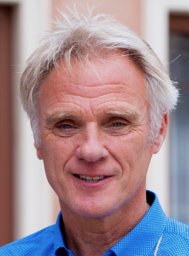 Walter J.V. Vermeulen合作论文数Department of Environmental;Sciences and Policy;Utrecht University;Department of Environmental|Sciences and Policy, Utrecht University4
 Maryse M. H. Chappin合作论文数Copernicus Institute of Sustainable Development, Utrecht University4
 M.P. Hekkert合作论文数Copernicus Institute for Sustainable Development and Innovation, University of Utrecht4
 Anne Loeber合作论文数3A Stevels合作论文数2
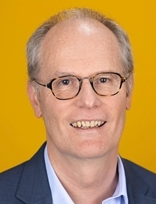 Peter Driessen合作论文数Copernicus Institute of Sustainable Development, Faculty of Geosciences, Utrecht University;University College Roosevelt2
 Rob Hagendijk合作论文数University of Amsterdam2
 Judith Klostermann合作论文数2Thomas J. de Römph合作论文数1rene kim合作论文数1John Grin合作论文数Max-Planck-Institut für Metallforschung, Institut für Werkstoffwissenschaft, Seestraβe 92, D-70174 Stuttgart Germany1
 Ron Eyerman合作论文数Yale Univ1
 Andrew Jamison合作论文数Aalborg University1W. Van Den Daele合作论文数1Erik Van Dam合作论文数1C. Van Hemel合作论文数1




