Observations of secondary radiation, Stimulated Electromagnetic Emission (SEE), produced during ionospheric modification experiments using ground-based high-power high frequency HF radio waves are considered. The High Frequency Active Auroral Research Program (HAARP) facility is capable of generating Magnetized Stimulated Brillouin scatter MSBS and Stimulated Ion Bernstein scatter SIBS in the SEE spectrum. Narrowband SEE features have not been observed at EISCAT before. Narrowband MSBS spectrums are compared to such behavior previously observed at HAARP. Preliminary analyses of SEE data show observation of ion acoustic emission lines due to stimulated Brillouin scatter during the 2012 July EISCAT campaign. For varying heater antenna beam angles, the CUTLASS radar backscatter induced by HF radio pumping is suppressed near electron gyro-harmonics whereas electron temperature enhancement weakens measured by EISCAT/UHF radar.
We present a study of ionospheric and thermospheric response during a November 9–10, 2004 major geomagnetic storm event (DsT ∼−300 nT). We utilize the North American sector longitude chain of incoherent scatter radars at Arecibo, Millstone Hill, and Sondrestrom, operating as part of a coordinated international mesosphere/lower thermosphere coupling study experiment. Total electron content (TEC) determinations from global positioning system (GPS) ground receivers, ground magnetometer traces from the Canadian CANOPUS array, Defense Meteorological Satellite Platform (DMSP) topside data, and global convection patterns from the SuperDARN radar network are analyzed to place the detailed radar data in proper mesoscale context. The plasmaspheric boundary layer (PBL) expanded greatly in the dusk sector during ring current intensification to span more than 25° of magnetic latitude, reaching as far south as 30° invariant latitude. Strong sub-auroral polarization stream velocities of more than 1 km/s were accompanied by large upwards thermal O+ fluxes to the overlying magnetosphere. The large PBL expansion subsequently exposed both Millstone Hill and Sondrestrom to the auroral convection pattern, which developed a complex multicell and reverse convection response under strongly northward IMF conditions during a period of global interplanetary electric field penetration. Large traveling atmospheric and ionospheric disturbances caused significant neutral wind and ion velocity surges in the mid-latitude and tropical ionosphere and thermosphere, with substorm activity launching equatorward neutral wind enhancements and subsequent mid-latitude dynamo responses at Millstone Hill. However, ionosphere and thermosphere observations at Arecibo point to significant disturbance propagation modification in the post-dusk sector PBL region.
Recent expansion of the SuperDARN network to midlatitudes and the addition of a new high-time resolution mode provides opportunities to observe mid-latitude ULF waves and other ionospheric sub-auroral features. During a substorm on 22 February 2008, Pi2 pulsations with a period of 172 s were observed simultaneously by the Blackstone, VA SuperDARN radar and magnetometers around the globe. Very similar pulsations were detected by the BKS radar and a nearby magnetometer at Remus, MI, which suggests that a single source generated the Pi2. Due to the localized nature of the radar measurements, the radar data contains significantly more spatial and temporal structure than data recorded by the magnetometers. A cross-phase analysis of magnetometer data places these measurements in the vicinity of the ionospheric projection of the plasmapause. About one minute prior to ground Pi2 onset, two Earthward-moving BBFs were observed by the THEMIS D and E probes in the near-Earth plasma sheet. Based on observations and previous studies, we suggest that the observed Pi2 pulsations are the result of either a plasmaspheric surface wave or a direct compressional response due to the braking of the BBF on the inner magnetosphere.
 Joseph B. H. Baker合作论文数Bradley Department of Electrical and Computer Engineering, Virginia Tech10
 Raymond A. Greenwald合作论文数9
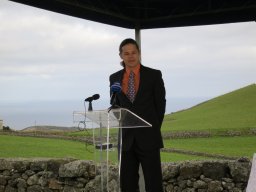 Simon G. Shepherd合作论文数Department of Physics and Astronomy;Dartmouth College;Department of Physics and Astronomy, Dartmouth College5
 William A. Bristow合作论文数4M. Lester合作论文数Department of Physics and Astronomy;University of Leicester4
 Kjellmar Oksavik合作论文数Department of Physics;University of Oslo;Department of Physics, University of Oslo3B. Kunduri合作论文数2
 Xueling Shi (雪灵 石)合作论文数2
 Nozomu Nishitani合作论文数2
 Dong Lin合作论文数Center for Space Science and Applied Research Chinese Academy of Sciences, Chinese Academy of Sciences2George J. Sofko合作论文数2
 Tim Yeoman合作论文数School of Physics and Astronomy, University of Leicester2
 Michael Kosch合作论文数Physics Department, Lancaster University2Michael J Nicolls合作论文数2
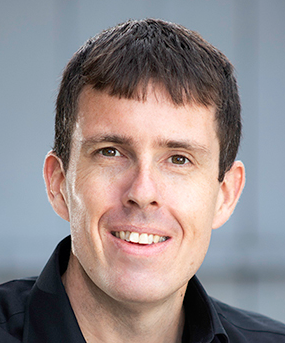 Michael Hartinger合作论文数Space Science Institute2
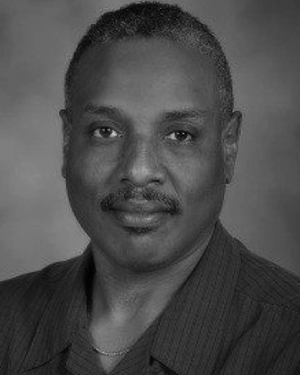 Wayne A. Scales合作论文数Department of Electrical and Computer Engineering;Virginia Polytechnic Institute, State University;Department of Electrical and Computer Engineering, Virginia Polytechnic Institute and State University2
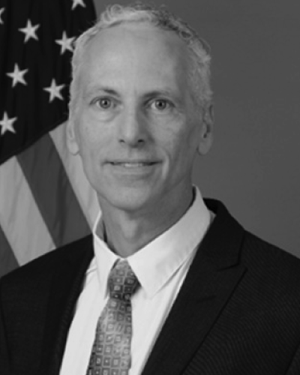 Chao-Song Huang合作论文数2O SAKA合作论文数1N. A. Frissell合作论文数1Teitaro Kitamura合作论文数1M. D. Silveira合作论文数1Sasha Koustov合作论文数1s w hsieh合作论文数1Toshi Nishimura合作论文数1Mariko Teramoto合作论文数1Kanako Seki合作论文数1Xiaofei Shi合作论文数1Emma C. Bland合作论文数1Richard Chadwick合作论文数1A. D. M. Walker合作论文数Sch Chem & Phys, Univ KwaZulu Natal1James Weygand合作论文数Department of Earth, Planetary, and Space Sciences, College of Physical Sciences, University of California, Los Angeles1
 Shasha Zou合作论文数Department of Climate and Space Sciences and Engineering, College of Engineering, University of Michigan-Ann Arbor1
 Aaron Ridley合作论文数Department of Climate and Space Sciences and Engineering, College of Engineering, University of Michigan-Ann Arbor1
 Xianzhe Jia合作论文数Department of Climate and Space Sciences and Engineering, College of Engineering, University of Michigan Ann Arbor1
 Christopher M Carr合作论文数Department of Physics, Faculty of Natural Sciences, Imperial College London1
 Stanley J. Briczinski合作论文数1
 Chakraborty, S.合作论文数Dept. of Electron. & Commun., Salt lake Electron. Complex;c;Dept. of Electron. & Commun., Salt lake Electron. Complex1
 Evan G. Thomas合作论文数Virginia Tech;c;Virginia Tech1
 Ray Roble合作论文数High Altitude Observatory, National Center for Atmospheric Research1
 Haiyang Fu (付海洋)合作论文数The School of Information Science and Technology, Fudan University;Key Laboratory for Information Science of Electromagnetic Waves, Ministry of Education, Fudan University1
 Ying Zou合作论文数University of Alabama in Huntsville1
 Zanyang Xing (邢赞扬)合作论文数Center for Space Weather Studies, Institute of Space Sciences, School of Space Science and Physics, Shandong University1
 Larry Lyons合作论文数Department of Atmospheric and Oceanic Sciences, College of Physical Sciences, University of California1Andre Senior合作论文数1
 Tomoaki Hori (堀智昭)合作论文数Center for Integrated Data Science, Institute for Space‐Earth Environmental Research, Nagoya University1Mike Pinnock合作论文数British Antarctic Survey, Natural Environment Research Council1J. W. Macdougall合作论文数1
 David G. Sibeck合作论文数NASA Goddard Space Flight Center1




