Most larger communities of influence will have a core of very active members who invest time and effort in shaping community activities, and sometimes it is helpful to formalise the role of these members into such a ‘community within a community’. A community of influence cannot be ‘managed’ like a normal team or working group, but nor is it realistic to expect such a group to be entirely self-sustaining. Delays experienced in booking travel and claiming expenses were causing tension within the group. Expense claims often got stuck in the system and the process of reimbursement was variable across the organisation. In 2002 the Department of Health and Macmillan Cancer Support set up a joint initiative, the Cancer Partnership Project, the aim of which was to develop ‘partnership groups’ linked to the 34 cancer networks in England. Cultivating communities of influence requires those responsible to ‘play a long game’.
The creation of guidelines can be one of the more visible and valuable results of a community’s work, but further effort is essential if these products are to have a ‘social life’ and influence practices on the ground. One thing that often emerges from the conversations of a community of influence in the health sphere is the desire to document and share experience of good practice whether for fellow professionals or for patients and carers. In healthcare, guidelines, protocols, plans, strategies, policy papers and reports come out every day. The story started in earnest when Lorraine, as part of her job, was asked by Macmillan to conduct a literature review to explore the meaning of ‘patient-centred care’ from the perspective of people affected by cancer. Group members also added their own further thoughts to the document, and took early versions to other groups they were involved with in various localities around Britain.
This introduction presents an overview of the key concepts discussed in the subsequent chapters of this book. The book explains how a charity best known for its nurses also came to work with doctors in order to improve care for people living with cancer. It shows how this work was informed and inspired by early experiences with patient self-help groups. The book describes the narrative writing methods people developed to enable those not directly involved in community conversations to see more clearly what difference they made. It provides rare long-term empirical evidence of healthcare improvements coming about through collective effort. The book takes up a particular aspect of community impact: how to increase the chances that the written products often created by groups, such as guidelines for good practice, succeed in influencing behaviour, rather than merely gathering dust. It describes the vital role of the ‘supporting team’.
A ‘distilling-and-connecting’ group such as the General Practitioner (GP) Advisors is there to enable a broader community of influence to make a difference, so it was important to make the role and effectiveness of this ‘community within a community’ visible to the funding organisation. A group of cancer charities, including Macmillan, was putting together a joint proposal to the United Kingdom (UK’s) Department of Health on priorities for cancer patients in coming years. The draft paper was circulated to the Macmillan GP community, and at one of the regular Macmillan GP conferences about 60 participants got a chance to comment on it. Big structures need a bureaucracy, and it is important to recognise the many benefits that a bureaucracy brings, provided that it adheres to the tasks for which a bureaucracy was designed, such as the open employment and promotion of staff, or the management of finance without corruption.
The difficulty often is that researchers based solely in academic institutions may be too remote from practice, and constrained by the pressures of academic life, e.g. the need to publish constantly to boost their university's research ratings. Improving services on the ground is simply not their first priority. Starting in 2003, Macmillan started testing a novel approach to these issues by forming the Macmillan Palliative and Cancer Care Research Collaborative (MacPaCC). In general, academics and clinicians can be quite different types of people, with contrasting senses of urgency around healthcare improvement. Academics typically want to follow rigorous scientific procedures and get all the data collected and analysed before drawing conclusions or recommendations. A memorable name for a new community of influence can help to create a sense of an established group, something that people can 'point to'. A capacity to collaborate and influence depends crucially on being able to develop and nurture relationships.
The roots of the Macmillan general practitioners (GP) story go back to the 1970s and 1980s, when the hospice movement was growing in the UK. Cancer had come to be seen as a specialist area involving chemotherapy, radiotherapy and surgery, and even palliative care itself seemed to be turning into another medical specialty. In 1989, Macmillan therefore approached the body responsible for training GPs, the Royal College of General Practitioners, to see what could be done to engage GPs in improving the experience of people affected by cancer. Early evaluations gave a sense of the wide-ranging activities pursued by Macmillan GPs in the first decade. Crucial support for the new centre came not only from Macmillan but also from the Lynda Jackson family and from Mount Vernon's visionary Chief Executive, Stephen Ramsden, who had always wanted to see a complementary therapy centre at the hospital.
Patients may not always feel confident in speaking up in front of health professionals and typically there is a perceived power imbalance between patients and doctors. The emphasis in the example above was on introducing patients and carers into a community made up mainly of professionals. The programme involved setting up seven pilot services across England, based in primary and secondary care. The ‘Cancer Genetics Pilots Programme’, as it was known, gave service-user involvement high priority. The priorities identified were fed into the evaluations of the pilot projects and influenced the final reports. Conversations in the national group also confirmed how difficult it can be to reach certain population groups, such as ethnic minorities and poor families. New people joining would not have the benefit of the safe environment of a small group, and when they joined the Primary Care Community a few apparently made anti-General Practitioner (GP) or otherwise inappropriate remarks.
Increasing cancer incidence together with improved survival rates are contributing to the growing number of cancer survivors. Survivors may encounter a range of potential effects as a result of the cancer itself or cancer treatments. Traditionally, the major focus of follow-up care has been on detection of cancer recurrence; however, the efficacy of such strategies is questionable. Traditional follow-up frequently fails to identify or adequately address many survivors' concerns. Aftercare needs to be planned to enable better outcomes for survivors, while using scarce health-care resources efficiently. This review focuses on provision of survivorship care, rather than on research. England's National Cancer Survivorship Initiative has developed principles for improved care of those living with and beyond cancer. These include risk-stratified pathways of care, the use of treatment summaries and care plans, information and education to enable choice and the confidence to self manage, rapid re-access to specialist care, remote monitoring and well-coordinated care. Many of these principles are relevant internationally, though preferred models of care will depend on local circumstances.
The National Cancer Survivorship Initiative: new and emerging evidence on the ongoing needs of cancer survivors
Clinicians need to create repeated opportunities for patients to talk about their future and end of life care, guided by the patient as to timing, pace, and content of such talks, and respecting the wishes of those who do not want to discuss such matters
Focus on Alternative and Complementary TherapiesVolume 10, Issue s1 p. 32-33 CAM use among people undergoing cancer treatment J Yardley, J Yardley School of Nursing & Midwifery, University of Southampton, Highfield, Southampton SO 17 1BJ, UKSearch for more papers by this authorJ Corner, J Corner School of Nursing & Midwifery, University of Southampton, Highfield, Southampton SO 17 1BJ, UKSearch for more papers by this authorJ Maher, J Maher Lynda Jackson Macmillan Centre, Mount Vernon Hospital, Rickmansworth Road, Northwood, Middlesex HA6 2RN, UKSearch for more papers by this authorG Lewith, G Lewith Complementary Medicine Research Unit, Primary Medical Care, Aldermoor Health Centre, Aldermoor Close, Southampton SO16 5ST, UKSearch for more papers by this authorS Maslin-Prothero, S Maslin-Prothero Keele University School of Nursing & Midwifery, Clinical Education Centre, University Hospital of North Staffordshire NHS Trust, City General, Newcastle Road, Stoke on Trent, ST4 6QG, UKSearch for more papers by this authorT Young, T Young Lynda Jackson Macmillan Centre, Mount Vernon Hospital, Rickmansworth Road, Northwood, Middlesex HA6 2RN, UKSearch for more papers by this authorL Roffe, L Roffe School of Nursing & Midwifery, University of Southampton, Highfield, Southampton SO 17 1BJ, UKSearch for more papers by this author J Yardley, J Yardley School of Nursing & Midwifery, University of Southampton, Highfield, Southampton SO 17 1BJ, UKSearch for more papers by this authorJ Corner, J Corner School of Nursing & Midwifery, University of Southampton, Highfield, Southampton SO 17 1BJ, UKSearch for more papers by this authorJ Maher, J Maher Lynda Jackson Macmillan Centre, Mount Vernon Hospital, Rickmansworth Road, Northwood, Middlesex HA6 2RN, UKSearch for more papers by this authorG Lewith, G Lewith Complementary Medicine Research Unit, Primary Medical Care, Aldermoor Health Centre, Aldermoor Close, Southampton SO16 5ST, UKSearch for more papers by this authorS Maslin-Prothero, S Maslin-Prothero Keele University School of Nursing & Midwifery, Clinical Education Centre, University Hospital of North Staffordshire NHS Trust, City General, Newcastle Road, Stoke on Trent, ST4 6QG, UKSearch for more papers by this authorT Young, T Young Lynda Jackson Macmillan Centre, Mount Vernon Hospital, Rickmansworth Road, Northwood, Middlesex HA6 2RN, UKSearch for more papers by this authorL Roffe, L Roffe School of Nursing & Midwifery, University of Southampton, Highfield, Southampton SO 17 1BJ, UKSearch for more papers by this author First published: 14 June 2010 https://doi.org/10.1111/j.2042-7166.2005.tb00498.xRead the full textAbout ToolsRequest permissionExport citationAdd to favoritesTrack citation ShareShare Give accessShare full text accessShare full-text accessPlease review our Terms and Conditions of Use and check box below to share full-text version of article.I have read and accept the Wiley Online Library Terms and Conditions of UseShareable LinkUse the link below to share a full-text version of this article with your friends and colleagues. Learn more.Copy URL Share a linkShare onFacebookTwitterLinkedInRedditWechat No abstract is available for this article. Volume10, Issues1March 2005Pages 32-33 RelatedInformation
CONTEXT:It is well recognised that teaching about palliative care, death and dying should begin at undergraduate level. The General Medical Council in the UK has issued clear recommendations for core teaching on the relieving of pain and distress, and care for the terminally ill. However, whereas some medical schools have incorporated comprehensive teaching programmes, others provide very little. The reasons underpinning such variability are unknown.OBJECTIVES:The aim of this study was to explore the factors that help or hinder the incorporation of palliative care teaching at undergraduate level in the UK.METHODS:Semi-structured interviews were carried out with a purposive sample of coordinators of palliative care teaching in 14 medical schools in the UK. Transcribed interviews were analysed using principles of grounded theory and respondent validation.RESULTS:There are several factors promoting or inhibiting palliative care teaching at undergraduate level that are common to the development of teaching about any specialty. However, this study also revealed several factors that are distinctive to palliative care. Emergent themes were 'need for an individual lead or champion', 'the curriculum', 'patient characteristics and exposure', 'local colleagues and set-up of service', 'university support' and 'the influence of students'.CONCLUSIONS:The incorporation of palliative care into the medical undergraduate curriculum involves a complex process of individual, institutional, clinical, patient and curricular factors. These new findings could help medical schools to incorporate or improve such teaching.
Better information is needed about prognosis and treatment, along with decision aids to help patients interpret it
Patients diagnosed with breast cancer have many needs that for a start include the expectation of cure. Where cure is unlikely there is always a place for hope and spiritual support. Furthermore whether dealing with the early stages or with the advanced disease patients require symptomatic control that encompasses pain relief, control of nausea and vomiting and psychological distress.To achieve all of these goals there is a need that goes beyond the role of scientific medicine. This position papers describes the guidelines for the use of complimentary and alternative medicine (CAM) developed by a workshop on behalf of the European Society of Mastology (EUSOMA).
 Elizabeth Lank合作论文数11
 Alison Donaldson合作论文数11
 Jessica Corner合作论文数Research England, United Kingdom Research and Innovation4
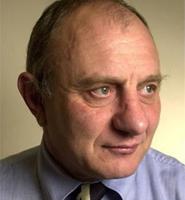 George Lewith合作论文数Department of Primary Care, University of Southampton3
 Sian Maslin-Prothero合作论文数3
 L. Roffe合作论文数2
 Tracey A Young合作论文数Regent Court (ScHARR), University of Sheffield2Ian Kunkler合作论文数2
 Stephen Barclay合作论文数Department of Public Health and Primary Care, University of Cambridge2Jackie Harewood合作论文数2Wendy B Smith合作论文数1Terje Risberg合作论文数1Jane Gibbins合作论文数1Michael Baum合作论文数1
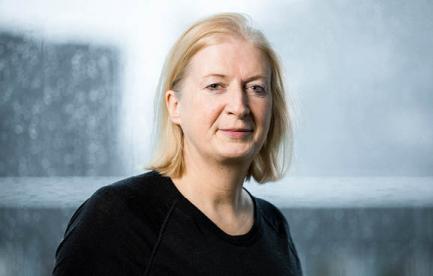 Karen Forbes合作论文数School of Art, Edinburgh College of Art, The University of Edinburgh1Nicholas James合作论文数School of Mathematics and Statistics, Faculty of Science, The University of Sydney1
 Barrie R Cassileth合作论文数1
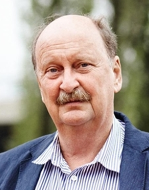 Edzard Ernst合作论文数University of Exeter1Addington-Hall Julia M合作论文数1Richards Michael合作论文数1Richards Mike合作论文数1Jacqueline Filshie合作论文数1
 Teresa E Young合作论文数1
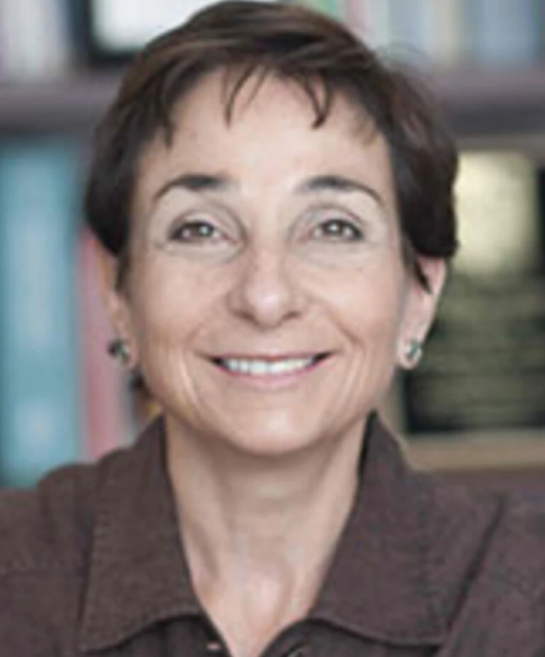 Eva Grunfeld合作论文数Department of Family and Community Medicine, Temerty Faculty of Medicine, University of Toronto1D Millar合作论文数1
 Michael Jefford合作论文数MacCallum Cancer Centre Supportive Care Research Group, Peter1Michelle Kohn合作论文数1John H Yardley合作论文数1Ivan Cox合作论文数1Julia H. Rowland合作论文数1Rachel McCoubriie合作论文数1
 Rosy Daniel合作论文数1Stéphane Lejeune合作论文数1
 Daniel Munday合作论文数1
 Markus Horneber合作论文数1
 Adam Glaser合作论文数School of Medicine, Faculty of Medicine and Health, University of Leeds1Alison Pearce合作论文数1Cathy Shipman合作论文数1Gerd Arno Nagel合作论文数1




