This paper describes how data-driven examination of barriers to successful completion of undergraduate engineering degrees amongst female-identifying and underrepresented minority (URM) students at XYZ University has shaped the development of new policies and programs within the college. This study is a continuation of a project which began with analysis of graduation data to identify factors associated with a student's successfully completing a degree within engineering. The was followed by a survey to better understand the experiences of students from underrepresented or marginalized groups. In this paper, we first present the results of focus groups conducted with students from a variety of backgrounds and experiences such as transfer students, female-identifying students, URM women, URM men, international students, and students who have either switched out of an engineering program or have a GPA that puts them at risk to not complete an engineering degree. In analyzing the results of the survey and the focus groups, we identified two primary trends that inform our new programs. First, students from underrepresented and marginalized groups are more likely to seek out opportunities for community within their degree programs. Second, students from these populations reported a culture within the engineering and computer science programs that can feel unwelcoming and at times hostile. Results from this study were presented to faculty and staff at a college-wide meeting. This was followed by a series of activities in which faculty and staff brainstormed ideas for how we could better support students from underrepresented and marginalized groups, with a focus on six categories: 1) adaptation and integration into academic life, 2) student sense of belonging, 3) student preparedness upon admission, 4) student professional development, 5) faculty/staff professional development, and 6) college culture of diversity and inclusion. Utilizing both the data collected from students and the results of the faculty & staff brainstorming activity, a number of new programs have been introduced. They include: • training workshops on issues of diversity, equity, and inclusion (DEI) for both students and faculty/staff, • community building events during new student summer orientation, • a summer online community for new students in the College of Science and Engineering, • DEI Student Ambassadors program, • syllabus statements on inclusion, and • a summer reading group for faculty and staff. We have facilitated a number of workshops on DEI. Part of this has been to leverage outside expertise. We have arranged for faculty and staff to participate in seminars offered by the American Society for Engineering Education (ASEE), with topics such as designing an inclusive classroom and Safe Zone Workshops. We have brought in an outside expert to hold workshops for both students and for faculty & staff on microaggressions. In addition, we have designed a bystander intervention workshop that can be run internally for faculty and staff. The workshop starts with a short introduction to core DEI concepts. Then participants are divided into small teams to brainstorm how to respond to scenarios involving microaggressions. The workshop ends with each group reporting about their conversations and general discussion of all participants. We have run this workshop twice, once with the faculty and staff members of our college's Committee for DEI, and once at a meeting for faculty and staff in one of the departments in our college. Future workshops will be offered both in department meetings and as stand-alone events for any faculty and staff in the college. Every summer, the university organizes several orientation events for new students. Students and their families come to campus for two days of informational sessions, tours, and discussions. This past summer, we organized sessions aimed at building a supportive community for new students in our college. As the beginning of each session, two faculty members and a professional advisor divided students into groups based on their majors. After introductions, each group discussed and wrote down their biggest fears about their first year in college and what they are looking forward to. Then, the students were sent on a scavenger hunt throughout the buildings where their major departments are located. Groups that completed their tasks first were given prizes. The session concluded with the facilitators addressing students' biggest fears about their first year in college. Following these events, we organized an online community for new students in our college. About one thid of incoming students participated in all or some of the nine online activities. The activities included games, trivia, self-introduction, getting to know their fellow students in their majors, their hometowns, and their dormitories. There were discussion topics and useful information posted such as how to be successful as a first-year student, best transportation options for getting around the city, and lists of best restaurants near the university. Students who participated in the summer orientation events and the online community felt that these initiatives helped them make meaningful connections with other students in their major. In March of 2020, we hired a team of students to serve as DEI ambassadors for the college. They were tasked with developing plans for student-centered DEI events, and to provide a student voice in the college's DEI committee. With the transition to remote instruction due to the coronavirus, their planned activities were put on hold. They shifted their focus to addressing how remote instruction might disproportionally impact students from underrepresented and marginalized populations. They organized a virtual town hall for students to discuss with faculty and staff what successes and struggles they were encountering during remote learning. Faculty were able to shift some practices to better support students, and to think about how to make remote or online classes in the future more accessible and inclusive. The DEI ambassadors also worked with us to design a survey to examine differences in remote learning experiences for students from marginalized and underrepresented populations. The timeframe of IRB approval was such that this survey could not be administered during the spring, but will hopefully be approved to use if remote learning continues in some form in the fall of 2020. A sample syllabus statement on inclusion was written and made available to faculty. Multiple departments have chosen to make it a standard part of their syllabi, and individual faculty in other departments have included it as well. In addition to outlining general principles of inclusion within the classroom, the statement provides students with specific links to resources at the university that are available to them to report incidences of bias and discrimination. Anecdotally, faculty have reported hearing from students that these statements make them feel safer and more supported in raising concerns that they have around diversity, equity, and inclusion. In response to a growing faculty & staff interest in better understanding DEI issues, we organized a reading & discussion group for the summer of 2020. Virtual meetings are being held to discuss articles, books, and videos related to DEI, along with online message boards for asynchronous discussion. In these discussions, an emphasis is placed on how the ideas in the readings can be turned into specific actions within the college. The paper gives more details about each of the above mentioned initiatives. We conclude the paper with a reflection on how we can improve our community building events and the online community and describe our future support services for underrepresented students.
Excess fat on the body impacts obesity-related co-morbidity risk; however, the location of fat stores affects the severity of these risks. The purpose of this study was to examine segmental fat accumulation patterns by sex and ethnicity using international datasets. An amalgamated and cross-calibrated dataset of dual x-ray absorptiometry (DXA)-measured variables compiled segmental mass for bone mineral content (BMC), lean mass (LM), and fat mass (FM) for each participant; percentage of segment fat (PSF) was calculated as PSFsegment = (FMsegment/(BMCsegment + LMsegment + FMsegment)) × 100. A total of 30 587 adults (N = 16 490 females) from 13 datasets were included. A regression model was used to examine differences in regional fat mass and PSF. All populations followed the same segmental fat mass accumulation in the ascending order with statistical significance (arms < legs < trunk), except for Hispanic/Latinx males (arms < [legs = trunk]). Relative fat accumulation patterns differed between those with greater PSF in the appendages (Arab, Mexican, Asian, Black, American Caucasian, European Caucasian, and Australasian Caucasian females; Black males) and those with greater PSF in the trunk (Mexican, Asian, American Caucasian, European Caucasian, and Australasian Caucasian males). Greater absolute and relative fat accumulation in the trunk could place males of most ethnicities in this study at a higher risk of visceral fat deposition and associated co-morbidities.
This paper presents the results of initial monitoring and evaluation visits conducted on two solar energy kiosks in the Zambian communities of Cheeba and Kanchomba. The Cheeba and Kanchomba energy kiosks were established in 2019, and 2020, respectively. The solar capacities range from 3 kW to 5 kW. Each kiosk houses several businesses such as grocery stores, barbershops, tailors, and chicken incubators that make use of the energy produced. The kiosks are a result of a partnership between Caritas Monze, a Zambian NGO, and KiloWatts for Humanity, an NGO based in the United States. The kiosks are owned and operated by local community-based organizations. The monitoring and evaluation visits were conducted in October 2022 and report on the community relationship, unmet needs, technical performance of the system, financial health of the kiosk businesses, operational challenges, and other findings. The results of the initial monitoring and evaluation visits were promising, with each kiosk impacting 100 – 200 households and showing job creation, excess revenue, and high community impact and benefit. Unmet needs and challenges include the desire for additional refrigerators and appliances, a larger-capacity system in Cheeba, and struggles with record-keeping due to illiteracy.
Background: Discretionary leisure time for health-promoting physical activity (PA) is limited. This study aimed to predict body composition and metabolic health marker changes from PA reallocation using isotemporal substitution analysis. Methods: Healthy New Zealand women (n = 175; 16–45 y) with high BMI (≥25 kg/m2) and high body fat percentage (≥30%) were divided into three groups by ethnicity (Māori n = 37, Pacific n = 54, and New Zealand European n = 84). PA, fat mass, lean mass, and metabolic health were assessed. Isotemporal substitution paradigms reallocated 30 min/day of sedentary behaviour to varying PA intensities. Results: Reallocating sedentary behaviour with moderate intensity, PA predicted Māori women would have improved body fat% (14.83%), android fat% (10.74%), and insulin levels (55.27%) while the model predicted Pacific women would have improved waist-to-hip (6.40%) and android-to-gynoid (19.48%) ratios. Replacing sedentary time with moderate-vigorous PA predicted Māori women to have improved BMI (15.33%), waist circumference (9.98%), body fat% (16.16%), android fat% (12.54%), gynoid fat% (10.04%), insulin (55.58%), and leptin (43.86%) levels; for Pacific women, improvement of waist-to-hip-ratio (5.30%) was predicted. Conclusions: Sedentary behaviour must be substituted with PA of at least moderate intensity to reap benefits. Māori women received the greatest benefits when reallocating PA. PA recommendations to improve health should reflect the needs and current activity levels of specific populations.
This paper discusses the results of a monitoring and evaluation program of two off-grid energy kiosks in rural Zambia which have been operational for 1-2 years. The monitoring and evaluation program was designed to capture qualitative and quantitative data primarily related to the extent at which kiosk-related services have been utilized in the community. They also include questions regarding environmental impacts and opportunities for future community development that could be supported by the kiosk. The results show that the kiosks did improve access to electricity services such as refrigeration, lighting, and mobile phone charging. However, the results also show the opportunity and desire for the kiosks to provide additional services such as water pumping and grain milling, and basic goods such as salt, soap and cooking oil.
Field surveys are commonplace and essential for off-grid power projects in developing countries where availability of data may be scarce. Critical decisions such as site selection, technology choice, business models employed, and approach to community engagement are all greatly assisted by data that can be gathered through field surveys. Paper-based field surveys, the de facto standard approach, are prone to error, slow to deploy and adjust, and have other practical challenges despite the obvious advantage of having fewer technological dependencies. Over recent years, improvement in freely available surveying software, smartphones and tablets, as well as good cellular coverage throughout the world offers humanitarian organizations an opportunity to implement digital field surveys with relative ease. This article presents the experience implementing KoboCollect by Kilowatts for Humanity (KWH), a non-profit that implements sustainable energy kiosks in developing countries. KoboCollect is an open-source data collection software platform designed to support humanitarian and research organizations. In this paper, limitations of paper-based field surveys from previous KWH projects, as well as from the extant literature, are considered with respect to their ultimate impact on the implementation of the development project. A new approach is presented in which survey questions are refined based on past experience and are directly related to pre-defined project indicators. Key benefits and challenges are identified from the adoption of the new approach and methodological questions around sampling and decision-making following data collection are discussed. The new method is discussed in the context of a KWH survey project being conducted in the summer of 2018 in three locations in the Philippines. A major goal of this work is to open a discussion about the successes and failures of the shoestring, paper-based survey methodology and point to current best practices.
This paper describes a statistics-based investigation of the long-term power production of solar panels installed in September 2015 in an energy kiosk in Filibaba, Zambia. The panels power a centralized energy kiosk, which in turn is used for powering personal electronic devices, homes, and businesses. As with any off-grid system, faults and normal or accelerated degradation can reduce the power produced by the solar panels over time. The motivation of this work is to determine if the condition of the solar panels can be assessed remotely, using limited measured data. This can save the time and expense of sending technicians to the site to diagnose or troubleshoot the system. The methods discussed in this paper utilize a data set of the solar panel production and energy kiosk battery voltage. The methods include: comparing solar power output on days that could be expected to have similar weather and sun exposure; analysis of the consistency of power output as it relates to time of year; and using the battery voltage to find times of day for full power output of the panels. Preliminary results show that for the Filibaba energy kiosk, there is, on average, as much as a 34% decrease in power output from one year to the next. Given the age of the panels, these results prompt more analysis to determine if this is indicative of accelerated degradation. The work outlined in this paper will be used to further develop systems for remotely diagnosing issues that may cause decreased panel performance.
In this paper, we share the results of our recent study of a quantitative literacy course with a service-learning component. Our study aims to answer the question: How did student attitudes shift as a result of participating in this course? We present and analyze statistics from pre- and post-surveys in five classes taught by two different professors, and we share qualitative data from focus group interviews in two sections of the course. This mixed-methods analysis suggests that the course has a positive effect on the math attitudes of our students.
From 1991 to 1996, Jeffrey pine beetles (Dendroctonus jeffreyi Hopkins) (JPB) caused tree mortality throughout the Lake Tahoe Basin during a severe drought. Census data were collected annually on 10,721 trees to assess patterns of JPB-caused mortality. This represents the most extensive tree-level, spatiotemporal dataset collected to-date documenting bark beetle activity. Our study was an exploratory assessment of characteristics associated with the probability of successful JPB mass-attack (P JPB) and group aggregation behavior that occurred throughout various outbreak phases. Numerous characteristics associated with P JPB varied by outbreak phase although population pressure and forest density had positive associations during all phases. During the incipient phase, JPBs caused mortality in individual trees and small groups within toeslope topographic positions and P JPB had a negative relationship with stem diameter. In the epidemic phase, JPB activity occurred in all topographic positions and caused mortality in spatially expanding clusters. P JPB had a curvilinear relationship with tree diameter and a negative relationship with proximity to nearest brood tree. Majority (92–96 %) of mass-attacked trees were within 30 m of a brood tree during the peak epidemic years. During the post-epidemic phase, mortality clusters progressively decreased while dispersal distances between mass-attacked and brood trees increased. Post-epidemic P JPB had a negative relationship with stem diameter and mortality was concentrated in the mid and upper-slope topographic positions. Results indicate mortality predictions are reasonable for the epidemic phase but not for incipient and post-epidemic phases. Ecological factors influencing JPB-caused tree mortality, clustered mortality patterns, and transitions from environmental to dynamic determinism are discussed.
KiloWatts for Humanity (KWH), formerly the Muhuru Bay Community Microgrid Project, developed an energy kiosk business model for a project site located in Chalokwa, Zambia. The Chalokwa business model was developed based on previous experiences in Muhuru Bay, Kenya and Filibaba, Zambia. These energy kiosks are designed to create sustainable, local energy businesses in locations that do not have access to an electrical grid. The model is based on a two-tiered approach of 1) providing the community with electrical services for businesses at a kiosk and 2) supplying the community with rent-to-own solar products to replace candles and kerosene lanterns and to charge cell phones and other batteries. Achieving the model includes selling energy kiosk services, rent-to-own tiered solar light and electrical products, developing long-term revenue streams, and record keeping. This kiosk was installed in June of 2016, through collaborative work between nongovernmental organizations in Zambia and the United States, Seattle University, and KiloWatts for Humanity.
Finding ways to improve student success in calculus is a critically important step on the path to supporting students who are pursuing degrees in STEM fields. Far too many students fail calculus 1 and are pushed to drop their majors in technical fields. One way of addressing this issue is by following a program that was pioneered at University of Colorado Boulder. At Boulder, oral exam reviews are offered to mathematics students in conjunction with other support. Oral reviews are structured, ungraded, optional, collaborative review sessions that prepare students to take exams by improving their understanding of mathematical concepts. In this paper, we discuss how we have implemented the University of Colorado Boulder model at Seattle University, and we report on the successes and the challenges of the program.
A key input to any responsible energy development project is the current state of energy consumption in the local community as well as the associated expenses. This information can be used to guide the design of the system and to plan for the project's long-term financial viability. This paper describes residential energy use and costs in Muhuru Bay, Kenya. The results are based on a 2013 household energy survey with 69 respondents as well as two focus groups. The survey included questions regarding the use and cost of kerosene, batteries, candles, price to recharge mobile phones, along with demographic information. It is demonstrated how the results of the survey are incorporated into the development of a sustainable business plan of a community charging station microgrid project at a school in Muhuru Bay, Kenya. Best practices of conducting energy surveys and lessons learned are provided based on experiences in Kenya and elsewhere.
The stochasticity of the electrical power output by wind turbines poses special challenges to power system operation and planning. Increasing penetration levels of wind and other weather-driven renewable resources exacerbate the uncertainty and variability that must be managed. This chapter focuses on the probabilistic modeling and statistical characteristics of aggregated wind power in large electrical systems. The mathematical framework for probabilistic models—accounting for geographic diversity and the smoothing effect—is developed, and the selection and application of parametric models is discussed. Statistical characteristics from several real systems with high levels of wind power penetration are provided and analyzed.
This article describes two R packages for probabilistic weather forecasting, ensem-bleBMA, which offers ensemble postprocessing via Bayesian model averaging (BMA), and Prob-ForecastGOP, which implements the geostatistical output perturbation (GOP) method.BMA forecasting models use mixture distributions, in which each component corresponds to an ensemble member, and the form of the component distribution depends on the weather parameter (temperature, quantitative precipitation or wind speed).The model parameters are estimated from training data.The GOP technique uses geostatistical methods to produce probabilistic forecasts of entire weather fields for temperature or pressure, based on a single numerical forecast on a spatial grid.Both packages include functions for evaluating predictive performance, in addition to model fitting and forecasting.
Probabilistic forecasts of wind vectors are becoming critical as interest grows in wind as a clean and renewable source of energy, in addition to a wide range of other uses, from aviation to recreational boating. Unlike other common forecasting problems, which deal with univariate quantities, statistical approaches to wind vector forecasting must be based on bivariate distributions. The prevailing paradigm in weather forecasting is to issue deterministic forecasts based on numerical weather prediction models. Uncertainty can then be assessed through ensemble forecasts, where multiple estimates of the current state of the atmosphere are used to generate a collection of deterministic predictions. Ensemble forecasts are often uncalibrated, however, and Bayesian model averaging (BMA) is a statistical way of postprocessing these forecast ensembles to create calibrated predictive probability density functions (PDFs). It represents the predictive PDF as a weighted average of PDFs centered on the individual bias-corrected forecasts, where the weights reflect the forecasts' relative contributions to predictive skill over a training period. In this paper the authors extend the BMA methodology to use bivariate distributions, enabling them to provide probabilistic forecasts of wind vectors. The BMA method is applied to 48-h-ahead forecasts of wind vectors over the North American Pacific Northwest in 2003 using the University of Washington mesoscale ensemble and is shown to provide better-calibrated probabilistic forecasts than the raw ensemble, which are also sharper than probabilistic forecasts derived from climatology.
This paper describes the University of Washington Probability Forecast (PROBCAST), a Web-based portal to probabilistic weather predictions over the Pacific Northwest. PROBCAST products are derived from the output of a mesoscale ensemble system run at the University of Washington, with the fields being postprocessed using Bayesian model averaging to produce sharp and reliable probabilistic predictions of temperature and precipitation. Based on research by University of Washington psychologists and human-interface specialists, a Web site has been constructed that allows for access to key elements of the probabilistic information produced by the system. The design approach of the PROBCAST system is explained in this paper as well as some of the challenges for future development. PROBCAST is intended to be a prototype for the kind of probabilistic forecast interface that could be used throughout the nation.
ensembleBMA is a contributed R package for probabilistic forecasting using ensemble post- processing via Bayesian Model Averaging. It provides functions for modeling and forecast- ing with data that may include missing ensemble member forecasts. The modeling can also account for exchangeable ensemble members. The modeling functions estimate model pa- rameters from training data via the EM algorithm for normal mixture models (appropriate for temperature or pressure), mixtures of gamma distributions (appropriate for maximum wind speed), and mixtures of gamma distributions with a point mass at 0 (appropriate for quantitative precipitation). Also included are functions for forecasting from these models, as well as functions for verification to assess forecasting performance.
ensembleBMA is a contributed R package for probabilistic forecasting using ensemble postprocessing via Bayesian Model Averaging. It provides functions for modeling and forecasting with data that may include missing ensemble member forecasts. The modeling can also account for exchangeable ensemble members. The modeling functions estimate model parameters from training data via the EM algorithm for normal mixture models (appropriate for temperature or pressure), mixtures of gamma distributions (appropriate for maximum wind speed), and mixtures of gamma distributions with a point mass at 0 (appropriate for quantitative precipitation). Also included are functions for forecasting from these models, as well as functions for verication to assess forecasting performance.
 Adrian E. Raftery合作论文数Department of Sociology, College of Arts & Sciences, University of Washington6
 Tilmann Gneiting合作论文数Institute for Stochastics, Karlsruhe Institute of Technology6
 Henry Louie合作论文数6
 Chris Fraley合作论文数Tableau5
 Paul Whitney合作论文数Pacific Northwest National Laboratory3
 Agnieszka C. Miguel合作论文数3
 Peter Dauenhauer合作论文数3
 mary powers合作论文数2Christopher Lacrampe合作论文数2
 George Chin Jr.合作论文数Pacific Northwest National Laboratory2
 Allison Henrich合作论文数2
 Sarah Shultz合作论文数Institute of Health and Biomedical Innovation, Queensland University of Technology2Sanja Klobucar合作论文数1Jeffrey Baars合作论文数1
 David Elmer合作论文数1Yin Ping Mak合作论文数1Jenna Isakson合作论文数1
 Elias Smith合作论文数1Emma Chávez-Manzanera合作论文数1
 Analiza M Silva合作论文数1joel m egan合作论文数1Matt Shields合作论文数1
 Erica Rauff合作论文数1Rebecca S. Hartley合作论文数1
 Ke Wu合作论文数1Wendy J O'brien合作论文数Massey University1
 Patrick Trainor合作论文数Univ Louisville, Louisville, KY 40292 USA1
 Ronald Plotnikoff合作论文数Priority Research Centre in Physical Activity and Nutrition, School of Education, College of Human and Social Futures, University of Newcastle;Hunter Medical Research Institute, University of Newcastle1Van Acker, Vincent合作论文数1
 Rozanne Kruger合作论文数Institute of Food Nutrition and Human Health, Massey University1
 Sangmo Hong合作论文数1
 Steven B Heymsfield合作论文数Pennington Biomedical Research Center, Louisiana State University1Bernhard H Breier合作论文数1David Jones合作论文数1
 Clifford Mass合作论文数Department of Atmospheric and Climate Science, College of The Environment, University of Washington1Philip Fink合作论文数Center for Complex Systems and Brain Sciences;Florida Atlantic University;Center for Complex Systems and Brain Sciences, Florida Atlantic University1Katherine E. Wolf合作论文数1
 Susan Joslyn合作论文数Department of Psychology, University of Washington1Steve J. Szablya合作论文数1
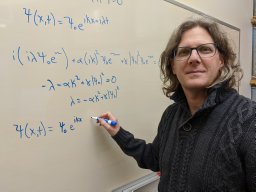 John D. Carter合作论文数Mathematics Department;Seattle University;Mathematics Department, Seattle University1
 Hugh D. Safford合作论文数Department of Environmental Science and Policy, University of California, Davis;Vibrant Planet;International Programs Office, USDA-Forest Service1
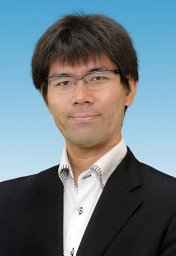 Masaharu Kagawa合作论文数Centre for Metabolic Fitness;School of Human Movement Studies;Institute of Health and Biomedical Innovation;Queensland University of Technology;Institute of Health and Biomedical Innovation, Queensland University of Technology1Olga A. Kuchar合作论文数1
 Eric Bahuaud合作论文数1
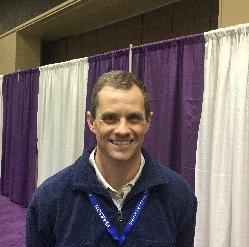 Dylan Helliwell合作论文数Harvey Mudd College1Patrick Tewson合作论文数1
 Luis B. Sardinha合作论文数Faculty of Human Kinetics, University of Lisbon;Department of Sport and Health, University of Lisbon1
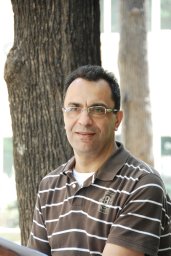 Omar Obeid合作论文数Faculty of Agricultural and Food Sciences, American University of Beirut1
 John Wesley Lauer合作论文数1




