This study explores the application of in-context learning (ICL) to the dialogue state tracking (DST) problem and investigates the factors that influence its effectiveness. We use a sentence embedding based k-nearest neighbour method to retrieve the suitable demonstrations for ICL. The selected demonstrations, along with the test samples, are structured within a template as input to the LLM. We then conduct a systematic study to analyse the impact of factors related to demonstration selection and prompt context on DST performance. This work is conducted using the MultiWoZ2.4 dataset and focuses primarily on the OLMo-7B-instruct, Mistral-7B-Instruct-v0.3, and Llama3.2-3B-Instruct models. Our findings provide several useful insights on in-context learning abilities of LLMs for dialogue state tracking.
In this work, we approach spoken Dialogue State Tracking (DST) by bridging the representation spaces of speech encoders and LLMs via a small connector module, with a focus on fully open-sourced and open-data components (WavLM-large, OLMo). We focus on ablating different aspects of such systems including full/LoRA adapter fine-tuning, the effect of agent turns in the dialogue history, as well as fuzzy matching-based output post-processing, which greatly improves performance of our systems on named entities in the dialogue slot values. We conduct our experiments on the SpokenWOZ dataset, and additionally utilize the Speech-Aware MultiWOZ dataset to augment our training data. Ultimately, our best-performing WavLM + connector + OLMo-1B aligned models achieve state of the art on the SpokenWOZ test set (34.66% JGA), and our system with Gemma-2-9B-instruct further surpasses this result, reaching 42.17% JGA on SpokenWOZ test.
Recently, the performance of blind speech separation (BSS) and target speech extraction (TSE) has greatly progressed. Most works, however, focus on relatively well-controlled conditions using, e.g., read speech. The performance may degrade in more realistic situations. One of the factors causing such degradation may be intrinsic speaker variability, such as emotions, occurring commonly in realistic speech. In this paper, we investigate the influence of emotions on TSE and BSS. We create a new test dataset of emotional mixtures for the evaluation of TSE and BSS. This dataset combines LibriSpeech and Ryerson Audio-Visual Database of Emotional Speech and Song (RAVDESS). Through controlled experiments, we can analyze the impact of different emotions on the performance of BSS and TSE. We observe that BSS is relatively robust to emotions, while TSE, which requires identifying and extracting the speech of a target speaker, is much more sensitive to emotions. On comparative speaker verification experiments we show that identifying the target speaker may be particularly challenging when dealing with emotional speech. Using our findings, we outline potential future directions that could improve the robustness of BSS and TSE systems toward emotional speech.
In typical multi-talker speech recognition systems, a neural network-based acoustic model predicts senone state posteriors for each speaker. These are later used by a single-talker decoder which is applied on each speaker-specific output stream separately. In this work, we argue that such a scheme is sub-optimal and propose a principled solution that decodes all speakers jointly. We modify the acoustic model to predict joint state posteriors for all speakers, enabling the network to express uncertainty about the attribution of parts of the speech signal to the speakers. We employ a joint decoder that can make use of this uncertainty together with higher-level language information. For this, we revisit decoding algorithms used in factorial generative models in early multi-talker speech recognition systems. In contrast with these early works, we replace the GMM acoustic model with DNN, which provides greater modeling power and simplifies part of the inference. We demonstrate the advantage of joint decoding in proof of concept experiments on a mixed-TIDIGITS dataset.
This paper describes joint effort of BUT and Telefonica Research on development of Automatic Speech Recognition systems for Albayzin 2020 Challenge. We compare approaches based on either hybrid or end-to-end models. In hybrid modelling, we explore the impact of SpecAugment layer on performance. For end-to-end modelling, we used a convolutional neural network with gated linear units (GLUs). The performance of such model is also evaluated with an additional n-gram language model to improve word error rates. We further inspect source separation methods to extract speech from noisy environment (i.e. TV shows). More precisely, we assess the effect of using a neural-based music separator named Demucs. A fusion of our best systems achieved 23.33% WER in official Albayzin 2020 evaluations. Aside from techniques used in our final submitted systems, we also describe our efforts in retrieving high quality transcripts for training.
This paper describes BUT’s efforts in the development of the system for the CHiME-6 challenge with far-field dinner party recordings [1]. Our experiments are on both diarization and speech recognition parts of the system. For diarization, we em-ploy the VBx framework which uses Bayesian hidden Markov model with eigenvoice priors on x-vectors. For acoustic modeling, we explore using different subsets of data for training, different neural network architectures, discriminative training, more robust i-vectors, and semi-supervised training on VoxCeleb data. Besides, we perform experiments with a neural network-based language model, exploring how to overcome the small size of the text corpus and incorporate across-segment context. When fusing our best systems, we achieve 41.21% / 42.55% WER on Track 1, for development and evaluation re-spectively, and 55.15% / 69.04% on Track 2, for development and evaluation respectively. Aside from techniques used in our final submitted systems, we also describe our efforts in end-to-end diarization and end-to-end speech recognition.
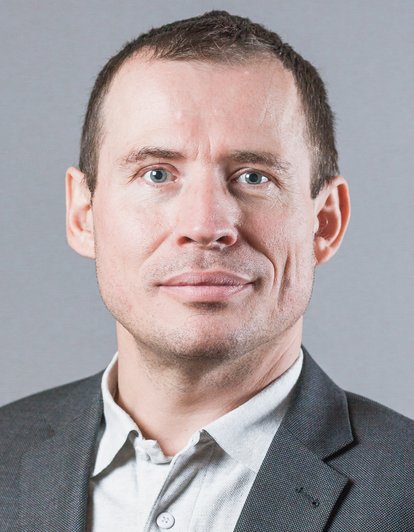 Jan Černocký合作论文数Department of Computer Graphics and Multimedia, Faculty of Information Technology, Brno University of Technology6
 Martin Kocour合作论文数Fac Informat Technol, Brno Univ Technol4
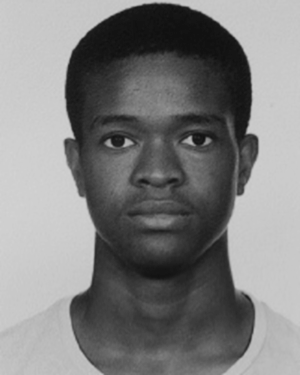 Bolaji Yusuf合作论文数3
 Kateřina Žmolíková合作论文数Meta3
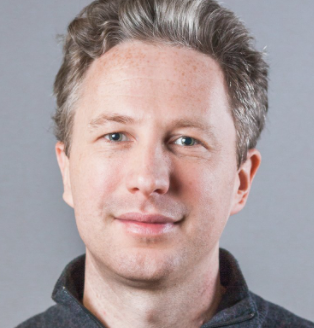 Oldrich Plchot合作论文数Department of Computer Graphics and Multimedia, Faculty of Information Technology, Brno University of Technology3
 Santosh Kesiraju合作论文数Department of Computer Graphics and Multimedia, Faculty of Information Technology, Brno University of Technology2
 Karel Beneš合作论文数Brno Univ Technol2
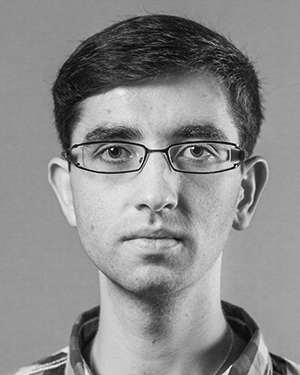 Ladislav Mosner合作论文数Brno University of Technology2
 Tsubasa Ochiai合作论文数Media Information Laboratory, NTT Communication Science Laboratories2
 Martin Karafiat合作论文数DCGM2
 Lukáš Burget合作论文数Department of Computer Graphics and Multimedia, Faculty of Information Technology, Brno University of Technology2
 Igor Szöke合作论文数Faculty of Information Technology, Brno University of Technology2
 Marc Delcroix合作论文数Media Information Laboratory, NTT Communication Science Laboratories2
 Pradyoth Hegde合作论文数Indian Institute of Information Technology1
 Fernando López合作论文数1
 Federico Landini合作论文数Deepgram1
 Murali Karthick Baskar合作论文数Brno University of Technology1
 Ondřej Novotný合作论文数NenoVision s.r.o.1
 Jordi Luque合作论文数Telefonica I D Research Spain1
 Alicia Lozano-Diez合作论文数1
 Hari Krishna合作论文数1
 Karel Veselý合作论文数Department of cybernetics;University of West Bohemia;Department of cybernetics, University of West Bohemia1
 Lukas Burget合作论文数Department of Computer Graphics and Multimedia (DCGM)1
 Lucas Ondel合作论文数Speech FIT and IT4I Center of Excellence, Brno University of Technology1
 Mireia Díez合作论文数Dept Elect & Elect, Univ Basque Country UPV EHU1
 Vladimir Malenovsky合作论文数Huawei Technologies1
 Frantisek Grezl合作论文数School of Science & Engineering, OGI;Computer Science Institute, International;Qualcomm Inc;OGI School of Science & Engineering, International Computer Science Institute1




