Equilibrium temperatures of mass transfer cooled walls in high speed flow of absorbing-emitting gas
Since the publication of the second edition of Handbook of Heat Transfer, there have been many new and exciting developments in the field, covering both fundamentals and applications. As the role of technology has grown, so too has the importance of heat transfer engineering. For example, in the industrial sector heat transfer concerns are critical to the design of practically every process. The same is true of such vitally important areas as energy production, conversion, and the expanding field of environmental controls. In the generation of electrical power, whether by nuclear fission or combustion of fossil fuels, innumerable problems remain to be solved. Similarly, further miniaturization of advanced computers is limited by the capability of removing the heat generated in the microprocessors. Heat transfer problems at the macro scale, as exemplified by global warming, also offer tremendous challenges. As technology advances, engineers are constantly confronted by the need to maximize or minimize heat transfer rates while at the same time maintaining system integrity. The upper and lower boundariesmsystem size, pressure, and temperature--are constantly expanding, confronting the heat transfer engineer with new design challenges. In preparing this third edition, the goal of the editors was to provide, in a single volume, up-to-date information needed by practicing engineers to deal with heat transfer problems encountered in their daily work. This new edition of the handbook contains information essential for design engineers, consultants, research engineers, university professors, students, and technicians involved with heat transfer technology. The third edition of Handbook of Heat Transfer provides expanded treatment of the fundamental topics covered in earlier editions. More than half of the authors of these basic chapters on conduction, convection, radiation, condensation, and boiling are new, reflecting the fact that there are new leaders in the field. Those chapters in the second edition dealing with applications related to the so-called energy crisis (solar energy, energy storage, cooling towers, etc.) have been replaced by new chapters treating heat transfer problems encountered in materials processing, porous media, and micro scale systems. Sections on the following topics were retained and updated: thermophysical properties, heat transfer enhancement, heat exchangers, heat pipes, fluidized beds, nonnewtonian fluids, and measurement techniques.
 W. J. Minkowycz合作论文数Department of Mechanical and Industrial Engineering, University of Illinois Chicago21
 T. F. Irvine合作论文数13
 Yehuda Taitel合作论文数Department of Fluid Mechanics and Heat Transfer, School of Mechanical Engineering, Tel Aviv University5E.R.G. Eckert合作论文数4A. Haji-Sheikh合作论文数3We Ibele合作论文数3Sm Yang合作论文数3
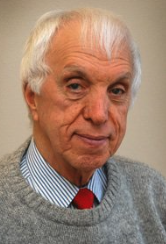 Richard J. Goldstein合作论文数Department of Mechanical Engineering, College of Science and Engineering, University of Minnesota3KT Yang合作论文数3O.G. Martynenko合作论文数3m a styrikovich合作论文数2KE TORRANCE合作论文数2d m france合作论文数2Cl Tien合作论文数2RL Mahajan合作论文数2Erg Eckert合作论文数2
 Noam Lior合作论文数Mechanical Engineering and Applied Mechanics, University of Pennsylvania2
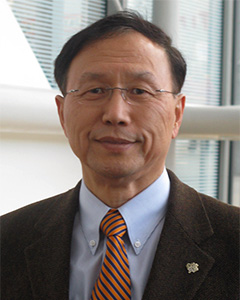 Young I Cho合作论文数Department of Mechanical Engineering and Mechanics, College of Engineering, Drexel University2
 Adrian Bejan合作论文数Thomas Lord Department of Mechanical Engineering & Materials Science, Pratt School of Engineering, Duke University2
 Yogesh Jaluria合作论文数Department of Mechanical and Aerospace Engineering, School of Engineering, Rutgers, The State University of New Jersey2
 Ping Cheng (郑平)合作论文数School of Mechanical Engineering, Shanghai Jiao Tong University2K.T. Yang合作论文数2G.A Greene合作论文数2
 Per Peterson合作论文数UC Berkeley Berkeley Engineering2
 Ralph Greif合作论文数Department of Mechanical Engineering, University of California, Berkeley2R.L Webb合作论文数2E. Hahne合作论文数2
 Ephraim M. Sparrow合作论文数Department of Mechanical Engineering, College of Science and Engineering, University of Minnesota2
 Francis A. Kulacki合作论文数Department of Mechanical Engineering,
College of Science and Engineering, University of Minnesota2Ai Leontiev合作论文数1Gf Hewitt合作论文数1Dm Maron合作论文数1Suhas V. Patankar合作论文数1
Francis A. Kulacki合作论文数Department of Mechanical Engineering,
College of Science and Engineering, University of Minnesota2Ai Leontiev合作论文数1Gf Hewitt合作论文数1Dm Maron合作论文数1Suhas V. Patankar合作论文数1 Ofodike Ezekoye合作论文数Department of Civil, Architectural and Environmental Engineering, Cockrell School of Engineering, University of Texas at Austin1
 Saima Patankar合作论文数1M. K. Jensen合作论文数1y yener合作论文数1L Wang合作论文数1Smith Randi合作论文数1
 Chang-Lin Tien (田长霖)合作论文数Department of Mechanical Engineerin, University of California, Berkeley1T.S. Chen合作论文数1F Mayinger合作论文数1Young I. Cho合作论文数1A. Bar-Cohen合作论文数1
 Zeng-Yuan Guo (过增元)合作论文数Institutes of Engineering Thermal Physics, Department of Engineering Mechanics, School of Aerospace Engineering, Tsinghua University;Department of Mechanical Engineering, Michigan State University1
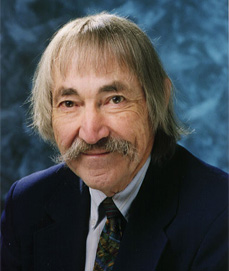 Stuart W. Churchill合作论文数University of Pennsylvania1
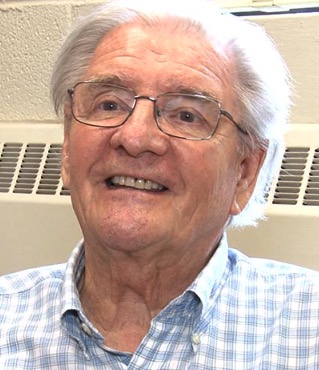 Raymond Viskanta合作论文数College of Engineering, Purdue University1H. Buchberg合作论文数1B.T. Chao合作论文数1




