Design of a dedicated parallel computer for spin models featuring 150 ps per spin update range and lattice configuration of 224 spins is described. This computer can process various classes of Spin Glass models up to third order neighbours and three dimensions. Processing elements of the simplified prototype version are based on Programmable Logic Device (PLD) technology while the final machine will benefit by custom devices. Prototype machine is expected to work in Summer 1996, the final computer one year later. The computer is designed in collaboration of Spanish and Italian universities.
It is shown that a bosonic formulation of the double-exchange model, one of the classical models for magnetism, generates dynamically a gauge-invariant phase in a finite region of the phase diagram. We use analytical methods, Monte Carlo simulations and finite-size scaling analysis. We study the transition line between that region and the paramagnetic phase. The numerical results show that this transition line belongs to the universality class of the antiferromagnetic RP2 model. The fact that one can define a universality class for the antiferromagnetic RP2 model, different from the one of the O(N) models, is puzzling and somehow contradicts naive expectations about universality.
APE is a family of supercomputers architecturally optimized for the numerical simulation of quantum field theories. Current generation APE systems (APEmille) have been commissioned at several European sites. When all planned systems are installed, later this year, a total peak processing power of about 2 TFlops will be available. A new generation system, apeNEXT, is under development. It adds several new features to the established APE architecture. Performance will be boosted towards the 10 Tflops range. (C) 2002 Published by Elsevier Science B.V.
This talk is divided in two parts. In the first part, we will summarize the status of the APEmille project that will be completed by the end of the year. We will then devote the rest of the talk to the description of a new project for a multi-TeraFlop machine, apeNEXT. The interested reader will find a much more detailed discussion of all the items touched upon here in the full proposal of the project that will shortly appear on hep-lat.
The use of last generation Programmable Electronic Components makes possible the construction of very powerful and competitive special purpose computers. We have designed, constructed and tested a three-dimensional Spin Glass model dedicated machine, which consists of 12 identical boards. Each single board can simulate 8 different systems, updating all the systems at every clock cycle. The update speed of the whole machine is 217ps/spin with 48 MHz clock frequency. A device devoted to fast random number generation has been developed and included in every board. The on-board reprogrammability permits us to change easily the lattice size, or even the update algorithm or the action. We present here a detailed description of the machine and the first runs using the Heat Bath algorithm.
We have simulated, using parallel tempering, the three-dimensional Ising spin glass model with binary couplings in a helicoidal geometry. The largest lattice $(L=20)$ has been studied using a dedicated computer (the SUE machine). We have obtained, measuring the correlation length in the critical region, strong evidence for a second-order finite-temperature phase transition, ruling out other possible scenarios like a Kosterlitz-Thouless phase transition. Precise values for the \ensuremath{\nu} and \ensuremath{\eta} critical exponents are also presented.
IEEE 1355 HS-Links and their support devices have been investigated as part of the ESPRIT projects Macramé and Arches. A description of the HS-Link technology and initial experience with the RCube 8-way packet router and the Bullit HS-Link interface device are presented. A 64 node HS-Link switching network based using these devices is being constructed at CERN. We report on the the design and construction of the network testbed.
We report on the construction of a 1024 node switching network using IEEE 1355 DS link technology. The nodes are interconnected by a switching fabric based on the STC104 packet switch. The system has been designed and constructed in a modular way in order to allow a variety of different network topologies to be investigated. Network throughput and latency have been studied for different topologies under various traffic conditions including those expected within the second level trigger of the ATLAS experiment. Initial experience using 1 Gbaud IEEE 1355 HS links and switches is also presented.
We present a parallel machine, based on programmable devices, dedicated to simulate spin glass models with Z2 variables and short-range interaction. A working prototype is described for two lattices containing 312 × 312 spins each with an update time of 50 ns per spin. The final version of the three-dimensional parallel machine is discussed with a spin update time up to 312 ps.
We present a high statistics calculation of ƒB in the static limit. The results have been obtained by numerical simulation of quenched QCD, at β = 6.0 on a 183 × 32 lattice. We compare ƒB calculated by using the Wilson and the Clover quark actions. The decay constant is obtained by studying heavy-light correlation functions of different smeared operators, on a sample of 210 gauge field configurations. We find that cubic smearings of size Ls ⩽ 3 or Ls ⩾ 9 are bad projectors on the lightest pseudoscalar state. Combining the information coming from smearing Ls = 5 and Ls = 7, we have obtained ƒB = 370±40 MeV in the clover case and ƒB = 350±40±30 MeV in the Wilson case. Our results support a large value of the pseudoscalar decay constant in the static approximation.
We present a calculation of f(B) in the static limit, obtained by numerical simulation of quenched QCD, at beta = 6.2 on a 18(3) x 64 lattice, using the SW-Clover quark action. The decay constant has been extracted by studying heavy (static)-light correlation functions of different smeared operators, on a sample of 220 gauge field configurations. We have obtained f(B)static = (290 +/- 15 +/- 45) MeV, where the first error comes from the uncertainty in the determination of the matrix element and the second comes from the uncertainty in the lattice spacing. We also obtain M(Bs) - M(Bd) = (70 +/- 10) MeV and f(Bs)stat/f(Bd)stat = 1.11 (3). A comparison of our results with other calculations of the same quantity is made.
The light quark results from three different simulations are summarized. We get consistent results, within our statistics, between smeared and non smeared data. A comparison is performed with similar results from the UKQCD collaboration. All runs have been performed on two 6.4 GF APE computers [1].
Recent results for semi-leptonic decays of D and B mesons at beta = 6.4, using the Wilson action, and at beta = 6.0, using the Clover action, are reported.
Recent results for semi-leptonic decays of D and B mesons at β = 6.4, using the Wilson action, and at β = 6.0, using the clover action, are reported.
The decay constants of the heavy-light pseudoscalar mesons are studied in a high statistics run using the Wilson action at β = 6.0 and β = 6.2, and the clover action at β = 6.0. The systematics of O(a) discretisation errors are discussed.. Our best estimates of the decay constant are: fD = 218(9) MeV, fD/fDs = 1.11(1) and we obtain preliminary values for fB.
We present a calculation of ƒB in the static limit, obtained by numerical simulation of quenched QCD, at β=6.2 on a 183 × 64 lattice, using the SW-Clover quark action. The decay constant has been extracted by studying heavy (static)-light correlation functions of different smeared operators, on a sample of 220 gauge field configurations. We have obtained ƒBstatic=(290±15±45) MeV, where the first error comes from the uncertainty in the determination of the matrix element and the second comes from the uncertainty in the lattice spacing. We also obtain MBs−MBd=(70±10) MeV and ƒBsstat/ƒBdstat=1.11 (3). A comparison of our results with other calculations of the same quantity is made.
The poster reported the status of the APE100 project and the results of a first full QCD simulation performed on a 6 Gflops APE100 machine using the Hybrid Monte Carlo algorithm for 2 flavours Wilson fermions.
 Nicola Cabibbo合作论文数Università la Sapienza di Roma22
 r sarno合作论文数21
 Simone Cabasino合作论文数Univ . di Roma ' La Sapienza;Sezione di Roma21GM TODESCO合作论文数20Federico Rapuano合作论文数20W. Tross合作论文数20
 Pier Stanislao Paolucci合作论文数WorkPackage;Istituto Nazionale di Fisica Nucleare18m torelli合作论文数17C. Battista合作论文数17
 P. Vicini合作论文数Sezione di Roma, INFN16
 A. Bartoloni合作论文数Sezione dell’ INFN Roma Italy, Università di Roma I15
 Alfonso Tarancon合作论文数Departamento de F ´ õsica Teorica;Facultad de Ciencias;Universidad de Zaragoza;Facultad de Ciencias, Universidad de Zaragoza15Raffaele Tripiccione合作论文数14
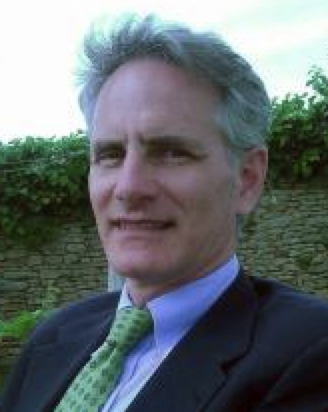 Frank Silvio Marzano合作论文数Dipartimento di Ingegneria Dell’Informazione, Elettronica e Telecomunicazioni, Sapienza University Di Rome;CETEMPS of the University of L Aquila13
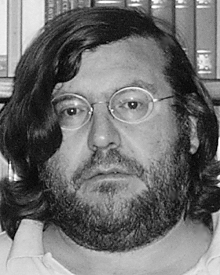 Gaetano Salina合作论文数Università di Roma II “Tor Vergata” and Sezione INFN13
 Guido Martinelli合作论文数Dipartimento di Fisica, Università degli Studi di Roma "La Sapienza"10A. Cruz合作论文数10
 Vittorio Lubicz合作论文数Universita di Roma Tre9C. R. Allton合作论文数9LA Fernandez合作论文数8
 P. Tellez合作论文数8C. L. Ullod合作论文数7Anastassios Vladikas合作论文数Sezione di Roma II7D. Badoni合作论文数6
 Enzo Marinari合作论文数Dipartimento di Fisica, Universita' di Roma La Sapienza6
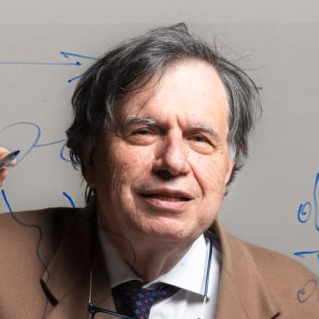 Giorgio Parisi (乔治·帕里西)合作论文数Dipartimento di Fisica, Sapienza Universita di Roma6
 David Iñiguez Dieste合作论文数Institute for Biocomputation and Physics of Complex Systems, University of Zaragoza6
 Maria-Paola Lombardo合作论文数Istituto Nazionale di Fisica Nucleare6A. Munoz Sudupe合作论文数6A. Fucci合作论文数5
 Isabel Campos Plasencia合作论文数5
 Antonio González-Arroyo España合作论文数Departamento de Física Teórica, Facultad de Ciencias, Universidad Autonoma de Madrid5E. Remiddi合作论文数Sezione di Bologna, Università di Bologna5P. Martínez合作论文数5F. Lesmes合作论文数5
 Juan J. Ruiz Lorenzo合作论文数Instituto de Computación Científica Avanzada de Extremadura, Universidad de Extremadura;Facultad de Ciencias, Universidad de Extremadura5
 Alejandro Rivero合作论文数Universidad de Zaragoza5C. Ungil合作论文数4g bastianello合作论文数4
 Adriano Lai合作论文数Istituto Nazionale Fisica Nucleare;Università degli Studi di Cagliari4Olivier Pène合作论文数4
 Emanuele Panizzi合作论文数"Sapienza, Università di Roma4J. J. Ruiz-Lorenzo合作论文数3C. Piedrafita合作论文数3
 Pierluigi Paolucci合作论文数Istituto Nazionale di Fisica Nucleare;European Organization for Nuclear Research3
 Philippe Boucaud合作论文数3
 José Luis Alonso合作论文数Laboratorios de Espectroscopia y Bioespectroscopia, Facultad de Ciencias, Universidad de Valladolid3
 Victor Martin-Mayor合作论文数Departamento de Física Teórica, Facultad de Ciencias Físicas, Universidad Complutense de Madrid3Luis Antonio Fernández Pérez合作论文数Departamento de Física Teórica, Facultad de Ciencias Físicas, Universidad Complutense Madrid3




