Within the human motor repertoire, speech production has a uniquely high level of spatiotemporal complexity. The production of running speech comprises the traversing of spatial positions with precisely coordinated articulator movements to produce 10 - 15 sounds/s. How does the brain use auditory feedback, namely the self-perception of produced speech sounds, in the online control of spatial and temporal parameters of multisyllabic articulation? This question has important bearings on the organizational principles of sequential actions, yet its answer remains controversial due to the long latency of the auditory feedback pathway and technical challenges involved in manipulating auditory feedback in precisely controlled ways during running speech. In this study, we developed a novel technique for introducing time-varying, focal perturbations in the auditory feedback during multisyllabic, connected speech. Manipulations of spatial and temporal parameters of the formant trajectory were tested separately on two groups of subjects as they uttered "I owe you a yo-yo." Under these perturbations, significant and specific changes were observed in both the spatial and temporal parameters of the produced formant trajectories. Compensations to spatial perturbations were bidirectional and opposed the perturbations. Furthermore, under perturbations that manipulated the timing of auditory feedback trajectory (slow-down or speed-up), significant adjustments in syllable timing were observed in the subjects' productions. These results highlight the systematic roles of auditory feedback in the online control of a highly over-learned action as connected speech articulation and provide a first look at the properties of this type of sensorimotor interaction in sequential movements.
Associate Professor, Department of Linguistics, Brown University. +Associate Professor, Department of Psychology and Social Relations, Harvard University. tAssistant Professor, Department of Psychology, Northeastern University. ** Assistant Professor, Consejo Nacional de Investigaciones Cientificas y Tecnicas, Buenos Aires, Argentina. ++Assistant Professor of Communicative Disorders, Emerson College. #Staff Member, Bolt Beranek and Newman, Inc.
Academic and Research Staff Prof. K.N. Stevens, Prof. J. Allen, Prof. M. Halle, Prof. S.J. Keyser, Prof. V.W. Zue, A. Andrade1 1 , Dr. D. Bradley 1 , Dr. Martha Danly12 , Dr. F. Grosjean1 3 , Dr. S. Hawkins 14 , Dr. R.E. Hillman 5 , E.B. Holmberg , Dr. A.W.F. Huggins , C. Hume, Dr. H. Kawasaki, Dr. D.H. Klatt, Dr. L.S. Larkey, Dr. John Locke 18, Dr. B. Lyberg"1 , Dr. J.I. Makhou117, Dr. E. Maxwell, Dr. L. Menn1 9, Dr. P. Menyuk 20 , Dr. J.L. Miller 13, Dr. J.M. Pardo Munoz 11, Dr. J.S. Perkell, Dr. P.J. Price, Dr. S. Shattuck-Hufnagel, S.-Q. Wang", T. Watanabe1 1
A two-part experiment on protrusion movements of the lower lip for the vowel /u/ was conducted to investigate: (1) the production of ‘troughs’, i.e., diminution of lip protrusion during the intervocalic consonant in /uCu/ utterances, and (2) ‘time locking’, that is, movement onset at a fixed interval prior to onset of voicing of /u/, regardless of the number of ‘neutral’ consonants in /VunroundedCnu/ utterances.
 Stefanie Shattuck-Hufnagel合作论文数3
 Kenneth N. Stevens合作论文数Massachusetts Institute of Technology3Samuel J. Keyser合作论文数2H. Leung合作论文数1William L. Henke合作论文数1Hong-Kwang Jeff Kuo合作论文数1
 harold a cheyne合作论文数1Stephanie Seneff合作论文数1maldonado aaron合作论文数1Dr. D. H. Klatt合作论文数1Dr. P. Menyuk合作论文数1Dr. L. S. Larkey合作论文数1Dr. L. Menn合作论文数1Dr. A. W. F. Huggins合作论文数1Arlene E. Wint合作论文数1
 Patricia Keating合作论文数Department of Linguistics, College of Humanities, University of California1Janet L. Slifka合作论文数1
 Frank Guenther合作论文数Department of Speech, Language and Hearing Sciences, Sargent College of Health and Rehabilitation Sciences, Boston University;Department of Biomedical Engineering, Boston University;Massachusetts General Hospital;Picower Institute for Learning and Memory, Massachusetts Institute of Technology;Harvard University1
 Dan Huttenlocher合作论文数Department of Electrical Engineering and Computer Science, Massachusetts Institute of Technology;Schwarzman College of Computing, Massachusetts Institute of Technology1Yong Zhang合作论文数1Dennis H. Klatt合作论文数1
 Louis Goldstein合作论文数Department of Linguistics, Dornsife College of Letters, Arts and Sciences, University of Southern California1Adrienne M. Prahler合作论文数1
 Laura C Dilley合作论文数Ohio State University1
 Samuel Jay Keyser合作论文数massachusetts institute of technology1
 Christine Mooshammer合作论文数Institut für Phonetik und Digitale Sprachverarbeitung1
 Jeung-Yoon Choi合作论文数Beckman Institute, University of Illinois at Urbana-Champaign1Felice T. Sun合作论文数1
 Andrew I. Russell合作论文数1Marilyn Y. Chen合作论文数1Morris Halle合作论文数1
 Shanqing Cai (蔡善清)合作论文数Google1
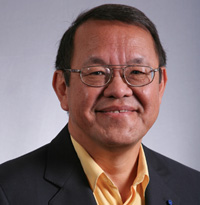 Victor Zue合作论文数Computer Science and Artificial Intelligence Laboratory, Massachusetts Institute of Technology1
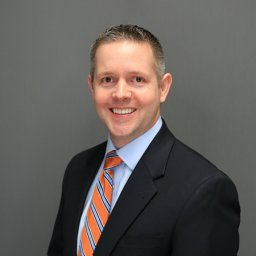 Jason L. Smith合作论文数Divisions of Hematology, Medical Oncology, Cellular Therapy, Duke University Medical Center1D. Scott Cyphers合作论文数MIT Laboratory for Computer Science1Corine A. Bickley合作论文数1Kelly L. Poort合作论文数1
 Satrajit Ghosh合作论文数McGovern Institute for Brain Research, Massachusetts Institute of Technology;Department of Otolaryngology Head and Neck Surgery, Medical School, Harvard University;Harvard Division of Medical Sciences1
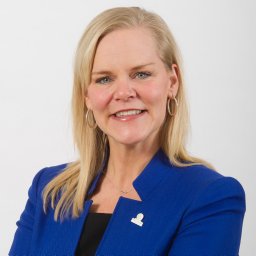 Jennell C Vick合作论文数Research Laboratory of Electronics, Massachusetts Institute of Technology1Helen Chen合作论文数1
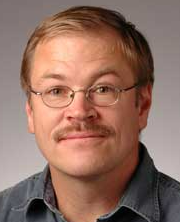 Mark Tiede合作论文数Brain Function Laboratory, Department of Psychiatry, Yale School of Medicine, Yale University;Haskins Laboratories1Michael P Harms合作论文数Department of Psychiatry, Washington University School of Medicine1Majid Zandipour合作论文数1




