Latinx represent the second largest ethnic group in the USA and remain significantly underrepresented in research studies. Efforts to better include Latinx make use of community-engaged research (CEnR) approaches, peer-navigators, and cultural humility training for research teams. While these efforts have led to slight increases in Latinx participation, studies to identify strategic practices for better inclusion of Latinx participants are needed. The objective of this study was to qualitatively examine factors leading to successful recruitment and retention of Latinx participants in the Promoting Activity and Stress Reduction in the Outdoors (PASITO) intervention. For this intervention, 99 low-income Latinx clients in a local community were contacted and 52 participants were recruited (53%). All were retained in the 3-month intervention. Of these, 12 were interviewed within 6 months of the close of PASITO by bi-cultural and bi-lingual non-research staff. They conducted one-on-one structured telephone interviews. Of the twelve participants, three (25%) were men, nine (75%) were women, and the mean age was 43.7 (SD = 8.7). Four critical themes for the recruitment and retention of Latinx populations emerged from the interviews: (1) importance of insider researchers; (2) sense of community and belonging; (3) responsive programming; and (4) health-promoting activities. These findings support the significant role insider researchers can play, and social identity theory provides a useful framework for understanding the role of insider researchers in recruiting and retaining Latinx, and likely other minoritized groups, in clinical studies. Insider researchers possess the skills, training, community cultural wealth, in-depth understanding of their communities, and structural competencies that position them to carry out more inclusive studies to address the needs of marginalized communities and advance science.
Migrants along the US-Mexico border have been subjected to transnational violence created by international policy, militaristic intervention, and multinational organizational administration of border operations. The COVID-19 pandemic compounded migrants' vulnerabilities and provoked several logistical and ethical problems for US-based clinicians and organizations. This commentary examines how the concept of transnational solidarity facilitates analysis of clinicians' and migrants' shared historical and structural vulnerabilities. This commentary also suggests how actions implemented by one organization in Tijuana, Mexico, could be scaled more broadly for care of migrants and asylum seekers in other transnational health care settings.
Based on the authors’ work in Latin America and Africa, this article describes and applies the concept ‘structural vulnerability’ to the challenges of clinical care and healthcare advocacy for migrants. This concept helps consider how specific social, economic and political hierarchies and policies produce and pattern poor health in two case studies: one at the USA–Mexico border and another in Djibouti. Migrants’ and providers’ various entanglements within inequitable and sometimes violent global migration systems can produce shared structural vulnerabilities that then differentially affect health and other outcomes. In response, we argue providers require specialised training and support; professional associations, healthcare institutions, universities and humanitarian organisations should work to end the criminalisation of medical and humanitarian assistance to migrants; migrants should help lead efforts to reform medical and humanitarian interventions; and alternative care models in Global South to address the structural vulnerabilities inherent to migration and asylum should be supported.
A decade ago, a number of English-speaking authors focused mainly on the analysis and intervention of processes of social determination of health of migrants developed the concept of structural vulnerability as a way to combat individualism, biologism, the invisibilization of processes of structural determination and the blaming of victims. As part of the historical contributions of social medicine, the current developments of the structural vulnerability approach have been disconnected from the discussions of the collective health movement and Latin American social medicine in general, among other reasons due to linguistic barriers associated with the scarcity of publications in Spanish. The present interview, conducted with two of the primary representatives of the structural vulnerability approach, investigates its historical origins and seeks to explore the specific contributions that are being made today, as a way to bring them closer to Spanish-speaking readers and so enable dialogue with the proposals of Latin American social medicine.
Desde hace una década, varios autores anglófonos, centrados principalmente en el análisis e intervención de los procesos de determinación social de la salud de los migrantes, forjaron el concepto de vulnerabilidad estructural, como una forma de combatir el individualismo, el biologismo, la invisibilización de los procesos de determinación estructural y la culpabilización de las víctimas. Siendo parte de las contribuciones históricas de la medicina social, los actuales desarrollos de la aproximación sobre la vulnerabilidad estructural han quedado desconectadas de las discusiones del movimiento de la salud colectiva y la medicina social latinoamericana en general, entre otras razones, por las barreras lingüísticas asociadas a la escasez de sus publicaciones en español. La presente entrevista, realizada a dos de sus principales representantes, indaga los orígenes históricos de dicha aproximación y busca explorar las contribuciones específicas que hoy está realizando, como una forma de acercarlas a los lectores de habla hispana, favoreciendo el diálogo con las propuestas de medicina social latinoamericanas.
The authors propose reinvigorating and extending the traditional social history beyond its narrow range of risk behaviors to enable clinicians to address negative health outcomes imposed by social determinants of health. In this Perspective, they outline a novel, practical medical vulnerability assessment questionnaire that operationalizes for clinical practice the social science concept of “structural vulnerability.” A structural vulnerability assessment tool designed to highlight the pathways through which specific local hierarchies and broader sets of power relationships exacerbate individual patients’ health problems is presented to help clinicians identify patients likely to benefit from additional multidisciplinary health and social services. To illustrate how the tool could be implemented in time- and resource-limited settings (e.g., emergency department), the authors contrast two cases of structurally vulnerable patients with differing outcomes. Operationalizing structural vulnerability in clinical practice and introducing it in medical education can help health care practitioners think more clearly, critically, and practically about the ways social structures make people sick. Use of the assessment tool could promote “structural competency,” a potential new medical education priority, to improve understanding of how social conditions and practical logistics undermine the capacities of patients to access health care, adhere to treatment, and modify lifestyles successfully. Adoption of a structural vulnerability framework in health care could also justify the mobilization of resources inside and outside clinical settings to improve a patient’s immediate access to care and long-term health outcomes. Ultimately, the concept may orient health care providers toward policy leadership to reduce health disparities and foster health equity.
Although immigration and immigrant populations have become increasingly important foci in public health research and practice, a social determinants of health approach has seldom been applied in this area. Global patterns of morbidity and mortality follow inequities rooted in societal, political, and economic conditions produced and reproduced by social structures, policies, and institutions. The lack of dialogue between these two profoundly related phenomena-social determinants of health and immigration-has resulted in missed opportunities for public health research, practice, and policy work. In this article, we discuss primary frameworks used in recent public health literature on the health of immigrant populations, note gaps in this literature, and argue for a broader examination of immigration as both socially determined and a social determinant of health. We discuss priorities for future research and policy to understand more fully and respond appropriately to the health of the populations affected by this global phenomenon.
Undocumented Latino day laborers in the United States are vulnerable to being arrested and expelled at any time. This social fact shapes their everyday lives in terms of actions taken and strategies deployed to mitigate being confronted, profiled, and possibly incarcerated and deported. While perceptions of threat and bouts of discrimination are routine among undocumented Latino day laborers, their specific nature vary according to multiple social factors and structural forces that differ significantly from locale to locale. The experience of discrimination is often tacitly negotiated through perceptions, decisions, and actions toward avoiding or moderating its ill effects. This essay examines urban undocumented Latino day laborers over a variety of sites in the greater San Francisco Bay Area, which, compared to many metropolitan areas in the U.S. is "as good as it gets" in terms of being socially tolerated and relatively safe from persecution. Nonetheless, tacit negotiations are necessary to withstand or overcome challenges presented by idiosyncratic and ever changing global, national/state, and local dynamics of discrimination. [undocumented Latino laborers, social exclusion, discrimination, tacit negotiation].
Latino migrant day laborers (LMDLs) live under challenging conditions in the San Francisco Bay Area. This study explored day laborer alcohol use guided by a structural vulnerability framework, specifically problem vs. non-problem drinking as perceived by LMDLs and how they cope with or try to avoid problem drinking given their broader environment. The study utilized ethnographic methods including in-depth semi-structured qualitative interviews with 51 LMDLs. Findings revealed the considerable challenge of avoiding problem drinking given socio-environmental factors that influence drinking: impoverished living and working conditions, prolonged separation from home and family, lack of work authorization, consequent distress and negative mood states, and peer pressure to drink. While participants shared strategies to avoid problem drinking, the success of individual-level efforts is limited given the harsh structural environmental factors that define day laborers' daily lives. Discussed are implications for prevention and intervention strategies at the individual, community, national and international levels.
Abstract This chapter presents a structural-environmental model of alcohol-related sexual HIV risk and prevention in Latino migrant day laborers (LMDLs). That is, the structural vulnerability of LMDLs to HIV, problem drinking, and many other psychosocial and health problems are theorized as rooted in the harsh living and working conditions that are reproduced for day labor in America (i.e., poverty, prolonged separation from family and country of origin, loneliness and isolation, stigma). Thus HIV prevention should involve scaling up community and cultural resources that help to mitigate such structural vulnerability, and help individuals cope more effectively with the risky environments and situations they frequently encounter. Chapter 1 serves as an overriding frame for subsequent book chapters, each of which considers where it stands in relation to a structural-environmental model of HIV risk and prevention in U.S. Latinos.
The purpose of this paper is to explore the context of the sexual health of Latino migrant day labourers in the USA, challenges to sexual health and ways of coping, with attention to conditions of structural vulnerability permeating the lives of this unique Latino population. Given the limited information about this topic and population, ethnographic research employing in-depth semi-structured interviews with 51 labourers, recruited through purposive sampling in the San Francisco Bay Area, was utilised. The sexual health aspirations of the men are deeply embedded in the core value and practice of Latino familismo or, in this case, the central goal of securing a family headed by men as providers and present husbands/fathers. However, such goals are frequently thwarted by the poverty engendering work and prolonged separations from home that characterise predominantly undocumented day labour in the USA. Resulting goal frustration, combined with pent up sexual urges, often lead to sexual risk in spite of efforts to cope with challenges to sexual health. Unless community-, state- and national-level interventions are developed to mitigate the pronounced structural vulnerability of migrant day labourers, individual level interventions to promote sexual health, and decrease risk and distress, are likely to have diminishing returns.
Latino immigrants in the United States constitute a paradigmatic case of a population group subject to structural violence. Their subordinated location in the global economy and their culturally depreciated status in the United States are exacerbated by legal persecution. Medical Anthropology, Volume 30, Numbers 4 and 5, include a series of ethnographic analyses of the processes that render undocumented Latino immigrants structurally vulnerable to ill health. We hope to extend the social science concept of “structural vulnerability” to make it a useful concept for health care. Defined as a positionality that imposes physical/emotional suffering on specific population groups and individuals in patterned ways, structural vulnerability is a product of class-based economic exploitation and cultural, gender/sexual, and racialized discrimination, as well as complementary processes of depreciated subjectivity formation. A good-enough medicalized recognition of the condition of structural vulnerability offers a tool for developing practical therapeutic resources. It also facilitates political alternatives to the punitive neoliberal policies and discourses of individual unworthiness that have become increasingly dominant in the United States since the 1980s.
California urban and agricultural centers rely heavily on Latino migrant laborers, regardless of their legal documented status. In the delivery of social services, and in the mass media, popular consciousness, and formal legal understandings and arrangements, Latino laborers are viewed as either legitimate voluntary low-wage workers or illegitimate undocumented workers not entitled to the same civil rights as US citizens. Their de facto second-class status becomes a central component of their social identity, with the structural conditions of their lives internalized, resulting in limited agency and poor social and health outcomes. The lived experience of structural vulnerability prefigures the actions and efforts of undocumented Latino contingent workers. In this article, the capacity for Latino laborers to maneuver and negotiate the travails of everyday life is explored.
Conceptually and methodologically, medical anthropology is well-positioned to support a "big-tent" research agenda on health and society. It fosters approaches to social and structural models of health and wellbeing in ways that are critically reflective, cross-cultural, people-centered, and transdisciplinary. In this review article, we showcase these four main characteristics of the field, as featured in Social Science & Medicine over the last fifty years, highlighting their relevance for an international and interdisciplinary readership. First, the practice of critical inquiry in ethnographies of health offers a deep appreciation of sociocultural viewpoints when recording and interpreting lived experiences and contested social worlds. Second, medical anthropology champions cross-cultural breadth: it makes explicit local understandings of health experiences across different settings, using a fine-grained, comparative approach to develop a stronger global platform for the analysis of health-related concerns. Third, in offering people-centered views of the world, anthropology extends the reach of critical enquiry to the lived experiences of hard-to-reach population groups, their structural vulnerabilities, and social agency. Finally, in developing research at the nexus of cultures, societies, biologies, and health, medical anthropologists generate new, transdisciplinary conversations on the body, mind, person, community, environment, prevention, and therapy. As featured in this journal, scholarly contributions in medical anthropology seek to debate human health and wellbeing from many angles, pushing forward methodology, social theory, and health-related practice.
Reviewed by: To Die in This Way: Nicaraguan Indians and the Myth of Mestizaje, 1880-1965 James Quesada To Die in This Way: Nicaraguan Indians and the Myth of Mestizaje, 1880-1965 Jeffrey L. Gould . Durham NC: Duke University Press, 1998; 305 pp. To Die in This Way is an exquisite ethnohistorical description and analysis not only of how local, regional, and national forces and dynamics shaped local identities and popular ideas, but also produced constituencies. These constituencies-Indians, ladinos, landlords, intellectuals, workers, politicos-have continued to produce and reproduce myths and rationales that, however unevenly, contribute to the very continuities of tensions and fractures lines that are rooted in the nineteenth century. Gould describes individual indigenous communities according to how varied local social and political forces shaped specific identities that diverge regionally from one another, which in sum calls into question conventional notions of Indianness. Gould's work provides a foundation for understanding the current patchwork of class, inter-ethnic, and ideological antagonisms in Nicaragua. In To Die in This Way Gould argues that there are no longer Indians in western Nicaragua while simultaneously exploring just what indigenous identity consists of today. This is no small feat considering he must contend with the dominant myth of mestizaje which has forged a homogenizing nationalist discourse based on the extinction of Central and Pacific region indigenas. Gould does this without succumbing to a salvage project of finding real Indians grounded on essentialist notions of authenticity. Gould closely examines three indigenous communities (Comunidades Indiginas) and provides a finely [End Page 46] textured history of each while eschewing a totalizing explanation that overrides the distinctive clusters and trajectories of power that shaped each community. His work provides a firm grounding for understanding how over time the destruction, crippling, and survival of Indian communities refracts discursive and ideological assaults, along with land acquisitions, forced labor practices, and co-optation of indigenous organizations. The latter combined to alter significantly the way not only non-Indians think of Indians, but how Indians think of themselves. Gould begins by examining the last major Indian uprising in western Nicaragua, in the central highland municipality of Matagalpa. The eventual victory of civilization over barbarism is also credited as contributing to the birth of "the myth of Nicaragua mestiza" (p. 38). The myth of mestizaje, whether the curious biological melding of Indians with whites or the transformation of Indians to mestizo cum ladino through culture loss and shifted loyalties, requires a sharp distinction be made between Indians and others that distorts the actual relations that obtained between them. At the time of the uprising, Matagalpan Indians were religiously loyal to the Jesuits as well as imbued with a protonationalist sentiment that included other Indians that allowed for tactical alliances with Liberal and Conservative factions. Such details run counter to a discourse of mestizaje that depicts the Indian as barbarians, who impede progress, are lazy, wild, and unreliable. It is precisely the variety of relations the Comunidad Indigena forge and reforge to resist Liberal attacks on the Comunidad itself that lead it to struggle in a manner that was ultimately constraining. In countering real and symbolic attacks, the Comunidad entered into agreements and tactical alliances with non-Indian counter-hegemonic forces and in doing so, unwittingly, if not reluctantly accepted, or at least legitimized, a nationalist ideological logic that ultimately worked to undermine their very social and political integrity. If in Matagalpa the Comunidad Indigena ultimately was splintered and increasingly ineffectual, it did survive. Whereas with the indigenous communities of Boaco and Camopa, Gould describes a more thorough "cultural loss" that culminates in the alteration of indigenous identity. In Boaco and Camopa, cultural loss relates to the local and state politics of denying indigenous identity to Indians. Such actions are the basis for expropriating their homes and land, while at the same time providing limited recognition of their status through a renegotiated communal organization that is incapable of holding their community together (p. 78). Gould skillfully dissects how the imposition of new modes of communal solidarity arbitrated by local non-indigenous forces dictate the terms of citizenship, legal claims, and indeed, cultural identity that dissipate resistance and result in social fragmentation...
Transforming AnthropologyVolume 8, Issue 1-2 p. 162-185 From Central American Warriors to San Francisco Latino Day Laborers: Suffering and Exhaustion in a Transnational Context Assistant Professor James Quesada, Assistant Professor James Quesada The Department of Anthropology at San Francisco State University.Search for more papers by this author Assistant Professor James Quesada, Assistant Professor James Quesada The Department of Anthropology at San Francisco State University.Search for more papers by this author First published: 07 January 2008 https://doi.org/10.1525/tran.1999.8.1-2.162Citations: 27AboutPDF ToolsExport citationAdd to favoritesTrack citation ShareShare Give accessShare full text accessShare full-text accessPlease review our Terms and Conditions of Use and check box below to share full-text version of article.I have read and accept the Wiley Online Library Terms and Conditions of UseShareable LinkUse the link below to share a full-text version of this article with your friends and colleagues. Learn more.Copy URL Share a linkShare onFacebookTwitterLinked InRedditWechat Abstract Many Central American day laborers seeking work in San Francisco, California are here mainly as a result of past and present political, economic, and military US policies practiced throughout the Central American region. However, this social fact, largely unacknowledged throughout the body politic in the United States, neither explains their current status nor detracts from coercive social and state efforts to demonize and exclude them. Instead, there has been cultivated a popular perception upon which an active political campaign has been built that views Central American day laborers as part of a larger mass of so-called illegal aliens who fundamentally threaten the integrity of US society. In this essay, Central American discourses of social suffering are juxtaposed to an official Californian measure that employs a counter-discursive nativist construction of social suffering. Taken as whole, we are witnesses to a particular contest of suffering which obfuscates the common concerns and structural forces that bind Central Americans to the United States. Citing Literature Volume8, Issue1-2January 1999Pages 162-185 RelatedInformation
Participant observation fieldwork among street-level heroin injectors in San Francisco demonstrates the need for contextualized understandings of how power relations structure individual behavior in the transmission of HIV. Problematizing macro/micro dichotomies, we explore how externally-imposed power constraints are expressed in everyday practices constituting differential HN infection rates within distinct population groups. The pragmatics of income-generating strategies and the symbolic hierarchies of respect and identity shape risky behavior. The political economy and symbolic representations of rare, class, gender, sexuality, and geography organize chronic social suffering and distort research data. Traditional paradigms of applied public health elide power relations and overemphasize individual behavior. Ignoring the centrality of power prevents a full understanding of the who, why, how, and where of HIV infection.
 Seth M. Holmes合作论文数Department of Environmental Science, Policy and Management, College of Natural Resources, University of California, Berkeley5
 Carlos Pinones Rivera合作论文数Department of Philosophy and Psychology, University of Tarapacá in Arica4
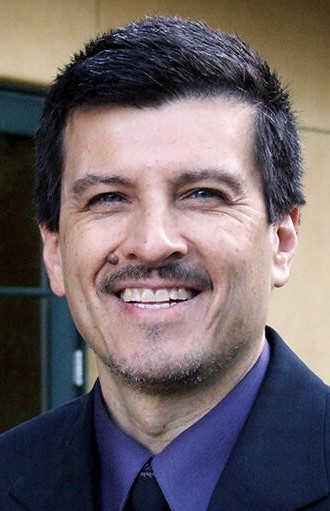 Kurt Organista合作论文数School of Social Welfare, University of California, Berkeley4
 Sonya Arreola合作论文数4
 Paula A Worby合作论文数4
 Alex H. Kral合作论文数RTI International4Sahar Khoury合作论文数3
 Philippe Bourgois合作论文数Department of Psychiatry and Biobehavioral Sciences, David Geffen School of Medicine, University of California3Carlos Martinez合作论文数2
 Carruth Lauren合作论文数Global Health &Health Policy Program, Woodrow Wilson School of Public &International Affairs, Princeton University;Woodrow Wilson School of Public & International Affairs, Princeton University2
 Lahra Smith合作论文数2Katharine M. Donato合作论文数Georgetown University2Rebecca Mendez合作论文数1
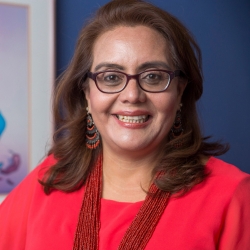 Leticia Márquez-Magaña合作论文数Health Equity Research Laboratory, Department of Biology, College of Science and Engineering, San Francisco State University1Hannah Janeway合作论文数1Cathy Samayoa合作论文数1Jaqueline Mendez合作论文数1Midley Michaud合作论文数1Alyssa Gimenez合作论文数1Miriam Wong合作论文数1Daniel Madrigal合作论文数1Hart Laurie Kain合作论文数1Rafael M. Diaz合作论文数1Beyeler Naomi合作论文数1
 Tor Neilands合作论文数Division of Prevention Science, Department of Medicine, School of Medicine, University of California, San Francisco1Niccolo Caldararo合作论文数Department of Anthropology, San Francisco State University1
 Heide Castaneda合作论文数Department of Anthropology, University of Arizona1




