Comparing spatial performance in different virtual reality setups can indicate which cues are relevant for a realistic virtual experience. Bodily self-movement cues and global orientation information were shown to increase spatial performance compared with local visual cues only. We tested the combined impact of bodily and global orientation cues by having participants learn a virtual multi corridor environment either by only walking through it, with additional distant landmarks providing heading information, or with a surrounding hall relative to which participants could determine their orientation and location. Subsequent measures on spatial memory only revealed small and non-reliable differences between the learning conditions. We conclude that additional global landmark information does not necessarily improve user's orientation within a virtual environment when bodily-self-movement cues are available.
In general, the literature suggests that visual information alone is insufficient to control rotational self-motion accurately. Typically, subjects misperceive simulated self-rotations when no vestibular or proprioceptive feedback is available (see Bakker et al., 1999; 2001 — these studies were done with HMDs). On the other hand, Riecke et al. (2002) found nearly perfect turning performance when a curved, half-cylindrical projection screen with a large FOV of 180 was used. So far, no study has systematically looked at the effect of screen curvature on ego-motion perception. To investigate whether screen curvature influences turning performance, we had 14 participants perform visually simulated ego-rotations either using a flat projection screen (FOV 86 ∞ 64 ) or a curved projection screen (radius 2m) with the same FOV in a within-subject repeated-measures design. Subjects saw a “star field” of limited lifetime dots without any landmarks, and they used a joystick to control instructed turn angles between 45 and 270 (steps of 45 ). No feedback about accuracy was provided. A repeated-measures ANOVA revealed a significant effect of screen curvature, and also an interaction between curvature and turn angle: While target angles were undershot on the curved screen (gain factor 0.84), a surprising overshoot was observed for the flat screen (gain factor 1.12). Subjects' verbal reports indicate that on the curved screen, the simulated self-rotations looked more realistic than on the flat screen. This may have led them to overestimate turns on the curved screen (thus undershoot turn angles) and to underestimate turns on the flat screen (thus overshoot turn angles). A possible explanation is that rotational lamellar flow on the flat screen was misperceived as translational flow rather than as rotational flow. Results indicate that screen curvature is a critical parameter to be considered for ego-motion simulation and vection studies.
Place naming examining the influence of language on wayfinding Tobias Meilinger Max-Planck-Institute for Biological Cybernetics J¨ org Schulte-Pelkum Max-Planck-Institute for Biological Cybernetics Julia Frankenstein Max-Planck-Institute for Biological Cybernetics Naima Laharnar Max-Planck-Institute for Biological Cybernetics Gregor Hardies University of T¨ ubingen Hanspeter A. Mallot University of T¨ ubingen Heinrich H. B¨ ulthoff Max-Planck-Institute for Biological Cybernetics Abstract: We asked the question how language influences a presumably embodied system such as human wayfinding. To test this, participants walked along a route in a virtual environment. They were asked to remember half of the intersections by what they saw. At the other 50
Research on self-motion perception and simulation has traditionally focused on the contribution of physical stimulus properties (“bottom-up factors”) using abstract stimuli. Here, we demonstrate that cognitive (“top-down”) mechanisms like ecological relevance and presence evoked by a virtual environment can also enhance visually induced self-motion illusions (vection). In two experiments, naive observers were asked to rate presence and the onset, intensity, and convincingness of circular vection induced by different rotating visual stimuli presented on a curved projection screen (FOV: 54° × 45°). Globally consistent stimuli depicting a natural 3D scene proved more effective in inducing vection and presence than inconsistent (scrambled) or unnatural (upside-down) stimuli with similar physical stimulus properties. Correlation analyses suggest a direct relationship between spatial presence and vection. We propose that the coherent pictorial depth cues and the spatial reference frame evoked by the naturalistic environment increased the believability of the visual stimulus, such that it was more easily accepted as a stable “scene” with respect to which visual motion is more likely to be judged as self-motion than object motion. This work extends our understanding of mechanisms underlying self-motion perception and might thus help to improve the effectiveness and believability of virtual reality applications.
This chapter is concerned with the perception and simulation of ego-motion in virtual environments, and how spatial presence and other higher cognitive and top-down factors can contribute to improve the illusion of ego-motion in virtual reality (VR). In the real world, we are used to being able to move around freely and interact with our environment in a natural and effortless manner. Current VR technology does, however, not yet allow for natural, real-life-like interaction between the user and the virtual environment. One crucial shortcoming in current VR is the insufficient and often unconvincing simulation of ego-motion, which frequently causes disorientation, unease, and motion sickness. We posit that a realistic perception of ego-motion in VR is a fundamental constituent for spatial presence and vice versa. Thus, by improving both spatial presence and ego-motion perception in VR, we aim to eventually enable performance levels in VR similar to the real world for basic tasks, e.g., spatial orientation and distance perception, which are currently very problematic cases. Users frequently get lost easily in VR while navigating, and simulated distances appear to be compressed and underestimated compared to the real world (Witmer & Sadowski, 1998; Chance, Gaunet, Beall, & Loomis, 1998; Creem-Regehr, Willemsen, Gooch, and Thompson, 2003; Knapp, 1999; Thompson, Willemsen, Gooch, Creem-Regehr, Loomis, & Beall, 2004, Stanney, 2002). The overall goal of the EU-funded project on “Perceptually Oriented Ego-Motion Simulation” (POEMS-IST-2001-39223, see www.poems-project.info) has been to take first steps towards establishing a lean and elegant ego-motion simulation paradigm to achieve convincing ego-motion perception and effective ego-motion simulation in VR, without (or while hardly) moving the user physically. The ultimate goal is to achieve cost-efficient, ego-motion simulation that enables compelling perception of self-motion and quick, intuitive, and robust spatial orientation while travelling in VR, with performance similar to the real world. The POEMS approach to tackle this goal was to concentrate on perceptual aspects and task-specific effectiveness rather than aiming for perfect physical realism (see Section 2). This approach focuses on multi-modal stimulation of our senses, where vision, auditory information, and vibrations let users perceive that they are moving in space. Furthermore, top-down or high-level phenomena like spatial presence and reference frames are utilized to improve the effectiveness of ego-motion simulation. It is well-known that quite compelling ego-motion illusions can occur both in the real world and in VR. Hence, the investigation of such ego-motion illusions in VR was used as a starting point for improving self-motion simulations in VR. Spatial presence and immersion occupy an important role in this context, as they are expected to be an essential factor in enabling robust and effortless spatial orientation and task performance. Furthermore, according to our current spatial orientation framework (von der Heyde & Riecke, 2002, Riecke & von der Heyde, 2002), we propose that spatial presence and immersion are necessary prerequisites for quick, robust, and effortless spatial orientation behaviour and also for automatic spatial updating in particular. Thus, increasing spatial presence and immersion would in turn be expected to increase the overall convincingness and perceived realism of the simulation, bringing us one step closer to our ultimate goal of real world-like interaction with and navigation through the virtual environment. In our psychophysical experiments, the observed data suggest a direct relation between spatial presence and the strength of the self-motion illusion in VR: Experimental data from two ego-motion perception experiments will be reported in more detail in Section 3 and 4, where a systematic link between spatial presence ratings and ego-motion perception responses was observed. This finding is important, both from an applied perspective of self-motion simulation, and for our understanding of presence and of self-motion perception.
The illusion of self-motion induced by moving visual stimuli ("vection") has typically been attributed to low-level, bottom-up perceptual processes. Therefore, past research has focused primarily on examining how physical parameters of the visual stimulus (contrast, number of vertical edges etc.) affect vection. Here, we investigated whether higher-level cognitive and top-down processes - namely global scene consistency and spatial presence - also contribute to the illusion. These factors were indirectly manipulated by presenting either a natural scene (the Tübingen market place) or various scrambled and thus globally inconsistent versions of the same stimulus. Due to the scene scrambling, the stimulus could no longer be perceived as a consistent 3D scene, which was expected to decrease spatial presence and thus impair vection. Twelve naive observers were asked to indicate the onset, intensity, and convincingness of circular vection induced by rotating visual stimuli presented on a curved projection screen (FOV: 54°x45°). Spatial presence was assessed using presence questionnaires. As predicted, scene scrambling impaired both vection and presence ratings for all dependent measures. Neither type nor severity of scrambling, however, showed any clear effect. The data suggest that higher-level information (the interpretation of the globally consistent stimulus as a 3D scene and stable reference frame) dominated over the low-level (bottom-up) information (more contrast edges in the scrambled stimuli, which are known to facilitate vection). Results suggest a direct relation between spatial presence and self-motion perception. We posit that stimuli depicting globally consistent, naturalistic scenes provide observers with a convincing spatial reference frame for the simulated environment which allows them to feel "spatially present" therein. We propose that this, in turn, increases the believability of the visual stimuli as a stable "scene" with respect to which visual motion is more likely to be judged as self-motion. We propose that not only low-level, bottom-up factors, but also higher-level factors such as the meaning of the stimulus are relevant for self-motion perception and should thus receive more attention. This work has important implications for both our understanding of selfmotion perception and motion simulator design and applications.
Despite recent technological advances, convincing self-motion simulation in virtual reality (VR) is difficult to achieve, and users often suffer from motion sickness and/or disorientation in the simulated world. Instead of trying to simulate self-motions with physical realism (as is often done for, e.g., driving or flight simulators), we propose in this paper a perceptually oriented approach towards self-motion simulation. Following this paradigm, we performed a series of psychophysical experiments to determine essential visual, auditory, and vestibular/tactile parameters for an effective and perceptually convincing self-motion simulation. These studies are a first step towards our overall goal of achieving lean and elegant self-motion simulation in virtual reality (VR) without physically moving the observer. In a series of psychophysical experiments about the self-motion illusion (circular vection), we found that (i) vection as well as presence in the simulated environment is increased by a consistent, naturalistic visual scene when compared to a sliced, inconsistent version of the identical scene, (ii) barely noticeable marks on the projection screen can increase vection as well as presence in an unobtrusive manner, (iii) physical vibrations of the observer's seat can enhance the vection illusion, and (iv) spatialized 3D audio cues embedded in the simulated environment increase the sensation of self-motion and presence. We conclude that providing consistent cues about self-motion to multiple sensory modalities can enhance vection, even if physical motion cues are absent. These results yield important implications for the design of lean and elegant self-motion simulators.
INTRODUCTION: Much of the work on self-motion perception and simulation has investigated the contribution of physical stimulus properties (so-called “bottom-up” factors). This paper provides an overview of recent experiments demonstrating that illusory self-motion perception can also benefit from “top-down” mechanisms, e.g. expectations, the interpretation and meaning associated with the stimulus, and the resulting spatial presence in the simulated environment. METHODS: Several VR setups were used as a means to independently control different sensory modalities, thus allowing for well-controlled and reproducible psychophysical experiments. Illusory self-motion perception (vection) was induced using rotating visual or binaural auditory stimuli, presented via a curved projection screen (FOV: 54x40.5°) or headphones, respectively. Additional vibrations, subsonic sound, or cognitive frameworks were applied in some trials. Vection was quantified in terms of onset time, intensity, and convincingness ratings. RESULTS & DISCUSSION: Auditory vection studies showed that sound sources participants associated with stationary “acoustic landmarks” (e.g., a fountain) can significantly increase the effectiveness of the self-motion illusion, as compared to sound sources that are typically associated to moving objects (like the sound of footsteps). A similar top-down effect was observed in a visual vection experiment: Showing a rotating naturalistic scene in VR improved vection considerably compared to scrambled versions of the same scene. Hence, the possibility to interpret the stimulus as a stationary reference frame seems to enhance the self-motion perception, which challenges the prevailing opinion that self-motion perception is primarily bottom-up driven. Even the mere knowledge that one might potentially be moved physically increased the convincingness of the self-motion illusion significantly, especially when additional vibrations supported the interpretation that one was really moving. CONCLUSIONS: Various topdown mechanisms were shown to increase the effectiveness of self-motion simulations in VR, even though they have received little attention in the literature up to now. Thus, we posit that a perceptually-oriented approach that combines both bottom-up and top-down factors will ultimately enable us to optimize self-motion simulations in terms of both effectiveness and costs.
In Virtual Reality, considerable systematic spatial orientation problems frequently occur that do not happen in comparable real-world situations. This study investigated possible origins of these problems by examining the influence of visual field of view (FOV) and type of display device (head-mounted display (HMD) vs. projection screens) on basic human spatial orientation behavior. In Experiment 1, participants had to reproduce traveled distances and to turn specified target angles in a simple virtual environment without any landmarks that was projected onto a 180 half-cylindrical projection screen. As expected, distance reproduction performance showed only small systematic errors. Turning performance, however, was unexpectedly almost perfect (gain = 0.97), with negligible systematic errors and minimal variability, which is unprecedented in the literature. In Experiment 2, turning performance was compared between a projection screen (FOV 84 degrees x 63 degrees), an HMD (40 degrees x 30 degrees), and blinders (40 degrees x 30 degrees) that restricted the FOV on the screen. Performance was best with the screen (gain 0.77) and worst with the HMD (gain 0.57). We found a significant difference between blinders (gain 0.73) and HMD, which indicates that different display devices can influence ego-motion perception differentially, even if the physical FOVs are equal. We conclude that the type of display device (HMD vs. curved projection screen) seems to be more critical than the FOV for the perception of ego-rotations. Furthermore, large, curved projection screens yielded better performance than HMDs.
This study investigated whether the visually induced selfmotion illusion (“circular vection”) can be enhanced by adding a matching auditory cue (the sound of a fountain that is also visible in the visual stimulus). Twenty observers viewed rotating photorealistic pictures of a market place projected onto a curved projection screen (FOV: 54ux45u). Three conditions were randomized in a repeated measures within-subject design: No sound, mono sound, and spatialized sound using a generic head-related transfer function (HRTF). Adding mono sound increased convincingness ratings marginally, but did not affect any of the other measures of vection or presence. Spatializing the fountain sound, however, improved vection (convincingness and vection buildup time) and presence ratings significantly. Note that facilitation was found even though the visual stimulus was of high quality and realism, and known to be a powerful vection-inducing stimulus. Thus, HRTF-based auralization using headphones can be employed to improve visual VR simulations both in terms of self-motion perception and overall presence.
 Bernhard Riecke合作论文数School of Interactive Arts & Technology, Simon Fraser University;TEDxSFU28
 Heinrich Bülthoff合作论文数Department of Human Perception, Cognition and Action, Max Planck Institute for Biological Cybernetics;Eberhard Karls Universität in Tübingen22
 Markus von der Heyde合作论文数Institute for Biological Cybernetics12
 Marios N. Avraamides合作论文数6
 F Caniard合作论文数4
 Julia Frankenstein合作论文数Max Planck Institute for Biological Cybernetics, Tübingen, Germany. julia.frankenstein@cognition.uni-freiburg.de3T Meilinger合作论文数2
 Naima Laharnar合作论文数2H.-G. Nusseck合作论文数2Franck Caniard合作论文数2R. Hoger合作论文数1ds chang合作论文数1P Larsson合作论文数1r ulrich合作论文数1
 Daniel S. Berger合作论文数Microsoft;University of Washington1
 Mel Slater合作论文数Department of Clinical Psychology, Universitat de Barcelona;Experimental Virtual Environments for Neuroscience and Technology Lab1
 John S Butler合作论文数Children’s Evaluation and Rehabilitation Center (CERC),, Albert Einstein College of Medicine1
 Pontus Larsson合作论文数1H. H. B???Lthoff合作论文数1
 Daniel Vastfjall合作论文数Department of Applied Acoustics;Chalmers University of Technology;Department of Applied Acoustics, Chalmers University of Technology1
 Hanspeter A. Mallot合作论文数Dept. of Biology, Faculty of Science, Eberhard Karls University1Daniel R. Berger合作论文数Institute for Biological Cybernetics1Mariano Alcañiz Raya合作论文数mentioned University1
 Tobias Meilinger合作论文数Max-Planck-Institute for Biological Cybernetics, Tübingen, Germany1
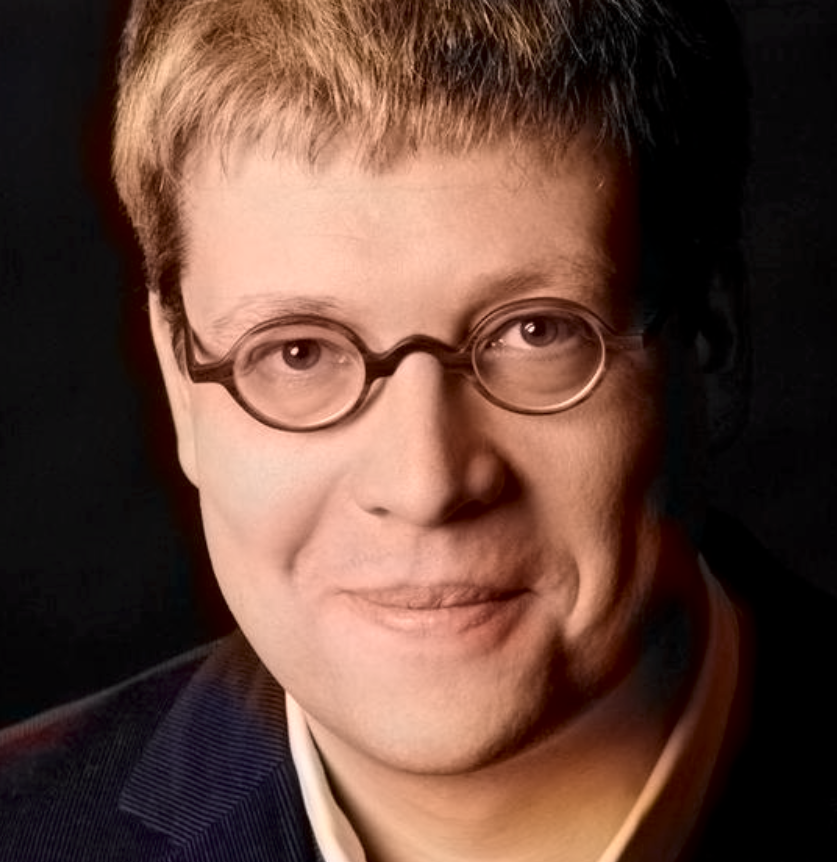 Felix Wichmann合作论文数Department of Computer Science, Faculty of Science, Eberhard Karls Universität Tübingen1




