The association of malignant pheochromocytoma and poorly differentiated lymphocytic lymphoma has not previously been reported. A case is presented of a 58-year old man with a 20-year history of malignant pheochromocytoma well controlled on Dibenzyline who was found to have poorly differentiated lymphocytic lymphoma. During lymphoma chemotherapy with cyclophosphamide, vincristine and prednisone (VCP) he developed tachycardia and syncope accompanied by severe hypertension. During the next course of chemotherapy one month later, 24-hour urinary VMA, metanephrine and catecholamine values were determined before, during and after the chemotherapy and were found to have increased two- to ten-fold. This suggests that VCP caused tumor lysis with release of catecholamines into the circulation.
To examine the weight loss of hyperbaric helium-oxygen habitation, we measured the exchange of liquids and calories in six men who lived in this atmosphere for 32 d. The maximum pressure was 49.5 ATA. The men lost 3.7-10.1 kg, in spite of warm ambient (31-32 degrees C) temperatures and adequate calories (2,737 kcal/d) provided for the sedentary ways of chamber living. Weight loss and a calculated fluid deficit were accompanied by significant hemoconcentration, shown by increases in serum proteins. These changes were followed by a rise in urinary aldosterone and vasopressin, but not thirst. Weight loss in hyperbaric atmospheres is probably multifactorial, but our data suggests an uncoupling of normal osmoregulation may have occurred in the present set of subjects. This may have been due to altered lung mechanics, increased catecholamines, or effects of high pressure on cellular responses to vasopressin.
ABSTRACT Plasma cortisol was measured by radioimmunoassay during 4 h oral glucose tolerance tests in 8 non-obese normal subjects. Following 100 g of glucose, plasma cortisol concentrations were lower than basal at 15, 30 and 60 min, and declined with a half-time of 70 min. No evidence was obtained that the hyperglycaemia which follows glucose ingestion leads to increased cortisol secretion and that such a mechanism is involved in the stabilization of blood sugar levels during the posthyperglycaemic phase of the normal oral glucose tolerance test. Epinephrine and norepinephrine excretory rates during the hyperglycaemic (0–2 h) and euglycaemic (2–4 h) phases of the test were not significantly different. It is concluded that adrenocortical and adrenomedullary activities are not increased during normal glucose tolerance in man.
This report concerns gastric juice, plasma, and urinary levels of adenosine 3′, 5′-monophosphate (cAMP) in 27 subjects undergoing routine gastric analysis under maximum stimulation with betazole or pentagastrin. Cyclic AMP was measured by sensitive and specific radioimmunoassay. No increase in concentration of cAMP was noted in gastric juice, plasma, or urine following either betazole or pentagastrin stimulation. Betazolestimulated human gastric acid secretion was associated with an increased cAMP output into the gastric juice (P<0.05). There was no change in cAMP output following pentagastrin stimulation. The peak acid output produced by pentagastrin and betazole was similar. The lack of increase in cAMP concentration lends support to the concept that cyclic AMP is not a primary mediator in the stimulation of gastric acid secretion by betazole or pentagastrin in the human. The physiologic significance of the increase in cAMP output following betazole stimulation remains unresolved.
The clinical utility of urinary cyclic adenosine-3',5'-monophosphate (cAMP) determinations has been limited by the overlap between hyperparathyroid and normal patients. We evaluated the potential of the parathyroid hormone (PTH)-dependent, nephrogenous cAMP in the diagnosis of hyperparathyroidism. Twenty-three patients with primary hyperparathyroidism and 19 control subjects had two-hour urine collections and blood sampling at midpoint. Nephrogenous cAMP level was calculated as total urinary cAMP excretion minus the amount filtered. The total urinary cAMP excretion (micromols per gram of creatinine) was higher in hyperparathyroid patients (6.8 +/- .5 SE), but overlapped with values obtained in controls (2.9 +/- .15). The level of nephrogenous cAMP (percent of total) was also higher in hyperparathyroid patients (72.5 +/- 1.8) than controls (26.3 +/- 4.1) and clearly separated the groups. Determination of nephrogenous cAMP levels may be useful in the diagnosis of hyperparathyroidism.
Fourteen scuba divers in swim trunks did ergometer work while breathing air at 3 m in 25.5 degrees C water. They were stressed by work and cold. Exercise produced increases in heart rate, minute ventilation (VE), oxygen consumption (VO2), and catecholamine excretion. Cold lowered rectal temperature (Tre) despite exercise, and contributed to the increase in VO2 and catecholamine excretion. Immersion, cutaneous vasoconstriction, work, and scuba breathing contributed to a brisk diuresis, probably by centralizing blood volume and thus stimulating central vascular volume receptors. Similar exercise in 25.5 degrees C water, breathing helium tri-mix (gas density less than air), produced higher VE but lower VO2 when compared to air breathing. Tri-mix scuba breathing resulted in a smaller diuresis, perhaps because its lower density leads to lesser atrial distension during work. The fall in Tre during work in 25.5 degrees C water was identical whether air or helium tri-mix was respired, since helium does not accentuate respiratory convective heat transfer.
Plasma testosterone, LH, and FSH were measured in 24 healthy subjects prior to and after bilateral vasectomy. No significant changes were noted in any of the hormones 42 and 87 days after surgery; this indicated that normal testicular function persisted during the period of study.
Journal Article Boric Acid Interference with Alumina Extraction of Urinary Catecholamines Get access Lawrence W Raymond, Lawrence W Raymond Naval Medical Research Institute National Naval Medical Center Bethesda, Md. 20014 Search for other works by this author on: Oxford Academic Google Scholar Roger E Johnsonbaugh, Roger E Johnsonbaugh Naval Medical Research Institute National Naval Medical Center Bethesda, Md. 20014 Search for other works by this author on: Oxford Academic Google Scholar Jonas Sode Jonas Sode Naval Medical Research Institute National Naval Medical Center Bethesda, Md. 20014 Search for other works by this author on: Oxford Academic Google Scholar Clinical Chemistry, Volume 20, Issue 7, 1 July 1974, Page 917, https://doi.org/10.1093/clinchem/20.7.917b Published: 01 July 1974
 LP GEORGES合作论文数6RE JOHNSONBAUGH合作论文数4Rh Bower合作论文数4LW RAYMOND合作论文数4Cl Czerwinski合作论文数4
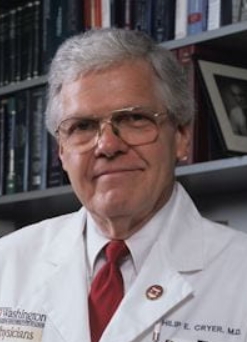 Philip E. Cryer合作论文数Division of Endocrinology, Metabolism & Lipid Research, John T. Milliken Department of Internal Medicine, School of Medicine, Washington University in St. Louis4Clifford M. Herman合作论文数4P E Cryer合作论文数3Wm Lukash合作论文数3JT OBRIAN合作论文数3Cm Herman合作论文数3HC LANGWORTHY合作论文数3
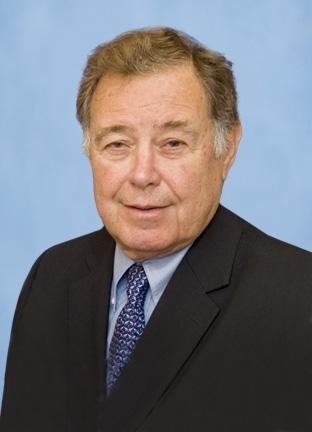 Arnold G. Coran合作论文数Department of Surgery, Medical School, University of Michigan3W. H. Lipshutz合作论文数3CS LEACH合作论文数2PF HOAR合作论文数2Babka J C合作论文数2Jr Fletcher合作论文数2Dl Horwitz合作论文数2Comdr. R.D. Gaskins合作论文数2J PETERSON合作论文数2Leon P. Georges合作论文数2Joseph R Tucci合作论文数2R.E. Johnsonbaugh合作论文数2benjamin r brooks合作论文数1Rb Johnson合作论文数1Roger E. Johnsonbaugh合作论文数1george h gass合作论文数1Rc Knudsen合作论文数1w king engel合作论文数1Dm Strong合作论文数1Kw Sell合作论文数1D M McCance合作论文数1S B Engel合作论文数1J J Sabol合作论文数1NS RAYMOND合作论文数1PMW PAILEY合作论文数1WH SPAUR合作论文数1RC OSBURNE合作论文数1Arnold G. Coran合作论文数1Bs Keenan合作论文数1A Ahmed合作论文数1
 Arthur J. Sober合作论文数Department of Dermatology, Massachusetts General Hospital, Harvard Medical School1O'Connell K合作论文数1Kleiman J O合作论文数1Kenneth D. Burman合作论文数1
 Leonard Wartofsky合作论文数School of Medicine, Georgetown University1




