The covariant quantization of the heterotic Green-Schwarz superstring action has been considered recently by Romans. We show that his BRST gauge fixed action has a conformal anomaly. We also give a brief review of the Minkowski space formulation of the operator product expansions.
In this letter we show how the covariant anomaly emerges in the overlap scheme. We also prove that the overlap scheme correctly reproduces the anomaly in the flavour currents such as $j^5_\mu$ in vector like theories like QCD.
Feynman rules for the vacuum amplitude of fermions coupled to external gauge and Higgs fields in a domain wall lattice model are derived using time-dependent perturbation theory. They have a clear and simple structure corresponding to 1-loop vacuum graphs. Their continuum approximations are extracted by isolating the infrared singularities and it is shown that, in each order, they reduce to vacuum contributions for chiral fermions. In this sense the lattice model is seen to constitute a valid regularization of the continuum theory of chiral fermions coupled to weak and slowly varying gauge and Higgs fields. The overlap amplitude, while not gauge invariant, exhibits a well defined (modulo phase conventions) response to gauge transformations of the background fields. This response reduces in the continuum limit to the expected chiral anomaly, independently of the phase conventions.
The vacuum polarization due to chiral fermions on a 4-dimensional Euclidean lattice is calculated according to the overlap prescription. The fermions are coupled to weak and slowly varying background gauge and Higgs fields, and the polarization tensor is given by second order perturbation theory. In this order the overlap constitutes a gauge-invariant regularization of the fermion vacuum amplitude. Its low-energy-long-wavelength behaviour can be computed explicitly and we verify that it coincides with the Feynman graph result obtainable, for example, by dimensional regularization of continuum gauge theory. In particular, the Standard Model Callan-Symanzik RG functions are recovered. Moreover, there are no residual lattice artefacts such as a dependence on Wilson-type mass parameters.
The weak coupling limit of an Ising type model on the F4 lattice is examined. It is shown that by imposing some constraints on the Ising couplings, one can express the weak coupling limit as a multidimensional Berezin integral with local symmetries, We explore the possibility of deriving a fermion propagator by a self-consistent, Nambu-Jona-Lasinio type of calculation. We argue that at low energies this model describes Dirac fermions coupled to Yang-Mills fields.
The overlap formula proposed by Narayanan and Neuberger in chiral gauge theories is examined. The free chiral and Dirac Green's functions are constructed in this formalism. Four dimensional anomalies are calculated and the usual anomaly cancellation for one standard family of quarks and leptons is verified.
The weak coupling limit of an Ising type model on the F-4 lattice is examined. It is shown that by imposing some constraints on the Ising couplings, one can express the weak coupling limit as a multidimensional Berezin integral with local symmetries. We explore the possibility of deriving a fermion propagator by a self-consistent, Nambu-Jona-Lasinio type of calculation. We argue that at low energies this model describes Dirac fermions coupled to Yang-Mills fields.
The overlap approach to chiral gauge theories on arbitrary D-dimensional lattices is studied. The doubling problem and its relation to chiral anomalies for D = 2 and 4 is examined. In each case it is shown that the doublers can be eliminated and the well-known perturbative results for chiral anomalies can be recovered. We also consider the multi-flavour case and give the general criteria for the construction of anomaly free chiral gauge theories on arbitrary lattices. We calculate the second-order terms in a continuum approximation to the overlap formula in D dimensions and show that they coincide with the bilinear part of the effective action of D-dimensional Weyl fermions coupled to a background gauge field. Finally, using the same formalism we reproduce the correct Lorentz, diffeomorphism and gauge anomalies in the coupling of a Weyl fermion to 2-dimensional gravitational and Maxwell fields.
In this letter we show that the overlap formulation of chiral gauge theories correctly reproduces the gravitational Lorentz anomaly in 2-dimensions. This formulation has been recently suggested as a solution to the fermion doubling problem on the lattice. The well known response to general coordinate transformations of the effective action of Weyl fermions coupled to gravity in 2-dimensions can also be recovered.
A class of generalized Ising models is examined with a view to extracting a low energy sector comprising Dirac fermions coupled to Yang-Mills vectors. The main feature of this approach is a set of gap equations, covariant with respect to one of the 4-dimensional crystallographic space groups. The Dirac propagator is determined a la generalized Nambu-Jona Lasinio mechanism as a solution of these gap equations.
Some aspects and applications of $ σ$-models in particle and condensed matter physics are briefly reviewed.
A class of generalized Ising models is examined with a view to extracting a low energy sector comprising Dirac fermions coupled to Yang-Mills vectors. The main feature of this approach is a set of gap equations, covariant with respect to one of the 4-dimensional crystallographic space groups.
The propagation of closed bosonic strings interacting with background gravitational and dilaton fields is reviewed. The string is treated as a quantum field theory on a compact 2-dimensional manifold. The question is posed as to how the conditions for the vanishing trace anomaly and the ensuing background field equations may depend on global features of the manifold. It is shown that to the leading order in σ-model perturbation theory the string loop effects do not modify the gravitational and the dilaton field equations. However for the purely bosonic strings new terms involving the modular parameter of the world sheet are induced by quantum effects which can be absorbed into a re-definition of the background fields. We also discuss some aspects of several regularization schemes such as dimensional, Pauli-Villars and the proper-time cut off in an appendix.
The renormalization group equations for a class of nonrelativistic quantum σ-models targeted on flag manifolds are given. These models emerge in a continuum limit of generalized Heisenberg antiferromagnets. The case of the [Formula: see text] manifold is studied in greater detail. We show that at zero temperature there is a fixed point of the RG transformations in (2 + ε) dimensions where the theory becomes relativistic. We study the linearized RG transformations in the vicinity of this fixed point and show that half of the couplings are irrelevant. We also show that at this fixed point there is an enlargement of the global isometries of the target manifold. We construct a discrete non-Abelian enlargement of this kind.
In this letter we show that the overlap formulation of chiral gauge theories correctlyreproduces the gravitational Lorentz anomaly in 2-dimensions. This formulationhas been recently suggested as a solution to the fermion doubling problemon the lattice.The well known response to general coordinate transformations of theeffective action of Weyl fermions coupled to gravity in 2-dimensions can also berecovered.The formulation of lattice chiral gauge theories has been an outstanding problem...
Effective field theory methods are applied to the study of non-relativistic quantum electrodynamics in a slowly varying electromagnetic background. It is shown that the one-loop effective action has singularities at those values of the background fields which correspond to complete fillings of Landau levels. One immediate result of our work is a simple derivation of the oscillatory behaviour of the energy density magnetization and permittivities, at zero temperature.
The integer quantum Hall effect and associated magnetic phenomena are reconsidered in a two-dimensional system with a flat boundary. The electromagnetic properties of this system are governed by an effective Lagrangian which includes an induced Chern-Simons term. The effective Lagrangian is relevant for the description of fields which are slowly varying about a uniform magnetic background associated with a fermionic ground state in which a whole number of Landau levels is filled. It is singular for field values that correspond to partially filled levels. The underlying assumption of translation invariance of the fermionic ground state fails in the vicinity of boundaries where the effective field theory is essentially nonlocal. The width of the boundary layer and the current flowing in it are estimated.
The response of a floating ice plate to a moving load is given in terms of a pair of Green's functions. General expressions for these Green's functions are derived for the case of an infinite isotropic plate of uniform thickness supported on a fluid base of uniform depth. The distributions of stress and strain in the vicinity of a concentrated load receive significant contributions from waves of length comparable with the plate thickness and their description necessitates an exact description of thickness effects. Circumstances in which the classical thin-plate theory can be recovered are discussed. The steady-state response to a uniformly moving load displays a so-called ‘critical’ behaviour for load velocities in the neighbourhood of a threshold value at which radiation commences. At the critical speed the amplitude is limited by dissipative forces in the ice plate. To describe this a simple viscoelastic term is included in our model. Calculations indicate that thin-plate theory is accurate to within 5% for distances greater than twenty times the ice thickness.
We study the coupling of an abelian Chern-Simons field to fermions in space-times of the form RxM2, where M2 is a compact riemannian manifold. Upon integrating out the non-zero modes of the Chern-Simons field, an effective N-particle hamiltonian is constructed, which involves a term representing the effects of the zero modes. We also study the transformation to the fractional statistics (anyon) basis. It is shown that unlike the case of the flat euclidean M2 the anyon wave equation involves some residual metric dependent interactions, and the wave function is multivalued.
 Abdus Salam合作论文数Imperial College London48
 Robert Delbourgo合作论文数School of Natural Sciences, University of Tasmania30
 S. Randjbar-Daemi合作论文数27ABDUS SALAM合作论文数16Chris Isham合作论文数Department of Physics, Faculty of Natural Sciences, Imperial College London8J. C. Pati合作论文数5M. A. Rashid合作论文数4Christopher Isham合作论文数Blackett Laboratory;College of Science, Imperial;Technology and Medicine;Blackett Laboratory, Imperial College of Science3m a rashid合作论文数2
 Jogesh Pati合作论文数Physics Department, College of Computer, Mathematical, and Natural Sciences, The Graduate School, University of Maryland;Stanford Linear Accelerator Center National Accelerator Laboratory2Yoshizo Takahashi合作论文数2J.F. Boyce合作论文数2S KAMEFUCHI合作论文数1j m jauch合作论文数1
 Werner Heisenberg合作论文数Leipzig1Subhash Rajpoot合作论文数1William H Robinson合作论文数1
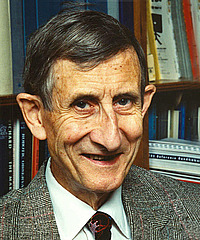 Freeman Dyson合作论文数School of Natural Sciences, Institute for Advanced Study1
 Tom Kibble合作论文数Blackett Laboratory, Faculty of Natural Sciences, Imperial College London1
 Ali Hani Chamseddine合作论文数Physics Department, American University of Beirut;Instiut des Hautes Etudes Scientifique1Richard J Eden合作论文数1
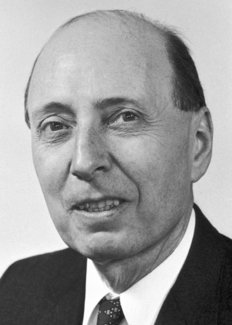 Eugene Wigner (尤金·保罗·维格纳)合作论文数Princeton University;University of Chicago1
 Edoardo Amaldi合作论文数Dipartimento di Elettronica, Informazione e Bioingegneria, Politecnico di Milano1
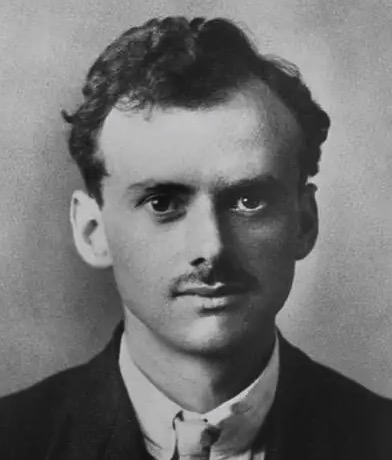 Paul Dirac (保罗·狄拉克)合作论文数Florida State University1John Polkinghorne合作论文数1E. M. Haines合作论文数1Chris Panagiotakopoulos合作论文数1Res Jost合作论文数1Mohamed Namazie合作论文数1D.M. Capper合作论文数1
 Muhammad Rashid合作论文数Faculty of Engineering, International Islamic University Malaysia1V Elias合作论文数1
 John Hasbrouck Van Vleck合作论文数Division of Engineering and Applied Physics, Harvard University1Cornelius Lanczos合作论文数1
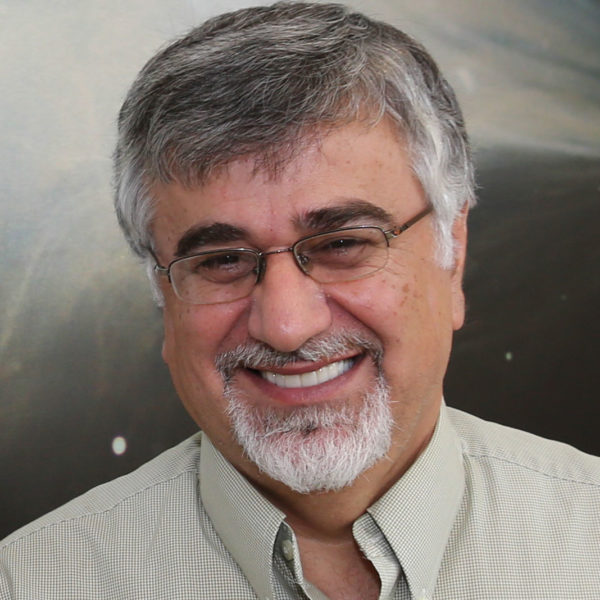 Ergin Sezgin合作论文数Department of Physics & Astronomy, College of Arts & Sciences, Texas A&M University1




