Correction to: Molecular Psychiatry advance online publication, 18 May 2010; doi: 10.1038/mp.2010.59 After the article was published online, the authors noted G Germain's name was incomplete in the author list. The corrected author list appears below: AM Addington, J Gauthier, A Piton, FF Hamdan, A Raymond, N Gogtay, R Miller, J Tossell, J Bakalar, G Inoff-Germain, P Gochman, R Long, JL Rapoport and GA Rouleau
Extensive experience with the diagnosis of childhood-onset schizophrenia indicates a high rate of false positives. Most mislabeled patients have chronic disabling, affective, or behavioral disorders. The authors report the cases of three children who passed stringent initial childhood-onset schizophrenia "screens" but had no chronic psychotic disorder. For two, the European literature yielded more fitting diagnoses: psychosis not otherwise specified (e.g., reactive or psychogenic psychosis, paranoid schizophrenia), single episode in full remission (e.g., anxiety psychosis), and factitious disorder (DSM-IV 300.16). These cases illustrate that transient psychotic illnesses can be misdiagnosed as childhood-onset schizophrenia. Proper identification can prevent years of inappropriate therapies.
Deficits in working memory have been repeatedly found on a behavioural level in children with attention-deficit/hyperactivity disorder (ADHD). Functional brain imaging studies have revealed evidence for alterations in the prefrontal cortex associated with working memory. So far it remains unresolved whether object (OWM) and spatial visual working memory (SWM) are distinctly impaired in ADHD. We investigated this issue with the fist multi-channel functional near-infrared spectroscopy study of children with ADHD.We investigated 19 children with ADHD combined type (DSM-IV) and 19 controls matched for age (8–15 years), sex, handedness, and intelligence during a working memory task assessing OWM and SWM separately, and a control condition (CON). Prefrontal brain activity was measured by concentration changes of oxygenated haemoglobin.Working memory performance showed significant differences for conditions (OWM > SWM > CON), but no differences between groups. Cortical prefrontal activation was significantly higher for OWM and SWM in contrast to CON, again with no differences between groups.We found no indication for an altered prefrontal processing during OWM and SWM tasks in ADHD children compared to controls. Reviewing the existing imaging literature on working memory in ADHD and considering the present data, we discuss possible confounding factors relevant for brain activity in previous, the current, and future investigations. Thus, it is of high importance to capture developmental trajectories, task specific discrepancies, and effects of permanent medication intake in future studies.
Clozapine, an atypical antipsychotic, is the most effective medication for treatment-resistant schizophrenia, but its use is limited by the high risk of neutropenia and agranulocytosis. In children, the rate of clozapine-induced neutropenia is even higher than in adults. We report two cases of children 7- and 12-years old diagnosed with very early onset schizophrenia, who developed neutropenia when treated with clozapine. In both cases addition of lithium carbonate elevated the white blood count (WBC) allowing clozapine rechallenge. WBC and total neutrophil count remained stable long-term with coadministration of clozapine (400-425 mg per day) and lithium with the blood level of 0.8-1.1 microg/mL. This report supports the use of adjunct lithium for clozapine-induced neutropenia as a safe and successful strategy in children.
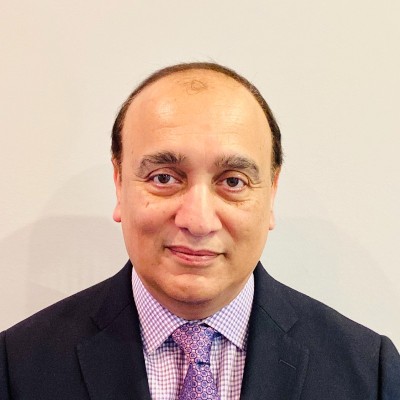 Nitin Gogtay合作论文数American Psychiatric Association;Private Practice;Symbiosis Institute7
 Judith L. Rapoport合作论文数Child Psychiatry Branch, National Institute of Mental Health7
 Peter Gochman合作论文数6M Lenane合作论文数4Addington Anjené M合作论文数3Alexandra Sporn合作论文数3Deanna Greenstein合作论文数3A. Raymond合作论文数2R Long合作论文数2
 Guy Rouleau合作论文数Department of Neurology and Neurosurgery, McGill University;Department of Medicine, McGill University;Montreal Neurological Institute, McGill University2
 Amelie Piton合作论文数Institut De Génétique et de Biologie Moléculaire et Cellulaire - Neurogenetics and Translational Medecine, University of Strasbourg2Julie Gauthier合作论文数2G Inoff-Germain合作论文数1WENDY S. SHARP合作论文数1LS Clasen合作论文数1Pa Gochman合作论文数1Aj Bobb合作论文数1Mc Lenane合作论文数1G. Germain合作论文数1N Baker合作论文数1Al Reiss合作论文数1Rachel Miller合作论文数Dept Med, Icahn Sch Med Mt Sinai1Uroš Potočnik合作论文数Faculty of Medicine, University of Maribor;Faculty for Chemistry and Chemical Engineering, University of Maribor;University of Maribor, University of Maribor1
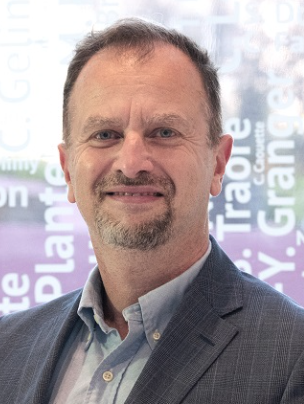 Fadi Hamdan合作论文数OptiLab, CHU Sainte-Justine;CHU Sainte-Justine Research Centre1Alfaro C L合作论文数1
 Michael Dean合作论文数Laboratory of Translational Genomics, Division of Cancer Epidemiology and Genetics, National Cancer Institute;Laboratory of Translational Genomics, NCI1
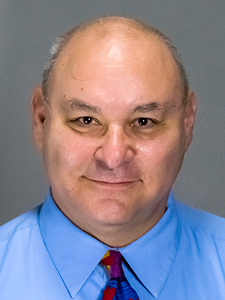 Jack A. Yanovski合作论文数Section on Growth and Obesity, Eunice Kennedy Shriver National Institute of Child Health and Human Development, National Institutes of Health1Roberto Ortiz-Aguayo合作论文数1
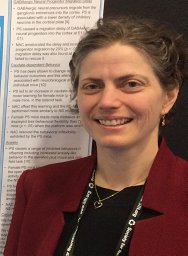 Hanna E Stevens合作论文数University of Illinois1Catherine Stayer合作论文数1
 Joachim Hallmayer合作论文数Department of Psychiatry and Behavioral Sciences, School of Medicine, Stanford University1Anand Mattai合作论文数1




