Owing to their similarities with giant exoplanets, brown dwarf companions of stars provide insights into the fundamental processes of planet formation and evolution. From their orbits, several brown dwarf companions are found to be more massive than theoretical predictions given their luminosities and the ages of their host stars1-3. Either the theory is incomplete or these objects are not single entities. For example, they could be two brown dwarfs each with a lower mass and intrinsic luminosity1,4. The most problematic example is Gliese 229 B (refs. 5,6), which is at least 2-6 times less luminous than model predictions given its dynamical mass of 71.4 ± 0.6 Jupiter masses (MJup) (ref. 1). We observed Gliese 229 B with the GRAVITY interferometer and, separately, the CRIRES+ spectrograph at the Very Large Telescope. Both sets of observations independently resolve Gliese 229 B into two components, Gliese 229 Ba and Bb, settling the conflict between theory and observations. The two objects have a flux ratio of 0.47 ± 0.03 at a wavelength of 2 μm and masses of 38.1 ± 1.0 and 34.4 ± 1.5 MJup, respectively. They orbit each other every 12.1 days with a semimajor axis of 0.042 astronomical units (AU). The discovery of Gliese 229 BaBb, each only a few times more massive than the most massive planets, and separated by 16 times the Earth-moon distance, raises new questions about the formation and prevalence of tight binary brown dwarfs around stars.
Precise mass constraints are vital for the characterisation of brown dwarfs and exoplanets. Here we present how the combination of data obtained by Gaia and GRAVITY can help enlarge the sample of substellar companions with measured dynamical masses. We show how the Non-Single-Star (NSS) two-body orbit catalogue contained in Gaia DR3 can be used to inform high-angular-resolution follow-up observations with GRAVITY. Applying the method presented in this work to eight Gaia candidate systems, we detect all eight predicted companions, seven of which were previously unknown and five are of a substellar nature. Among the sample is Gaia DR3 2728129004119806464 B, which - detected at an angular separation of (34.01 ± 0.15) mas from the host - is the closest substellar companion ever imaged. This translates to a semi-major axis of (0.938 ± 0.023) AU. WT 766 B, detected at a greater angular separation, was confirmed to be on an orbit exhibiting an even smaller semi-major axis of (0.676 ± 0.008) AU. The GRAVITY data were then used to break the host-companion mass degeneracy inherent to the Gaia NSS orbit solutions as well as to constrain the orbital solutions of the respective target systems. Knowledge of the companion masses enabled us to further characterise them in terms of their ages, effective temperatures, and radii via the application of evolutionary models. The inferred ages exhibit a distinct bias towards values younger than what is to be expected based on the literature. The results serve as an independent validation of the orbital solutions published in the NSS two-body orbit catalogue and show that the combination of astrometric survey missions and high-angular-resolution direct imaging holds great promise for efficiently increasing the sample of directly imaged companions in the future, especially in the light of Gaia's upcoming DR4 and the advent of GRAVITY+.
We present new Very Large Telescope Interferometer (VLTI)/GRAVITY near-infrared interferometric measurements of the angular size of the innermost hot dust continuum for 14 type 1 active galactic nuclei (AGNs). The angular sizes are resolved on scales of similar to 0.7 mas and the inferred ring radii range from 0.028 to 1.33 pc, comparable to those reported previously and a factor of 10-20 smaller than the mid-infrared sizes in the literature. Combining our new data with previously published values, we compiled a sample of 25 AGNs with bolometric luminosity ranging from 10(42) to 10(47) erg s(-1), with which we studied the radius-luminosity (R - L) relation for the hot dust structure. Our interferometric measurements of radius are offset by a factor of 2 from the equivalent relation derived through reverberation mapping. Using a simple model to explore the dust structure's geometry, we conclude that this offset can be explained if the 2 mu m emitting surface has a concave shape. Our data show that the slope of the relation is in line with the canonical R proportional to L-0.5 when using an appropriately non-linear correction for bolometric luminosity. In contrast, using optical luminosity or applying a constant bolometric correction to it results in a significant deviation in the slope, suggesting a potential luminosity dependence on the spectral energy distribution. Over four orders of magnitude in luminosity, the intrinsic scatter around the R - L relation is 0.2 dex, suggesting a tight correlation between the innermost hot dust structure size and the AGN luminosity.
Context. Since 2019, GRAVITY has provided direct observations of giant planets and brown dwarfs at separations of down to 95 mas from the host star. Some of these observations have provided the first direct confirmation of companions previously detected by indirect techniques (astrometry and radial velocities). Aims. We want to improve the observing strategy and data reduction in order to lower the inner working angle of GRAVITY in dual-field on-axis mode. We also want to determine the current limitations of the instrument when observing faint companions with separations in the 30–150 mas range. Methods. To improve the inner working angle, we propose a fiber off-pointing strategy during the observations to maximize the ratio of companion-light-to-star-light coupling in the science fiber. We also tested a lower-order model for speckles to decouple the companion light from the star light. We then evaluated the detection limits of GRAVITY using planet injection and retrieval in representative archival data. We compare our results to theoretical expectations. Results. We validate our observing and data-reduction strategy with on-sky observations; first in the context of brown dwarf follow-up on the auxiliary telescopes with HD 984 B, and second with the first confirmation of a substellar candidate around the star Gaia DR3 2728129004119806464. With synthetic companion injection, we demonstrate that the instrument can detect companions down to a contrast of 8 × 10 −4 (Δ Κ = 7.7 mag) at a separation of 35 mas, and a contrast of 3 × 10 −5 (Δ Κ = 11 mag) at 100 mas from a bright primary ( K < 6.5), for 30 min exposure time. Conclusions. With its inner working angle and astrometric precision, GRAVITY has a unique reach in direct observation parameter space. This study demonstrates the promising synergies between GRAVITY and Gaia for the confirmation and characterization of substellar companions.
Context. The GRAVITY beam-combiner at the Very Large Telescope Interferometer has recently made important contributions to many different fields of astronomy, from observations of the Galactic centre to the study of massive stars, young stellar objects, exoplanet atmospheres, and active galactic nuclei. These achievements were only made possible by the development of several key technologies, including the development of reliable and high-performance fringe trackers. These systems compensate for disturbances ranging from atmospheric turbulence to vibrations in the optical system, enabling long exposures and ensuring the stability of interferometric measurements. Aims. As part of the ongoing GRAVITY+ upgrade of the Very Large Telescope Interferometer infrastructure, we aim to improve the performance of the GRAVITY fringe tracker, and to enable its use by other instruments. Methods. We modified the group-delay controller to consistently maintain tracking in the white-light fringe, which is characterised by a minimum group delay. Additionally, we introduced a novel approach in which fringe-tracking is performed in the non-observable optical path length state-space using a covariance-weighted Kalman filter and an auto-regressive model of the disturbance. We outline this new state-space representation and the formalism we used to propagate the state vector and generate the control signal. While our approach is presented specifically in the context of GRAVITY/GRAVITY+, it can easily be adapted to other instruments or interfero-metric facilities. Results. We successfully demonstrate phase-delay tracking within a single fringe, with any spurious phase jumps detected and corrected in less than 100 ms. We also report a significant performance improvement, as shown by a reduction of similar to 30 to 40% in phase residuals, and a much better behaviour under sub-optimal atmospheric conditions. Compared to what was observed in 2019, the median residuals have decreased from 150 nm to 100 nm on the Auxiliary Telescopes and from 250 nm to 150 nm on the Unit Telescopes. Conclusions. The improved phase-delay tracking combined with white-light fringe tracking means that from now on, the GRAVITY fringe tracker can be used by other instruments operating in different wavebands. The only limitation remains the need for an adjustment of the optical path dispersion.
Tight relationships exist in the local universe between the central stellar properties of galaxies and the mass of their supermassive black hole. These suggest galaxies and black holes co-evolve, with the main regulation mechanism being energetic feedback from accretion onto the black hole during its quasar phase. A crucial question is how the relationship between black holes and galaxies evolves with time; a key epoch to probe this relationship is at the peaks of star formation and black hole growth 8-12 billion years ago (redshifts 1-3). Here we report a dynamical measurement of the mass of the black hole in a luminous quasar at a redshift of 2, with a look back time of 11 billion years, by spatially resolving the broad line region. We detect a 40 micro-arcsecond (0.31 pc) spatial offset between the red and blue photocenters of the H$\alpha$ line that traces the velocity gradient of a rotating broad line region. The flux and differential phase spectra are well reproduced by a thick, moderately inclined disk of gas clouds within the sphere of influence of a central black hole with a mass of 3.2x10$^{8}$ solar masses. Molecular gas data reveal a dynamical mass for the host galaxy of 6x10$^{11}$ solar masses, which indicates an under-massive black hole accreting at a super-Eddington rate. This suggests a host galaxy that grew faster than the supermassive black hole, indicating a delay between galaxy and black hole formation for some systems.
Context. Temporal variability in the photometric and spectroscopic properties of protoplanetary disks is common in young stellar objects. However, evidence pointing toward changes in their morphology over short timescales has only been found for a few sources, mainly due to a lack of high-cadence observations at high angular resolution. Understanding this type of variation could be important for our understanding of phenomena related to disk evolution. Aims. We study the morphological variability of the innermost circumstellar environment of HD 98922, focusing on its dust and gas content. Methods. Multi-epoch observations of HD 98922 at milliarcsecond resolution with VLTI/GRAVITY in the K-band at low (R = 20) and high (R = 4000) spectral resolution are combined with VLTI/PIONIER archival data covering a total time span of 11 yr. We interpret the interferometric visibilities and spectral energy distribution with geometrical models and through radiative transfer techniques using the code MCMax. We investigated high-spectral-resolution quantities (visibilities and differential phases) to obtain information on the properties of the HI Brackett-gamma (Br gamma)-line-emitting region. Results. Comparing observations taken with similar (u,v) plane coverage, we find that the squared visibilities do not vary significantly, whereas we find strong variability in the closure phases, suggesting temporal variations in the asymmetric brightness distribution associated to the disk. Our observations are best fitted by a model of a crescent-like asymmetric dust feature located at similar to 1 au and accounting for similar to 70 % of the near-infrared (NIR) emission. The feature has an almost constant magnitude and orbits the central star with a possible sub-Keplerian period of similar to 12 months, although a 9 month period is another, albeit less probable, solution. The radiative transfer models show that the emission originates from a small amount of carbon-rich (25%) silicates, or quantum-heated particles located in a low-density region. Among different possible scenarios, we favor hydrodynamical instabilities in the inner disk that can create a large vortex. The high spectral resolution differential phases in the Br gamma line show that the hot-gas compact component is offset from the star and in some cases is located between the star and the crescent feature. The scale of the emission does not favor magnetospheric accretion as a driving mechanism. The scenario of an asymmetric disk wind or a massive accreting substellar or planetary companion is discussed. Conclusions. With this unique observational data set for HD 98922, we reveal morphological variability in the innermost 2 au of its disk region. This property is possibly common to many other protoplanetary disks, but is not commonly observed due to a lack of high-cadence observation. It is therefore important to pursue this approach with other sources for which an extended dataset with PIONIER, GRAVITY, and possibly MATISSE is available.
The detection of low-mass planets orbiting the nearest stars is a central stake of exoplanetary science, as they can be directly characterized much more easily than their distant counterparts. Here, we present the results of our long-term astrometric observations of the nearest binary M-dwarf Gliese 65 AB (GJ65), located at a distance of only 2.67 pc. We monitored the relative astrometry of the two components from 2016 to 2023 with the VLTI/GRAVITY interferometric instrument. We derived highly accurate orbital parameters for the stellar system, along with the dynamical masses of the two red dwarfs. The GRAVITY measurements exhibit a mean accuracy per epoch of 50-60 microarcseconds in 1.5h of observing time using the 1.8m Auxiliary Telescopes. The residuals of the two-body orbital fit enable us to search for the presence of companions orbiting one of the two stars (S-type orbit) through the reflex motion they imprint on the differential A-B astrometry. We detected a Neptune-mass candidate companion with an orbital period of p = 156 +/- 1 d and a mass of m = 36 +/- 7 Mearth. The best-fit orbit is within the dynamical stability region of the stellar pair. It has a low eccentricity, e = 0.1 - 0.3, and the planetary orbit plane has a moderate-to-high inclination of i > 30{\deg} with respect to the stellar pair, with further observations required to confirm these values. These observations demonstrate the capability of interferometric astrometry to reach microarcsecond accuracy in the narrow-angle regime for planet detection by reflex motion from the ground. This capability offers new perspectives and potential synergies with Gaia in the pursuit of low-mass exoplanets in the solar neighborhood.
We present the Wavefront Sensor units of the Gravity Plus Adaptive Optics (GPAO) system, which will equip all 8m class telescopes of the VLTI and is an instrumental part of the GRAVITY+ project. It includes two modules for each Wavefront Sensor unit: a Natural Guide Star sensor with high-order 40x40 Shack-Hartmann and a Laser Guide Star 30x30 sensor. The state-of-the-art AO correction will considerably improve the performance for interferometry, in particular high-contrast observations for NGS observations and all-sky coverage with LGS, which will be implemented for the first time on VLTI instruments. In the following, we give an overview of the Wavefront Sensor units system after completion of their integration and characterization.
Rocky planets form by the concentration of solid particles in the inner few au regions of planet-forming disks. Their chemical composition reflects the materials in the disk available in the solid phase at the time the planets were forming. Studying the dust before it gets incorporated in planets provides a valuable diagnostic for the material composition. We aim to constrain the structure and dust composition of the inner disk of the young Herbig Ae star HD 144432, using an extensive set of infrared interferometric data taken by the Very Large Telescope Interferometer (VLTI), combining PIONIER, GRAVITY, and MATISSE observations. We introduced a new physical disk model TGMdust to image the interferometric data, and to fit the disk structure and dust composition. We also performed equilibrium condensation calculations with GGchem to assess the hidden diversity of minerals occurring in a planet-forming disk such as HD 144432. Our best-fit model has three disk zones with ring-like structures at $0.15$, $1.3$, and $4.1$ au. Assuming that the dark regions in the disk at sim $0.9$ au and at sim $3$ au are gaps opened by planets, we estimate the masses of the putative gap-opening planets to be around a Jupiter mass. We find evidence for an optically thin emission ($ from the inner two disk zones ($r < 4$ au) at $ Our silicate compositional fits confirm radial mineralogy gradients, as for the mass fraction of crystalline silicates we get around $61$ in the innermost zone ($r<1.3$ au), mostly from enstatite, while only sim $20$ in the outer two zones. To identify the dust component responsible for the infrared continuum emission, we explore two cases for the dust composition, one with a silicate+iron mixture and the other with a silicate+carbon one. We find that the iron-rich model provides a better fit to the spectral energy distribution. Our GGchem calculations also support an iron-rich and carbon-poor dust composition in the warm disk regions ($r<5$ au, $T > 300$ K). We propose that in the warm inner regions ($r<5$ au) of typical planet-forming disks, most if not all carbon is in the gas phase, while iron and iron sulfide grains are major constituents of the solid mixture along with forsterite and enstatite. Our analysis demonstrates the need for detailed studies of the dust in inner disks with new mid-infrared instruments such as MATISSE and JWST/MIRI.
Dual-field interferometric observations with VLTI/GRAVITY sometimes require the use of a "binary calibrator", a binary star whose individual components remain unresolved by the interferometer, with a separation between 400 and 2000 mas for observations with the Units Telescopes (UTs), or 1200 to 3000 mas for the Auxiliary Telescopes (ATs). The separation vector also needs to be predictable to within 10 mas for proper pointing of the instrument. Up until now, no list of properly vetted calibrators was available for dual-field observations with VLTI/GRAVITY on the UTs. Our objective is to compile such a list, and make it available to the community. We identify a list of candidates from the Washington Double Star (WDS) catalogue, all with appropriate separations and brightness, scattered over the Southern sky. We observe them as part of a dedicated calibration programme, and determine whether these objects are true binaries (excluding higher multiplicities resolved interferometrically but unseen by imaging), and extract measurements of the separation vectors. We combine these new measurements with those available in the WDS to determine updated orbital parameters for all our vetted calibrators. We compile a list of 13 vetted binary calibrators for observations with VLTI/GRAVITY on the UTs, and provide orbital estimates and astrometric predictions for each of them. We show that our list guarantees that there are always at least two binary calibrators at airmass < 2 in the sky over the Paranal observatory, at any point in time. Any Principal Investigator wishing to use the dual-field mode of VLTI/GRAVITY with the UTs can now refer to this list to select an appropriate calibrator. We encourage the use of "whereistheplanet" to predict the astrometry of these calibrators, which seamlessly integrates with "p2Gravity" for VLTI/GRAVITY dual-field observing material preparation.
Young, low-mass brown dwarfs orbiting early-type stars, with low mass ratios ( q ≲ 0.01), appear to be intrinsically rare and present a formation dilemma: could a handful of these objects be the highest-mass outcomes of “planetary” formation channels (bottom up within a protoplanetary disk), or are they more representative of the lowest-mass “failed binaries” (formed via disk fragmentation or core fragmentation)? Additionally, their orbits can yield model-independent dynamical masses, and when paired with wide wavelength coverage and accurate system age estimates, can constrain evolutionary models in a regime where the models have a wide dispersion depending on the initial conditions. We present new interferometric observations of the 16 Myr substellar companion HD 136164 Ab (HIP 75056 Ab) made with the Very Large Telescope Interferometer (VLTI)/GRAVITY and an updated orbit fit including proper motion measurements from the Hipparcos–Gaia Catalog of Accelerations. We estimate a dynamical mass of 35 ± 10 M J ( q ∼ 0.02), making HD 136164 Ab the youngest substellar companion with a dynamical mass estimate. The new mass and newly constrained orbital eccentricity ( e = 0.44 ± 0.03) and separation (22.5 ± 1 au) could indicate that the companion formed via the low-mass tail of the initial mass function. Our atmospheric fit to a SPHINX M-dwarf model grid suggests a subsolar C/O ratio of 0.45 and 3 × solar metallicity, which could indicate formation in a circumstellar disk via disk fragmentation. Either way, the revised mass estimate likely excludes bottom-up formation via core accretion in a circumstellar disk. HD 136164 Ab joins a select group of young substellar objects with dynamical mass estimates; epoch astrometry from future Gaia data releases will constrain the dynamical mass of this crucial object further.
We report discovering an exoplanet from following up a microlensing event alerted by Gaia. The event Gaia22dkv is toward a nearby disk source at ~2.5 kpc rather than the traditional bulge microlensing fields. Our primary analysis yields a Jovian planet with M_p = 0.50 +/- 0.05 M_J at a projected orbital separation r_perp = 1.63 +/- 0.17 AU. The host is a turnoff star with mass 1.24 +/- 0.06 M_sun and distance of 1.35 +/- 0.09 kpc, and at r'~14, it is far brighter than any previously discovered microlensing planet host, opening up the opportunity of testing the microlensing model with radial velocity (RV) observations. RV data can be used to measure the planet's orbital period and eccentricity, and they also enable searching for inner planets of the microlensing cold Jupiter, as expected from the "inner-outer correlation" inferred from Kepler and RV discoveries. Furthermore, we show that Gaia astrometric microlensing will not only allow precise measurements of its angular Einstein radius theta_E, but also directly measure the microlens parallax vector and unambiguously break a geometric light-curve degeneracy, leading to definitive characterization of the lens system.
Aims.The goal of this work is to characterize the polarization effects of the beam path of the Very Large Telescope Interferometer (VLTI) and the GRAVITY beam combiner instrument. This is useful for two reasons: to calibrate polarimetric observations with GRAVITY for instrumental effects and to understand the systematic error introduced to the astrometry due to birefringence when observing targets with a significant intrinsic polarization.Methods.By combining a model of the VLTI light path and its mirrors and dedicated experimental data, we constructed a full polarization model of the VLTI Unit Telescopes (UTs) and the GRAVITY instrument. We first characterized all telescopes together to construct a universal UT calibration model for polarized targets with the VLTI. We then expanded the model to include the differential birefringence between the UTs. With this, we were able to constrain the systematic errors and the contrast loss for highly polarized targets.Results.Along with this paper, we have published a standalone Python package that can be used to calibrate the instrumental effects on polarimetric observations. This enables the community to use GRAVITY with the UTs to observe targets in a polarimetric observing mode. We demonstrate the calibration model with the Galactic Center star IRS 16C. For this source, we were able to constrain the polarization degree to within 0.4% and the polarization angle to within 5° while being consistent with the literature values. Furthermore, we show that there is no significant contrast loss, even if the science and fringe-tracker targets have significantly different polarization, and we determine that the phase error in such an observation is smaller than 1°, corresponding to an astrometric error of 10 µas.Conclusions.With this work, we enable the use by the community of the polarimetric mode with GRAVITY/UTs and outline the steps necessary to observe and calibrate polarized targets with GRAVITY. We demonstrate that it is possible to measure the intrinsic polarization of astrophysical sources with high precision and that polarization effects do not limit astrometric observations of polarized targets.
Context. A low-mass companion potentially in the brown dwarf mass regime was discovered on a similar to 12 yr orbit (similar to 5.5 au) around HD 167665 using radial velocity (RV) monitoring. Joint RV-astrometry analyses confirmed that HD 167665B is a brown dwarf with precisions on the measured mass of similar to 4-9%. Brown dwarf companions with measured mass and luminosity are valuable for testing formation and evolutionary models. However, its atmospheric properties and luminosity are still unconstrained, preventing detailed tests of evolutionary models. Aims. We further characterize the HD 167665 system by measuring the luminosity and refining the mass of its companion and reassessing the stellar age. Methods. We present new high-contrast imaging data of the star and of its close-in environment from SPHERE and GRAVITY, which we combined with RV data from CORALIE and HIRES and astrometry from HIPPARCOS and Gaia. Results. The analysis of the host star properties indicates an age of 6.20 +/- 1.13 Gyr. GRAVITY reveals a point source near the position predicted from a joint fit of RV data and HIPPARCOS-Gaia proper motion anomalies. Subsequent SPHERE imaging confirms the detection and reveals a faint point source of contrast of Delta H2 = 10.95 +/- 0.33 mag at a projected angular separation of similar to 180 mas. A joint fit of the high-contrast imaging, RV, and HIPPARCOS intermediate astrometric data together with the Gaia astrometric parameters constrains the mass of HD 167665B to similar to 1.2%, 60.3 +/- 0.7 M-J. The SPHERE colors and spectrum point to an early or mid-T brown dwarf of spectral type T4(-2)(+1). Fitting the SPHERE spectrophotometry and GRAVITY spectrum with synthetic spectra suggests an effective temperature of similar to 1000-1150 K, a surface gravity of similar to 5.0-5.4 dex, and a bolometric luminosity log(L/L-circle dot)=-4.892(-0.028)(+0.024) dex. The mass, luminosity, and age of the companion can only be reproduced within 3 sigma by the hybrid cloudy evolutionary models of Saumon & Marley (2008, ApJ, 689, 1327), whereas cloudless evolutionary models underpredict its luminosity.
The dark compact object at the centre of the Milky Way is well established to be a supermassive black hole with mass M-center dot similar to 4.3 x 10(6) M-circle dot, but the nature of its environment is still under debate. In this work, we used astrometric and spectroscopic measurements of the motion of the star S2, one of the closest stars to the massive black hole, to determine an upper limit on an extended mass composed of a massive vector field around Sagittarius A*. For a vector with effective mass 10(-19) (less than or similar to) m(s less than or similar to) 10(-18) eV, our Markov chain Monte Carlo analysis shows no evidence for such a cloud, placing an upper bound M-cloud (less than or similar to) 0.1 % M-center dot at 3 sigma confidence level. We show that dynamical friction exerted by the medium on S2 motion plays no role in the analysis performed in this and previous works, and can be neglected thus.
MATISSE is the 2nd generation mid-infrared (3.0 mu m to 12.0 mu m) spectro-interferometric instrument of the Very Large Telescope Interferometer (VLTI). It was designed to deliver its advertised performance when supported by an external fringe tracker. This proceeding gives an historical account of how the fringe tracker of the GRAVITY instrument, another 2nd generation K-band spectro-astrometric instrument of VLTI, became this external fringe tracker. For a more technical and performance-oriented description of the GRAVITY for MATISSE project, Woillez, Petrov, et al. (2024)(1) should be consulted.
We resolve the multiple images of the binary-lens microlensing event ASASSN-22av using the GRAVITY instrument of the Very Large Telescope Interferometer (VLTI). The light curves show weak binary-lens perturbations, complicating the analysis, but the joint modeling with the VLTI data breaks several degeneracies, arriving at a strongly favored solution. Thanks to precise measurements of the angular Einstein radius theta E = 0.724 +/- 0.002 mas and microlens parallax, we determine that the lens system consists of two M dwarfs with masses of M 1 = 0.258 +/- 0.008 M circle dot and M 2 = 0.130 +/- 0.007 M circle dot, a projected separation of r perpendicular to = 6.83 +/- 0.31 au, and a distance of D L = 2.29 +/- 0.08 kpc. The successful VLTI observations of ASASSN-22av open up a new path for studying intermediate-separation (i.e., a few astronomical units) stellar-mass binaries, including those containing dark compact objects such as neutron stars and stellar-mass black holes.
Context.The GRAVITY beam-combiner at the Very Large Telescope Interferometer has recently made important contributions to many different fields of astronomy, from observations of the Galactic centre to the study of massive stars, young stellar objects, exoplanet atmospheres, and active galactic nuclei. These achievements were only made possible by the development of several key technologies, including the development of reliable and high-performance fringe trackers. These systems compensate for disturbances ranging from atmospheric turbulence to vibrations in the optical system, enabling long exposures and ensuring the stability of interferometric measurements.Aims.As part of the ongoing GRAVITY+ upgrade of the Very Large Telescope Interferometer infrastructure, we aim to improve the performance of the GRAVITY fringe tracker, and to enable its use by other instruments.Methods.We modified the group-delay controller to consistently maintain tracking in the white-light fringe, which is characterised by a minimum group delay. Additionally, we introduced a novel approach in which fringe-tracking is performed in the non-observable optical path length state-space using a covariance-weighted Kalman filter and an auto-regressive model of the disturbance. We outline this new state-space representation and the formalism we used to propagate the state vector and generate the control signal. While our approach is presented specifically in the context of GRAVITY/GRAVITY+, it can easily be adapted to other instruments or interfero-metric facilities.Results.We successfully demonstrate phase-delay tracking within a single fringe, with any spurious phase jumps detected and corrected in less than 100 ms. We also report a significant performance improvement, as shown by a reduction of ~30 to 40% in phase residuals, and a much better behaviour under sub-optimal atmospheric conditions. Compared to what was observed in 2019, the median residuals have decreased from 150 nm to 100 nm on the Auxiliary Telescopes and from 250 nm to 150 nm on the Unit Telescopes.Conclusions.The improved phase-delay tracking combined with white-light fringe tracking means that from now on, the GRAVITY fringe tracker can be used by other instruments operating in different wavebands. The only limitation remains the need for an adjustment of the optical path dispersion.
 Guy Perrin合作论文数CNRS105
 Frank Eisenhauer合作论文数95C. Straubmeier合作论文数85Wolfgang Brandner合作论文数Max-Planck-Institut fur Astronomie83T. Paumard合作论文数82
 Reinhard Genzel合作论文数University of California, Berkeley;Max Planck Institute for Extraterrestrial Physics82
 Gillessen Sommer Silke合作论文数Ente Ospedaliero Cantonale82
 Jean-Philippe Berger合作论文数Institut de Planétologie et d'Astrophysique, Université Grenoble Alpes82
 P. J. V. Garcia合作论文数Centro de Astrofí sica, Universidade do Porto82Oliver Pfuhl合作论文数80T. Ott合作论文数79Karine Perraut合作论文数Laboratoire d'Astrophysique de Grenoble79Eckhard Sturm合作论文数78
 Felix Widmann合作论文数77Y. Clénet合作论文数77
 Jean-Baptiste Le Bouquin合作论文数LAOG76
 Andreas Eckart合作论文数I. Physikalisches Institut, Universitat zu Koln74
 Xavier Haubois合作论文数73
 Pierre Kervella合作论文数72Eric Gendron合作论文数72F. Vincent合作论文数70L. Jocou合作论文数70
 Antonio Amorim合作论文数70Roberto Abuter合作论文数European Southern Observatory70V. Lapeyrère合作论文数69Henri Bonnet合作论文数69
 Linda Tacconi合作论文数Max Planck Institute for Extraterrestrial Physics66
 Stefan Hippler合作论文数Max-Planck-Institut fur Astronomie66J. Shangguan合作论文数65
 Odele Straub合作论文数University of Goteborg, Univ. Goteborg65
 Tim de Zeeuw合作论文数Sterrewacht Leiden65Matthew Horrobin合作论文数62P. Léna合作论文数61E. Wieprecht合作论文数61
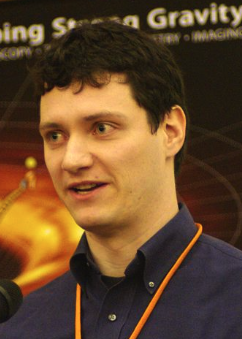 Jason Dexter合作论文数University of Colorado, Boulder56E. Wiezorrek合作论文数55D. Lutz合作论文数55
 Natascha M. Förster Schreiber合作论文数Max-Planck-Institut Fur Extraterrestrische Physik55T. Shimizu合作论文数53
 Sebastiano von Fellenberg合作论文数52
 Antoine Mérand合作论文数European Southern Observatory52A. Drescher合作论文数51F. Gao合作论文数51S. Scheithauer合作论文数49S. Yazici合作论文数46M. Nowak合作论文数45
 Stéphanie Lacour合作论文数Bertarelli Foundation, School of Engineering, Ecole Polytechnique Federale de Lausanne;Laboratory for Soft Bioelectronic Interfaces, Ecole Polytechnique Federale de Lausanne;Center for Neuroprosthetics, Ecole Polytechnique Federale de Lausanne;Neuro-X institute, Ecole Polytechnique Federale de Lausanne45Gilles Duvert合作论文数45Roderick Dembet合作论文数44




