In this paper, we analyze a polling system on a circle with. Random batches of customers arrive at a circle, where each customer, independently, obtains a location according to a general distribution. A single server cyclically travels over the circle to serve all customers. We analyze the experienced delay of batches for two service policies: globally gated and exhaustive. The Laplace-Stieltjes transform of the experienced delay is found under the former policy. For the latter policy, we propose a mean-value analysis, resulting in an algorithmic approach for the evaluation of the mean experienced delay. Light- and heavy-traffic limits are derived exactly for the system performance.
We consider an ASIP (asymmetric inclusion process) tandem queue, in which the first queue receives a fluid input according to a nondecreasing L & eacute;vy process. Each queue has a gate that opens after independent, exponentially distributed periods for an infinitesimal amount of time, allowing the queue content to move to the next queue. In addition, again at independent exponentially distributed instants, a fixed fraction of a queue content is removed from the system. For this model, restricting ourselves to steady state, we obtain the following results. (i) We derive the buffer content distribution of the first queue. (ii) For the 2-queue model, we obtain relatively simple explicit expressions for the Laplace transform of the joint buffer content in several special cases. (iii) Asymptotic results are obtained for the 2-queue model when the above-mentioned buffer content removal process approaches a shot-noise process. (iv) For the general n-queue case, we show how all moments of the buffer contents at all queues can be obtained. (v) For the general n-queue case, we sketch an approximation method that allows one in principle to derive tractable expressions for the Laplace transform of the buffer content at each queue, with exact mean buffer contents at all queues.
This paper presents exact derivations of the first two moments of the total order picking time in a warehouse for three routing heuristics, under the assumption of random storage. The analysis is done for general order size distributions and provides exact closed expressions in terms of the probability generating function of the order size distribution. We also indicate how the methods and insights in this paper extend to different storage policies and multi-block warehouses. The exact results derived in this paper are used to investigate effects of routing heuristics, order size distributions and layouts on warehouse efficiency. As illustration, we model the warehouse as a queueing system. By using approximations of the average order-lead time in terms of the first two moments of the order picking time, we are able to find optimal warehouse layouts and batch pick sizes.
In this paper, we analyze a polling system on a circle. Random batches of customers arrive at a circle, where each customer, independently, obtains a location that is uniformly distributed on the circle. A single server cyclically traverses the circle to serve all customers. Using mean value analysis, we derive the expected number of waiting customers within a given distance of the server. We exploit this to obtain closed-form expressions for both the mean batch sojourn time and the mean time to delivery.
Bitcoin is currently subject to a significant pay-for-speed trade-off. This is caused by lengthy and highly variable transaction confirmation times, especially during times of congestion. Users can reduce their transaction confirmation times by increasing their transaction fee. In this paper, based on the inner workings of Bitcoin, we propose a model-based approach (based on the Cramér-Lundberg model) that can be used to determine the optimal fee, via, for example, the mean or quantiles, and models accurately the confirmation time distribution for a given fee. The proposed model is highly suitable as it arises as the limiting model for the mempool process (that tracks the unconfirmed transactions), which we rigorously show via a fluid limit and we extend this to the diffusion limit (an approximation of the Cramér-Lundberg model for fast computations in highly congested instances). We also propose methods (incorporating the real-time data) to estimate the model parameters, thereby combining model and data-driven approaches. The model-based approach is validated on real-world data and the resulting transaction fees outperform, in most instances, the data-driven ones.
The Asymmetric Inclusion Process (ASIP) tandem queue is a model of stations in series with a gate after each station. At a gate opening, all customers in that station instantaneously move to the next station unidirectionally. In our study, we enhance the ASIP model by introducing the capability for individual customers to independently move from one station to the next, and by allowing both individual customers and batches of customers from any station to exit the system. The model is inspired by the process by which macromolecules are transported within cells. We present a comprehensive analysis of various aspects of the queue length in the ASIP tandem model. Specifically, we provide an exact analysis of queue length moments and correlations and, under certain circumstances, of the queue length distribution. Furthermore, we propose an approximation for the joint queue length distribution. This approximation is derived using three different approaches, one of which employs the concept of the replica mean-field limit. Among other results, our analysis offers insight into the extent to which nutrients can support the survival of a cell.
We investigate Markovian queues that are examined by a controller at random times determined by a Poisson process. Upon examination, the controller sets the service speed to be equal to the minimum of the current number of customers in the queue and a certain maximum service speed; this service speed prevails until the next examination time. We study the resulting two-dimensional Markov process of queue length and server speed, in particular two regimes with time scale separation, specifically for infinitely frequent and infinitely long examination times. In the intermediate regime the analysis proves to be extremely challenging. To gain further insight into the model dynamics we then analyse two variants of the model in which the controller is just an observer and does not change the speed of the server.
In this paper, we analyze a polling system on a circle. Random batches of customers arrive at a circle, where each customer, independently, obtains a uniform location. A single server cyclically travels over the circle to serve all customers. Using mean value analysis, we derive the expected number of waiting customers within a given distance of the server and a closed form expression for the mean batch sojourn time.
This paper derives exact expressions for the Laplace-Stieltjes transform of the order picking time in single- and 2-block warehouses. We consider manual warehouses that deploy return routing and assume that order sizes follow a Poisson distribution. The results in this paper apply to a wide range of storage policies, including but not restricted to class-based and random storage. Furthermore, we compare the performance of the storage policies and warehouse lay-outs by using numerical inversion of the Laplace-Stieltjes transforms.
In this paper, we study a functional equation for generating functions of the form f(z) = g(z) ∑ _i=1^M p_i f(α _i(z)) + K(z) , viz. a recursion with multiple recursive terms. We derive and analyze the solution of this equation for the case that the α _i(z) are commutative contraction mappings. The results are applied to a wide range of queueing, autoregressive and branching processes.
In this paper, a few models for optical router nodes are considered. The stations (ports) of such a node try to transmit packets. Successful transmission of a packet of type j at station i gives a profit γij, but there is also a positive probability that such a packet is dropped, causing a penalty θij. Consider one fixed cycle (frame), in which each station is assigned some visit time. The goal is to choose the visit times in such a way that the revenue is maximized. In our first model there is only one wavelength, and we take the finiteness of buffers into account. The revenue maximization problem is shown to be separable concave, thus allowing application of a very efficient algorithm. In our second model we allow multiple wavelengths. We aim to maximize the revenue by optimally assigning stations to wavelengths and, for each wavelength, by optimally choosing the visit times of the allocated stations within the cycle. This gives rise to a mixed integer linear programming problem (MILP) which is NP-hard. To solve this problem fast and efficiently we provide a three-step heuristic. It consists of (i) solving a separable concave optimization problem, then (ii) allocating the stations to wavelengths using a simple bin packing algorithm, and finally (iii) solving another set of separable concave optimization problems. We present numerical results to investigate the effectiveness of the heuristic and the advantages of having multiple wavelengths. Finally, some model variants are briefly discussed.
The robotic mobile fulfillment system (MFS) is widely used for automating storage pick and pack activities in e-commerce distribution centers. In this system, the items are stored on movable storage shelves, also known as inventory pods, and brought to the order pick stations by robotic drive units. We develop stylized performance evaluation models to analyze both order picking and replenishment processes in a mobile fulfillment system storage zone, based on multi-class closed queueing network models. To analyze robot assignment strategies for multiple storage zones, we develop a two-stage stochastic model. For a single storage zone, we compare dedicated and pooled robot systems for pod retrieval and replenishment. For multiple storage zones, we also analyze the effect of assigning robots to least congested zones on system throughput in comparison to random zone assignment. The models are validated using detailed simulations. For single zones, the expected throughput time for order picking reduces to one-third of its initial value by using pooled robots instead of dedicated robots; however, the expected replenishment time estimate increases up to three times. For multiple zones, we find that robots that are assigned to storage zones with dedicated and shortest queues provide a greater throughput than robots assigned at random to the zones.
In this paper, an optical router node with multiple wavelengths is considered. We introduce revenue for successful transmission and study the ensuing revenue maximization problem. We present an efficient and accurate heuristic procedure for solving the NP-hard revenue maximization problem and investigate the advantage offered by having multiple wavelengths.
Motivated by the cost savings that can be obtained by sharing resources in a network context, we consider a stylized, yet representative, model for the coordination of maintenance and service logistics for a geographic network of assets. Capital assets, such as wind turbines in a wind park, require maintenance throughout their long lifetimes. Two types of preventive maintenance are considered: planned maintenance at periodic, scheduled opportunities, and opportunistic maintenance at unscheduled opportunities. The latter type of maintenance arises due to the network context: When an asset in the network fails, this constitutes an opportunity for preventive maintenance for the other assets in the network. So as to increase the realism of the model at hand and its applicability to various sectors, we consider the option of not-deferring and of deferring planned maintenance after the occurrence of opportunistic maintenance. We also assume that preventive maintenance may not always restore the condition of the system to ‘as good as new.’ By formulating this problem as a semi-Markov decision process, we characterize the optimal policy as a control limit policy (depending on the remaining time until the next planned maintenance) that indicates on the one hand when it is optimal to perform preventive maintenance and on the other hand when maintenance resources should be shared if an opportunity in the network arises. In order to facilitate managerial insights on the effect of each parameter on the cost, we provide a closed-form expression for the long-run rate of cost for any given control limit policy (depending on the remaining time until the next planned maintenance) and compare the costs (under the optimal policy) to those of suboptimal policies that neglect the opportunity for resource sharing. We illustrate our findings using data from the wind energy industry.
We present a heavy traffic analysis of a single-server polling model, with the special features of retrials and glue periods. The combination of these features in a polling model typically occurs in certain optical networking models, and in models where customers have a reservation period just before their service period. Just before the server arrives at a station there is some deterministic glue period. Customers (both new arrivals and retrials) arriving at the station during this glue period will be served during the visit of the server. Customers arriving in any other period leave immediately and will retry after an exponentially distributed time. As this model defies a closed-form expression for the queue length distributions, our main focus is on their heavy-traffic asymptotics, both at embedded time points (beginnings of glue periods, visit periods and switch periods) and at arbitrary time points. We obtain closed-form expressions for the limiting scaled joint queue length distribution in heavy traffic and use these to accurately approximate the mean number of customers in the system under different loads.
Filtration, flow in narrow channels and traffic flow are examples of processes subject to blocking when the channel conveying the particles becomes too crowded. If the blockage is temporary, which means that after a finite time the channel is flushed and reopened, one expects to observe a maximum throughput for a finite intensity of entering particles. We investigate this phenomenon by introducing a queueing theory inspired, circular Markov model. Particles enter a channel with intensity λ and exit at a rate μ. If N particles are present at the same time in the channel, the system becomes blocked and no more particles can enter. After an exponentially distributed time with rate the blockage is cleared and the system resets to an empty channel. We obtain an exact expression for the steady state throughput (including the exiting blocked particles) for all values of N. For N = 2 we show that the throughput assumes a maximum value for finite λ if . The time-dependent throughput either monotonically approaches the steady state value, or reaches a maximum value at finite time. We demonstrate that, in the steady state, this model can be mapped to a previously introduced non-Markovian model with fixed transit and blockage times. We also examine an irreversible, non-Markovian blockage process with constant transit time exposed to an entering flux of fixed intensity for a finite time and we show that the first and second moments of the number of exiting particles are maximized for a finite intensity.
We consider gated polling systems with two special features: (i) retrials and (ii) glue or reservation periods. When a type- i customer arrives, or retries, during a glue period of the station i , it will be served in the following service period of that station. Customers arriving at station i in any other period join the orbit of that station and will retry after an exponentially distributed time. Such polling systems can be used to study the performance of certain switches in optical communication systems. When the glue periods are exponentially distributed, we obtain equations for the joint generating functions of the number of customers in each station. We also present an algorithm to obtain the moments of the number of customers in each station. When the glue periods are generally distributed, we consider the distribution of the total workload in the system, using it to derive a pseudo-conservation law which in turn is used to obtain accurate approximations of the individual mean waiting times. We also investigate the problem of choosing the lengths of the glue periods, under a constraint on the total glue period per cycle, so as to minimize a weighted sum of the mean waiting times.
We study a vacation-type queueing model, and a single-server multi-queue polling model, with the special feature of retrials. Just before the server arrives at a station there is some deterministic glue period. Customers (both new arrivals and retrials) arriving at the station during this glue period will be served during the visit of the server. Customers arriving in any other period leave immediately and will retry after an exponentially distributed time. Our main focus is on queue length analysis, both at embedded time points (beginnings of glue periods, visit periods and switch- or vacation periods) and at arbitrary time points.
In this paper we study a revenue maximization problem for optical routing nodes. We model the routing node as a single server polling model with the aim to assign visit periods (service windows) to the different stations (ports) such that the mean profit per cycle is maximized. Under reasonable assumptions regarding retrial and dropping probabilities of packets the optimization problem becomes a separable concave resource allocation problem, which can be solved using existing algorithms.
 Onno Boxma合作论文数Eindhoven University of Technology30Ivo J. Adan合作论文数Department of Mathematics and Computer Science, Eindhoven University of Technology26
 Stella Kapodistria合作论文数Department of Mathematics and Computer Science, Eindhoven University of Technology7
 Murtuza Ali Abidini合作论文数EURANDOM, Eindhoven University of TechnologyP.O. Box 5135600 MB EindhovenThe Netherlands6Paul Beekhuizen合作论文数5
 Sem Borst合作论文数Department of Complex System Analysis and Optimization Research, Mathematical and Algorithmic Sciences Research Center, Bell Laboratories;Networks and Algorithms Department, Center for Mathematics and Computer Science, CWI;Department of Mathematics and Computer Science, Eindhoven University of Technology5
 Dee Denteneer合作论文数Philips Research5Tim Engels合作论文数4j van der wal合作论文数4
 E. S. Badila合作论文数4
 Rudesindo Núñez-Queija合作论文数Operations Research at the University of Amsterdam.4M. S. Keane合作论文数3E. M. M. Winands合作论文数3
 Johan Van Leeuwaarden合作论文数EURANDOM, MB Eindhoven3
 Hansjörg Albrecher合作论文数Radon Institute for Computational and Applied Mathematics;Austrian Academy of Sciences;Radon Institute for Computational and Applied Mathematics, Austrian Academy of Sciences3
 Eleftherios N. Economou合作论文数Department of Physics, University of Crete;Institute of Electronic Structure and Laser, FORTH3Ronald Rietman合作论文数3Geert Jan Olsder合作论文数3
 Ton Koonen合作论文数Department of Electrical Engineering, Eindhoven University of Technology3m j a van eenige合作论文数2Ijbf Adan合作论文数2
 Jelmer Pier Van Der Gaast合作论文数School of Management, Fudan University2
 Jorma Virtamo合作论文数Department of Communications and Networking, Aalto University2Cor Hurkens合作论文数Department of Mathematics and Computer Science, Eindhoven University of Technology2
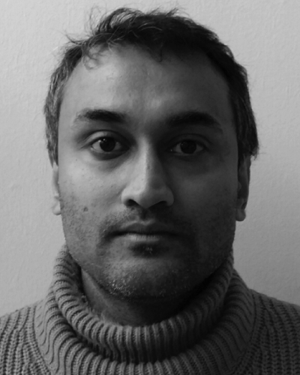 Balakrishna J. Prabhu合作论文数2
 T. J. J. Denteneer合作论文数2M. B. M. De Koster合作论文数2E. Kuumola合作论文数2
 Werner R. W. Scheinhardt合作论文数Faculty of Electrical Engineering, Mathematics and Computer Science, University of Twente2Gerard Hooghiemstra合作论文数DIAM of the Faculty EEMCS of Delft University of Technology2Erik a Van Doorn合作论文数University of Twente2
 René Bekker合作论文数Department of Mathematics & Computer Science, Eindhoven University of Technology2J. L. van den Berg合作论文数1Yaron Yeger合作论文数1Rowel Gündlach合作论文数1Ivo Stoepker合作论文数1r e de vries合作论文数1
 Collin Drent合作论文数Department of Mathematics and Computer Science, Eindhoven University of Technology1M. Keane合作论文数1Malwina Luczak合作论文数School of Mathematics and Statistics, Faculty of Science, The University of Melbourne1
 Di Lucente, S.合作论文数Dept. Electr. Eng., Eindhoven Univ. of Technol.;c;Dept. Electr. Eng., Eindhoven Univ. of Technol.1Jan-Pieter L. Dorsman合作论文数1
 Nicola Calabretta合作论文数Technische Universiteit Eindhoven1
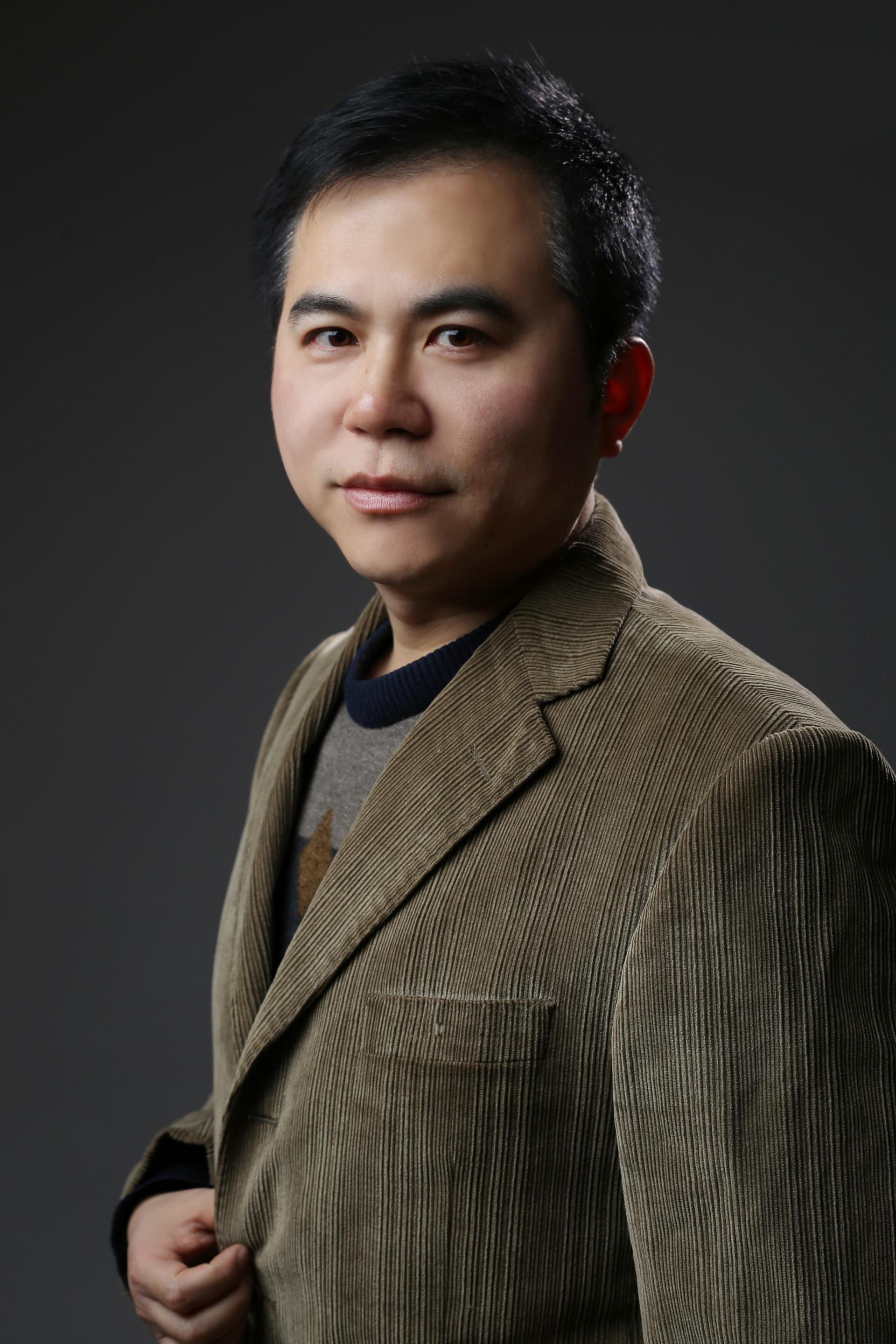 Zhen Liu (刘震)合作论文数School of Automation Engineering, University of Electronic Science and Technology of China1
 Offer Kella合作论文数Department of Statistics, The Hebrew University of Jerusalem1Jeongsim Kim合作论文数1Q. Deng合作论文数1
 Eitan Altman合作论文数Sophia Antipolis, Institut National de Recherche en Informatique et Automatique1




