Morphable architected materials enable tunable mechanical and functional properties through geometry rather than material composition. However, existing morphing strategies are largely limited to one- or two-dimensional transformations, preserve topology during deformation, and often rely on material-level phase changes for shape retention, restricting volumetric tunability, structural stiffness, and material choice. Here, we present a general inverse design framework for topologically variable and volumetric morphing of 3D architected materials with shape locking capabilities. The proposed approach enables reversible morphing between flat two-dimensional configurations and a wide range of three-dimensional curvilinear and polyhedral geometries-including shapes with different Euler characteristics-while remaining functionally bistable, with stable undeployed and deployed configurations. The framework combines volumetric mapping of bistable modular origami unit cells with kinematic constraints for flat foldability and kinetic constraints that induce structural bistability, achieving shape locking through mechanical instability rather than material phase transitions. Volumetric morphing further enables access to a previously unexplored materials design space, allowing a single architected material to exhibit widely tunable bulk and shear moduli and programmable structural responses. This work establishes a unified paradigm for inverse-designed morphable architected materials and the energy-efficient fabrication of complex 3D structures.
A mechanical model of a laminated composite ring on a nonreciprocal elastic foundation is a valuable engineering tool during the early design stages of various applications, such as non-pneumatic wheels, flexible bearings/bushings, expandable tubulars in oil wells, and vascular stents interacting with blood vessel linings, especially under non-axisymmetric loadings. Despite its importance, limited research has focused on the interaction between laminated composite rings and nonreciprocal elastic foundations. Moreover, no quantitative studies have yet explored the influence of foundation stiffness on the ring's deformation. This work aims to develop an analytical framework for a laminated composite ring supported by a nonreciprocal elastic foundation under non-axisymmetric loading conditions. The model generates a design map that correlates the foundation's stiffness with the ring's deformation, accounting for ring dimensions, laminate lay-up architecture, and lamina anisotropy. The closed-form solution provides an efficient design tool for analyzing non-axisymmetric and nonuniform loadings at a low computational cost. The resulting design map provides a valuable resource for exploring the interaction between the nonreciprocal foundation and the laminated ring. The proposed analytical framework and design map hold broad potential applications in automotive, mechanical, civil, and biomedical engineering fields.
Meta-wheels-non-pneumatic wheels whose performance is governed by structural geometry rather than internal pressure-offer new opportunities for directional stiffness control. Yet achieving independent tuning of longitudinal, lateral, and vertical stiffness within a single wheel architecture has remained challenging due to the inherent coupling in conventional radial and planar curved spokes. In this study, we introduce a three-dimensional (3D) discrete curved-spoke design that provides explicit geometric control through two independent parameters: the in-plane curvature angle (alpha) and the out-of-plane inclination angle (beta). Using spoke-level and full-wheel finite-element (FE) simulations, supported by a simplified cantilever-beam analytical model, we show that these two geometric parameters govern stiffness in fundamentally different ways. The curvature angle alpha serves primarily as a geometric softener, reducing stiffness in all directions while maintaining a high top-loading ratio (TLR) (>92%). In contrast, the inclination angle beta enables true directional stiffness decoupling: increasing beta substantially raises longitudinal stiffness and decreases lateral stiffness, while leaving vertical stiffness nearly unchanged (approximate to 1.4% variation). Compared with conventional two-dimensional (2D) spoke designs, the proposed 3D architecture achieves stiffness characteristics approaching those of pneumatic tires, particularly higher longitudinal stiffness and lower lateral stiffness, without sacrificing vertical load-bearing capacity. Moreover, the combined simulation-analysis framework provides an efficient early-stage screening tool by mapping desired stiffness ratios directly to geometric parameters, narrowing the feasible design space before full-wheel FE verification. Overall, this work demonstrates that 3D discrete curved spokes present a practical and interpretable route toward stiffness-decoupled, directionally programmable meta-wheels for next-generation mobility platforms.
Mechanical couplings with symmetry breaking enable novel applications in robotic metamaterials and directional mechanical signal guidance. While previous studies of three-dimensional (3D) mechanical couplings have focused primarily on axial-twist designs, we extend this limitation by characterizing 3D axial-bending (AB) coupling and its relationship to non-centrosymmetry and chirality. By incorporating mirror and inversion symmetry breaking, we identify AB coupling effects of non-centrosymmetric lattices with both achiral and chiral geometries. Applying an extended 3D micropolar homogenization method, we systematically quantify anisotropic physical properties and mechanical couplings as functions of curvature and handedness, integrating point group symmetry with micropolar constitutive mechanics of curved cubic lattices. Our investigation, supported by experiments and finite-element (FE) simulations, reveals that chirality weakly correlates with both AB and axial-twisting (AT) couplings. We employ Neumann's principle to both design and characterize the anisotropic behaviour of these structures, enabling the development of multimodal mechanical couplings. This work presents a robust framework for understanding mechanical couplings related to symmetry breaking and spatial anisotropy in metamaterial design, drawing an analogy to crystal physics and crystal chemistry.
Developing analytical models for structures with multiple interactions-such as a ring interacting internally with spokes and externally with a contact surface-is critical for the design of meta-wheels and the accurate quantification of contact pressure and load distribution. However, constructing such models is challenging due to the mathematical complexity involved in capturing these coupled interactions, and consequently, only a few analytical frameworks currently exist. This study introduces an analytical contact model for laminated composite rings in meta-wheels, incorporating both material anisotropy and foundation nonreciprocity. The model evaluates the deformation of a laminated ring supported by a nonreciprocal elastic foundation, employing a contact algorithm based on the integration of point loads. The proposed dual-interaction model enables comprehensive analysis of contact behavior and top-loading ratio as functions of ring geometry, laminate layup, material anisotropy, and the compression-to-tension stiffness ratio of the foundation. Results reveal that reducing this stiffness ratio significantly lowers contact pressure while enhancing load-bearing performance. The framework provides valuable physical insights and serves as an efficient inverse design tool for developing nonreciprocal spoke systems in meta-wheels, enabling the systematic optimization of structural performance.
Mechanical computing, while not poised to replace electronic computing, presents a complementary solution in areas where electronic systems face challenges like high power consumption and environmental vulnerability. Despite the inherent limitations of mechanical systems in speed, size, and functional scalability, their unique 2D and 3D geometries offer multi-dimensional signal transmission and non-volatile logic computing, potentially enhancing computational density. However, a lack of advanced modular design strategies for complex systems has hindered progress in mechanical computing. This study introduces a top-down design approach to non-volatile logic mechanical computing using multi-output logic gates designed with square lattices and bistable beams, addressing functional scalability through a modular design that facilitates the assembly of mechanical circuits. This innovation not only enhances computational density but also reduces system size, offering new avenues for research in fields like soft robotics and active metamaterials, and setting the stage for advances in mechanical computing systems.
Mechanical metamaterials enable unconventional direction-dependent actuation, vibration isolation, and signal routing. Beyond dynamic phenomena, static nonreciprocity can arise from geometric nonlinearities—curvature, contact, and buckling—or from material nonlinearity, challenging classical Maxwell–Betti reciprocity and Cauchy elasticity. This Perspective unifies direct, coupled, and odd elasticity, surveys symmetry-informed design strategies, nonlinear mechanisms, and constitutive models, and outlines pathways to programmable lattices. We propose a taxonomy linking nonreciprocity to symmetry-guided design.
Origami structures with embedded creases provide predesigned deformed paths that could enhance the mechanical properties upon loading. Nature has provided hints from the cross-section of the hexagon-filled tessellation pattern of the bamboo and the porous protective layer of the pomelo peel, but the design method of the mechanical metamaterials that combines both energy absorption and protection capacities remains unknown. Inspired by this, the novel design method of the thick-wall cylindrical origami-based metamaterials (TCOM) derived from different tessellation patterns is provided, and both capacities are studied under two loading cases. The main parameters, such as layer heights ranging from 5 mm to 10 mm and rotation angles of 1 degrees, 3 degrees, and 5 degrees, are varied to investigate their influence on these two capacities. The results show that these two capacities are generally incompatible, and the mixed polygon tessellation patterns stand out. We found that the specific energy absorption (SEA) capacity could be inversely programmable from the parametric study results, hence an optimization method based on the Gaussian Process Regression is provided as a design tool by a simple input of a user-preferred SEA value, hence providing a programmable energy-absorption capacity design tool for the future applications of the cylindrical origami-based mechanical metamaterials. The research here sheds light on the effects of tessellation design principles on origami-based mechanical metamaterial design.
The morphing of 3D structures is suitable for i) future tunable material design for customizing material properties and ii) advanced manufacturing tools for fabricating 3D structures on a 2D plane. However, there is no inverse design method for topologically variable and volumetric morphing or morphing with shape locking, which limits practical engineering applications. In this study, we construct a general inverse design method for 3D architected materials for topologically variable and volumetric morphing, whose shapes are lockable in the morphed states, which can contribute to future tunable materials, design, and advanced manufacturing. Volumetric mapping of bistable unit cells onto any 3D morphing target geometry with kinematic and kinetic modifications can produce flat-foldable and volumetric morphing structures with shape-locking. This study presents a generalized inverse design method for 3D metamaterial morphing that can be used for structural applications with shape locking. Topologically variable morphing enables the manufacture of volumetric structures on a 2D plane, saving tremendous energy and materials compared with conventional 3D printing. Volumetric morphing can significantly expand the design space with tunable physical properties without limiting the selection of base materials.
Thermal diodes that enable directional heat transport are essential for advanced thermal management in microelectronics, energy systems, and thermal logic devices. However, existing designs based on phase-change materials, nanostructures, or interfacial engineering suffer from limited rectification performance, configurational inflexibility, and poor scalability. Here, we present a thermomechanical metamaterial-based thermal diode that combines temperature-responsive actuation with structural bistability to achieve high-efficiency, nonreciprocal thermal transport. The device integrates shape memory alloy (SMA) springs with pre-buckled copper strips that undergo snap-through transitions in response to thermal gradients. This reconfiguration enables contact-based conduction in the forward mode and suppresses reverse heat flow via radiative isolation. We develop a coupled analytical model combining Euler-Bernoulli beam theory and a thermal resistance network, and validate the system through finite element (FE) simulations and experiments. The device achieves a thermal rectification ratio exceeding 900, with robust cycling stability and structural integrity. A modular stacking strategy further enhances scalability without compromising performance. This work establishes a new design framework for high-performance, passive thermal rectifiers that bridge mechanical metamaterials and advanced thermal engineering.
Mechanical computing has garnered significant interest as a supplement to traditional electronic computing, which often grapples with issues like high power consumption, security vulnerabilities, and susceptibility to extreme environmental conditions such as intense heat and radiation. Yet, most research in mechanical computing has been limited to the ad hoc design of simple logic gates and has not fully achieved the implementation of simple arithmetic computation within an electricity-free framework. Additionally, progress in environmentally adaptive computing, crucial for decentralized intelligence, has also been slow. New ground is broken with the development of a mechanical transistor that synergizes a Kirigami thermomechanical sensor and a bistable actuator, enabling in-memory computing for combinational and sequential logic. The design stands out by employing modular construction, symmetry breaking, and nonlinear materials, crafting logic gates, and memory units that respond to environmental stimuli through thermal delay. These transistors integrate design and material intelligence to establish nonvolatile memories, essential for logic-in-memory, and align thermal transport with mechanical deformation for environmental responsiveness. The mechanical transistor heralds a new age in mechanical computing, proving to be as versatile and vital as the electronic transistor has been in the era of modern computing. This study introduces a mechanical transistor merging a Kirigami thermomechanical sensor with a soft bistable actuator featuring multi-variable terminals. The design integrates modular construction, symmetry breaking, and nonlinear materials to build logic gates, volatile memory, and non-volatile memory units. This work also achieves environmentally responsive computing that accounts for sequential thermal signal delays by synchronizing thermal transport with thermomechanical deformation. image
Curved Crease Origami (CCO) structures exhibit intrinsic elastic behavior, resulting from a combination of crease folding and facet bending. In this work, we introduce a generic theoretical framework for constructing and predicting the mechanical properties of OMMs composed of curved crease unit cells, and an inverse design method that could achieve programmable stiffness and stability of CCO metamaterials, the CCO stacked unit with 2n-stability is first designed. Theoretical models, which could predict the in- and out-of-plane Poisson's ratios, uniaxial forces and stiffnesses of a single CCO tessellation, are constructed and validated by comparing with the finite element numerical method and experiment. Based on the analytical framework, the mechanical properties of the proposed CCO metamaterial with different crucial parameters are investigated, the results show that the combination of the initial folding angle pair could prominently affects the presence of bistability of the CCO unit. Our framework reveals that stacking two distinct layers of CCO units enables unique properties, such as bistability and zero stiffness, expanding the design space for CCO metamaterials. To determine the most suitable parameters for the unit cell to achieve programmable stabilities and targeted stiffness, the genetic algorithm is employed to optimize the basic model parameters and to carry out the inverse design, several case studies are demonstrated to show that the bistability model with specific stiffness, assigned stable locations, zero-stiffness in stable states and multistability model could be achieved. In summary, this work presents a comprehensive framework for designing and analyzing the curved crease origami mechanical metamaterials and proposes the inverse design method that could pave the way for a range of novel applications.
Morphing origami has numerous potential engineering applications owing to its intrinsic morphing features from 2D planes to 3D surfaces. However, the current 1D hinge deformation‐driven transformation of foldable origami with rigid or slightly deformable panels cannot achieve a 3D complex and large curvilinear morphing. Moreover, most active origami structures use thin hinges with soft materials on their creases, thus resulting in a lower load capability. This study proposes a novel origami morphing method demonstrating large free‐form surface morphing, such as Euclidean to non‐Euclidean surface morphing with shape‐locking. Tensorial anisotropic stress in origami panels is embedded during the extrusion‐based 3D printing of shape memory polymers. The extrusion‐based 3D printing of isotropic SMPs can produce tensorial anisotropic stress in origami panels during fabrication, which can realize significant non‐Euclidean surface morphing with multiple deformation modes. The connecting topology of the origami unit cells influences the global morphing behavior owing to the interaction of the deformation of adjacent panels. Non‐Euclidean morphing integrated with 4D printing can provide multimodal shape locking at material and structural levels.
The nonreciprocal elastic behavior of flexible spokes is essential for designing a top-loading condition of nonpneumatic wheels to distribute the vehicle load throughout the upper circumferential region of a wheel to replicate the loading mode of their pneumatic counterparts. However, most ad hoc spoke designs had been conducted without considering the top-loading mechanics. Moreover, minimizing the stress concentration on the spokes is also significant for preventing potential failures; however, modification of the geometry to reduce the local stress on the spokes has not yet been studied. In this work, we investigate the effect of nonreciprocal elastic behaviors of curved spokes on the top-loading distribution of nonpneumatic wheels. We also study the geometric effect of nonuniform curved spokes on reducing the local stress concentration. Curved beam spokes with greater curvature can contribute to a high top-loading ratio of nonpneumatic wheels. The nonuniform thickness of curved spokes with the spoke’s ends and center regions can reduce the local stress level by up to 24%. Our design method with varying curvature and nonuniformity of the curved spokes can provide significant design guidelines for nonpneumatic wheels for determining the top-loading ratio, tuning the vertical stiffness, and minimizing local stress on the spokes.
An elastic ring interacting with rigid surfaces is a fundamental engineering challenge with vast practical implications in various disciplines. However, the exploration of closed-form solutions for this issue has been limited, and existing studies often present complex, numerically unstable solution methods influenced by specific boundary conditions. Furthermore, the lack of scalable design principles for the ring-in-contact scenario has hindered its broader application across different geometries and materials. This study introduces a streamlined analytical and numerical approach to predict the contact behavior of orthotropic rings against centrosymmetric rigid surfaces, encompassing both flat and curved surfaces. Our approach, which simplifies the closed-form solution for extensible Timoshenko curved beams coupled with a contact algorithm that prevents penetration, yields robust and accurate predictions of nonlinear contact behaviors in elastic rings, including deformation patterns, contact angles, stresses, and stiffness. Additionally, we present a design map that serves as a scalable guideline for engineering elastic rings in contact, facilitating the choice of geometry and materials, such as ring radius, thickness, and elastic moduli. This research enhances the theoretical underpinnings of elasticity concerning ring contact and expands the engineering viewpoint on designing elastic rings in various contact scenarios.
Mechanical couplings with symmetry breaking open up novel applications such as robotic metamaterials and directional mechanical signal guidance. However, most studies on 3D mechanical couplings have been limited to ad-hoc axial-twist designs due to a lack of comprehensive understanding of 3D non-centrosymmetry and chirality. Few theoretical methods exist to identify and quantify mechanical couplings in non-centrosymmetric and chiral lattices, typically relying on crystal physics (point group symmetry) and generalized constitutive equations. By extending symmetry breaking to mirror and inversion symmetries, we identify a broader range of mechanical couplings beyond axial-twist, such as axial-bending couplings. We develop a generalized 3D micropolar model of curved cubic lattices, encompassing both non-centrosymmetric achiral and chiral geometries, to quantify anisotropic physical properties and mechanical couplings as functions of curvature and handedness. Integrating point group symmetry operations with micropolar homogenized constitutive equations for curved cubic lattices, including mirror and inversion symmetry breaking, provides a clear design framework for identifying and quantifying anisotropic physical properties and mechanical couplings beyond axial-twist. This study uncovers a novel axial-bending coupling in non-centrosymmetric structures and highlights the weak correlation between chirality and both axial-bending and axial-twisting couplings. It also offers design guidelines for achieving multimodal couplings. The relationship between metamaterials' geometry and physical properties aligns with Neumann's principle. This work presents a robust framework for understanding mechanical couplings related to symmetry breaking and spatial anisotropy in metamaterial design, drawing an analogy to crystal physics and crystal chemistry.
Thermal Computing Traditional electronic computing frequently faces challenges such as elevated power usage, security risks, and vulnerability to harsh environmental factors, including extreme heat and radiation. In article number 2401244, Lei Shao, Jaehyung Ju, and co-workers present a thermal computing approach using several mechanical transistors made from a Kirigami thermomechanical sensor coupled with a bistable actuator that has multi-variable terminals, with potential applications in environments like the International Space Station.
 Joshua Summers合作论文数Department of Mechanical Engineering, University of Texas at Dallas20
 Hyeonu Heo合作论文数University of North Texas17
 Kwangwon Kim合作论文数Sch Aerosp & Mech Engn, Korea Aerosp Univ16
 Doo-Man Kim合作论文数14
 Bihui Zou合作论文数UM-SJTU Joint Institute, Shanghai Jiao Tong University11
 Zhiming Cui合作论文数11
 Chao Song合作论文数UM-SJTU Joint Institute, Shanghai Jiao Tong University10
 Md Salah Uddin合作论文数Dept Mech & Energy Engn, Univ North Texas9
 Kai Xiao合作论文数UM-SJTU Joint Institute, Shanghai Jiao Tong University9
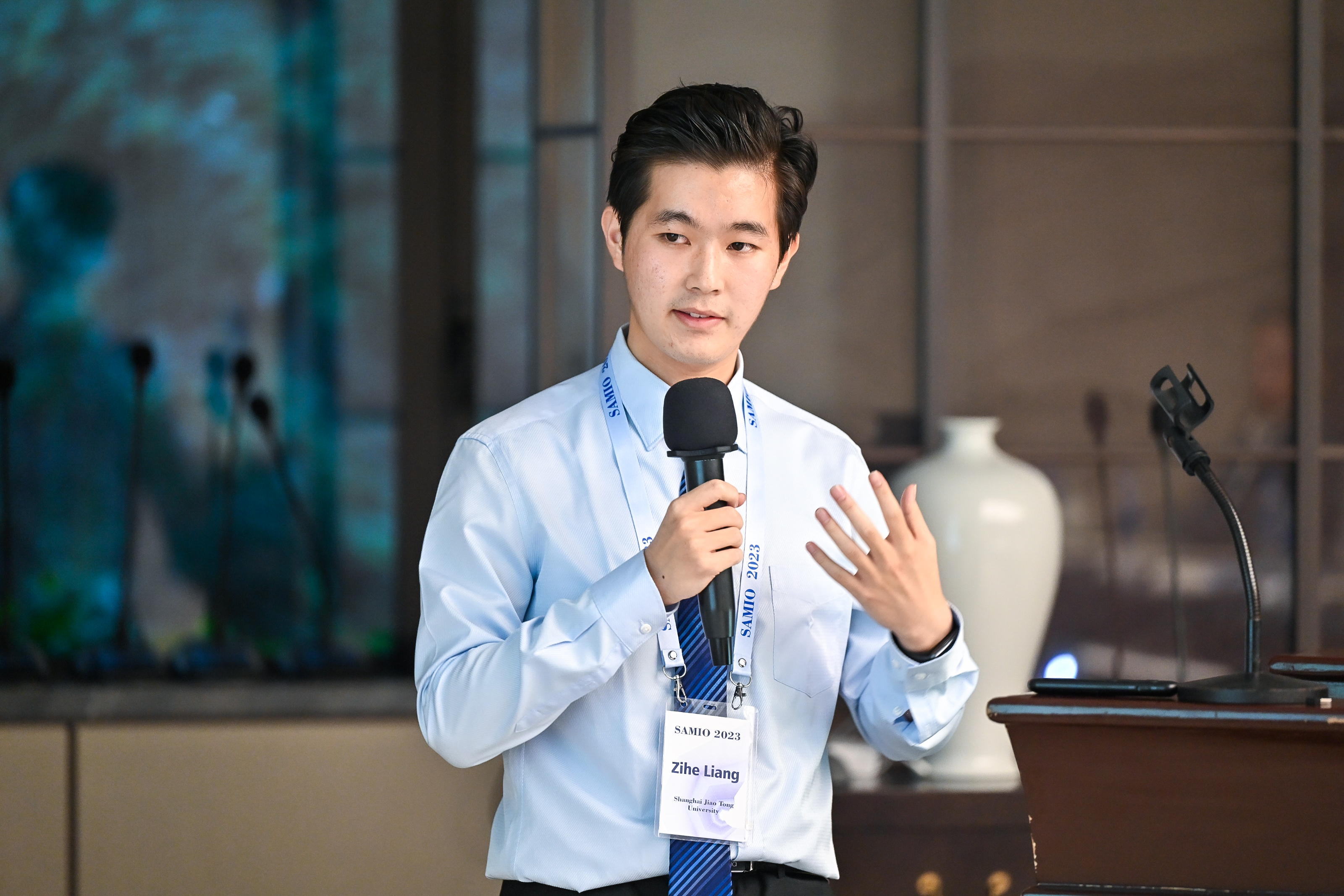 Zihe Liang (梁子赫)合作论文数UM-SJTU Joint Institute, Shanghai Jiao Tong University8
 John C. Ziegert合作论文数8
 Arup Neogi合作论文数Laboratory of Ultrafast Nanophotonics and Acoustic Communications, Institute of Fundamental and Frontier Sciences, University of Electronic Science and Technology of China7Jiwon Mun合作论文数6
 Lonny L. Thompson合作论文数Department of Mechanical Engineering6
 Georges M. Fadel合作论文数Clemson Research in Engineering Design and Optimization (CREDO) Laboratory, Clemson University6Rj Morgan合作论文数5
 Xiang Zhou (周翔)合作论文数School of Aeronautics and Astronautics, Shanghai Jiao Tong University5James Thurman合作论文数4
 Luke Berglind合作论文数4Zhihao Yuan合作论文数4
 prabhu shankar合作论文数Amrita School of Engineering, Amrita Vishwa Vidyapeetham4mallikarjun veeramurthy合作论文数3sarom ryu合作论文数3
 Sairom Yoo合作论文数3
 Huyue Chen合作论文数University of Michigan–Shanghai Jiao Tong University Joint Institute, Shanghai Jiao Tong University3Zhihan Zhang合作论文数3
 Zhaoguang Wang (王召光)合作论文数Shanghai Jiao Tong University Global College3Seok-Ju Choi合作论文数3jiahao wu合作论文数3
 Yuljae Cho合作论文数Univ Oxford, Dept Engn Sci, Parks Rd, Oxford OX1 3PJ, England3
 An Zou (邹桉)合作论文数Shanghai Jiao Tong University Global College3
 Lei Shao (邵磊)合作论文数University of Michigan - Shanghai Jiao Tong University Joint Institute;Shanghai Jiao Tong University Global College3
 Wenming Zhang (张文明)合作论文数School of Mechanical Engineering, Shanghai Jiao Tong University3
 Arkadii Krokhin合作论文数Department of Physics;University of North Texas;Department of Physics, University of North Texas3e eugene shin合作论文数2Byungmoon Chang合作论文数2seunghye kim合作论文数2j michael schultz合作论文数2
 Byoung-Gwan Yun合作论文数2jaehong lee合作论文数2Shuang Shao合作论文数2chihun lee合作论文数2
 Zhiyuan Hu合作论文数2avinash kolla合作论文数Clemson Engn Design Applicat & Res Grp CEDAR, Clemson Univ2david griese合作论文数2
 Addis Tessema合作论文数Lineberger Comprehens Canc Ctr, Univ N Carolina2Shouhang Li合作论文数2
 Zhipeng Liu合作论文数UM-SJTU Joint Institute, Shanghai Jiao Tong University2




