We study the effects of social media political advertising by randomizing subsets of 36,906 Facebook users and 25,925 Instagram users to have political ads removed from their news feeds for 6 weeks before the 2020 US presidential election. We show that most presidential ads were targeted towards parties' own supporters and that fundraising ads were the most common. On both Facebook and Instagram, we found no detectable effects of removing political ads on political knowledge, polarization, perceived legitimacy of the election, political participation (including campaign contributions), candidate favourability and turnout. This was true overall and for both Democrats and Republicans separately.
The proliferation of social media and rising political polarization have radically changed the landscape of political information transmission. We know little about the effects of these changes in the media landscape on the process of political socialization, despite an expectation that the information adolescents encounter on social media may be particularly relevant to their political development. Canonical research on American political behavior concluded that teenagers do not have firm partisan attachments or ideological orientations. However, recent research suggests that rising polarization has induced teenagers to develop partisan attachments, opening questions about the heuristics they use to parse the information they encounter. In an age where the information environment demands skills for assessing source credibility, we ask: do teens differ from adults in their reliance on traditional party and source cues? What cues do teens use in the absence of strong party cues to assess political arguments? We conducted two studies: a study fielded on a sample of American teenagers ( n = 803) and an identical study fielded to a nationally representative sample of American adults ( n = 1000). We find that while both teenagers and adults find counter-attitudinal messages and partisan messages to be less credible, there is no interaction between those features. Overall, adults’ and teenagers’ political attitudes are affected by message cues in mostly the same way: neither source credibility cues alone nor higher popularity cues affect political attitudes, but counter-attitudinal and partisan messages move respondents in the opposite direction of the tweet’s ideological message.
Over the last two decades political parties and candidates have shifted many of their functions and activities online. As individuals differ greatly in their technological competence, this shift generates a democratic digital divide. Most of the research focuses on the characteristics of those who are disadvantaged by this divide, exploring the role of Internet literacy programs to ameliorate the problem. However, little attention has been paid to an alternative solution: improving the infrastructure of online communication itself. Employing hidden eye tracking technology, randomly assigned participants (N = 21) were asked to conduct several tasks on parties' websites. Through observation flow and heat maps, mouse movements and retroscope questioning, we found that political parties' websites were not optimally designed to facilitate participation. In fact, they hampered participation, especially among those with low technological competence. Based on our findings, we modified the parties' websites and asked a second group of randomly assigned volunteers (N = 21) to conduct the very same tasks. A cross-group comparison shows that the digital divide may be significantly reduced by following simple web-design best practices.
At present, the field of political psychology lacks an effective framework to conceptually organize the findings from the voluminous literature assessing whether interpersonal political interaction makes democracy better or worse. Historically, the scholarship examining various styles of interactions has remained siloed; scholars have not designed their studies to facilitate comparisons across different styles, so the accumulation of knowledge about one style often fails to influence how knowledge is accumulated about other styles. Moreover, the approaches used to study interpersonal political interaction bundle together constituent facets of discussion in a way that makes it difficult to unpack the relationship between the structural features and attitudinal outcomes of that interaction. In this review, I seek to develop a conceptual framework with two goals: (1) to encourage research design that intentionally examines why and how particular features of interpersonal interactions are linked to particular kinds of attitudinal outcomes, regardless of the style of interaction and (2) to facilitate communication between academic researchers and practitioners in order to strengthen the theory-to-practice pipeline for interpersonal political interaction research.
Social media creates the possibility for rapid, viral spread of content, but how many posts actually reach millions? And is misinformation special in how it propagates? We answer these questions by analyzing the virality of and exposure to information on Facebook during the U.S. 2020 presidential election. We examine the diffusion trees of the approximately 1 B posts that were re-shared at least once by U.S.-based adults from July 1, 2020, to February 1, 2021. We differentiate misinformation from non-misinformation posts to show that (1) misinformation diffused more slowly, relying on a small number of active users that spread misinformation via long chains of peer-to-peer diffusion that reached millions; non-misinformation spread primarily through one-to-many affordances (mainly, Pages); (2) the relative importance of peer-to-peer spread for misinformation was likely due to an enforcement gap in content moderation policies designed to target mostly Pages and Groups; and (3) periods of aggressive content moderation proximate to the election coincide with dramatic drops in the spread and reach of misinformation and (to a lesser extent) political content.
We study the effect of Facebook and Instagram access on political beliefs, attitudes, and behavior by randomizing a subset of 19,857 Facebook users and 15,585 Instagram users to deactivate their accounts for 6 wk before the 2020 U.S. election. We report four key findings. First, both Facebook and Instagram deactivation reduced an index of political participation (driven mainly by reduced participation online). Second, Facebook deactivation had no significant effect on an index of knowledge, but secondary analyses suggest that it reduced knowledge of general news while possibly also decreasing belief in misinformation circulating online. Third, Facebook deactivation may have reduced self-reported net votes for Trump, though this effect does not meet our preregistered significance threshold. Finally, the effects of both Facebook and Instagram deactivation on affective and issue polarization, perceived legitimacy of the election, candidate favorability, and voter turnout were all precisely estimated and close to zero.
Does Facebook enable ideological segregation in political news consumption? We analyzed exposure to news during the US 2020 election using aggregated data for 208 million US Facebook users. We compared the inventory of all political news that users could have seen in their feeds with the information that they saw (after algorithmic curation) and the information with which they engaged. We show that (i) ideological segregation is high and increases as we shift from potential exposure to actual exposure to engagement; (ii) there is an asymmetry between conservative and liberal audiences, with a substantial corner of the news ecosystem consumed exclusively by conservatives; and (iii) most misinformation, as identified by Meta's Third-Party Fact-Checking Program, exists within this homogeneously conservative corner, which has no equivalent on the liberal side. Sources favored by conservative audiences were more prevalent on Facebook's news ecosystem than those favored by liberals.
We investigated the effects of Facebook's and Instagram's feed algorithms during the 2020 US election. We assigned a sample of consenting users to reverse-chronologically-ordered feeds instead of the default algorithms. Moving users out of algorithmic feeds substantially decreased the time they spent on the platforms and their activity. The chronological feed also affected exposure to content: The amount of political and untrustworthy content they saw increased on both platforms, the amount of content classified as uncivil or containing slur words they saw decreased on Facebook, and the amount of content from moderate friends and sources with ideologically mixed audiences they saw increased on Facebook. Despite these substantial changes in users' on-platform experience, the chronological feed did not significantly alter levels of issue polarization, affective polarization, political knowledge, or other key attitudes during the 3-month study period.
Many critics raise concerns about the prevalence of 'echo chambers' on social media and their potential role in increasing political polarization. However, the lack of available data and the challenges of conducting large-scale field experiments have made it difficult to assess the scope of the problem(1,2). Here we present data from 2020 for the entire population of active adult Facebook users in the USA showing that content from 'like-minded' sources constitutes the majority of what people see on the platform, although political information and news represent only a small fraction of these exposures. To evaluate a potential response to concerns about the effects of echo chambers, we conducted a multi-wave field experiment on Facebook among 23,377 users for whom we reduced exposure to content from like-minded sources during the 2020 US presidential election by about one-third. We found that the intervention increased their exposure to content from cross-cutting sources and decreased exposure to uncivil language, but had no measurable effects on eight preregistered attitudinal measures such as affective polarization, ideological extremity, candidate evaluations and belief in false claims. These precisely estimated results suggest that although exposure to content from like-minded sources on social media is common, reducing its prevalence during the 2020 US presidential election did not correspondingly reduce polarization in beliefs or attitudes.
ABSTRACT Undergraduate students today face a more demanding and competitive labor market than their parents’ generation. In response, some pursue double majors to signal breadth to potential employers and to improve their job prospects. Some students also realize that a strong signal of workplace readiness is acquiring in-demand skills through independent and collaborative research. In this article, four professors at an undergraduate-focused public university in the United States share their experiences working with undergraduate students on research, focusing on the “supply side” of student research training and mentoring. We discuss how institutions can support differently situated faculty members, who face different career incentives and constraints, to integrate undergraduates in their research. We also address the limits of what is possible for faculty‐student research and suggest ways to overcome them.
Abstract Evidence for the biological origins of politics first emerged as early as the 1970s, and the Politics and the Life Sciences journal was founded in 1982, a testament to nascent interest in the discipline. Recognition of the potential for biological measurement of political attitudes persisted throughout the 1980s and 1990s, but it has only been in the last 15 years that the biology and politics research agenda has emerged as a robust area of inquiry, integrating biological processes into the study of a wide variety of political outcomes. Although certain facets of the research agenda have inspired controversy, there has come to be wide recognition that biological approaches to understanding politics—often rooted in evolutionary perspectives—can be informative and complementary to a broad range of topics within political psychology, such as attitudes, identity, participation, interest, sophistication, and information processing.
We studied the effects of exposure to reshared content on Facebook during the 2020 US election by assigning a random set of consenting, US-based users to feeds that did not contain any reshares over a 3-month period. We find that removing reshared content substantially decreases the amount of political news, including content from untrustworthy sources, to which users are exposed; decreases overall clicks and reactions; and reduces partisan news clicks. Further, we observe that removing reshared content produces clear decreases in news knowledge within the sample, although there is some uncertainty about how this would generalize to all users. Contrary to expectations, the treatment does not significantly affect political polarization or any measure of individual-level political attitudes.
An abstract is not available for this content so a preview has been provided. Please use the Get access link above for information on how to access this content.
Why are political conversations uncomfortable for so many people? The current literature focuses on the structure of people's discussion networks and the frequency with which they talk about politics, but not the dynamics of the conversations themselves. In What Goes Without Saying, Taylor N. Carlson and Jaime E. Settle investigate how Americans navigate these discussions in their daily lives, with particular attention to the decision-making process around when and how to broach politics. The authors use a multi-methods approach to unpack what they call the 4D Framework of political conversation: identifying the ways that people detect others' views, decide whether to talk, discuss their opinions honestly—or not, and determine whether they will repeat the experience in the future. In developing a framework for studying and explaining political discussion as a social process, What Goes Without Saying will set the agenda for research in political science, psychology, communication, and sociology for decades to come.
The past decade has seen a rapid increase in the number of studies employing psychophysiological methods to explain variation in political attitudes and behavior. However, the collection, analysis, and interpretation of physiological data present novel challenges for political scientists unfamiliar with the underlying biological concepts and technical skills necessary for utilizing this approach. Our objective in this article is to maximize the effectiveness of future work utilizing psychophysiological measurement by providing guidance on how the techniques can be employed most fruitfully as a complement to, not a replacement for, existing methods. We develop clear, step-by-step instructions for how physiological research should be conducted and provide a discussion of the issues commonly faced by scholars working with these measures. Our hope is that this article will be a useful resource for both neophytes and experienced scholars in lowering the start-up costs to doing this work and assessing it as part of the peer review process. More broadly, in the spirit of the open science framework, we aim to foster increased communication, collaboration, and replication of findings across political science labs utilizing psychophysiological methods.
An abstract is not available for this content so a preview has been provided. As you have access to this content, a full PDF is available via the ‘Save PDF’ action button.
 James H. Fowler合作论文数Department of Political Science, University of California, San Diego19
 Robert M. Bond合作论文数12
 Christopher J. Fariss合作论文数Department of Political Science, College of Literature, Science, and the Arts, University of Michigan, University of Michigan10
 Jason D Jones合作论文数Department of Psychiatry, Perelman School of Medicine, University of Pennsylvania9
 Johanna Dunaway合作论文数Department of Political Science and Manship School of Mass Communication, Louisiana State University9Annie Franco合作论文数8
 Young Mie Kim合作论文数School of Journalism and Mass Communication, University of Wisconsin-Madison8
 Sandra González-Bailón合作论文数Annenberg School for Communication, University of Pennsylvania8
 Andrew M. Guess合作论文数Department of Politics, Princeton School of Public and International Affairs, Princeton University8
 Hunt Allcott合作论文数Doerr School of Sustainability, Stanford University;Stanford Institute for Economic Policy8
 David Lazer合作论文数College of Social Sciences and Humanities, Northeastern University;Khoury College of Computer Science, Northeastern University;Department of Political Science, Northeastern University;Institute for Quantitative Social Science Associate, Harvard University8
 Jennifer Pan合作论文数Department of Political Science, School of Humanities and Sciences, Stanford University;Freeman Spogli Institute for International Studies, Stanford University;Department of Communication, Stanford University8Nyhan Brendan合作论文数8
 Jennifer Jerit合作论文数Department of Political Science;Florida State University;Department of Political Science, Florida State University8
 Deen Freelon合作论文数Hussman School of Journalism and Media, The University of North Carolina at Chapel Hill8
 Winter Mason合作论文数Facebook8Emily Thorson合作论文数8
 Rick K. Wilson合作论文数Department of Political Science, School of Social Sciences, Rice University8
 Magdalena Wojcieszak合作论文数ie university8
 Neil Malhotra合作论文数Center for Social Innovation, Stanford University;Golub Capital Social Impact Lab, Graduate School of Business, Stanford University;Center for Entrepreneurial Studies, Graduate School of Business, Stanford University8
 Rebekah Tromble合作论文数Khoury College of Computer Sciences, Northeastern University8
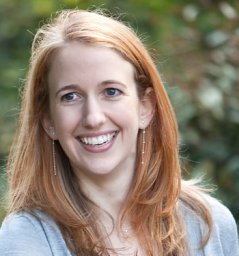 Cheryl Boudreau合作论文数Department of Political Science, University of California, Davis8
 Matthew Gentzkow合作论文数Department of Economics, School of Humanities and Sciences, Stanford University8Arjun Wilkins合作论文数7
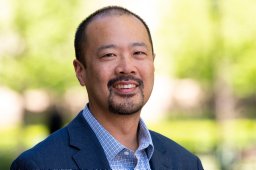 Jonathan Woon合作论文数Univ Pittsburgh, Pittsburgh, PA 15260 USA7
 Pablo Barberá合作论文数7
 Daniel Rubenson合作论文数Department of Government;School of Economics, London;Department of Government, London School of Economics7David Nickerson合作论文数6Betsy Paluck合作论文数6Jennifer L. Merolla合作论文数6Kris Kanthak合作论文数6Rose McDermott合作论文数6Der Straeen合作论文数6Nicholas A. Valentino合作论文数6Joshua A. Tucker合作论文数6Daniel Posner合作论文数6Gary King合作论文数6Steve Nicholson合作论文数6Scott Deposato合作论文数6Edmund Malesky合作论文数6Kevin Arceneaux合作论文数6Helen V. Milner合作论文数6Michael Bang Petersen合作论文数6Dustin Tingley合作论文数6Karin Van合作论文数6Luke Keele合作论文数6Adriana Crespo-Tenorio合作论文数6Carlos Velasco Rivera合作论文数6Chad Kiewiet de Jonge合作论文数6




