Consumer-level omnidirectional video offers an economically viable means to create virtual reality (VR) assets, enabling users to explore and interact within a fully immersive visual environment. However, editing such videos, particularly those with 360${}^{\circ }$∘ views and dynamic objects, poses significant challenges. Existing approaches to representing and manipulating omnidirectional content-whether designed for typical 2D perspective imagery or panoramas-often fail to adequately capture the complex spatiotemporal relationships crucial for producing high-quality, editable outputs in dynamic, panoramic settings. To overcome these challenges, we introduce OmniPlane, a novel method that leverages spherical spatiotemporal feature grids to empower the representation and editability of real-world dynamic omnidirectional environments casually captured by commodity omnidirectional cameras. OmniPlane computes spatiotemporal features by fusing vectors or matrices from each learnable spatial and spatiotemporal feature plane within a spherical coordinate system, complemented by a specifically designed weighted sampling strategy respecting the inherent spherical distribution of omnidirectional content. These learned feature planes can be flexibly decomposed into palette-based color bases. This innovative method not only enhances the representation capability of omnidirectional content and dynamics but also enables the recoloring of omnidirectional videos. Extensive experiments and a dedicated user study validate the superior performance of our proposed method in facilitating recolorable representations of dynamic omnidirectional environments.
Due to recent advances in 3D reconstruction from RGB images, it is now possible to create photorealistic representations of real-world scenes that only require minutes to be reconstructed and can be rendered in real time. In particular, 3D Gaussian splatting shows promising results, outperforming preceding reconstruction methods while simultaneously reducing the overall computational requirements. The main success of 3D Gaussian splatting relies on the efficient use of a differentiable rasterizer to render the Gaussian scene representation. One major drawback of this method is its underlying pinhole camera model. In this paper, we propose an extension of the existing method that removes this constraint and enables scene reconstructions using arbitrary camera optics such as highly distorting fisheye lenses. Our method achieves this by applying a differentiable warping function to the Gaussian scene representation. Additionally, we reduce overfitting in outdoor scenes by utilizing a learnable skybox, reducing the presence of floating artifacts within the reconstructed scene. Based on synthetic and real-world image datasets, we show that our method is capable of creating an accurate scene reconstruction from highly distorted images and rendering photorealistic images from such reconstructions.
High-quality data is crucial for the success of machine learning, but labeling large datasets is often a time-consuming and costly process. While semi-supervised learning can help mitigate the need for labeled data, label quality remains an open issue due to ambiguity and disagreement among annotators. Thus, we use proposal-guided annotations as one option which leads to more consistency between annotators. However, proposing a label increases the probability of the annotators deciding in favor of this specific label. This introduces a bias which we can simulate and remove. We propose a new method CleverLabel for Cost-effective LabEling using Validated proposal-guidEd annotations and Repaired LABELs. CleverLabel can reduce labeling costs by up to 30.0%, while achieving a relative improvement in Kullback-Leibler divergence of up to 29.8% compared to the previous state-of-the-art on a multi-domain real-world image classification benchmark. CleverLabel offers a novel solution to the challenge of efficiently labeling large datasets while also improving the label quality.
Medical phantoms mimic aspects of procedures like computed tomography (CT), ultrasound (US) imaging, and surgical practices. However, the materials for current commercial phantoms are expensive and the fabrication with these is complex and lacks versatility. Therefore, existing material solutions are not suitable for creating patient-specific phantoms. We present a novel and cost-effective material system (utilizing ubiquitous sodium alginate hydrogel and coconut fat) with independently and accurately tailorable CT, US, and mechanical properties. By varying the concentration of alginate, cross-linker, and coconut fat, the radiological parameters and the elastic modulus were adjusted independently in a wide range. The independence was demonstrated by creating phantoms with features hidden in US, while visible in CT imaging and vice versa. This system is particularly beneficial in resource-scarce areas since the materials are cheap (<$ 1 USD/kg) and easy to obtain, offering realistic and versatile phantoms to practice surgeries and ultimately enhance patient care.
Hyperfluorescence (HF) and reduced autofluorescence (RA) are important biomarkers in fundus autofluorescence images (FAF) for the assessment of health of the retinal pigment epithelium (RPE), an important indicator of disease progression in geographic atrophy (GA) or central serous chorioretinopathy (CSCR). Autofluorescence images have been annotated by human raters, but distinguishing biomarkers (whether signals are increased or decreased) from the normal background proves challenging, with borders being particularly open to interpretation. Consequently, significant variations emerge among different graders, and even within the same grader during repeated annotations. Tests on in-house FAF data show that even highly skilled medical experts, despite previously discussing and settling on precise annotation guidelines, reach a pair-wise agreement measured in a Dice score of no more than 63–80% for HF segmentations and only 14–52% for RA. The data further show that the agreement of our primary annotation expert with herself is a 72% Dice score for HF and 51% for RA. Given these numbers, the task of automated HF and RA segmentation cannot simply be refined to the improvement in a segmentation score. Instead, we propose the use of a segmentation ensemble. Learning from images with a single annotation, the ensemble reaches expert-like performance with an agreement of a 64–81% Dice score for HF and 21–41% for RA with all our experts. In addition, utilizing the mean predictions of the ensemble networks and their variance, we devise ternary segmentations where FAF image areas are labeled either as confident background, confident HF, or potential HF, ensuring that predictions are reliable where they are confident (97% Precision), while detecting all instances of HF (99% Recall) annotated by all experts.
 Reinhard Koch合作论文数Department of Computer Science, Faculty of Engineering, Christian-Albrechts-Universität zu Kiel5
 Simin Kou合作论文数2
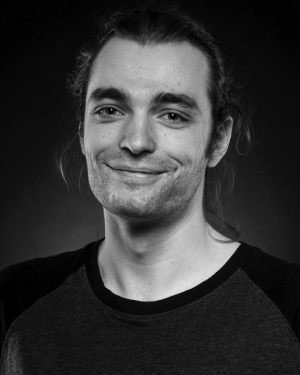 Monty Santarossa合作论文数Dept Comp Sci, Univ Kiel2
 Frank-Andre Siebert合作论文数2
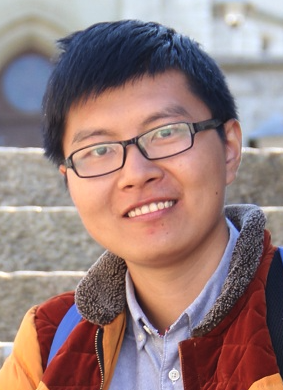 Fang-Lue Zhang (张方略)合作论文数School of Engineering and Computer Science, Victoria University of Wellington2Joerg Bahr合作论文数1
 Simon Reichhuber合作论文数1Soeren Kaps合作论文数1Johann Roider合作论文数1
 Leonard Siebert合作论文数Funct Nanomat, Christian Albrecht Univ Kiel1Claus von der Burchard合作论文数1
 Tim Michels合作论文数1Lars Schmarje合作论文数1
 Haoyi Qiu合作论文数Phi-Stone AG1Claudius Zelenka合作论文数1
 Neil Dodgson合作论文数School of Engineering and Computer Science, Victoria University of Wellington;Faculty of Graduate Research, Victoria University of Wellington1
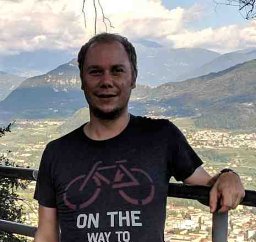 Sven Tomforde合作论文数Institute of Systems Engineering, Leibniz Universität Hannover1
 Rainer Adelung合作论文数Institute for Materials Science, Faculty of Engineering, Christian-Albrechts-Universität zu Kiel1Vasco Grossmann合作论文数Department of Computer Science, Christian-Albrechts-University of Kiel1Ulf Luetzen合作论文数1




