Physical exercise has long been widely regarded as essential to human health.1 Yet, we do not know how exercise-stressed skeletal muscle cells that generate reactive oxygen species such as hydrogen peroxide (H2O2) delay—if not prevent—the occurrence and severity of diseases such as type 2 diabetes (as well as dementias, cardiovascular disease, and some cancers). Also unexplained is the recent finding that metformin—the most commonly used drug to treat type 2 diabetes2–4—and physical exercise seem to be beneficial for several of the same diseases, including cancer, Alzheimer's disease, and cardiovascular disease.
Cancer cells are preferentially killed by anticancer agents because key signals for growth and cell division are "always on" as opposed to the alternative "on" and "off" signaling of normal cells. Too much of today's anticancer drug discovery effort may go toward reversing genetically promoted "always on" signals. More effective anticancer drug targets may be found through use of RNAi technologies that pinpoint the key gene regulatory and metabolic weakness of the "always on" cancer cells.
The various structural genomics projects throughout the globe have developed high-throughput protein structure determination pipelines which have been responsible for the deposition of a vast number of protein structures. As a consequence of the need for rapid data release and their target selection strategy, these projects have deposited a large number of proteins with little or no functional information. As the experimental characterization of protein function is expensive and time consuming, the bio-informatics community was prompted to address the problem of protein function prediction from sequence and structure. Over the years many methods have been developed and show varying degrees of success. Here we will discuss the main types of approach, the problems faced and, with examples from the Midwest Center for Structural Genomics (MCSG), illustrate how these structures and the techniques developed can have a significant impact on the study of health and disease.
The glycine-rich G-loop controls ATP binding and phosphate transfer in protein kinases. Here we show that the functions of Src family and Abl protein tyrosine kinases require an electrostatic interaction between oppositely charged amino acids within their G loops that is conserved in multiple other phylogenetically distinct protein kinases from plants to humans. By limiting G-loop flexibility, it controls ATP binding, catalysis and inhibition by ATP-competitive compounds such as Imatinib. In WeeB mice, mutational disruption of the interaction results in expression of a Lyn protein with reduced catalytic activity, and in perturbed B cell receptor signaling. Like Lyn-/- mice, WeeB mice show profound defects in B cell development and function and succumb to autoimmune glomerulonephritis. This demonstrates the physiological importance of the conserved G-loop salt bridge and at the same time distinguishes the in vivo requirement for the Lyn kinase activity from other potential functions of the protein.
Le dispositif d’entree objet de cette invention est destine a interagir avec une surface d’affichage d’un systeme d’affichage electronique. Ledit dispositif d’entree peut posseder un corps, une pointe, un systeme de detection, un capuchon et un systeme d’indication de mode. Ledit corps peut fournir au dispositif d’entree un support structurel. La pointe est en communication avec le corps. Cette pointe peut etre utilisee pour interagir directement avec la surface d’affichage susmentionnee. Le systeme de detection peut detecter des indices correspondant a la position du dispositif d’entree par rapport a ladite surface d’affichage, dans le but de faciliter le fonctionnement de ce meme dispositif d’entree. Le capuchon peut etre fixe sur la pointe, et il peut faire partie du systeme d’indication de mode. Le dispositif d’entree adopte un premier mode de fonctionnement lorsque le capuchon est fixe sur la pointe, et un second lorsque le capuchon est retire.
L'invention concerne un systeme de tableau blanc electronique muni d’un dispositif effaceur. Le systeme de tableau blanc electronique peut comporter une surface d’ecriture et un perimetre retro-reflechissant. Un ou plusieurs elements optiques de detection peuvent etre disposes aux coins du perimetre. Les elements de detection peuvent emettre un faisceau lumineux et detecter sa reflexion. Le systeme peut detecter la presence d’un objet a proximite de la surface d’ecriture par l’absence de lumiere reflechie. Le dispositif effaceur peut comporter des elements retro-reflechissants. Lesdits elements retro-reflechissants peuvent produire un motif caracteristique de reflexion observe par les elements de detection lorsqu’ils reflechissent les faisceaux lumineux emis. Le motif de reflexion peut etre analyse pour determiner l’orientation du dispositif effaceur par rapport a la surface d’ecriture. En determinant l’orientation reelle du dispositif effaceur, on parvient a eliminer ou a reduire sensiblement les images fantomes ou les ambiguites dans l’orientation du dispositif.
The development of high-throughput protein structure determination pipelines by the various Structural Genomics initiatives around the globe has resulted in the deposition of several thousand protein structures in the Protein Data Bank. However, due to the nature of the target selection process and the require ment for rapid data release, a significant proportion of these structures have little or no functional information. In order to address this problem a vast array of compu tational methods have been developed to predict a protein's function from its three dimensional structure. The approaches range from large scale fold comparison to highly specific residue templates, each with its own advantages and disadvantages. Here we look at the application of these methods in Structural Genomics and review attempts to determine how successful function prediction from structure has been, with specific examples illustrating some of the success stories.
In this era of complete genomes, our knowledge of neuroanatomical circuitry remains surprisingly sparse. Such knowledge is critical, however, for both basic and clinical research into brain function. Here we advocate for a concerted effort to fill this gap, through systematic, experimental mapping of neural circuits at a mesoscopic scale of resolution suitable for comprehensive, brainwide coverage, using injections of tracers or viral vectors. We detail the scientific and medical rationale and briefly review existing knowledge and experimental techniques. We define a set of desiderata, including brainwide coverage; validated and extensible experimental techniques suitable for standardization and automation; centralized, open-access data repository; compatibility with existing resources; and tractability with current informatics technology. We discuss a hypothetical but tractable plan for mouse, additional efforts for the macaque, and technique development for human. We estimate that the mouse connectivity project could be completed within five years with a comparatively modest budget.
Mutations in the protein dysferlin, a member of the ferlin family, lead to limb girdle muscular dystrophy type 2B and Myoshi myopathy. The ferlins are large proteins characterised by multiple C2 domains and a single C-terminal membrane-spanning helix. However, there is sequence conservation in some of the ferlin family in regions outside the C2 domains. In one annotation of the domain structure of these proteins, an unusual internal duplication event has been noted where a putative domain is inserted in between the N- and C-terminal parts of a homologous domain. This domain is known as the DysF domain. Here, we present the solution structure of the inner DysF domain of the dysferlin paralogue myoferlin, which has a unique fold held together by stacking of arginine and tryptophans, mutations that lead to clinical disease in dysferlin.
 julian lewis合作论文数19
 Martin Raff合作论文数MRC Laboratory for Molecular Cell Biology, University College London;Divison of Biosciences, University College London19
 Keith Roberts合作论文数University of East Anglia19bruce alberts合作论文数18dennis bray合作论文数16peter w hildebrandt合作论文数12
 Roman Laskowski合作论文数European Bioinformatics Institute, European Molecular Biology Laboratory11
 Janet Thornton合作论文数European Bioinformatics Institute, European Molecular Biology Laboratory11
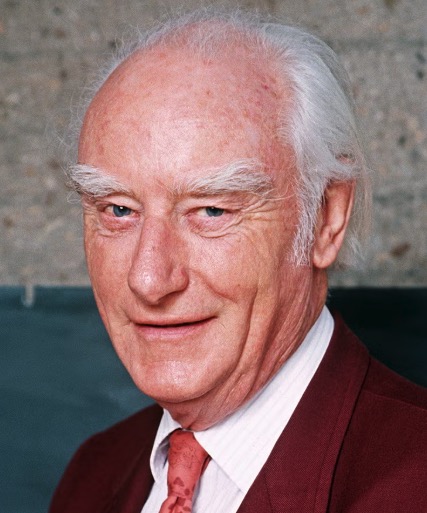 Francis Crick合作论文数Salk Institute for Biological Studies9neal a hofmann合作论文数8Paul L.J. Tan合作论文数7brent w anderson合作论文数6
 Andrzej Joachimiak合作论文数The University of Chicago;Structural Biology Center, Argonne National Laboratory;Midwest Center for Structural Genomics, Argonne National Laboratory6michael h dunn合作论文数5scott e wilson合作论文数5
 Aled Edwards合作论文数Department of Medical Biophysics, Temerty Faculty of Medicine, University of Toronto;Structural Genomics Consortium;M4K Pharma;McGill University5Geoffrey W. Krissansen合作论文数5Christine A. Orengo合作论文数5
 Euphemia Leung合作论文数Faculty of Medical and Health Sciences, University of Auckland5ian g hutchinson合作论文数4louis ashford合作论文数4richard meissner合作论文数4cold spring harbor symposium on quantitative biology合作论文数3nevin abernethy合作论文数3alexander b ferguson合作论文数3james g murison合作论文数3MA Sleeman合作论文数3WM JIANG合作论文数3Qian Yuan合作论文数3Murison J G合作论文数3Hilary J. Mckenna合作论文数3
 Ilkka Havukkala合作论文数Auckland University of Technology3Ross L. Prestidge合作论文数3Plj Tan合作论文数2Rl Prestidge合作论文数2rene onrust合作论文数2elizabeth visser合作论文数2Pj Morrissey合作论文数2Robert Cook-Deegan合作论文数2grigor murray robert genesis r合作论文数2E. Evdokimova合作论文数2lorna strachan合作论文数2Alexei Savchenko合作论文数2
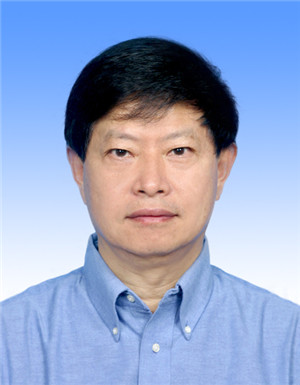 Rongguang Zhang (张荣光)合作论文数National Laboratory of Biomacromolecules, Institute of Biophysics, Chinese Academy of Sciences2Widmer M B合作论文数2Rudert F合作论文数2
 Oliver C. Redfern合作论文数Nuffield Department of Clinical Neurosciences, University of Oxford2
 Cheryl Arrowsmith合作论文数Department of Medical Biophysics, Temerty Faculty of Medicine, University of Toronto;Princess Margaret Cancer Centre2Michael L. Tress合作论文数Protein Design Group, CNB-CSIC2




