Chimeras have been used for investigating fundamental aspects of early embryonic development, and differentiation, and for introducing foreign genes into mammals (Robertson et al., 1986 Nature 323, 445–448; Cibelli et al., 1998 Science 280, 1256–1258). The main objective of this study was to determine if the transfer of blastomeres from in vitro-produced (IVP) embryos into cloned, transchromosomic embryos improved the efficiency of producing transchromosomic calves. Cloned embryos were produced using in vitro-matured bovine oocytes and bovine fetal fibroblasts containing a human artificial chromosome (HAC) (Kuroiwa et al., 2002 Nat Biotechnol 20, 889–894). IVP embryos were produced using standard procedures and blastomeres were harvested at the 8–16 cell stage by removing the zona pellucida with protease. Cloned embryos were randomly divided on Day 4 into two groups. One group received 3–4 IVP blastomeres while a second group served as a control (nonmanipulated cloned embryos). After transferring the blastomeres, the chimeric and cloned embryos were placed in culture (Kasinathan et al., 2001 Biol. Reprod. 64, 1487–1493) and on Day 7 development to the blastocyst stage was evaluated. Grades 1 and 2 embryos were transferred; two each per synchronized recipient. Pregnancy maintenance, calving, and calf survival were evaluated in both groups. Presence of a HAC in live calves was evaluated in both fibroblasts and peripheral blood lymphocytes (PBLs) using FISH analysis. Embryo development to the blastocyst stage, maintenance of pregnancy and number of calves born were analyzed using Chi-square. There were no differences in the rate of blastocyst development at day 7 or establishment of pregnancy at 40d (P>0.05). However, pregnancy rate at 120d, and number of calves that developed to term and were alive at birth (chimera 14/54 and clone 4/90), and at 1 month of age (chimera 13/54 and clone 1/90) were lower (P<0.01) for cloned embryos. The proportion of cells containing an HAC in PBLs, was higher in cloned calves (100%) compared to chimeric calves (26%). The HAC retension rates in PBLs in HAC-positive chimeric and cloned calves were 84% and 95%, respectively. These data indicate that, although the proportion of calves retaining an HAC was lower in chimeras compared to clones, more HAC-positive calves were produced in the chimeric treatment from fewer cloned embryos. We speculate that higher rates of development in the chimeras may be related to the normality of the placenta. Future studies will be required to determine the contribution of the IVP blastomeres to both the inner cell mass and trophectoderm. Therefore, a chimeric approach may be useful for improving the efficiency of producing cloned transchromosomic calves.
Conference Proceedings: Genetic and Hormonal Basis of Sexual Differentiation Disorders: CLINICAL NOTE
The formation of the testis or ovary is a critical step in development. The pioneering studies of Professor Alfred Jost showed that the hormones produced by the embryonic rabbit testis are essential for development of the male phenotype. Sexually dimorphic hormones play a key role in the transition from an undifferentiated gonad into the mature testis and ovary. Marsupials, with their altricial young, provide an accessible model for the study of sexual differentiation because most of these events occur postnatally, while the young are attached to teats within their mothers' pouches. The relatively long time-course for the marsupial sexual differentiation has provided an excellent opportunity to correlate morphological changes with the genes and hormones that control them. Using this model species we have demonstrated that not all sexual dimorphisms are controlled by hormones. Virilization of the prostate and phallus is androgen dependent but appears to rely on circulating 5alpha-androstane-3alpha, 17beta-diol which is converted to dihydrotestosterone in these target tissues. Collectively these studies have led to the development of new paradigms to explain the hormonal mechanisms mediating sexual differentiation.
We previously identified a nonsense mutation (Cys545Stop) in the paternal human LH/CG receptor (hLHR) allele in a family with two 46,XY children afflicted with Leydig cell hypoplasia. This mutation abolished the signal transduction capability of the affected hLHR. We have now examined all coding exons and the transcript of both alleles of the hLHR gene of the affected children. A 33-bp in-frame insertion was found in the maternal hLHR allele. This insertion occurred between nucleotide 54 and 55 and might be the result of a partial gene duplication. Genomic DNA-PCR showed that this defective maternal hLHR allele was inherited by the two affected children. However, examination of the inheritance of the 935-A/G polymorphism of the hLHR by genomic- and RT-PCR indicated that the maternal hLHR allele was not expressed in cultured fibroblasts of the patients. The effect of the in-frame insertion on the biological activity of the hLHR was examined by expressing the mutated hLHR construct, generated by site-directed mutagenesis, in HEK 293 cells. The expression of the mRNA for the mutant hLHR in HEK 293 cells was not affected. Response of cells expressing the mutated hLHR to hCG stimulation was impaired as demonstrated by reduced intracellular cAMP biosynthesis. This change in signal transduction was the result of a profound reduction in hormone binding at the cell surface due to altered expression and processing of the mutated receptor. We conclude that Leydig cell hypoplasia in this family is the result of compound heterozygous loss-of-function mutations of the hLHR gene.
COMPOUND HETEROZYGOUS MUTATIONS OF THE LUTEINIZING HORMONE/CHORIONIC GONADOTROPIN RECEPTOR GENE IN A FAMILY WITH TWO CHILDREN AFFECTED BY LEYDIG CELL HYPOPLASIA (LCH). • 387
Autosomal recessive mutations in the 17 beta-hydroxysteroid dehydrogenase 3 gene impair the formation of testosterone in the fetal testis and give rise to genetic males with female external genitalia. Such individuals are usually raised as females, but virilize at the time of expected puberty as the result of increases in serum testosterone. Here we describe mutations in 12 additional subjects/families with this disorder. The 14 mutations characterized to date include 10 missense mutations, 3 splice junction abnormalities, and 1 small deletion that results in a frame shift. Three of these mutations have occurred in more than 1 family. Complementary DNAs incorporating 9 of the 10 missense mutations have been constructed and expressed in reporter cells; 8 of the 9 missense mutations cause almost complete loss of enzymatic activity. In 2 subjects with loss of function, missense mutations testosterone levels in testicular venous blood were very low. Considered together, these findings strongly suggest that the common mechanism for testosterone formation in postpubertal subjects with this disorder is the conversion of circulating androstenedione to testosterone by one or more of the unaffected 17 beta-hydroxysteroid dehydrogenase isoenzymes.
Leydig cell hypoplasia (LCH) is a form of male pseudohermaphroditism in which Leydig cell differentiation and testosterone production are impaired. This report describes the first case of a nonsense mutation (A1635C) in exon 11 of the human luteinizing hormone receptor (hLHR) gene in two sisters with LCH. This mutation causes loss of function of the receptor by introducing a stop codon at residue 545 in transmembrane helix 5 of the hLHR. Surface expression of the truncated hLHR (hLHR-t545) in human embryonic kidney cells stably transfected with cDNA encoding hLHR-t545 was diminished compared to the wild-type hLHR and hCG-induced cAMP accumulation was impaired. These results establish that single base mutations in exon 11 of the hLHR gene can produce inactivation as well as activation of the hLHR. Furthermore, they demonstrate that functional domains between transmembrane helix 5 and the C-terminal cytoplasmic tail of the hLHR are required for normal cell surface expression of the receptor and signal transduction.
This census population study surveyed 147 occupational safety and health professionals employed by the Ohio Division of Safety and Hygiene to determine how they satisfy their work-related information needs. The study achieved a response rate of 81% (n=120). Respondents were asked to identify the information providers whom they had consulted in a recent major decision or planning situation. Variables studied included information providers used, levels of satisfaction with providers, barriers to accessing information, and demographic variables. Respondents were also surveyed on their reason for use and non-use of the Bureau of Workers Compensation, Division of Safety and Hygiene Librarys(BWC Library). The study identifies the information-seeking behaviors of Division safety professionals, providing insight into their concerns about the cost, quality, usefulness, and time aspects of information. Division personnel use the BWC Library extensively for their information needs, and chose library materials as one of the three most helpful information sources. Safety professionals sought information providers that were close by and familiar, whether print material or a person, and then turned to outside sources. Over 70% stated they used a most helpful source based on previous experience. Appendices include respondents' written answers and comments, cover letters, and the survey. (Contains 13 references.) (Author/SWC) ****************************************************************** Reproductions supplied by EDRS are the best that can be made from the original document. *********************************************************************** U.S. DEPARTMENT OF EDUCATION Office of Educational Research and Improvement EDUCATIONAL RESOURCES INFORMATION CENTER (ERIC) This document has been reproduced as received from the person or organization originating it. C11 Minor changes have been made to improve reproduction quality. Points of view or opinions stated in this document do not necessarily represent official OERI position or policy. 7tINFORMATION-SEEKING BEHAVIORS OF OCCUPATIONAL SAFETY AND HEALTH PROFESSIONALS: THE OHIO DIVISION OF SAFETY AND HYGIENE A Master's Research Paper submitted to the Kent State School of Library and Information Science in partial fulfillment of the requirements for the degree Master of Library Science
Two isozymes of steroid 5 alpha-reductase encoded by separate loci catalyze the conversion of testosterone to dihydrotestosterone. Inherited defects in the type 2 isozyme lead to male pseudohermaphroditism in which affected males have a normal internal urogenital tract but external genitalia resembling those of a female. The 5 alpha-reductase type 2 gene (gene symbol SRD5A2) was cloned and shown to contain five exons and four introns. The gene was localized to chromosome 2 band p23 by somatic cell hybrid mapping and chromosomal in situ hybridization. Molecular analysis of the SRD5A2 gene resulted in the identification of 18 mutations in 11 homozygotes, 6 compound heterozygotes, and 4 inferred compound heterozygotes from 23 families with 5 alpha-reductase deficiency. 6 apparent recurrent mutations were detected in 19 different ethnic backgrounds. In two patients, the catalytic efficiency of the mutant enzymes correlated with the severity of the disease. The high proportion of compound heterozygotes suggests that the carrier frequency of mutations in the 5 alpha-reductase type 2 gene may be higher than previously thought.
Analysis of the nucleotide sequence of the coding segment of the androgen receptor gene in a patient (N105) with the receptor-negative form of complete testicular feminization has revealed a single substitution (CGC----TGC) at nucleotide 2476. This alteration results in the conversion of an arginine at amino acid 772 to a cysteine. Introduction of this mutation into an androgen receptor cDNA and transfection of the mutant cDNA into COS cells result in the production of a receptor protein with an alteration in the apparent Kd of ligand binding (3 nM) compared to that of the normal androgen receptor (0.5 nM). The mutant receptor protein predicted for patient N105 also demonstrates thermal instability of ligand binding that is not associated with quantitative or qualitative changes in the immunoreactive androgen receptor protein. When assayed in cotransfection experiments using a mouse mammary tumor virus-chloramphenicol acetyl transferase reporter system, the N105 receptor protein appears to be about a tenth as active as the control receptor. These functional characteristics do not appear sufficient to account for the phenotype of complete testicular feminization and do not explain the profound deficiency of androgen receptor in cultured skin fibroblasts. Quantitative S1 nuclease protection assays reveal that the level of androgen receptor mRNA in fibroblasts from patient N105 is markedly reduced. These results suggest that the phenotype in patient N105 is due to two effects of the nucleotide substitution at residue 2476: the replacement of a crucial amino acid (772) in the hormone-binding domain that impairs the function of any receptor molecules formed and a decrease in the level of androgen receptor mRNA.
A male infant with perineal hypospadias and a small phallus bound in chordee is described. Biochemical investigation at age 9 months after hCG stimulation revealed a testosterone to dihydrotestosterone (DHT) ratio of 40, a markedly elevated value suggestive of deficient steroid 5 alpha-reductase activity. The diagnosis of 5 alpha-reductase deficiency was confirmed by elevated urinary 5 beta/5 alpha-steroid metabolite ratios and demonstration of defective 5 alpha-reductase activity in cultured fibroblasts from the patient's scrotum and foreskin. Application of DHT cream to the patient's abdomen raised circulating levels of DHT to the adult male range. Two courses of DHT given nightly for 3 and 4 months resulted in phallic enlargement. Surgical release of the chordee and hypospadias repair have resulted in normal male appearance of the genitalia. This case illustrates the heterogeneity of the 5 alpha-reductase deficiency phenotype.
This review describes the changes in thyroid physiology with aging and notes that normal thyroid status is maintained with advanced age. The increased frequency of hypothyroidism in the elderly is stressed with consideration given to the multiple possible etiologies. The natural history of hypothyroidism is considered as evidenced by the various hormonal abnormalities in subjects with autoimmune thyroiditis and patients previously treated with radioiodine. The potential significance of subclinical hypothyroidism is discussed in regard to nonspecific symptoms and subtle cardiovascular manifestations. The problems in the clinical and laboratory diagnosis of hypothyroidism are reviewed with emphasis on the high index of suspicion and cautious interpretation of plasma thyroxine and thyroid-stimulating hormone (TSH) levels required. Finally the potential problems in treating hypothyroidism in the elderly are discussed in regard to dosage requirements and the need to avoid subclinical hypothyroidism by using the ultrasensitive TSH assay.
Defects of the androgen receptor in 46,XY individuals cause aberrant virilization that varies from a female phenotype to men with minor defects. More severely affected individuals also develop gynecomastia associated with enhanced estradiol secretion by the testis. However, the degree of breast development does not correlate with the rate of estrogen production, leading us to propose that feminization is a function of the degree of androgen resistance as well as the rate of estrogen formation. To test this hypothesis we measured estrogen and androgen formation in two brothers with perineoscrotal hypospadias and severe gynecomastia (the Reifenstein phenotype) due to a mutation that impairs androgen receptor function. Rates of estradiol production (60 and 70 micrograms/day) were elevated, but were not as high as in previously studied men with a similar phenotype. We conclude that the variable degree of feminization in this disorder cannot be explained by androgen resistance alone.
A 46,XY infant with perineoscrotal hypospadias and microphallus was identified in a family in which seven individuals have severe hypospadias that is inherited in a pattern compatible with an X-linked defect. The infant had small testes that were palpable in the labioscrotal folds, the proximal urethra was male in character, and there was no vagina. Serum testosterone rose from 0.5 to 5.1 nmol/L in response to hCG, and there was a negligible clinical response to a short term course of testosterone enanthate. A clinical diagnosis of male pseudohermaphroditism due to androgen resistance was made. Studies in cultured genital skin fibroblasts disclosed normal 5 alpha-reductase activity, a normal amount of high affinity dihydrotestosterone binding, and normal up-regulation of androgen receptors when monolayers were incubated with dihydrotestosterone or mibolerone. Fibroblast cytosol preparations contained a normal 7-8S sedimenting peak of androgen binding. However, androgen binding in monolayers decreased 60% when the assay temperature was raised from 30 to 41 C, and the dissociation rate of ligand from the receptor was enhanced 5-fold compared to the control value, establishing the diagnosis of androgen resistance due to a qualitative abnormality of the androgen receptor. Because of parental decision to raise the patient as a male, he was given two courses of high dose testosterone cypionate when he was 2.5 and 3.5 yr old (100 mg every 2 weeks for six doses). This treatment produced significant phallic growth, making it possible to undertake surgical correction of the hypospadias. We postulate that the impairment of androgen receptor function was overcome in part by the large dose of androgen.
A family is described in which gynecomastia and undervirilization in five men (four of whom have fathered children) were inherited in a manner compatible with an X-linked defect. Three members from whom blood could be obtained had supranormal serum testosterone and normal LH and FSH levels. One man had severe oligospermia with decreased motility, and one had normal sperm density and motility. In fibroblasts cultured from genital skin biopsies from two of the men, the levels of androgen receptor and affinity of binding of receptor to dihydrotestosterone were normal. However, androgen binding in fibroblast monolayers was thermolabile, up-regulation of receptor levels did not occur after prolonged incubation of monolayers with dihydrotestosterone or methyltrienolone, and dissociation rates at 37 C were increased with the synthetic androgen mibolerone. In addition, in cytosol preparations the androgen receptor protein was unstable. This disorder probably represents the most subtle functional abnormality of androgen receptor characterized to date, since it is compatible with normal male phenotypic development and in some affected men with fertility. It follows that infertility is not an invariable feature of androgen resistance as we previously suggested.
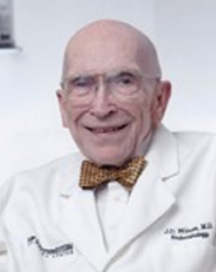 Jean D. Wilson合作论文数University of Texas Southwestern Medical Center20
 M LESHIN合作论文数9J D Wilson合作论文数5F W George合作论文数3Caroline Brain合作论文数3
 William Neaves合作论文数3
 Julianne Imperato-McGinley合作论文数Clinical & Translational Investigation, Weill Cornell Graduate School of Medical Sciences, Cornell University3Gordon B. Cutler合作论文数3
 David Russell合作论文数Department of Molecular Genetics, Medical School, The University of Texas Southwestern Medical Center3David B. Grant合作论文数3A. Caroline Berry合作论文数3P. B. Grino合作论文数3D L Davis合作论文数2Fredrick W. George合作论文数2Pc Macdonald合作论文数2Gb Cutler合作论文数2J. D. WILSON合作论文数2
 Melvin Malcolm Grumbach合作论文数2
 Berenice Bilharinho de Mendonça合作论文数Division of Endocrinology, Faculdade de Medicina, Universidade de São Paulo2
 Wai-yee Chan (陳偉儀)合作论文数School of Biomedical Sciences, The Chinese University of Hong Kong2Marco Marcelli合作论文数and the Institute of Molecular Medicine, University of Texas Health Science Center2
 Maria I. New合作论文数Vagelos College of Physicians and Surgeons, Columbia University;Herbert Wertheim College of Medicine, Florida International University2Ralph E. Peterson合作论文数2S. Draghi合作论文数2William J. Kovacs合作论文数2Michael J. Mcphaul合作论文数2Karen M. Hallermeier合作论文数2Charles Eil合作论文数2Magdalena R Berenyi合作论文数2Fredrick W George合作论文数2Carol M. Wilson合作论文数1O.H. Pearson合作论文数1R S Yalow合作论文数1F.C. Bartter合作论文数1C. Lazier合作论文数1K. Sterling合作论文数1A.K. Roy合作论文数1J.M. George合作论文数1H.J. Ringold合作论文数1L E Faber合作论文数1C. Monder合作论文数1H.L. Bradlow合作论文数1J. Geller合作论文数1J. Weisz合作论文数1J.E. Rall合作论文数1R. Chatterton合作论文数1R O Greep合作论文数1A.R. Means合作论文数1B.E.P. Murphy合作论文数1




