This paper describes a general framework called Hybrid Dynamic Mixed Networks (HDMNs) which are Hybrid Dynamic Bayesian Networks that allow representation of discrete deterministic information in the form of constraints. We propose approximate inference algorithms that integrate and adjust well known algorithmic principles such as Generalized Belief Propagation, Rao-Blackwellised Particle Filtering and Constraint Propagation to address the complexity of modeling and reasoning in HDMNs. We use this framework to model a person's travel activity over time and to predict destination and routes given the current location. We present a preliminary empirical evaluation demonstrating the effectiveness of our modeling framework and algorithms using several variants of the activity model.
The fundamental research question that was addressed with the project is whether a simple, continuously collected GPS sequence can be used to accurately measure human behavior. We applied Hybrid Dynamic Mixed Network (HDMN) modeling techniques to learn behaviors given an extended GPS data stream. This research project was designed to be an important component of a much larger effort. Unfortunately, the promised funding from a commercial sponsor for the larger project did not materialize, and so we did not have the resources to deploy a prototype personal travel assistant system. Work focused on developing the HDMN model. The learning and inference steps using the HDMN model were much slower than would be acceptable in an operational Personal Travel Assistant (PTA) system. We conducted research into alternate formulations that would improve convergence, handle noisy data more robustly and reduce the need for human intervention. This report describes how this project’s results fit into the larger research context, details the work done for this UCTC grant, and outlines future directions of research based on the findings of this project.
Vehicular traffic monitoring and control has had a strong infrastructure bias—data is collected centrally, processed, and then redistributed to travelers and other clients. There are several efforts to decentralize traffic monitoring by leveraging advanced local area wireless technology. This paper describes our implementation of such a traveler-centric system, called Autonet. Each Autonet client exchanges network knowledge wirelessly with other, nearby clients. It is demonstrated that knowledge about traffic state can be propagated using this system. The client programs were also used to test the actual throughput possible for messages sent from one vehicle to another using 802.11b wireless hardware. These measurements establish the maximum throughput at about 4,000 incidents for two vehicles moving in opposite directions at highway speeds.
With the proliferation of wireless communication technologies, inter-vehicle communication (IVC) could potentially be applied to solve ever-worsening transportation problems around the world.In this paper, we study impacts of network vehicular traffic on IVC, apply IVC to route-guidance, and report preliminary field tests.These studies are intended to demonstrate the feasibility of IVC-based traveler information system and the interaction between IVC and network vehicular traffic.
In several frameworks for travel modeling, travel prediction, route choice, traffic control, and optimization, path-related data structures become a key element that determine the efficacy or even the plausibility of analysis or modeling. Such frameworks have always been developed so as to avoid the well-known combinatorial explosion that results from sub-paths within paths, and the associated computational difficulties. This paper attempts to provide an alternative and explain a way to use certain concepts from string storage data structures to network path and sub-path storage which could potentially be applicable to travel networks of reasonable sizes. Though it alludes to other applications for the data structures, the paper does not enumerate all such possibilities, and focuses on describing it in the context of a specific application which is on predicting individual travel from trip diary databases, where correlation in observed behavior normally exists among sub-path variable level. The motivation for this research is a recent project called Persistent Traffic Cookie (PTC) system that collect individual trip diaries using wireless techniques, which are time stamped sequence data. The identified frequently-visited sub-sequences can also be used as sub-path components in a route choice model to make it more behaviorally sound. The proposed data structures are based on the suffix tree and the suffix array for efficiently storing and querying sequence data. A numerical example is used to illustrate the algorithms and some preliminary results are presented.
This project updated and deployed a freeway safety performance measurement tool, building upon a previous project that developed the core methodology. The tool evaluates the cumulative risk over time of an accident or a particular kind of accident. The probability is estimated using a model that takes as input only variables that are derived from common inductive loop detectors. The estimated models predict increased risk of any accident occurring, as well as a number of characteristics of those accidents. By using this safety performance measurement tool, Caltrans will be able to evaluate the safety impacts of roadway changes over time. Specifically, it is anticipated that new deployments of intelligent transportation systems elements can be evaluated for their safety impacts by comparing the net risk of different kinds of accidents before and after deployment. The model predictions are best used to evaluate the cumulative probability of accidents and accident characteristics over longer time horizons and extended stretches of roadway.
A novel distributed method for estimating a trip table in real time is described. The system is called "persistent traffic cookies" by analogy with the use of cookies by web servers to keep track of the current state of web browsers navigating a web site. The method uses traffic cookies placed on in-vehicle computers to maintain the state (current trip) of vehicles moving through the system. These cookies are persistent from day to day; taken together, they form a complete travel history for a traveler or vehicle. The method leverages the vehicles to store their own travel data and then physically do carry those data around the network. Advantages include scalability in both storage and computational effort as well as the unique ability to incorporate the travel behavior of individuals into real-time traffic predictions. A small-scale simulation is presented to illustrate the concept and its potential applications.
A novel distributed method for estimating a trip table in real time is described. The system is called “persistent traffic cookies” by analogy with the use of cookies by web servers to keep track of the current state of web browsers navigating a web site. The method uses traffic cookies placed on in-vehicle computers to maintain the state (current trip) of vehicles moving through the system. These cookies are persistent from day to day; taken together, they form a complete travel history for a traveler or vehicle. The method leverages the vehicles to store their own travel data and then physically do carry those data around the network. Advantages include scalability in both storage and computational effort as well as the unique ability to incorporate the travel behavior of individuals into real-time traffic predictions. A small-scale simulation is presented to illustrate the concept and its potential applications.
This paper describes a method for efficiently storing, modeling, and processing an individual's travel history collected with a global positioning system (GPS) enabled device. The technique uses a general framework called Hybrid Dynamic Mixed Networks (HDMNs), which are Hybrid Dynamic Bayesian Networks that allow representation of discrete deterministic information in the form of constraints. The paper uses this framework to model a person's travel activity over time and to infer likely destinations and routes given information about the current trip. The paper also presents a preliminary empirical evaluation demonstrating the effectiveness of the modeling framework and algorithms using three variants of the activity model. This research will improve the quality of activity surveys based on electronic data collection methods, as well as improve the usefulness and effectiveness of in-vehicle and hand-held devices for daily activity planning and rescheduling.
Recent trends toward operationalization of activity-based microsimulation models are producing new research questions related to the development of comprehensive models of human behavior. This paper provides a view of what will be necessary for the development of a dynamic, longitudinal, agent-based microsimulation model of human activity in urban settings. The discussion outlines a conceptual model of an environmentally situated human agent that must adapt to its environment in order to meet its goals. The agent's ability to perceive, interpret, and decide upon how to interact with its environment is viewed as a series of sub-models which are themselves the target of a set of learning procedures.
This paper describes the development and implementation of an agent-based activity microsimulation kernel based upon the concept that human activity is the negotiated interaction of socially and physically situated individuals and organizations. The kernel uses a modication of the contract-net protocol from the distributed articial intelligence literature to represent the ìphysicsî of interaction in human activity settings. The details of the kernel design and implementation are discussed.
The fundamental principle of intelligent transportation systems is to match the complexity of travel demands with advanced supply-side analysis, evaluation, management, and control strategies. A fundamental limitation is the lack of basic knowledge of travel demands at the network level. Modeling and sensor technology is primarily limited to aggregrate parameters or micro-simluations based on aggregate distributions of behavior. Global Positioning Systems (GPS) are one of several available technologies which allow individual vehicle trajectories to be recorded and analyzed. Potential applications of GPS which are relevant to the ATMS Testbed are implemented in probe vehicles to deliver real-time performance data to complement loop and other sensor data and implementation in vehicles from sampled households to record route choice behavior. An Extensible GPS-based in-vehicle Data Collection Unit (EDCU)has been designed, tested, and applied in selected field tests. Each unit incorporates GPS, data logging capabilities, two-way wireless communications, and a user interface in an extensible system which eliminates driver interaction. Together with supporting software, this system is referred to as TRACER. The design and initial implementation tests Testbed are presented herein. This research is a continuation of PATH MOU 3006; selected portions of the interim report for that MOU are repeated here to provide a complete overview of the research effort
Long records of activities and travel for individuals, essential for understanding the dy- namic changes in traveler behavior, do not exist due to the difculty of collecting such data. To address this need, an on-line activity survey was designed that is tightly intertwined with real-time position data streaming over wireless data links from in-vehicle GPS data collection devices. While the technology to construct such a survey has existed for some time, the author has been unable to nd other published examples of such a survey system. Some preliminary observations of the system based on a small, informal pilot survey are reported.
 Craig Rindt合作论文数University of California21Michael G. Mcnally合作论文数14A. M. Koos合作论文数4
 Jayakrishnan Ramakrishnan合作论文数University of California3
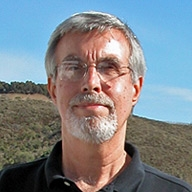 Wilfred Recker (Will Recker)合作论文数Samueli School of Engineering, University of California, Irvine3
 Rina Dechter合作论文数Donald Bren School of Information and Computer Sciences, University of California, Irvine2
 Sean Doherty合作论文数Department of Geography and Environmental Studies, Wilfrid Laurier University1Xu Yang合作论文数1Peter Martini合作论文数1
 Vibhav Gogate合作论文数The Center for Machine Learning, Department of Computer Science, Erik Jonsson School of Engineering and Computer Science, The University of Texas at Dallas1Thomas F Golob合作论文数Institute of Transportation Research, University of California, Irvine1
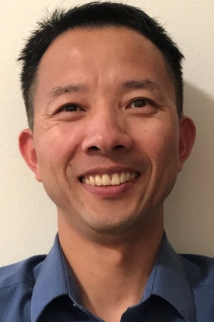 Wen-Long Jin合作论文数Department of Civil and Environmental Engineering, Institute of Transportation Studies, California Institute for Telecommunications and Information Technology, University of California, Irvine;Department of Civil and Environmental Engineering, Samueli School of Engineering, University of California, Irvine1
 Trevor Harmon合作论文数1Ming S. Lee合作论文数1
 Bozhena Bidyuk合作论文数Amazon1




