Introduction: A rapid diagnostic tool that appropriately triages stroke and non-stroke patients would decrease patients’ time to treatment and therefore lower the risk of morbidity. Single blood protein biomarkers for stroke have not shown clinical utility. Our objective in this biomarker discovery study is to examine a wide array of proteins to identify a panel that stratifies stroke patients from stroke-mimicking patients. Hypothesis: Serum from ischemic stroke patients contains proteins identified by the SOMAscan biomarker discovery assay that can stratify stroke from non-stroke patients. Methods: Patients presenting to the emergency department with stroke-like symptoms had peripheral blood drawn upon arrival according to Stroke Alert protocols. Once informed consent was obtained, serum was analyzed with the SOMAscan assay to quantify the expression of 1305 proteins. These data were analyzed using the semi-supervised machine learning algorithm, random forest analysis (RFA), to determine a combination of proteins which best predicted the final patient discharge diagnosis. Results: Twenty-two stroke patients, 9 transient ischemic attack (TIA) patients, and 23 patients with other stroke-mimicking symptoms participated in the study. Normal age- and sex-matched serum controls were obtained commercially. RFA identified four panels encompassing a total of nine proteins to stratify patients between the stroke, TIA, other stroke mimic, and control groups. Applying these panels to the same training set of patient data, one panel of two proteins distinguished stroke from stroke-mimics with a sensitivity of 50% and specificity of 100%. A second panel of three proteins identified stroke from non-stroke patients with a sensitivity of 78% and specificity of 95%. A provisional patent application describing these panels is underway. Conclusion: Ischemic stroke patients and stroke-mimic patients exhibit a differential expression of serum proteins at the time of clinical presentation. The simultaneous analysis of two or three proteins in a biomarker panel exhibits high specificity and may be clinically useful as a stroke “rule in” tool for emergency personnel. This would facilitate triage and avoid inappropriate treatment of non-stroke patients.
The maintenance of hydromineral homeostasis requires bidirectional detection of changes in extracellular fluid osmolality by primary osmosensory neurons (ONs) in the organum vasculosum laminae terminalis (OVLT). Hypertonicity excites ONs in part through the mechanical activation of a variant transient receptor potential vanilloid-1 channel (dn-Trpv1). However, the mechanism by which local hypotonicity inhibits ONs in the OVLT remains unknown. Here, we show that hypotonicity can reduce the basal activity of dn-Trpv1 channels and hyperpolarize acutely isolated ONs. Surprisingly, we found that mice lacking dn-Trpv1 maintain normal inhibitory responses to hypotonicity when tested in situ. In the intact setting, hypotonicity inhibits ONs through a non-cell-autonomous mechanism that involves glial release of the glycine receptor agonist taurine through hypotonicity activated anion channels (HAAC) that are activated subsequent to Ca2+ influx through Trpv4 channels. Our study clarifies how Trpv4 channels contribute to the inhibition of OVLT ONs during hypotonicity in situ.
IntroductionThe presentation of an ill appearing patient with profuse diarrhea should raise a concern for systemic effects beyond dehydration. We describe a woman who presented to the Emergency Department (ED) due to severe diarrhea who had a significant coagulopathy secondary to depletion of vitamin K dependent clotting factors.CaseA 31year old female presented to the ED complaining of generalized weakness, abdominal cramping, and profuse diarrhea. The symptoms began after initiation of chemotherapy for gastric adenocarcinoma. The patient was three months postop from partial gastrectomy and four days post-op from a dilation and curettage for a missed abortion. Laboratory studies showed dehydration with a metabolic acidosis and significant coagulopathy with PT=118.9seconds, PTT- 59.3seconds, and INR- 11.2. Platelets, fibrinogen, and ddimer were all elevated. Imaging showed no acute pathology.DiscussionThe abrupt onset of coagulopathy was thought to be multifactorial due to chemotherapy related diarrhea. Disproportionate elevations of PT and INR with mild elevation in PTT were consistent with severe vitamin K deficiency. The coagulopathy may be related to inadequate intake, insufficient absorption, and/or decreased synthesis due to changes in gut flora. Vitamin K deficiency is likely under recognized and should be considered in patients with severely restricted diet or prolonged significant gastrointestinal losses. This case demonstrates the importance of evaluating the hematologic manifestations of diarrhea in critically ill patients.
Assess the impact of scribes on an academic emergency department's (ED) throughput one year after implementation.A prospective cohort design compared throughput metrics of patients managed when scribes were and were not a part of the treatment team during pre-defined study hours in a tertiary academic ED with both an adult and pediatric ED. An alternating-day pattern one year following scribe implementation ensured balance between the scribe and non-scribe groups in time of day, day of week, and patient complexity.Adult: Overall length of stay (LOS) was essentially the same in both groups (214 vs. 215 min, p = 0.34). In area A where staffing includes an attending and residents, scribes made a significant impact in treatment room time in the afternoon (190 vs 179 min, p = 0.021) with an increase in patients seen per hour on scribed days (2.00 vs. 2.13). There was no statistically significant changes in throughput metrics in area B staffed by an attending and a nurse practitioner/physician assistant, however scribed days did average more patients per hour (2.01 vs. 2.14).Pediatric: All throughput measurements were significantly longer when the treatment team had a scribe; however, patients per hour increased from 2.33 to 2.49 on scribed days.Overall patient throughput was not enhanced by scribes. Certain areas and staffing combinations yielded improvements in treatment room and door to provider time, however, scribes appear to have enabled attending physicians to see more patients per hour. This effect varied across treatment areas and times of day.
Background: Identifying patients who may progress to a poor clinical outcome will encourage earlier appropriate therapeutic interventions. Brain edema may contribute to secondary injury in traumatic brain injury (TBI) and thus, may be a useful prognostic indicator. Objective: We determined whether the presence of brain edema on the initial computed tomography (CT) scan of TBI patients would predict poor in-hospital outcome. Methods: We performed a retrospective review of all trauma patients with nonpenetrating head trauma at a Level I Trauma Center. International Classification of Diseases, Ninth Revision codes indicated the presence of brain edema and we evaluated the validity of this pragmatic assessment quantitatively in a random subset of patients. In-hospital mortality was the primary outcome variable. Univariate analysis and logistic regression identified predictors of mortality in all TBI patients and those with mild TBI. Results: Over 7200 patients were included in the study, including 6225 with mild TBI. Measurements of gray and white matter CT density verified radiological assessments of brain edema. Patients with documented brain edema had a mortality rate over 10 times that of the entire study population. With logistic regression accounting for Injury Severity Score, Glasgow Coma Scale score, other CT findings, and clinical variables, brain edema predicted an eightfold greater mortality rate in all patients (odds ratio 8.0, 95% confidence interval 4.6-14.0) and fivefold greater mortality rate for mild TBI patients (odds ratio 4.9, 95% confidence interval 2.0-11.7). Conclusions: Brain edema is an independent prognostic variable across all categories of TBI severity. By alerting emergency physicians to patients with poor predicted clinical outcomes, this finding will drive better resource allocation, earlier intervention, and reduced patient mortality. (C) 2017 Elsevier Inc. All rights reserved.
The utility of the gum-elastic bougie (GEB) as an assistive device for tracheal intubation during chest compressions has not been sufficiently validated. This study aimed to compare the utility of the GEB during chest compressions on an adult manikin.Seventeen novice physicians performed tracheal intubation on an adult manikin using the GEB with or without chest compressions. Intubation success rate, intubation time, subjective difficulty of laryngoscopy, and tube passage through the glottis were measured. P < .05 was considered as significantly different.All novice physicians successfully secured the airway without chest compression with and without the GEB. In contrast, during chest compressions, 7 failed without the GEB, whereas only 1 failed with the GEB (P = .007). Intubation time was significantly longer with chest compressions regardless of GEB use (P < .001). Both laryngoscopy and tube passage through the glottis were perceived as significantly more difficult with chest compressions, regardless of GEB use (P < .001). Subjective difficulty of tube passage through the glottis during chest compression was perceived as significantly more easy by GEB application (P < .001).These findings suggest that the GEB facilitates tracheal intubation during chest compressions performed by novice physicians in adult simulations.
Objective: This study sought to answer the question, "Can police officers administer intranasal naloxone to drug overdose victims to decrease the opioid overdose death rate?"Methods: This prospective interventional study was conducted in Lorain County, OH, from January 2011 to October 2014. Starting October 2013, trained police officers administered naloxone to suspected opioid overdose victims through a police officer naloxone prescription program (NPP). Those found by the county coroner to be positive for opioids at the time of death and those who received naloxone from police officers were included in this study. The rate of change in the total number of opioid-related deaths in Lorain County per quarter year, before and after initiation of the NPP, and the trend in the survival rate of overdose victims who were given naloxone were analyzed by linear regression. Significance was established a priori at P < .05.Results: Data from 247 individuals were eligible for study inclusion. Opioid overdose deaths increased significantly before initiation of the police officer NPP with average deaths per quarter of 5.5 for 2011, 15.3 for 2012, and 16.3 for the first 9 months of 2013. After initiation of the police officer NPP, the number of opioid overdose deaths decreased each quarter with an overall average of 13.4. Of the 67 participants who received naloxone by police officers, 52 (77.6%) survived, and 8 (11.9%) were lost to follow-up.Conclusions: Intranasal naloxone administration by police first responders is associated with decreased deaths in opioid overdose victims. (C) 2015 Elsevier Inc. All rights reserved.
Patient satisfaction, a commonly measured indicator of quality of care and patient experience, is often used in physician performance reviews and promotion decisions. Patient satisfaction surveys may introduce gender-related bias.Examine the effect of patient and physician gender concordance on patient satisfaction with emergency care.We performed a cross-sectional analysis of electronic health record and Press Ganey patient satisfaction survey data of adult patients discharged from the emergency department (2015-2018). Logistic regression models were used to examine relationships between physician gender, patient gender, and physician-patient gender dyads. Binary outcomes included: perfect care provider score and perfect overall assessment score.Female patients returned surveys more often (n=7 612; 61.55%) and accounted for more visits (n=232 024; 55.26%). Female patients had lower odds of perfect scores for provider score and overall assessment score (OR: 0.852, 95% CI: 0.790, 0.918; OR: 0.782, 95% CI: 0.723, 0.846). Female physicians had 1.102 (95% CI: 1.001, 1.213) times the odds of receiving a perfect provider score. Physician gender did not influence male patients' odds of reporting a perfect care provider score (95% CI: 0.916, 1.158) whereas female patients treated by female physicians had 1.146 times the odds (95% CI: 1.019, 1.289) of a perfect provider score.Female patients prefer female emergency physicians but were less satisfied with their physician and emergency department visit overall. Over-representation of female patients on patient satisfaction surveys introduces bias. Patient satisfaction surveys should be deemphasized from physician compensation and promotion decisions.
BACKGROUND:The angiotensin (Ang) converting enzyme 2 (ACE2)/Ang-(1-7)/Mas receptor pathway is an important component of the renin-angiotensin system and has been suggested to exert beneficial effects in ischemic stroke.AIMS:This study explored whether the ACE2/Ang-(1-7)/Mas pathway has a protective effect on cerebral ischemic injury and whether this effect is affected by age.METHODS:We used three-month and eight-month transgenic mice with neural over-expression of ACE2 (SA) and their age-matched nontransgenic (NT) controls. Neurological deficits and ischemic stroke volume were determined following middle cerebral artery occlusion (MCAO). In oxygen and glucose deprivation (OGD) experiments on brain slices, the effects of the Mas receptor agonist (Ang1-7) or antagonist (A779) on tissue swelling, Nox2/Nox4 expression reactive oxygen species (ROS) production and cell death were measured.RESULTS:(1) Middle cerebral artery occlusion -induced ischemic injury and neurological deficit were reduced in SA mice, especially in eight-month animals; (2) OGD-induced tissue swelling and cell death were decreased in SA mice with a greater reduction seen in eight-month mice; (3) Ang-(1-7) and A779 had opposite effects on OGD-induced responses, which correlated with changes in Nox2/Nox4 expression and ROS production.CONCLUSIONS:Angiotensin converting enzyme 2/Ang-(1-7)/Mas axis protects brain from ischemic injury via the Nox/ROS signaling pathway, with a greater effect in older animals.
We previously demonstrated that mice which overexpress human renin and angiotensinogen (R+A+) show enhanced cerebral damage in both in vivo and in vitro experimental ischemia models. Angiotensin-converting enzyme 2 (ACE2) counteracts the effects of angiotensin (Ang-II) by transforming it into Ang-(1-7), thus reducing the ligand for the AT1 receptor and increasing stimulation of the Mas receptor. Triple transgenic mice, SARA, which specifically overexpress ACE2 in neurons of R+A+ mice were used to study the role of ACE2 in ischemic stroke using oxygen and glucose deprivation (OGD) of brain slices as an in vitro model. We examined tissue swelling, the production of reactive oxygen species (ROS), and cell death in the cerebral cortex (CX) and the hippocampal CA1 region during OGD. Expression levels of NADPH oxidase (Nox) isoforms, Nox2 and Nox4 were measured using Western blots. Results show that SARA mice and R+A+ mice treated with the Mas receptor agonist Ang-(1-7) had less swelling, cell death, and ROS production in CX and CA1 areas compared to those in R+A+ animals. Treatment of slices from SARA mice with the Mas antagonist A779 eliminated this protection. Finally, western blots revealed less Nox2 and Nox4 expression in SARA mice compared with R+A+ mice both before and after OGD. We suggest that reduced brain swelling and cell death observed in SARA animals exposed to OGD result from diminished ROS production coupled with lower expression of Nox isoforms. Thus, the ACE2/Ang-(1-7)/Mas receptor pathway plays a protective role in brain ischemic damage by counteracting the detrimental effects of Ang-II-induced ROS production. (C) 2014 IBRO. Published by Elsevier Ltd. All rights reserved.
This old man, He played PEM doc He forestalled a heartsick ‘bye. With a hurrahed dispatch, give a dog a bone.
To triage, to triage to buy an apt gig; Home again, home again, diagnosed thingamajig. To triage, to triage to buy an apt doc; Home again, home again, diagnosed thingamabob. To triage, to triage a gallop a trot; To buy some granite to put in the plot. One million, three million coverage supplied, If he hadn’t been killed, he must have died.
 David M. Holtzman合作论文数Department of Neurology, Washington University School of Medicine in St. Louis;Hope Center for Neurological Disorders, Washington University School of Medicine in St. Louis8
 Guangze Li (李光泽)合作论文数8Jonathan I. Singer合作论文数7
 Catherine A. Marco合作论文数Wright State University5gerald c horak合作论文数5
 Dennis Mann合作论文数4
 Jay Dean合作论文数4
 Dominic P D'Agostino合作论文数College of Medicine, University of South Florida4
 Glenn C Hamilton合作论文数4Hector R. Wong合作论文数Cincinnati Children's Hospital Medical Center3Kreisman N R合作论文数3
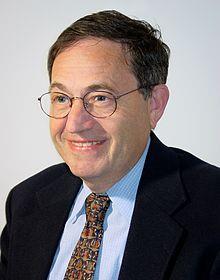 Ferenc Jolesz合作论文数Advanced Imaging Center, NeuroDiscovery Center, Harvard Medical School3Jose E. Irazuzta合作论文数3Nicholas V. Reo合作论文数3
 Yanfang Chen (陈艳芳)合作论文数Dept. of Materials Science & Engineering, Myongji University3J W Beetsch合作论文数2J B Dean合作论文数2P HENNEMAN合作论文数2r wayne nelson合作论文数2D. Redi合作论文数2RVW DIMLICH合作论文数2Brian Tucker合作论文数2Julie Whitis合作论文数2sheldon h hanson合作论文数2Bonnie Marmora合作论文数2James Xidas合作论文数2Alexander Cook合作论文数2
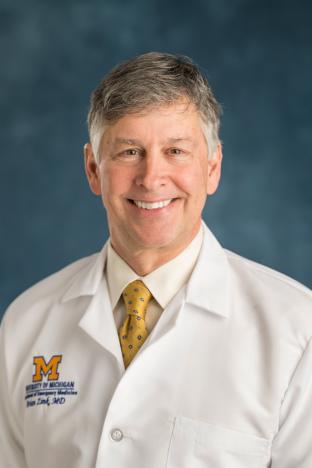 Brian Zink合作论文数Department of Emergency Medicine, Medical School, University of Michigan2
 Michelle Biros合作论文数Department of Emergency Medicine, School of Medicine, University of Minnesota2
 Wright David W合作论文数Centre for Computational Science, University College London2D CLINE合作论文数2
 Shuzhen Chen (陈淑珍)合作论文数Institute of Medicinal Biotechnology, Chinese Academy of Medical Sciences2Donald M Yealy合作论文数2Peter F Vanligten合作论文数2
 Aameek Singh合作论文数Instagram2Matthew P Kiefaber合作论文数2
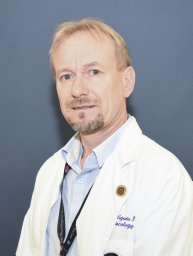 Eric Lazartigues合作论文数Health Sciences Center School of Medicine, Louisiana State University2Andrea G Levitt合作论文数2
 Charles Bourque合作论文数Centre for Research in Neuroscience, McGill University;Department of Neurology and Neurosurgery, Faculty of Medicine and Health Sciences, McGill University;Department of Physiology, School of Biomedical Sciences, McGill University2Timothy G. Janz合作论文数2
 Gary Gaddis合作论文数2Hubert S. Mickel合作论文数2James Leasure合作论文数2Gerard B. Martin合作论文数2
 Mary C. Mccarthy合作论文数Department of Surgery, Wright State University2Jinju Wang合作论文数2Robert A. Lowe合作论文数Leonard Davis Institute of Health Economics, University of Pennsylvania2M Boska合作论文数1D. P. D'Agostino合作论文数1




