The U.S. Department of Energy Computational Graduate Fellowship Program, celebrating 30 years of existence in 2021, is one of the most successful graduate fellowships in the world as well as one of the longest running programs in the U.S. Department of Energy. This article discusses the conception, early years and evolution of the fellowship over the past thirty years.
U.S. computing leaders, including Department of Energy National Laboratories, have partnered with universities, government agencies, and the private sector to research responses to COVID-19, providing an unprecedented collection of resources that include some of the fastest computers in the world. For HPC users, these leadership machines will drive the AI to accelerate the discovery of promising treatments, enable at-scale simulations to understand the virus's protein structure and attack mechanisms, and help inform policymakers to deploy resources effectively.
Reports on the use of supercomputers in the field of geology. The effort to collect and analyze data for a range of geologic materials is time consuming and leaves researchers with only static images of the dynamic process of fluid flow. From 2014 to 2018, researchers led by computational scientist James McClure of Virginia Tech used the 27-petaflop Cray XK7 Titan supercomputer at the US Department of Energy’s (DOE’s), Oak Ridge National Laboratory (ORNL) to advance the team’s computational code for modeling fluid flow in complex, porous geometries. Guided by synchrotron data, McClure’s team models the complex geometries of rocks, then simulates fluid flow based on fundamental physics principles. By combining modeling and simulation with in situ (or real-time) analysis, the team can predict the properties important to large-scale modeling of reservoirs.
Imagine being able to predict — with unprecedented accuracy and precision — the structure of the proton and neutron, and the forces between them, directly from the dynamics of quarks and gluons, and then using this information in calculations of the structure and reactions of atomic nuclei and of the properties of dense neutron stars (NSs). Also imagine discovering new and exotic states of matter, and new laws of nature, by being able to collect more experimental data than we dream possible today, analyzing it in real time to feed back into an experiment, and curating the data with full tracking capabilities and with fully distributed data mining capabilities. Making this vision a reality would improve basic scientific understanding, enabling us to precisely calculate, for example, the spectrum of gravity waves emitted during NS coalescence, and would have important societal applications in nuclear energy research, stockpile stewardship, and other areas. This review presents the components and characteristics of the exascale computing ecosystems necessary to realize this vision.
Computers have revolutionized every aspect of our lives. Yet in science, the most tantalizing applications of computing lie just beyond our reach. The current quest to build an exascale computer with one thousand times the capability of today’s fastest machines (and more than a million times that of a laptop) will take researchers over the next horizon. The field of materials, chemical reactions, and compounds is inherently complex. Imagine millions of new materials with new functionalities waiting to be discovered—while researchers also seek to extend those materials that are known to a dizzying number of new forms. We could translate massive amounts of data from high precision experiments into new understanding through data mining and analysis. We could have at our disposal the ability to predict the properties of these materials, to follow their transformations during reactions on an atom-by-atom basis, and to discover completely new chemical pathways or physical states of matter. Extending these predictions from the nanoscale to the mesoscale, from the ultrafast world of reactions to long-time simulations to predict the lifetime performance of materials, and to the discovery of new materials and processes will have a profound impact on energy technology. In addition, discovery more»
The widespread use of computing in the American economy would not be possible without a thoughtful, exploratory research and development (R&D) community pushing the performance edge of operating systems, computer languages, and software libraries. These are the tools and building blocks — the hammers, chisels, bricks, and mortar — of the smartphone, the cloud, and the computing services on which we rely. Engineers and scientists need ever-more specialized computing tools to discover new material properties for manufacturing, make energy generation safer and more efficient, and provide insight into the fundamentals of the universe, for example. The research division of the U.S. Department of Energy’s (DOE’s) Office of Advanced Scientific Computing and Research (ASCR Research) ensures that these tools and building blocks are being developed and honed to meet the extreme needs of modern science. See also http://exascaleage.org/ascr/ for additional information.
Computers have revolutionized every aspect of our lives. Yet in science, the most tantalizing applications of computing lie just beyond our reach. The current quest to build an exascale computer with one thousand times the capability of today’s fastest machines (and more than a million times that of a laptop) will take researchers over the next horizon. The field of materials, chemical reactions, and compounds is inherently complex. Imagine millions of new materials with new functionalities waiting to be discovered — while researchers also seek to extend those materials that are known to a dizzying number of new forms. We could translate massive amounts of data from high precision experiments into new understanding through data mining and analysis. We could have at our disposal the ability to predict the properties of these materials, to follow their transformations during reactions on an atom-by-atom basis, and to discover completely new chemical pathways or physical states of matter. Extending these predictions from the nanoscale to the mesoscale, from the ultrafast world of reactions to long-time simulations to predict the lifetime performance of materials, and to the discovery of new materials and processes will have a profound impact on energy technology. In addition, discovery of new materials is vital to move computing beyond Moore’s law. To realize this vision, more than hardware is needed. New algorithms to take advantage of the increase in computing power, new programming paradigms, and new ways of mining massive data sets are needed as well. This report summarizes the opportunities and the requisite computing ecosystem needed to realize the potential before us. In addition to pursuing new and more complete physical models and theoretical frameworks, this review found that the following broadly grouped areas relevant to the U.S. Department of Energy (DOE) Office of Advanced Scientific Computing Research (ASCR) would directly affect the Basic Energy Sciences (BES) mission need. Simulation, visualization, and data analysis are crucial for advances in energy science and technology. Revolutionary mathematical, software, and algorithm developments are required in all areas of BES science to take advantage of exascale computing architectures and to meet data analysis, management, and workflow needs. In partnership with ASCR, BES has an emerging and pressing need to develop new and disruptive capabilities in data science. More capable and larger high-performance computing (HPC) and data ecosystems are required to support priority research in BES. Continued success in BES research requires developing the next-generation workforce through education and training and by providing sustained career opportunities.
The additional computing power offered by the planned exascale facilities could be transformational across the spectrum of plasma and fusion research — provided that the new architectures can be efficiently applied to our problem space. The collaboration that will be required to succeed should be viewed as an opportunity to identify and exploit cross-disciplinary synergies. To assess the opportunities and requirements as part of the development of an overall strategy for computing in the exascale era, the Exascale Requirements Review meeting of the Fusion Energy Sciences (FES) community was convened January 27–29, 2016, with participation from a broad range of fusion and plasma scientists, specialists in applied mathematics and computer science, and representatives from the U.S. Department of Energy (DOE) and its major computing facilities. This report is a summary of that meeting and the preparatory activities for it and includes a wealth of detail to support the findings. Technical opportunities, requirements, and challenges are detailed in this report (and in the recent report on the Workshop on Integrated Simulation). Science applications are described, along with mathematical and computational enabling technologies. Also see http://exascaleage.org/fes/ for more information.
The U.S. Department of Energy (DOE) Office of Science (SC) Offices of High Energy Physics (HEP) and Advanced Scientific Computing Research (ASCR) convened a programmatic Exascale Requirements Review on June 10–12, 2015, in Bethesda, Maryland. This report summarizes the findings, results, and recommendations derived from that meeting. The high-level findings and observations are as follows. Larger, more capable computing and data facilities are needed to support HEP science goals in all three frontiers: Energy, Intensity, and Cosmic. The expected scale of the demand at the 2025 timescale is at least two orders of magnitude — and in some cases greater — than that available currently. The growth rate of data produced by simulations is overwhelming the current ability of both facilities and researchers to store and analyze it. Additional resources and new techniques for data analysis are urgently needed. Data rates and volumes from experimental facilities are also straining the current HEP infrastructure in its ability to store and analyze large and complex data volumes. Appropriately configured leadership-class facilities can play a transformational role in enabling scientific discovery from these datasets. A close integration of high-performance computing (HPC) simulation and data analysis will greatly aid in interpreting the results of HEP experiments. Such an integration will minimize data movement and facilitate interdependent workflows. Long-range planning between HEP and ASCR will be required to meet HEP’s research needs. To best use ASCR HPC resources, the experimental HEP program needs (1) an established, long-term plan for access to ASCR computational and data resources, (2) the ability to map workflows to HPC resources, (3) the ability for ASCR facilities to accommodate workflows run by collaborations potentially comprising thousands of individual members, (4) to transition codes to the next-generation HPC platforms that will be available at ASCR facilities, (5) to build up and train a workforce capable of developing and using simulations and analysis to support HEP scientific research on next-generation systems.
Understanding the fundamentals of genomic systems or the processes governing impactful weather patterns are examples of the types of simulation and modeling performed on the most advanced computing resources in America. High-performance computing and computational science together provide a necessary platform for the mission science conducted by the Biological and Environmental Research (BER) office at the U.S. Department of Energy (DOE). This report reviews BER’s computing needs and their importance for solving some of the toughest problems in BER’s portfolio. BER’s impact on science has been transformative. Mapping the human genome, including the U.S.-supported international Human Genome Project that DOE began in 1987, initiated the era of modern biotechnology and genomics-based systems biology. And since the 1950s, BER has been a core contributor to atmospheric, environmental, and climate science research, beginning with atmospheric circulation studies that were the forerunners of modern Earth system models (ESMs) and by pioneering the implementation of climate codes onto high-performance computers. See http://exascaleage.org/ber/ for more information.
Oak Ridge National Laboratory’s (ORNL’s) Leadership Computing Facility (OLCF) continues to surpass its operational target goals: supporting users; delivering fast, reliable systems; creating innovative solutions for high-performance computing (HPC) needs; and managing risks, safety, and security aspects associated with operating one of the most powerful computers in the world. The results can be seen in the cutting-edge science delivered by users and the praise from the research community. Calendar year (CY) 2015 was filled with outstanding operational results and accomplishments: a very high rating from users on overall satisfaction that ties the highest-ever mark set in CY 2014; the greatest number of core-hours delivered to research projects; the largest percentage of capability usage since the OLCF began tracking the metric in 2009; and success in delivering on the allocation of 60, 30, and 10% of core hours offered for the INCITE (Innovative and Novel Computational Impact on Theory and Experiment), ALCC (Advanced Scientific Computing Research Leadership Computing Challenge), and Director’s Discretionary programs, respectively. These accomplishments, coupled with the extremely high utilization rate, represent the fulfillment of the promise of Titan: maximum use by maximum-size simulations. The impact of all of these successes and more is reflected in the accomplishments of OLCF users, with publications this year in notable journals Nature, Nature Materials, Nature Chemistry, Nature Physics, Nature Climate Change, ACS Nano, Journal of the American Chemical Society, and Physical Review Letters, as well as many others. The achievements included in the 2015 OLCF Operational Assessment Report reflect first-ever or largest simulations in their communities; for example Titan enabled engineers in Los Angeles and the surrounding region to design and begin building improved critical infrastructure by enabling the highest-resolution Cybershake map for Southern California to date. The Titan system provides the largest extant heterogeneous architecture for computing and computational science. Usage is high, delivering on the promise of a system well-suited for capability simulations for science. This success is due in part to innovations in tracking and reporting the activity on the compute nodes, and using this information to further enable and optimize applications, extending and balancing workload across the entire node. The OLCF continues to invest in innovative processes, tools, and resources necessary to meet continuing user demand. The facility’s leadership in data analysis and workflows was featured at the Department of Energy (DOE) booth at SC15, for the second year in a row, highlighting work with researchers from the National Library of Medicine coupled with unique computational and data resources serving experimental and observational data across facilities. Effective operations of the OLCF play a key role in the scientific missions and accomplishments of its users. Building on the exemplary year of 2014, as shown by the 2014 Operational Assessment Report (OAR) review committee response in Appendix A, this OAR delineates the policies, procedures, and innovations implemented by the OLCF to continue delivering a multi-petaflop resource for cutting-edge research. This report covers CY 2015, which, unless otherwise specified, denotes January 1, 2015, through December 31, 2015.
ddressing the scientific grand challenges identified by the US Department of Energy's (DOE's) Office of Science's programs alone demands a total leadership-class computing capability of 150 to 400 Pflops by the end of this decade. The successors to three of the DOE's most powerful leadership-class machines are set to arrive in 2017 and 2018-the products of the Collaboration Oak Ridge Argonne Livermore (CORAL) initiative, a national laboratory-industry design/build approach to engineering next-generation petascale computers for grand challenge science. These mission-critical machines will enable discoveries in key scientific fields such as energy, biotechnology, nanotechnology, materials science, and high-performance computing, and serve as a milestone on the path to deploying exascale computing capabilities.
The guest editors present the first part of a two-part special issue on leadership computing.
The guest editors present the second part of a two-part special issue on leadership computing, focusing on scalability, high resolution simulation, high-performance computing, and laser-plasma interactions.
An ensemble of simulations covering the present day observational period using forced sea surface temperatures and prescribed sea-ice extent is configured with an 85 truncation resolution spectral transform dynamical core (T85) within the Community Atmosphere Model (CAM), version 4 and is evaluated relative to observed and model derived data sets and the one degree finite volume (FV) dynamical core. The spectral option provides a well-known base within the climate model community to assess climate behavior and statistics, and its relative computational efficiency for smaller computing platforms allows it to be extended to perform high-resolution climate length simulations. Overall, the quality of the T85 ensemble is similar to FV. Analyzing specific features of the T85 simulations show notable improvements to the representation of wintertime Arctic sea level pressure and summer precipitation over the Western Indian subcontinent. The mean and spatial patterns of the land surface temperature trends over the AMIP period are generally well simulated with the T85 ensemble relative to observations, however the model is not able to capture the extent nor magnitude of changes in temperature extremes over the boreal summer, where the changes are most dramatic. Biases in the wintertime Arctic surface temperature and annual mean surface stress fields persist with T85 as with the CAM3 version of T85, as compared to FV. An experiment to identify the source of differences between dycores has revealed that the longwave cloud forcing is sensitive to the choice of dycore, which has implications for tuning strategies of the physics parameter settings.
 J. T. Kiehl合作论文数18
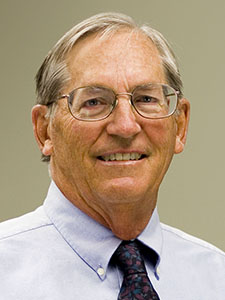 Wayne H. Schubert合作论文数Department of Atmospheric Science, Colorado State University15
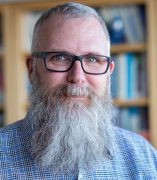 Michael E. Papka合作论文数Department of Computer Science, College of Engineering, University of Illinois Chicago;Argonne National Laboratory;University of Chicago14
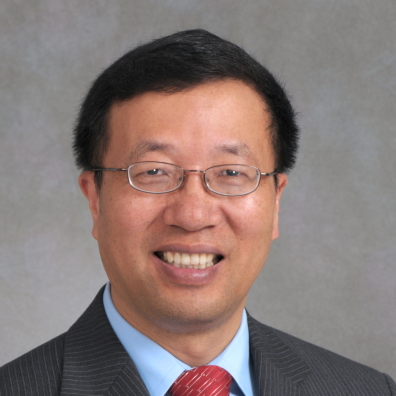 Minghua Zhang (张明华)合作论文数School of Marine and Atmospheric Sciences, Stony Brook University14
 Phil Rasch合作论文数Atmospheric Sciences and Global Change Division, Pacific Northwest National Laboratory13Byron A. Boville合作论文数National Center for Atmospheric Research12
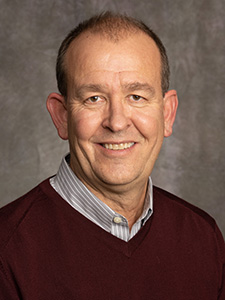 James W. Hurrell合作论文数Department of Atmospheric Science, Colorado State University;National Center for Atmospheric Research10
 Jeffrey T. Kiehl合作论文数9Richard Coffey合作论文数8Lauren Rotman合作论文数8Tjerk P. Straatsma合作论文数8Jack Wells合作论文数8Richard A. Gerber合作论文数Departments of Physics and Astronomy, University of Illinois at Urbana-Champaign8
 Katherine Riley合作论文数Argonne National Laboratory8
 Inder Monga合作论文数Nortel, Billerica, MA8Sudip Dosanjh合作论文数Sandia National Laboratories, USA8
 Julie M. Caron合作论文数8Eli Dart合作论文数Lawrence Berkeley National Laboratory8
 Katie Antypas合作论文数Lawrence Berkeley National Laboratory8David L. Williamson合作论文数7
 David A. Randall合作论文数Department of Atmospheric Science, Walter Scott, Jr. College of Engineering, Colorado State University7Bruce P. Briegleb合作论文数7Ashley D Barker合作论文数6dl williamson合作论文数6Jc White合作论文数6Rd Cess合作论文数6
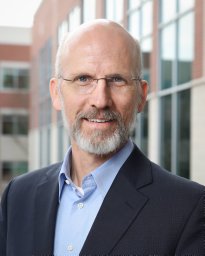 j c wells合作论文数NVIDIA Corp6
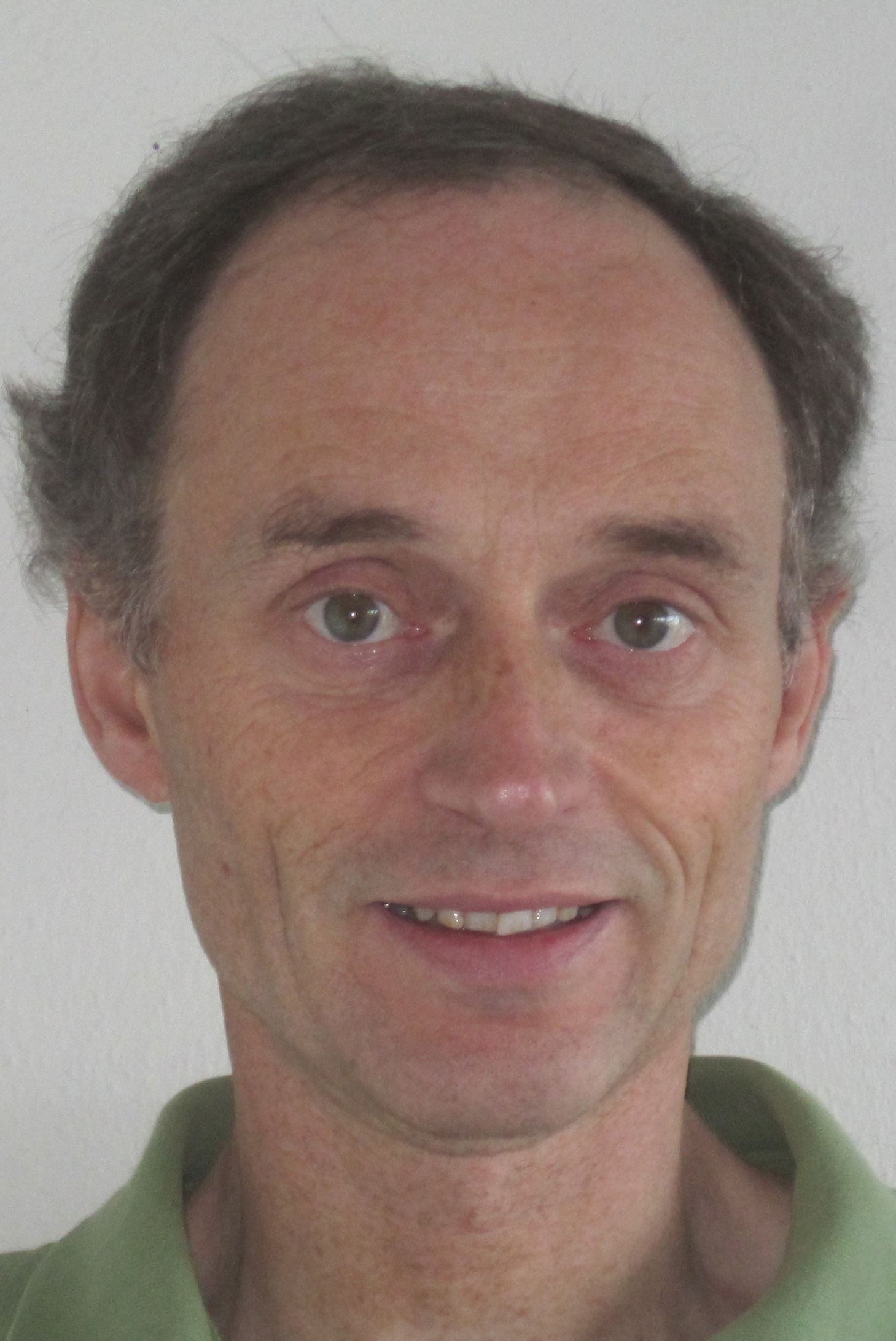 Chris Bretherton合作论文数Department of Atmospheric Sciences, College of the Environment, University of Washington;Department of Applied Mathematics, College of Arts and Sciences, University of Washington;Vulcan Inc6Gita Alaghband合作论文数Computer Science and Engineering6
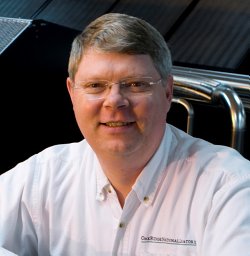 Arthur S. Bland合作论文数6
 Jeffrey Kiehl合作论文数CG Jung Institute of Colorado;Aspen Global Change Institute6
 William Collins合作论文数Department of Earth and Planetary Science, University of California, Berkeley;Lawrence Berkeley National Laboratory6
 Katherine J. Evans合作论文数6a boville合作论文数5James H. Rogers合作论文数5
 Anthony Del Genio合作论文数NASA Goddard Institute for Space Studies5
 Deborah Bard合作论文数5
 Sudharshan S. Vazhkudai合作论文数Technology Integration Group, National Center for Computational Sciences5Stefan Muszala合作论文数5
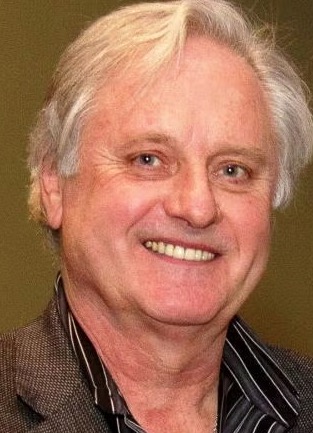 Mitchell W. Moncrieff合作论文数National Center for Atmospheric Research5John Truesdale合作论文数Climate and Global Dynamics Division, National Center for Atmospheric Research5W. L. Gates合作论文数4Kevin G. Thach合作论文数4
 Ulrike Lohmann合作论文数Institute for Atmospheric and Climate Science, Department of Environmental Systems Science, ETH Zurich;Department of Physics, ETH Zurich4
 John Michalakes合作论文数4David L Williamson合作论文数4
 Bronson Messer合作论文数Scientific Computing and Theoretical Physics Groups, Oak Ridge National Laboratory;Department of Physics & Astronomy, University of Tennessee4
 Stephen A Klein合作论文数Cloud Processes Research Group, Lawrence Livermore National Laboratory4
 Karl E. Taylor合作论文数Program for Climate Model Diagnosis and Intercomparison, Lawrence Livermore National Laboratory4




