The paper combines several fortunate mini miracles to achieve its two objectives. These were woven together in a several year's effort to answer a question raised by Iz Singer a decade ago. Our answer is accessible to the topologist, to the differential geometer and to the analyst who appreciates the statement of the Index theorem of Atiyah,Patodi,Singer for manifolds with boundary. The mini miracles are these: a] The Conner Floyd miracle that complex bordism tensored over the Todd genus and the Bott miracle that stable complex vector bundles respectively satisfy the axioms of a generalized homology theory and of a generalized cohomology theory. b] That these theories, with the covariant and contravariant geometric representations indicated, stably almost complex (SAC) manifolds modulo product relations and stable complex bundles, are not only related by Alexander duality but they are also related by Pontryagin duality. c] The abstract corollary of b] that stable complex bundles have a complete system of numerical invariants and that these can be computed by integrals of chern weil characteristic forms over manifolds with boundary reduced modulo integers, thanks to the APS Index Theorem. d] The adiabatic limit argument of the appendix to the last section showing a direct sum connection on the total space of a riemannian family of Riemannian manifolds with connection is Chern Simons equivalent in the limit to the Levi Civita connection of the direct sum metric. This allows the invariants to be described by the eta invariants of odd SAC manifolds reduced mod integers.
In [1] it was shown that K^, a certain differential cohomology functor associated to complex K-theory, satisfies the Mayer-Vietoris property when the underlying manifold is compact. It turns out that this result is quite general. The work that follows shows the M-V property to hold on compact manifolds for any differential cohomology functor J^ associated to any Z-graded cohomology functor J(, Z) which, in each degree, assigns to a point a finitely generated group. The approach is to show that the result follows from Diagram 1, the commutative diagram we take as a definition of differential cohomology, and Diagram 2, which combines the three Mayer-Vietoris sequences for J*(, Z), J*(, R) and J*(, R/Z).
A equivalence relation, preserving the Chern-Weil form, is defined between connections on a complex vector bundle. Bundles equipped with such an equivalence class are called Structured Bundles, and their isomorphism classes form an abelian semi-ring. By applying the Grothedieck construction one obtains the ring K, elements of which, modulo a complex torus of dimension the sum of the odd Betti numbers of the base, are uniquely determined by the corresponding element of ordinary K and the Chern-Weil form. This construction provides a simple model of differential K-theory, c.f.Hopkins-Singer (2005), as well as a useful codification of vector bundles with connection.
The Cheeger–Simons differential characters, the Deligne cohomology in the smooth category, the Hopkins–Singer construction of ordinary differential cohomology, and the recent Harvey–Lawson constructions are each in two distinct ways abelian group extensions of known functors. In one description, these objects are extensions of integral cohomology by the quotient space of all differential forms by the subspace of closed forms with integral periods. In the other, they are extensions of closed differential forms with integral periods by the cohomology with coefficients in the circle. These two series of short‐exact sequences mesh with two interlocking long‐exact sequences (the Bockstein sequence and the de Rham sequence) to form a commutative DNA‐like array of functors called the Character Diagram. Our first theorem shows that on the category of smooth manifolds and smooth maps, any package consisting of a functor into graded abelian groups together with four natural transformations that fit together so as to form a Character Diagram as mentioned earlier is unique up to a unique natural equivalence. Our second theorem shows that natural product structure on differential characters is uniquely characterized by its compatibility with the product structures on the known functors in the Character Diagram. The proof of our first theorem couples the naturality with results about approximating smooth singular cycles and homologies by embedded pseudomanifolds.
This paper first appeared in a collection of lecture notes which were distributed at the A.M.S. Summer Institute on Differential Geometry, held at Stanford in 1973. Since then it has been (and remains) the authors' intention to make available a more detailed version. But, in the mean time, we continued to receive requests for the original notes. Moreover, the secondary invariants we discussed have recently arisen in some new contexts, e.g. in physics and in the work of Cheeger and Gromov on "collapse" (which was the subject of the first author's lectures at the Special Year). For these reasons we decided to finally publish the notes, albeit in their original form.
Fluorimetry is a relatively fast and accurate means of determining the dissociation constants of sparingly soluble heterocyclic bases. Complications can arise, however, from the dependence of fluorescence on excited-state as well as ground-state acid—base chemistry. Several approaches to circumventing or compensating for this difficulty are discussed. To demonstrate the utility of the methods, the pKa, values of the conjugate acids of two bases are evaluated by the methods described.
We describe a sequence of results that begins with the introduction of differential characters on singular cycles in the seventies motivated by the search for invariants of geometry or more generally bundles with connections. The sequence passes through an Eilenberg-Steenrod type uniqueness result for ordinary differential cohomology using these characters and a construction of a differential K-theory using Grothendieck’s construction on classes of complex bundles with connection. The last element of the sequence returns full circle with a differential character definition of differential K-theory. The cycles in this definition of characters for differential K-theory are closed smooth manifolds provided with complex structures and hermitian connections on their stable tangent bundles.
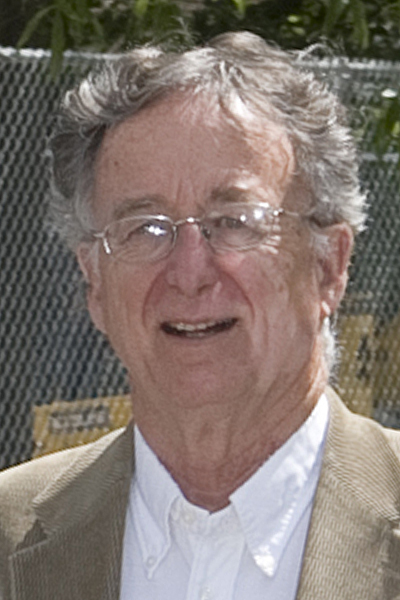 Dennis Sullivan合作论文数Department of Mathematics, State University of New York/The Graduate Center, The City University of New York8
 Jeff Cheeger合作论文数Department of Mathematics, New York University2
 Daniel Burns合作论文数Department of Mathematics, College of Literature, Science, and the Arts, University of Michigan-Ann Arbor1
 Robert Bryant合作论文数Department of Mathematics, Mathematics, Trinity College of Arts & Sciences, Duke University1
 David G. Ebin合作论文数Department of Mathematics, SUNY at Stony Brook1
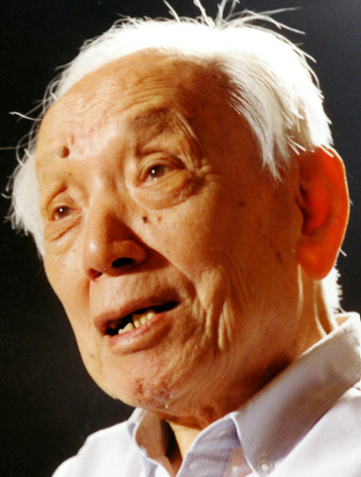 Shiing-Shen Chern (陈省身)合作论文数Nankai University1
 Richard S. Palais合作论文数Department of Mathematics, University of California, Irvine1
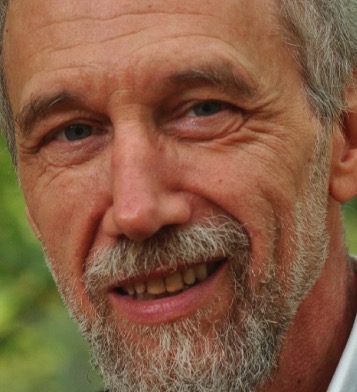 Alain Connes合作论文数Collège de France;Department of Mathematics, College of Arts and Sciences, The Ohio State University1Leonard S. Rosenberg合作论文数1
 Phillip Griffiths合作论文数School of Mathematics, Institute for Advanced Study;University of Miami1




