Vision-language models (VLMs) like CLIP have been cherished for their ability to perform zero-shot visual recognition on open-vocabulary concepts. This is achieved by selecting the object category whose textual representation bears the highest similarity with the query image. While successful in some domains, this method struggles with identifying fine-grained entities as well as generalizing to unseen concepts that are not captured by the training distribution. Recent works attempt to mitigate these challenges by integrating category descriptions at test time, albeit yielding modest improvements. We attribute these limited gains to a fundamental misalignment between image and description representations, which is rooted in the pretraining structure of CLIP. In this paper, we propose GRAIN, a new pretraining strategy aimed at aligning representations at both fine and coarse levels simultaneously. Our approach learns to jointly ground textual descriptions in image regions along with aligning overarching captions with global image representations. To drive this pre-training, we leverage frozen Multimodal Large Language Models (MLLMs) to derive large-scale synthetic annotations. We demonstrate the enhanced zero-shot performance of our model compared to current state-of-the art methods across 11 diverse image classification datasets. Additionally, we introduce Products-2023, a newly curated, manually labeled dataset featuring novel concepts, and showcase our model's ability to recognize these concepts by benchmarking on it. Significant improvements achieved by our model on other downstream tasks like retrieval further highlight the superior quality of representations learned by our approach. Code available at https://github.com/shaunak27/grain-clip .
Large Language Models (LLMs) have significantly advanced AI with their exceptional performance across a wide range of tasks. However, their extensive computational requirements restrict their use on devices with limited resources.While recent compression methods based on low-rank matrices show potentialsolutions, they often suffer from significant loss of accuracy or introduce substantialoverhead in parameters and inference time. In this paper, we introduce Modular De-composition (MoDeGPT), a new, efficient, and structured compression frameworkthat overcomes these limitations. MoDeGPT jointly decomposes pairs of consecu-tive subcomponents within Transformer blocks, reduces hidden dimensions throughoutput reconstruction on a larger structural scale than conventional low-rank meth-ods, and repurposes three classical matrix decomposition algorithms—Nyströmapproximation, CR decomposition, and SVD—to ensure bounded errors in ournovel decomposition approach. Our experiments show that MoDeGPT, withoutrelying on backward propagation, consistently matches or surpasses the performance of prior techniques that depend on gradient information, while achieving a98% reduction in compute costs when compressing a 13B-parameter model. OnLLaMA-2/3 and OPT models, MoDeGPT retains 90-95% of zero-shot performancewith compression rates of 25-30%. The compression process can be completed ona single GPU in a few hours, boosting inference throughput by up to 46%.
The rapid proliferation of large language models (LLMs) in natural language processing (NLP) has created a critical need for techniques that enable efficient deployment on memory-constrained devices without compromising performance. We present a method to prune LLMs that selectively prunes model blocks based on an importance score and replaces them with a low-parameter replacement strategy. Specifically, we propose a principled metric to replace each pruned block using a weight-sharing mechanism that leverages unpruned counterparts from the model and block-specific low-rank adapters. Furthermore, we facilitate the learning of these replacement blocks with output feature normalization and an adapter initialization scheme built on low-rank SVD reconstructions. Empirical evaluations demonstrate substantial performance gains over existing methods, achieving state-of-the-art performance on 5/6 benchmarks for a compression rate of 30% and 6/6 benchmarks for a compression rate of 40%. We also demonstrate that our approach can extend smaller models, boosting performance on 6/6 benchmarks using only approximate to 0.3% tokens of extended training with minimal additional parameter costs.
Recent works demonstrate a remarkable ability to customize text-to-image diffusion models while only providing a few example images. What happens if you try to customize such models using multiple, fine-grained concepts in a sequential (i.e., continual) manner? In our work, we show that recent state-of-the-art customization of text-to-image models suffer from catastrophic forgetting when new concepts arrive sequentially. Specifically, when adding a new concept, the ability to generate high quality images of past, similar concepts degrade. To circumvent this forgetting, we propose a new method, C-LoRA, composed of a continually self-regularized low-rank adaptation in cross attention layers of the popular Stable Diffusion model. Furthermore, we use customization prompts which do not include the word of the customized object (i.e., "person" for a human face dataset) and are initialized as completely random embeddings. Importantly, our method induces only marginal additional parameter costs and requires no storage of user data for replay. We show that C-LoRA not only outperforms several baselines for our proposed setting of text-to-image continual customization, which we refer to as Continual Diffusion, but that we achieve a new state-of-the-art in the well-established rehearsal-free continual learning setting for image classification. The high achieving performance of C-LoRA in two separate domains positions it as a compelling solution for a wide range of applications, and we believe it has significant potential for practical impact. Project page: https://jamessealesmith.github.io/continual-diffusion/
Speculative decoding has emerged as a prominent alternative to autoregressive decoding for expediting inference in large language models (LLMs). However, prevailing assumptions often focus solely on latency reduction, neglecting the computational expenses. In this paper, we present Speculate Less, validate More (SLiM), a speculative decoding enhancement to reduce the speculation set while validating more effective tokens. SLiM is designed to mitigate LLMs' computation costs associated with the token verification by introducing hypothesis reduction based on a fast posterior estimation. It consistently surpasses counterparts lacking cost reduction across a spectrum from CPU to GPU. Our evaluation with diverse conversational datasets shows that SLiM can achieve a substantial 70% reduction in FLOPs while generating more effective predictions on top of prior arts.
Recent work has demonstrated a remarkable ability to customize text-to-image diffusion models to multiple, fine-grained concepts in a sequential (i.e., continual) manner while only providing a few example images for each concept. This setting is known as continual diffusion. Here, we ask the question: Can we scale these methods to longer concept sequences without forgetting? Although prior work mitigates the forgetting of previously learned concepts, we show that its capacity to learn new tasks reaches saturation over longer sequences. We address this challenge by introducing a novel method, STack-And-Mask INcremental Adapters (STAMINA), which is composed of low-ranked attention-masked adapters and customized MLP tokens. STAMINA is designed to enhance the robust fine-tuning properties of LoRA for sequential concept learning via learnable hard-attention masks parameterized with low rank MLPs, enabling precise, scalable learning via sparse adaptation. Notably, all introduced trainable parameters can be folded back into the model after training, inducing no additional inference parameter costs. We show that STAMINA outperforms the prior SOTA for the setting of text-to-image continual customization on a 50-concept benchmark composed of landmarks and human faces, with no stored replay data. Additionally, we extended our method to the setting of continual learning for image classification, demonstrating that our gains also translate to state-of-the-art performance in this standard benchmark.
In this paper, we focus on the important yet understudied problem of Continual Federated Learning (CFL), where a server communicates with a set of clients to incrementally learn new concepts over time without sharing or storing any data. The complexity of this problem is compounded by challenges from both the Continual and Federated Learning perspectives. Specifically, models trained in a CFL setup suffer from catastrophic forgetting which is exacerbated by data heterogeneity across clients. Existing attempts at this problem tend to impose large overheads on clients and communication channels or require access to stored data which renders them unsuitable for real-world use due to privacy. In this paper, we attempt to tackle forgetting and heterogeneity while minimizing overhead costs and without requiring access to any stored data. We study this problem in the context of Vision Transformers and explore parameter-efficient approaches to adapt to dynamic distributions while minimizing forgetting. We achieve this by leveraging a prompting based approach (such that only prompts and classifier heads have to be communicated) and proposing a novel and lightweight generation and distillation scheme to consolidate client models at the server. We formulate this problem for image classification and establish strong baselines for comparison, conduct experiments on CIFAR-100 as well as challenging, large-scale datasets like ImageNet-R and DomainNet. Our approach outperforms both existing methods and our own baselines by as much as 7% while significantly reducing communication and client-level computation costs. Code available at https://github.com/shaunak27/hepco-fed.
Foundation Models (FMs) have become the hallmark of modern AI, however, these models are trained on massive data, leading to financially expensive training. Updating FMs as new data becomes available is important, however, can lead to 'catastrophic forgetting', where models underperform on tasks related to data sub-populations observed too long ago. This continual learning (CL) phenomenon has been extensively studied, but primarily in a setting where only a small amount of past data can be stored. We advocate for a new paradigm where memory is abundant, allowing us to keep all previous data, but computational resources are limited. In this setting, traditional replay-based CL approaches are outperformed by a simple baseline which replays past data selected uniformly at random [33], indicating that this setting necessitates a new approach. We address this by introducing a framework of adaptive memory replay for continual learning, where sampling of past data is phrased as a multi-armed bandit problem. We utilize Bolzmann sampling to derive a method which dynamically selects past data for training conditioned on the current task, assuming full data access and emphasizing training efficiency. Through extensive evaluations on both vision and language pre-training tasks, we demonstrate the effectiveness of our approach, which maintains high performance while reducing forgetting by up to 10% at no training efficiency cost.
In this paper, we focus on the important yet understudied problem of Continual Federated Learning (CFL), where a server communicates with a set of clients to incrementally learn new concepts over time without sharing or storing any data. The complexity of this problem is compounded by challenges from both the Continual and Federated Learning perspectives. Specifically, models trained in a CFL setup suffer from catastrophic forgetting which is exacerbated by data heterogeneity across clients. Existing attempts at this problem tend to impose large overheads on clients and communication channels or require access to stored data which renders them unsuitable for real-world use due to privacy. In this paper, we attempt to tackle forgetting and heterogeneity while minimizing overhead costs and without requiring access to any stored data. We achieve this by leveraging a prompting based approach (such that only prompts and classifier heads have to be communicated) and proposing a novel and lightweight generation and distillation scheme to consolidate client models at the server. We formulate this problem for image classification and establish strong baselines for comparison, conduct experiments on CIFAR-100 as well as challenging, large-scale datasets like ImageNet-R and DomainNet. Our approach outperforms both existing methods and our own baselines by as much as 7% while significantly reducing communication and client-level computation costs.
Computer vision models suffer from a phenomenon known as catastrophic forgetting when learning novel concepts from continuously shifting training data. Typical solutions for this continual learning problem require extensive rehearsal of previously seen data, which increases memory costs and may violate data privacy. Recently, the emergence of large-scale pre-trained vision transformer models has enabled prompting approaches as an alternative to data-rehearsal. These approaches rely on a key-query mechanism to generate prompts and have been found to be highly resistant to catastrophic forgetting in the well-established rehearsal-free continual learning setting. However, the key mechanism of these methods is not trained end-to-end with the task sequence. Our experiments show that this leads to a reduction in their plasticity, hence sacrificing new task accuracy, and inability to benefit from expanded parameter capacity. We instead propose to learn a set of prompt components which are assembled with input-conditioned weights to produce input-conditioned prompts, resulting in a novel attention-based end-to-end key-query scheme. Our experiments show that we outperform the current SOTA method DualPrompt on established benchmarks by as much as 4.5% in average final accuracy. We also outperform the state of art by as much as 4.4% accuracy on a continual learning benchmark which contains both class-incremental and domain-incremental task shifts, corresponding to many practical settings. Our code is available at https://github.com/GT-RIPL/CODA-Prompt
Recently, large-scale pre-trained Vision-and-Language (VL) foundation models have demonstrated remarkable capabilities in many zero-shot downstream tasks, achieving competitive results for recognizing objects defined by as little as short text prompts. However, it has also been shown that VL models are still brittle in Structured VL Concept (SVLC) reasoning, such as the ability to recognize object attributes, states, and inter-object relations. This leads to reasoning mistakes, which need to be corrected as they occur by teaching VL models the missing SVLC skills; often this must be done using private data where the issue was found, which naturally leads to a data-free continual (no task-id) VL learning setting. In this work, we introduce the first Continual Data-Free Structured VL Concepts Learning (ConStruct-VL) benchmark 1 1 Our code is publicly available at https://github.com/jamessealesmith/ConStruct-VL and show it is challenging for many existing data-free CL strategies. We, therefore, propose a data-free method comprised of a new approach of Adversarial Pseudo-Replay (APR) which generates adversarial reminders of past tasks from past task models. To use this method efficiently, we also propose a continual parameter-efficient Layered-LoRA (LaLo) neural architecture allowing no-memory-cost access to all past models at train time. We show this approach outperforms all data-free methods by as much as ~ 7% while even matching some levels of experience-replay (prohibitive for applications where data-privacy must be preserved).
Continual learning is a setting where machine learning models learn novel concepts from continuously shifting training data, while simultaneously avoiding degradation of knowledge on previously seen classes which may disappear from the training data for extended periods of time (a phenomenon known as the catastrophic forgetting problem). Current approaches for continual learning of a single expanding task (aka class-incremental continual learning) require extensive rehearsal of previously seen data to avoid this degradation of knowledge. Unfortunately, rehearsal comes at a cost to memory, and it may also violate data-privacy. Instead, we explore combining knowledge distillation and parameter regularization in new ways to achieve strong continual learning performance without rehearsal. Specifically, we take a deep dive into common continual learning techniques: prediction distillation, feature distillation, L2 parameter regularization, and EWC parameter regularization. We first disprove the common assumption that parameter regularization techniques fail for rehearsal-free continual learning of a single, expanding task. Next, we explore how to leverage knowledge from a pre-trained model in rehearsal-free continual learning and find that vanilla L2 parameter regularization outperforms EWC parameter regularization and feature distillation. Finally, we explore the recently popular ImageNet-R benchmark, and show that L2 parameter regularization implemented in self-attention blocks of a ViT transformer outperforms recent popular prompting for continual learning methods.
In this supplementary material, we share our code and provide additional insights and experimental results that were not included in the main paper due to space constraints. In Section A we describe the implementation code for generating SyViC and the code for the proposed finetuning approach on SyViC. In Section B, we analyze the performance of recently open-sourced VL models on VL-Checklist [18] and show they have low performance, demonstrating the need for our improvements. In Section C, we provide additional results on Winoground [13] using CyCLIP [7] (excluded from the main text for space purposes). Section D demonstrates how we can improve BLIP [8] using SyViC. In Section E, we combine our contributions with those of concurrent work of [6] and demonstrate that our approach for improving VLC using synthetic data is orthogonal / complementary to the text-augmentation based methods. Section F provides more dataset details, describing how the metadata from each synthesized scene is used to generate a caption for each image in SyViC. In Section G, we explore combinations of our metadata-driven grammar-based caption generation with paraphrasing using openly available large language models. Section H provides ”SyViC number of models and number of samples” ablation excluded from the main paper due to lack of space. Finally, in Section I we provide some randomly sampled examples from SyViC.
Large-scale pre-trained Vision & Language (VL) models have shown remarkable performance in many applications, enabling replacing a fixed set of supported classes with zero-shot open vocabulary reasoning over (almost arbitrary) natural language prompts. However, recent works have uncovered a fundamental weakness of these models. For example, their difficulty to understand Visual Language Concepts (VLC) that go 'beyond nouns' such as the meaning of non-object words (e.g., attributes, actions, relations, states, etc.), or difficulty in performing compositional reasoning such as understanding the significance of the order of the words in a sentence. In this work, we investigate to which extent purely synthetic data could be leveraged to teach these models to overcome such shortcomings without compromising their zero-shot capabilities. We contribute Synthetic Visual Concepts (SyViC) - a million-scale synthetic dataset and data generation codebase allowing to generate additional suitable data to improve VLC understanding and compositional reasoning of VL models. Additionally, we propose a general VL finetuning strategy for effectively leveraging SyViC towards achieving these improvements. Our extensive experiments and ablations on VL-Checklist, Winoground, and ARO benchmarks demonstrate that it is possible to adapt strong pre-trained VL models with synthetic data significantly enhancing their VLC understanding (e.g. by 9.9% on ARO and 4.3% on VL-Checklist) with under 1% drop in their zero-shot accuracy.
Robust fine-tuning aims to achieve competitive in-distribution (ID) performance while maintaining the out-of-distribution (OOD) robustness of a pre-trained model when transferring it to a downstream task. Recently, projected gradient descent has been successfully used in robust fine-tuning by constraining the deviation from the initialization of the fine-tuned model explicitly through projection. However, algorithmically, two limitations prevent this method from being adopted more widely, scalability and efficiency. In this paper, we propose a new projection-based fine-tuning algorithm, Fast Trainable Projection (FTP) for computationally efficient learning of per-layer projection constraints, resulting in an average 35% speedup on our benchmarks compared to prior works. FTP can be combined with existing optimizers such as AdamW, and be used in a plug-and-play fashion. Finally, we show that FTP is a special instance of hyper-optimizers that tune the hyper-parameters of optimizers in a learnable manner through nested differentiation. Empirically, we show superior robustness on OOD datasets, including domain shifts and natural corruptions, across four different vision tasks with five different pre-trained models. Additionally, we demonstrate that FTP is broadly applicable and beneficial to other learning scenarios such as low-label and continual learning settings thanks to its easy adaptability. The code will be available at https://github.com/GT-RIPL/FTP.git.
Both of the fields of continual learning and causality investigate complementary aspects of human cognition and are fundamental components of artificial intelligence if it is to reason and generalize in complex environments. Despite the burgeoning interest in investigating the intersection of the two fields, it is currently unclear how causal models may describe continuous streams of data and vice versa, how continual learning may exploit learned causal structure. We proposed to bridge this gap through the inaugural AAAI-23 "Continual Causality" bridge program, where our aim was to take the initial steps towards a unified treatment of these fields by providing a space for learning, discussions, and to build a diverse community to connect researchers. The activities ranged from traditional tutorials and software labs, invited vision talks, and contributed talks based on submitted position papers, as well as a panel and breakout discussions. Whereas materials are publicly disseminated as a foundation for the community: https://www.continualcausality.org, respectively discussed ideas, challenges, and prospects beyond the inaugural bridge are summarized in this retrospective paper.
As progress is made on training machine learning models on incrementally expanding classification tasks (i.e., incremental learning), a next step is to translate this progress to industry expectations. One technique missing from incremental learning is automatic architecture design via Neural Architecture Search (NAS). In this paper, we show that leveraging NAS for incremental learning results in strong performance gains for classification tasks. Specifically, we contribute the following: first, we create a strong baseline approach for incremental learning based on Differentiable Architecture Search (DARTS) and state-of-the-art incremental learning strategies, outperforming many existing strategies trained with similar-sized popular architectures; second, we extend the idea of architecture search to regularize architecture forgetting, boosting performance past our proposed baseline. We evaluate our method on both RF signal and image classification tasks, and demonstrate we can achieve up to a 10% performance increase over state-of-the-art methods. Most importantly, our contribution enables learning from continuous distributions on real-world application data for which the complexity of the data distribution is unknown, or the modality less explored (such as RF signal classification).
Knowledge distillation (KD) is a substantial strategy for transferring learned knowledge from one neural network model to another. A vast number of methods have been developed for this strategy. While most method designs a more efficient way to facilitate knowledge transfer, less attention has been put on comparing the effect of knowledge sources such as features, logits, and gradients. This work provides a new perspective to motivate a set of knowledge distillation strategies by approximating the classical KL-divergence criteria with different knowledge sources, making a systematic comparison possible in model compression and incremental learning. Our analysis indicates that logits are generally a more efficient knowledge source and suggests that having sufficient feature dimensions is crucial for the model design, providing a practical guideline for effective KD-based transfer learning.
Federated Learning (FL) seeks to distribute model training across local clients without collecting data in a centralized data-center, hence removing data-privacy concerns. A major challenge for FL is data heterogeneity (where each client's data distribution can differ) as it can lead to weight divergence among local clients and slow global convergence. The current SOTA FL methods designed for data heterogeneity typically impose regularization to limit the impact of non-IID data and are stateful algorithms, i.e., they maintain local statistics over time. While effective, these approaches can only be used for a special case of FL involving only a small number of reliable clients. For the more typical applications of FL where the number of clients is large (e.g., edge-device and mobile applications), these methods cannot be applied, motivating the need for a stateless approach to heterogeneous FL which can be used for any number of clients. We derive a first-order gradient regularization to penalize inconsistent local updates due to local data heterogeneity. Specifically, to mitigate weight divergence, we introduce a first-order approximation of the global data distribution into local objectives, which intuitively penalizes updates in the opposite direction of the global update. The end result is a stateless FL algorithm that achieves 1) significantly faster convergence (i.e., fewer communication rounds) and 2) higher overall converged performance than SOTA methods under non-IID data distribution. Importantly, our approach does not impose unrealistic limits on the client size, enabling learning from a large number of clients as is typical in most FL applications.
Generalized Zero-Shot Learning (GZSL) aims to train a classifier that can generalize to unseen classes, using a set of attributes as auxiliary information, and the visual features extracted from a pre-trained convolutional neural network. While recent GZSL methods have explored various techniques to leverage the capacity of these features, there has been an extensive growth of representation learning techniques that remain under-explored. In this work, we investigate the utility of different GZSL methods when using different feature extractors, and examine how these models' pre-training objectives, datasets, and architecture design affect their feature representation ability. Our results indicate that 1) methods using generative components for GZSL provide more advantages when using recent feature extractors; 2) feature extractors pre-trained using self-supervised learning objectives and knowledge distillation provide better feature representations, increasing up to 15% performance when used with recent GZSL techniques; 3) specific feature extractors pre-trained with larger datasets do not necessarily boost the performance of GZSL methods. In addition, we investigate how GZSL methods fare against CLIP, a more recent multi-modal pre-trained model with strong zero-shot performance. We found that GZSL tasks still benefit from generative-based GZSL methods along with CLIP's internet-scale pre-training to achieve state-of-the-art performance in fine-grained datasets. We release a modular framework for analyzing representation learning issues in GZSL here: https://github.com/uvavision/TV-GZSL
 Zsolt Kira合作论文数School of Interactive Computing, College of Computing, Georgia Institute of Technology16
 Yilin Shen合作论文数Samsung Research America AI Center7
 Junjiao Tian合作论文数Robotics Perception and Learning Lab, Georgia Institute of Technology6
 Leonid Karlinsky合作论文数MIT-IBM Watson AI Lab, IBM Research6
 Hongxia Jin合作论文数Samsung Research America6
 Shaunak Halbe合作论文数5
 Paola Cascante-Bonilla合作论文数Institute for Advanced Computer Studies, University of Maryland5
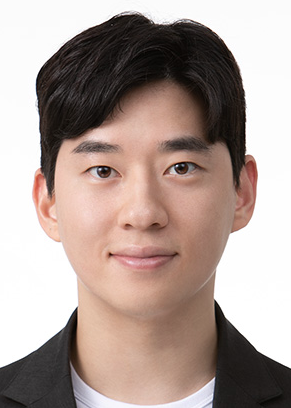 Donghyun Kim合作论文数Department of Artificial Intelligence, Korea University4
 Yen-Chang Hsu合作论文数AI4BI Innovation Center, Taiwan Semiconductor Manufacturing Company, Ltd.4
 Rogerio Schmidt Feris合作论文数MIT-IBM Watson AI Lab, IBM Research4
 Chi-Heng Lin合作论文数Samsung Research America3
 Shikhar Tuli合作论文数Department of Electrical Engineering, IIT Delhi3
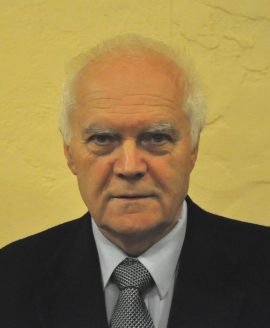 Bogdan 'Dan' M. Wilamowski合作论文数Alabama Microelectronics Science and Technology Center, Department of Electrical and Computer Engineering, Auburn University3
 Vicente Ordóñez Román合作论文数Vision, Language, and Learning Lab, Department of Computer Science, George R. Brown School of Engineering, Rice University3
 Rameswar Panda合作论文数MIT-IBM Watson AI Lab, IBM Research3
 Sivan Doveh合作论文数Google2
 Vyshnavi Gutta合作论文数2Bo Wu合作论文数Ryerson University, Toronto, Canada2
 Assaf Arbelle合作论文数Ben-Gurion University of the Negev2
 Gül Varol合作论文数Ligm Lab, École des Ponts ParisTech2
 Tyler L. Hayes合作论文数Georgia Institute of Technology2
 Jonathan Balloch合作论文数Anduril Industries;Rapt AI2
 Shangqian Gao合作论文数Department of Computer Science, College of Arts and Sciences, Florida State University2Hongxia Jim合作论文数1Haris Jeelani合作论文数1
 Mayank Lunayach合作论文数Google;Georgia Institute of Technology1
 Indranil Sur合作论文数SRI International1Khaled Shehada合作论文数1
 Jhair Gallardo合作论文数Dept Mech Engn, Univ Nacl Ingn1Harideep Nair合作论文数1
 Lazar Valkov合作论文数MIT-IBM Watson AI Lab1Zachary Alan Daniels合作论文数Rutgers State Univ, Dept Comp Sci, New Brunswick, NJ 08901 USA1Kamil Faber合作论文数1
 Abhishek Patel合作论文数Samsung Res Amer, Mountain View, CA 94043 USA1Abrar Rahman合作论文数1Zachary Seymour合作论文数SRI International1
 Lingyu Zhang合作论文数Rensselaer Polytechnic Institute1Adele H Ribeiro合作论文数Columbia University1
 Keiland W Cooper合作论文数Univ Calif Irvine, Interdept Neurosci Program, Irvine, CA USA1
 Devendra Singh Dhami合作论文数Department of Chemistry, Kumaun University1
 Cameron Taylor合作论文数Department of Computer Science, University of Central Florida1
 Martin Mundt合作论文数Hessian.AI;TU Darmstadt1
 Robert M. Nelms合作论文数College of Engineering, Auburn University1
 Roberto Corizzo合作论文数Department of Computer Science, College of Arts & Sciences, American University1
 Ting Hua合作论文数Samsung Research America1
 Yen-Cheng Liu合作论文数Meta1
 M. Burak Gürbüz合作论文数School of Computer Science, Georgia Institute of Technology;X, the moonshot factory1
 Constantine Dovrolis合作论文数School of Computer Science, College of Computing, Georgia Institute of Technology;Institute for Data Engineering and Science, College of Computing, Georgia Institute of Technology1




