High levels of T-wave alternans (TWA) are linked to an increased risk of sudden cardiac death. People with epilepsy display elevated TWA levels that are decreased by chronic vagus nerve stimulation via implanted devices after 2–4 weeks or later. Our objective was to explore short-term effects of transcutaneous auricular vagus nerve stimulation (tVNS) on TWA. Five patients (3 female) with focal epilepsy undergoing video-EEG monitoring were included. TWA levels were determined using a one-channel modified lead I ECG via an open-source TWA-algorithm on two consecutive days, 1 h before, during and after tVNS via the left auricle. Data are given as mean ± SE. Mean TWA at baseline was 3.8 ± 0.4 µV and 3.0 ± 0.6 µV during stimulation on day 2. Stimulations on the second day were associated with TWA reductions by 22 ± 13 % that exceeded stimulation effects on the first day relative to baseline (p < 0.05). Linear mixed-models revealed effects of both stimulation (p < 0.05) and stimulation number (p < 0.005). Normalized TWA showed reproducible peak reductions at both days within 35 min after the initiation of tVNS (p < 0.05). Our observations suggest that tVNS has short-term effects on TWA, supporting the notion that vagus nerve stimulation has a beneficial impact on electrical cardiac properties.
AbstractObjectiveTo identify non‐EEG‐based signals and algorithms for detection of motor and non‐motor seizures in people lying in bed during video‐EEG (VEEG) monitoring and to test whether these algorithms work in freely moving people during mobile EEG recordings.MethodsData of three groups of adult people with epilepsy (PwE) were analyzed. Group 1 underwent VEEG with additional devices (accelerometry, ECG, electrodermal activity); group 2 underwent VEEG; and group 3 underwent mobile EEG recordings both including one‐lead ECG. All seizure types were analyzed. Feature extraction and machine‐learning techniques were applied to develop seizure detection algorithms. Performance was expressed as sensitivity, precision, F1 score, and false positives per 24 hours.ResultsThe algorithms were developed in group 1 (35 PwE, 33 seizures) and achieved best results (F1 score 56%, sensitivity 67%, precision 45%, false positives 0.7/24 hours) when ECG features alone were used, with no improvement by including accelerometry and electrodermal activity. In group 2 (97 PwE, 255 seizures), this ECG‐based algorithm largely achieved the same performance (F1 score 51%, sensitivity 39%, precision 73%, false positives 0.4/24 hours). In group 3 (30 PwE, 51 seizures), the same ECG‐based algorithm failed to meet up with the performance in groups 1 and 2 (F1 score 27%, sensitivity 31%, precision 23%, false positives 1.2/24 hours). ECG‐based algorithms were also separately trained on data of groups 2 and 3 and tested on the data of the other groups, yielding maximal F1 scores between 8% and 26%.SignificanceOur results suggest that algorithms based on ECG features alone can provide clinically meaningful performance for automatic detection of all seizure types. Our study also underscores that the circumstances under which such algorithms were developed, and the selection of the training and test data sets need to be considered and limit the application of such systems to unseen patient groups behaving in different conditions.
Rare sound event detection (rare SED) deals with obtaining valuable information from data consisting mostly of acoustic background noises. It has meanwhile a long research history and was part of the DCASE 2017 Challenge. State-of-the-art performance is currently reached using a stacked combination of a CNN and an RNN, dubbed CRNN, which was also successfully applied in other domains such as in hybrid automatic speech recognition. In this work, we propose a new CRNN model for rare SED. This new model uses a set of parallel convolutions with multiple kernel widths in the CRNN and is based on an extended feature representation of the log-mel spectrogram. Furthermore, we apply and optimize different evaluation postprocessing methods and analyze the modifications in an ablation study. The proposed model outperforms the so-far top-scoring networks of the DCASE Challenge – using the same training material for all methods – by an error rate of 6.13% absolute and by 4.39% absolute in the F1 score on the test set and under these conditions achieves a new benchmark result on the DCASE 2017 Rare SED data set.
There are many ways to evaluate rare sound event detection (SED) approaches, e.g., the DCASE 2017 challenge provides a widely employed framework. This paper proposes a rare SED training and test framework, which is reflecting an SED application in a more realistic way. Our setup gets rid of too much prior knowledge on the test data, and assumes additional unknown acoustic events both in training and test data, which in practice have to be identified as background. Taking this into account during training, the robustness in real-world scenarios can be significantly increased, with an average event-based error rate reduction of an absolute 34 percentage points. Further we show and compare the performance of multi-event (polyphonic) classifiers vs. single-event classifiers while outlining the benefits of multi-event training.
We experimentally demonstrate excitation of orbital angular momentum states in an air-core fiber by a silicon integrated vortex beam emitter which is designed and fabricated to match the modes supported by the fiber. The coupling loss is measured to be ∼7.5 dB. Excitation of eigenmodes is confirmed by analyzing the fiber output.
ObjectiveGeneralized convulsive seizures (GCS) are associated with high demands on the cardiovascular system, thereby facilitating cardiac complications. To investigate occurrence, influencing factors, and extent of cardiac stress or injury, the alterations and time course of the latest generation of cardiac blood markers were investigated after documented GCS. MethodsAdult patients with refractory epilepsy who underwent video-electroencephalography (EEG) monitoring along with simultaneous one-lead electrocardiography (ECG) recordings were included. Cardiac biomarkers (cardiac troponin I [cTNI]; high-sensitive troponin T [hsTNT]; N-terminal prohormone of brain natriuretic peptide [NT-proBNP]; copeptin; suppression of tumorigenicity-2 [SST-2]; growth differentiation factor 15, [GDF-15]; soluble urokinase plasminogen activator receptor [suPAR]; and heart-type fatty acid binding protein [HFABP]) and catecholamines were measured at inclusion and at different time points after GCS. Periictal cardiac properties were assessed by analyzing heart rate (HR), HR variability (HRV), and corrected QT intervals(QTc). ResultsThirty-six GCS (6 generalized-onset tonic-clonic seizures and 30 focal to bilateral tonic-clonic seizures) were recorded in 30 patients without a history of cardiac or renal disease. Postictal catecholamine levels were elevated more than twofold. A concomitant increase in HR and QTc, as well as a decrease in HRV, was observed. Elevations of cTNI and hsTNT were found in 3 of 30 patients (10%) and 6 of 23 patients (26%), respectively, which were associated with higher dopamine levels. Copeptin was increased considerably after most GCS, whereas SST-2, HFABP, and GDF-15 displayed only subtle variations, and suPAR was unaltered in the postictal period. Cardiac symptoms did not occur in any patient. SignificanceThe use of more sensitive biomarkers such as hsTNT suggests that signs of cardiac stress occur in about 25% of the patients with GCS without apparent clinical symptoms. SuPAR may indicate clinically relevant troponin elevations. Copeptin could help to diagnose GCS, but specificity needs to be tested.
Orbital angular momentum (OAM) modes in fibres are modes that potentially can be used for mode-division multiplexing systems. OAM modes possess a helical phase front which can be written as exp(iLφ), with L being the topological charge and φ being the azimuthal coordinate. Here, we present a chip capable of multiplexing waveguide modes to OAM modes in a fibre in the C-band.
A chip-to-chip mode-division multiplexing connection is demonstrated using a pair of multiplexers/demultiplexers fabricated on the silicon-on-insulator platform. Successful mode multiplexing and demultiplexing is experimentally demonstrated, using the LP01, LP11a and LP11b modes.
On-chip multiplexing of the spatial modes of few-moded fibers can dramatically expand the communications bandwidth of single optical fibers.
In a green world, power consumption by electronics, amongst myriad of other things, must be and is being optimized to allow for minimum power consumption for the best set of features and performance. A quick look at the power conversion efficiencies of DCDC converters reveals that it has been steadily climbing and in some cases can reach the mid 90%. The challenges of converting medium dc voltage 36V- 48V to low DC voltages in a single stage are several and consistently leads to higher power losses that leads to lower efficiency and higher thermal load on the final application. Typically these higher voltages are first converted down to 5V or 12V rails which are then converted further down to 0.6V to 3.3V for CPU, DDR etc. rails. With the present focus on high efficiency over the entire range of the load current in multi-rail systems, these intermediate voltages (5V/12V) may not be optimum for all load currents. This challenge may lead to more complex and larger implementation of the power section. In today's market where all new applications must be more powerful, smaller size, lighter weight and less expensive than the competition, a new solution is needed Exar has developed a new IC that enables a Two Stage Bus Architecture that will facilitate achieving high efficiency in the challenging situations where we are converting high DC voltage into a low DC voltage at high load currents.
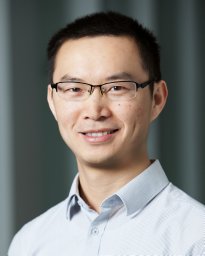 Yunhong Ding合作论文数Department of Electrical and Photonics Engineering, Technical University of Denmark;SiPhotonIC Technologies4
 Alexander Roy合作论文数IAV3
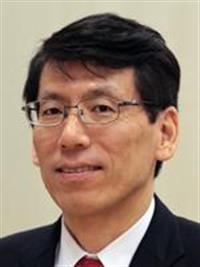 Toshio Morioka合作论文数Department of Photonics Engineering, Danmarks Tekniske Universitet3
 Tim Fingscheidt合作论文数Department of Signal Processing and Machine Learning, Institute for Communications Technology, Faculty of Electrical Engineering, Information Technology, Physics, Technische Universität Braunschweig3
 Rainer Surges合作论文数Department of Clinical and Experimental Epilepsy, UCL Institute of Neurology3SCHARNBERG OLE合作论文数2Papendieck Michael合作论文数2
 Timo Lohrenz合作论文数Institute for Communications Technology, Technische Universität Braunschweig;Innovationsgesellschaft Technische Universität Braunschweig Mbh2Kasper Ingerslev合作论文数OFS Fitel2
 Christian Elger合作论文数Center for Economics and Neuroscience, University of Bonn2
 Lars Hagedorn Frandsen合作论文数Research Center;Technical University of Denmark;Research Center, Technical University of Denmark2
 Robert Daniel Nass合作论文数Cardiovascular Research Center, Mount Sinai School of Medicine2
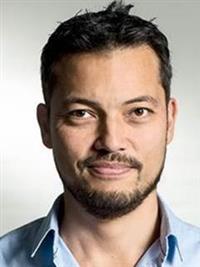 Leif Katsuo Oxenløwe合作论文数Department of Electrical and Photonics Engineering, Technical University of Denmark2
 Michael Lichtenauer合作论文数1Jan Pukropski合作论文数1Amirhossein Jahanbekam合作论文数1
 Randi von Wrede合作论文数Dept Epileptol, Univ Hosp Bonn1
 Marcel Bausch合作论文数Univ Bonn, Div Epileptol, D-53105 Bonn, Germany1
 Vera Paar合作论文数1
 Lukas J Motloch合作论文数1
 Edson P. da Silva合作论文数Department of Electrical Engineering, Federal University of Campina Grande1Dalgaard Kjeld合作论文数1
 Alan Elbanhawy合作论文数Fairchild Semicond.;c1
 Patrick Meyer合作论文数Braunschweig University of Technology1Stefan Holdenrieder合作论文数1Jordan Arthur合作论文数1Uta C. Hoppe合作论文数1
 Jing Xu (徐竞)合作论文数School of Optical and Electronic Information, Huazhong University of Science and Technology;Wuhan National Laboratory for Optoelectronics, Huazhong University of Science and Technology1
 Christian Bauckhage合作论文数The Lamarr Institute for Machine Learning and Artificial Intelligence;Department of Computer Science, The University of Bonn;Fraunhofer Institute for Intelligent Analysis and Information Systems1
 Karsten Rottwitt合作论文数Department of Electrical and Photonics Engineering, Technical University of Denmark1
 Berndt Zur合作论文数Institute of Clinical Chemistry and Pharmacology, Bonn University Medical Center1
 Holger Hill合作论文数Psychiatric Department, University of Heidelberg;(MW, HH, RN);Psychiatric Department, University of Heidelberg1




