Power capping is the standard GPU energy lever in LLM serving, and it appears to work: throughput drops, power readings fall, and energy budgets are met. We show the appearance is illusory for the phase that dominates production serving: autoregressive decode. Across four attention paradigms – GQA, MLA, Gated DeltaNet, and Mamba2 – on NVIDIA H200, decode draws only 137–300 W on a 700 W GPU; no cap ever triggers, because memory-bound decode saturates HBM bandwidth rather than compute and leaves power headroom untouched. Firmware-initiated clock throttling compounds the illusion: these deviations can corrupt any throughput measurement that attributes them to the cap. SM clock locking dissolves both confounds. By targeting the lever that is actually on the critical path, clock locking Pareto-dominates power capping universally, recovering up to 32% of decode energy at minimal throughput loss. We identify three architecture-dependent DVFS behavioural classes and characterise a common energy pattern across novel attention replacements: a heavy prefill cost recouped by efficient decode, eventually halving total request energy relative to GQA at production batch sizes.
Multimodal agents repeatedly re-examine the same video frames, UI screenshots, and rendered artifacts as their context window slides and reasoning iterates, yet every look-back re-encodes from scratch, because prefix caches serve reuse only at a fixed leading position. We show this recompute is avoidable, and identify exactly what naive KV reuse loses: the cross-chunk conditioning a chunk absorbs from its neighbours. This loss is asymmetric. The direct readout of a cached chunk is recovered exactly and for free by the standard state-merge. What remains is a diffuse, low-rank residue concentrated in deep layers, invisible to single-hop retrieval but precisely what multi-hop reasoning binds on. Blind reuse therefore leaves single-hop recall intact while halving multi-hop accuracy; this is the failure mode prior position-independent caches, designed for single-context or single-image reuse, do not address. We repair it with a small, training-free low-rank conditioning patch stored alongside each position-free chunk. Reuse reduces to one operator across MLA, GQA, and MHA: exact RoPE re-rotation to any target position, plus the patch that restores cross-chunk binding. This makes three window operations cheap: reorder (one patch serves every ordering of a cached set), sliding-window survival (surviving chunks relocate via rotation only, zero re-encode), and recall (an evicted chunk is rehydrated by its patch, never re-encoded). A rank-m patch recovers full task accuracy on cross-chunk-binding benchmarks, MM-NIAH across two attention families and two-page doc-QA, at a fraction of the KV footprint, and reconstructs re-prefill KV to within bf16 rounding in a production SGLang kernel across six backbones. The conditioning signal is strongest in redundant vision and video streams, making our solution most impactful where multimodal agents spend their recompute budget.
Agentic LLM workloads put bit-identical tokens at shifted positions every turn, voiding prefix caches at the first byte of divergence. Operators report cache-hit regressions ranging from moderate slowdowns to severe TTFT spikes of 10-16s on unchanged content. Prior position-independent caching systems correct RoPE on the full $d_K$-dimensional key, an architectural cost imposed by GQA, not by caching itself. Multi-Head Latent Attention, deployed at scale in DeepSeek-V2/V3/R1, Kimi-K2/Moonlight, GLM-5, and Mistral Large 3, factors each KV row into a position-free $c_{KV}$ and a 64-dim $k_r$ correctable in closed form; this structure motivates content-addressed caching as a natural fit rather than a GQA workaround. We present Irminsul, which extends SGLang's radix cache with content-hash keying over CDC-chunked segments and a $δ$-rotation rule for $k_r$. We evaluate three native MLA-MoE deployments - DeepSeek-V2-Lite (16B/2.4B), Kimi Moonlight-16B-A3B, and JoyAI-Flash (48B/3B) - with output-consistency on all three and recovery measured on the two endpoints; Irminsul recovers up to ~83% of prompt tokens above exact-prefix on agentic traffic while delivering 63% prefill energy savings per cache hit. We argue that content-addressed caching belongs in the serving stack as a first-class primitive, not a retrofit over prefix matching.
Frontier LLMs increasingly decide what a query attends to with a sparse-attention indexer that picks a few KV-cache blocks per query: attention's unit is now a small, reusable chunk. Agentic workloads hammer it: many sub-agents query one large codebase, reusing the same blocks. When that corpus outgrows one GPU it is partitioned across instances, so a query and the blocks it selects often sit on different GPUs: answering it means attention across instances. The reflex of prior cross-instance KV systems is to move the cache: pull the selected blocks to the requester. Multi-head Latent Attention inverts the arithmetic, compressing each token's key and value into one narrow vector, so a routed query row is only 1 KB, smaller than the chunk it attends; routing the query is then often cheaper than moving the cache. Which primitive wins, over which fabric and request shape, is uncharted, least of all on device-initiated RDMA that makes per-request cross-node transfers cheap. We characterize cross-instance MLA attention on a real multi-node H100 cluster, distilling two reusable artifacts: a topology-aware cost model (probe / transfer / compute / return / merge) and a closed-form route/fetch/local predicate, whose constants we measure on real IBGDA, where the model tracks batched round-trips to within 7
AlltoAll dispatch is the dominant bottleneck of MoE expert parallelism, and the interconnect community has responded with four families of mitigations: predictive sample placement, adaptive expert relayout, hierarchical collectives, and EP-aware topology. All four rest on two assumptions about the workload. The first is that routing imbalance is correctable by the system layer. The second is that the mock-token benchmarks evaluating them faithfully represent production routing. We introduce DODOCO to test both assumptions. We instrument five MoE checkpoints spanning five sequence-mixer designs (DeepSeek-V2-Lite MLA, DeepSeek-MoE-16B MHA, Qwen3-30B GQA, Nemotron-30B Mamba-2, Qwen3.5-35B GDN) under a 5 by 6 grid of data conditions plus a matched EP scan from 4 to 32 ranks on H100s; both assumptions fail. Scaling EP changes the per-expert max/mean token ratio by at most 5 A third pattern, unexpected, emerges from the same matrix: the five architectures cleave into two stable bands. MHA and Mamba-2 (data-resilient) drop to Gini 0.105 and 0.150 on wikitext. MLA and GDN (persistently concentrated) stay above 0.24 on every real-text condition and reach 0.29 to 0.38 on mock. GQA is the intermediate case. These bands, not the EP degree or the mock-data profile, are the right workload input to AlltoAll-aware interconnect and dispatch design.
Modern KV cache management assumes the chatbot workload: prompts arrive once and the cache grows append-only, so prefix caching and forward-only eviction are correct by construction. Agentic LLMs break this assumption. Their conversations evolve through policy-driven editing: failed tool calls are retried, stale outputs dropped, trajectories pivoted. Two distinct cache problems result. First, identical content moves to new positions between turns, invalidating exact-prefix caches even though the underlying KV would still be valid; recent work on position-independent caching for MLA addresses this reuse problem. Second, and this paper's focus, a policy may need to direct the serving system to actively remove or replace a span of cached content and continue without re-prefilling everything that came after. No existing primitive offers this. Production agentic harnesses fall back to re-prefill on every edit, paying full prefix-recomputation cost; kernel-level eviction methods make their own decisions and cannot accept policy directives from outside the kernel. We introduce Leyline, a serving-side primitive that closes this gap. A declarative directive 4-tuple separates what to edit from how to preserve position correctness. The policy declares the edit and its mode (in-place splice or prefix-trimmed re-prefill for semantic forgetting); an architecture-agnostic interface routes to a per-architecture kernel that restores attention math via a closed-form RoPE-rotation correction. The splice kernel lifts replay cache-hit by +11.2 pp and cuts latency by up to 241 ms. A ten-line truncation rule routed through the same interface lifts agentic solve rate by +14.3 pp on debug-gym. The mechanism is open; the policy space it enables is the agenda.
Data centers need tooling that validates an entire installation rather than individual nodes, at acceptance and at regular intervals thereafter. This requires dispatching identical benchmarks to every node in a single submission, and therefore cluster-aware scheduling. This paper presents ClusterBench, a framework for cluster-wide continuous benchmarking. It ships with a benchmark collection targeting each component: CPU, GPU, memory, interconnect, and I/O. Because measurements are repeated throughout the cluster's lifetime, ClusterBench collects data across space and time. Comparison against earlier runs detects performance regressions introduced by software changes, such as kernel updates or new library versions. The measurements also form a dataset for research on hardware variability. On the NHR@FAU clusters Helma, Alex, and Fritz, variation within a single component stays within 1
Modern NVIDIA GPUs like the H100 (HBM2e) and H200 (HBM3e) share similar compute characteristics but differ significantly in memory interface technology and bandwidth. By isolating memory bandwidth as a key variable, the power distribution between the memory and Streaming Multiprocessors (SM) changes notably between the two architectures. In the era of energy-efficient computing, analyzing how these hardware characteristics impact performance per watt is critical. This study investigates how the H100 and H200 manage memory power consumption at various power-cap levels. By a regression analysis, we study the memory power limit and uncover outliers consuming more memory power. To evaluate efficiency, we employ compute-bound (DGEMM) and memory-bound (TheBandwidthBenchmark) workloads, representing the two extremes of the Roofline model. Our observations indicate that across varying power caps, the H100 remains the slightly better choice for strictly compute-bound workloads, whereas the H200 demonstrates superior efficiency for memory-bound applications.
Various physics simulations today rely on simulating particle interactions, where particles can represent point masses (Molecular Dynamics), rigid bodies (Discrete Element Method) or even massive bodies such as planets. Evaluating and calculating the required particle interactions in a simulation is computationally expensive, hence suitable algorithms and proper optimizations to exploit available parallelism in the target hardware are important to reach good performance. However, it is difficult to maintain flexible implementations while keeping state-of-the-art performance, as most packages are developed individually and have their own hard-coded, fine-tuned implementations. To combine flexibility and optimal performance, we introduce P4IRS, an intermediate representation and compiler for particle simulations which aims at generating high-performing code. We describe P4IRS and its features, provide some usage examples for MD and DEM fields and discuss the benefits we can obtain with code generation. Finally, we evaluate the performance and scalability from the code generated by P4IRS on modern processors, accelerators and supercomputers.
This paper discusses the challenges encountered when analyzing the energy efficiency of synthetic benchmarks and the Gromacs package on the Fritz and Alex HPC clusters. Experiments were conducted using MPI parallelism on full sockets of Intel Ice Lake and Sapphire Rapids CPUs, as well as Nvidia A40 and A100 GPUs. The metrics and measurements obtained with the Likwid and Nvidia profiling tools are presented, along with the results. The challenges and pitfalls encountered during experimentation and analysis are revealed and discussed. Best practices for future energy efficiency analysis studies are suggested.
Energy consumption has become a major cost factor in the procurement and operation of large scale HPC data centers. In addition, funding bodies and governments are starting to focus on assessment and improvement of energy efficiency, as well as reducing the overall environmental impact of data centers, like carbon usage reduction. The goal of the EE-HPC project is to develop a targeted job specific control and optimization of the hardware to enable a more efficient energy usage of HPC systems. The project started at the end of 2022 and builds upon the existing stable software components ClusterCockpit [1] and LIKWID [2] developed by FAU. It provides a simple, robust, secure and scalable monitoring & energy control framework for hybrid HPC cluster management. The EE-HPC project is developing energy aware software components that will be integrated with ClusterCockpit for power monitoring and reducing the energy consumption of the system. The framework is complemented with an instrumentation library for fine grained analysis, phase detection and tuning of MPI & OpenMP regions. The effectiveness of the approach is evaluated against a set of representative HPC applications ranging from molecular dynamics to earth system modelling.
High Performance Computing (HPC) systems are among the most energy-intensive scientific facilities, with electric power consumption reaching and often exceeding 20 Megawatts per installation. Unlike other major scientific infrastructures such as particle accelerators or high-intensity light sources, which are few around the world, the number and size of supercomputers are continuously increasing. Even if every new system generation is more energy efficient than the previous one, the overall growth in size of the HPC infrastructure, driven by a rising demand for computational capacity across all scientific disciplines, and especially by Artificial Intelligence (AI) workloads, rapidly drives up the energy demand. This challenge is particularly significant for HPC centers in Germany, where high electricity costs, stringent national energy policies, and a strong commitment to environmental sustainability are key factors. This paper describes various state-of-the-art strategies and innovations employed to enhance the energy efficiency of HPC systems within the national context. Case studies from leading German HPC facilities illustrate the implementation of novel heterogeneous hardware architectures, advanced monitoring infrastructures, high-temperature cooling solutions, energy-aware scheduling, and dynamic power management, among other optimisations. By reviewing best practices and ongoing research, this paper aims to share valuable insight with the global HPC community, motivating the pursuit of more sustainable and energy-efficient HPC architectures and operations.
Molecular dynamics (MD) simulations provide considerable benefits for the investigation and experimentation of systems at atomic level. Their usage is widespread into several research fields, but their system size and timescale are also crucially limited by the computing power they can make use of. Performance engineering of MD kernels is therefore important to understand their bottlenecks and point out possible improvements. For that reason, we developed MD-Bench, a proxy-app for short-range MD kernels that implements state-of-the-art algorithms from multiple production applications such as LAMMPS and GROMACS. MD-Bench is intended to have simpler, understandable and extensible source code, as well as to be transparent and suitable for teaching, benchmarking and researching MD algorithms. In this paper we introduce MD-Bench, describe its design and structure and implemented algorithms. Finally, we show five usage examples of MD-Bench and describe how these are useful to have a deeper understanding of MD kernels from a performance point of view, also exposing some interesting performance insights.
Proxy-apps, or mini-apps, are simple self-contained benchmark codes with performance-relevant kernels extracted from real applications. Initially used to facilitate software-hardware co-design, they are a crucial ingredient for serious performance engineering, especially when dealing with large-scale production codes. MD-Bench is a new proxy-app in the area of classical short-range molecular dynamics. In contrast to existing proxy-apps in MD (e.g. miniMD and coMD) it does not resemble a single application code, but implements state-of-the art algorithms from multiple applications (currently LAMMPS and GROMACS). The MD-Bench source code is understandable, extensible and suited for teaching, benchmarking and researching MD algorithms. Primary design goals are transparency and simplicity, a developer is able to tinker with the source code down to the assembly level. This paper introduces MD-Bench, explains its design and structure, covers implemented optimization variants, and illustrates its usage on three examples.
Molecular dynamics (MD) simulations provide considerable benefits for the investigation and experimentation of systems at atomic level. Their usage is widespread into several research fields, but their system size and timescale are crucially limited by the available computing power. Performance engineering of MD kernels is therefore critical to understand their bottlenecks and investigate possible improvements. For that reason, we developed MD-Bench, a performance-focused prototyping harness for short-range MD kernels that implements state-of-the-art algorithms from multiple production applications such as LAMMPS and GROMACS. The MD-Bench source code is simple, understandable, and extensible, and therefore well suited for benchmarking, teaching, and researching MD algorithms. In this paper we introduce MD-Bench, describe its design, structure, and implemented algorithms. Finally, we show five use-cases of MD-Bench and describe how these are useful to gain a deeper understanding of the performance of MD kernels.
This work extends Halide with a profiling API to measure events supported by the target processor during the application runtime. We demonstrate how developers can use this extension to profile application loop levels, functions' producer and consumer relations, and threads on parallel regions. We also show that the extension is library agnostic, hence developers can choose the profiling library that best suits their environment. As a case study we measure data traffic, number of flops and clock-cycles per instruction on x86 processors, and discuss how the reported results can be used to detail the performance aspects and improve Halide schedules.
This paper investigates the suitability of the AnyDSL partial evaluation framework to implement tinyMD: an efficient, scalable, and portable simulation of pairwise interactions among particles. We compare tinyMD with the miniMD proxy application that scales very well on parallel supercomputers. We discuss the differences between both implementations and contrast miniMD's performance for single-node CPU and GPU targets, as well as its scalability on SuperMUC-NG and Piz Daint supercomputers. Additionally, we demonstrate tinyMD's flexibility by coupling it with the waLBerla multi-physics framework. This allow us to execute tinyMD simulations using the load-balancing mechanism implemented in waLBerla.
This paper investigates the suitability of the AnyDSL partial evaluation framework to implement tinyMD: an efficient, scalable, and portable simulation of pairwise interactions among particles. We compare tinyMD with the miniMD proxy application that scales very well on parallel supercomputers. We discuss the differences between both implementations and contrast miniMD's performance for single-node CPU and GPU targets, as well as its scalability on SuperMUC-NG and Piz Daint supercomputers. Additionaly, we demonstrate tinyMD's flexibility by coupling it with the waLBerla multi-physics framework. This allow us to execute tinyMD simulations using the load-balancing mechanism implemented in waLBerla.
 Gerhard Wellein合作论文数Regionales Rechenzentrum Erlangen19
 Georg Hager合作论文数Regionales Rechenzentrum Erlangen15
 Harald Kostler合作论文数Chair for System Simulation, University of Erlangen-Nuremberg9
 Rafael Ravedutti Lucio Machado合作论文数7
 Thomas Röhl合作论文数3
 Thomas Gruber合作论文数3
 Jonas Schmitt合作论文数Friedrich-Alexander-Universitat Erlangen-Nurnberg3
 Johannes Hofmann合作论文数Condensed Matter Theory Center and Joint Quantum Institute, University of Maryland3
 Richard Membarth合作论文数Department of Computer Science, University of Erlangen-Nuremberg3Dietmar Fey合作论文数Institut fur Informatik3
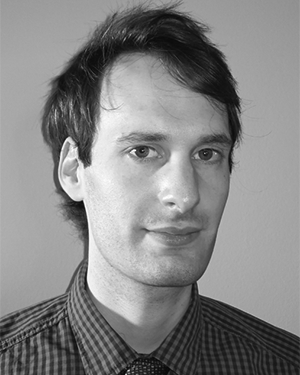 Arsène Pérard-Gayot合作论文数Saarland University, Germany2
 Jan Laukemann合作论文数Department of Computer Science, Computer ArchitectureFriedrich-Alexander University Erlangen-Nürnberg (FAU)Martensstr. 3, 91058 ErlangenGermany2Sebastian Eibl合作论文数Friedrich Alexander Univ Erlangen Nurnberg, Chair Syst Simulat, Cauerstr 11, D-91058 Erlangen, Germany2Ayesha Afzal合作论文数2Julian Hammer合作论文数2
 Sebastian Hack合作论文数Saarland University2Roland Leißa合作论文数Saarland University2Frank Winkler合作论文数1Anara Kozhokanova合作论文数1
 Julian Hornich合作论文数1
 Radita Liem合作论文数1Michael Riedmann合作论文数1
 Ralf Schneider合作论文数High Performance Computing Center Stuttgart (HLRS),, University of Stuttgart1
 Christie L. Alappat合作论文数Erlangen National High Performance Computing Center, Friedrich-Alexander-Universität Erlangen-Nürnberg1
 Francesco Cremonesi合作论文数Brain Mind Institute, École polytechnique fédérale de Lausanne (EPFL),1
 Jonas Hahnfeld合作论文数RWTH Aachen University1Michael Ott合作论文数Leibniz Supercomputing Centre1Klaus Reuter合作论文数Institut für Pharmazeutische Chemie, Philipps-Universität Marburg1Roehl, T.合作论文数1
 Andreas Herten合作论文数1
 Daniel Weingaertner合作论文数School of Electrical and Computer Engineering (FEEC),, State University of Campinas1Benedikt Von St. Vieth合作论文数1
 Sandra Wienke合作论文数1Thomas Ilsche合作论文数Center for Information Services and High Performance Computing, Technische Universität Dresden1
 Estela Suarez合作论文数Jülich Supercomputing Centre1
 Thomas Zeiser合作论文数1
 Christian Terboven合作论文数Center for Computing and Communication, RWTH Aachen University1
 Bastian Koller合作论文数High Performance Computing Center Stuttgart1Sebastian Oeste合作论文数1E. Laure合作论文数Royal Institute of Technology (KTH)1
 Robert Dietrich合作论文数Department of Systems and Industrial Engineering USA1
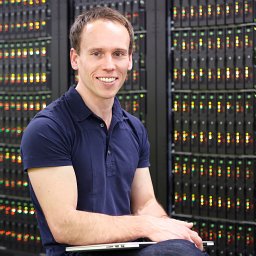 Daniel Hackenberg合作论文数Center for Information Services and High Performance Computing, Technische Universität Dresden1
 Andre Murbach Maidl合作论文数Universidade Federal do Paraná1
 Norbert Eicker合作论文数Jülich Supercomputing Centre, Institute for Advanced Simulation, Forschungszentrum Jülich;Bergische Universität Wuppertal1Salem El Sayed合作论文数1




