Older people may experience considerable loss when they endure emotional or social loneliness. Emotional loneliness is related to the loss or absence of a confidant while social loneliness describes the discrepancy between the nature of one’s desired and actual social network. In this article, both concepts are examined in relation to new attendees at time-limited day center reablement programs in Northern Ireland. Using group work activities, reablement programs aim to motivate participants to continue to live independently, often in the face of later life losses. Out of a total of 91 initial respondents (range, 61–94), 13 lived with adult children (10 of whom were lone parents). Those living with, or who had daily contact with, adult children had significantly higher levels of emotional loneliness at the start of their program, but not at the end. For this sample, reductions in emotional loneliness in certain cohorts of older adults who attend these programs have been identified. In conclusion, it is proposed that fourth age losses mediate older people’s living arrangement and may create greater vulnerability to emotional loneliness in those living with adult children. In addition, social groups may be effective in helping reduce emotional loneliness.
Information and Communication Technology (ICT) has profound impacts on society as people integrate technology into their lives. Social work is similarly influenced by ICT as workplaces, individual practitioners and clients adopt new forms of technology and this has prompted an increasing focus on the implications of technology on all aspects of professional practice. Drawing on the work of Spanish sociologist Manuel Castells as its theoretical foundation, this article reports on a Participatory Action Research (PAR) project that sought to understand the potential practice-led integration of ICTs with traditional social work practice at an organisation in rural Victoria, Australia. Eight participants were provided with tablet computers and collaborated with the researcher over a period of eight months to trial ways in which ICTs might complement traditional face-to-face practice in the field. Findings highlight a range of benefits and challenges in adopting a practice-led approach that spanned three key themes: successful practice-led approaches, technological friction and challenges inherent in what Castells describes as the transition to network enterprises. Findings highlight the need for ongoing research and engagement to ensure that technological advances are implemented in ways that are consistent with the enduring ethics and philosophies of the social work profession.
The experience of disenfranchised grief has many twists and turns. This is particularly the case in situations that have external cause for celebration, but, in fact, contain internal loss, embodied betrayal, and double jeopardy. Focusing on a significant embodied experience, that of pregnancy after a previous pregnancy loss, we suggest that the lived experience can be vastly different from the normative experiences of joy, celebration, and “moving on.” Drawing on existing literature, we find the lived experience of a subsequent pregnancy, instead reignites anxiety, guilt, grief, and loss; a profound sense of betrayal by one’s body; and the liminality of the double jeopardy. Women maintain an inexpressible continuing bond to the lost baby amidst struggling with the paradox of a new pregnancy. The past seems to contradict the present, and even cloud the future. To understand such complexity, we then theorize these experiences from the Heideggerian perspectives of Being-toward-death, Angst and unheimlichkeit, and the authenticity of lived experience. We propose that phenomenological ways of seeing the world can enrich our understanding of disenfranchised grief.
Background: People affected by cancer (PABC) continue to experience a range of unmet psychosocial needs. Our research indicates that the rural setting exacerbates those needs as a result of geographic and service-delivery challenges. Methods: Our research draws on qualitative data from rural Victoria, Australia (n=19) and the rural English county of Lincolnshire (n=20). In-depth interviews were digitally recorded and transcribed verbatim. All data were collated and analysed thematically. Participants were PABC at various stages of the cancer trajectory and included carers of those in receipt of palliative care. Results: There were consistencies in the findings from both England and Australia studies. Psychosocial care is often provided informally by friends and family with many participants not receiving any professional psychosocial care. Partners and family were a common source of emotional and practical support. Both studies raised concerns about access and awareness of psychosocial support services. The rural setting meant participants often had to travel long distances to receive care and this constituted an emotional, practical and financial burden. Notably, the presence of the charitable organisation, Macmillan Cancer Support in England went some way to meeting some of the patients' psychosocial needs. Conclusions: The results have implications for the long-term well-being of PABC in rural areas and for partners, family members and health professionals working with people living with cancer and their carers.
Background: Health policy directives have increasingly stressed the inclusion of patient voices and lived experiences, and co-produced knowledge, as vital to mainstream health care. An outcome of this direction is the gradually amassed ‘knowledge’ of the experiences of people affected by cancer (PABC). Despite such intention, nonetheless, there is little evidence of knowledge translation with regard to implementation of psychosocial supportive care services. Methods: In this paper we draw together a body of research from the University of Lincoln, UK, and La Trobe University, Victoria, Australia, and reanalyse our collective findings using a modified form of Foucauldian discourse analysis. Our research triangulates a range of qualitative methods and designs, with participants recruited from rural and regional communities. Results: An unexpected but important finding was the perceived emotional disconnection of the treating health and social care practitioners toward their patients. We posit that this is a result of unacknowledged professional emotional toil. A significant theoretical outcome, we suggest, is the concept of iatrogenic uncertainty and concomitant mortality salience. Combined, these profound existential responses present significant barriers in the patient-professional relationship. In particular, there is an increased risk of poor mental health outcomes for both PABC and their treating practitioners. Conclusion: Further research is recommended to explore how health and social care professionals use and resist patient experience, as well as their own existential dilemmas. We offer the concept of iatrogenic uncertainty as a way of reconceptualising such challenges in psychosocial supportive care.
This chapter suggests that there are important synergies that, together, could offer a rich and nuanced sociological perspective and make applicable both C. Wright Mills' sociological imagination and Martin Heidegger's Being-in-the-World. It combines both Mills' sociological and Heidegger's philosophical ways of seeing the world, with the aim of exploring the lived experience of people living with and beyond cancer (PLWBCs). The chapter conceptualizes the key shared experiences for PLWBCs as embodiment, spirituality, temporality, and authentic connection. The spiritual aspect of lived experience, either preceding the illness or newly arrived at or reconfigured through the illness itself, can facilitate meaning making that then becomes a further integral strand of the person's narrative in terms of his or her integration in the social world. Terry Gall and Mark Cornblat seek to extend models of coping and stress to include a spiritual domain of stress appraisal.
In this chapter we bring together both C. Wright Mills’ sociological and Martin Heidegger’s philosophical ways of seeing the world, with the aim of exploring the lived experience of people living with and beyond cancer (PLWBCs). It is important to note at the outset that this chapter is not about dying, or palliative care, but about the meanings created in the face of a cancer diagnosis, with its concomitant possibilities for death. People living with and beyond cancer were once referred to as “survivors” and considered the “lucky” ones, in that they escaped death. What often goes unrecognized are the losses, which need to be grieved, yet are often rendered invisible in everyday life and everyday discourses of remission and survival.
Background: At the point of cancer diagnosis, practitioners may wrestle with dilemmas associated with medico‐legal implications of diagnosis, treatment options and disclosure to family members. Post‐diagnosis patients' perspectives can diverge, focusing instead on questions about the meaning and purpose of life, including managing long‐term interactions with health and mental health practitioners. Such interactions can create iatrogenic uncertainty, where treatment and follow up‐protocols reignite distress and serve to represent the fragility of survivorhood status. Aims: Our paper explores opportunities for integrated cancer care protocols across multidisciplinary teams. We outline ways psychologists, social workers and medical scientists can ameliorate, or work with, iatrogenic uncertainty to improve follow‐up and discharge ‘compliance’, thereby enhancing emotional well‐being for cancer survivors. Methods: The three researchers contributing represent both qualitative and quantitative approaches and are involved in three different disciplines of health inquiry. Together, we have undertaken a meta‐analysis of our original data, and these analyses have been brought together to form a corpus from which the findings in this paper derive. Results: Iatrogenic uncertainty was present regardless of cancer stage or diagnostic type, pervaded throughout length of survival and focused on the experience of anxiety about recurrence and metastatic disease. In particular, participants reported iatrogenic uncertainty induced by tests and treatment with surveillance regimes underscoring mortality awareness. Conclusions: Our findings have implications for psychology, social work and medical and allied health practitioners and could enhance the design of discharge plans and follow‐up protocols for cancer survivors.
Health, mental health, and social care policy are dominated by the imperative of employing person-centered approaches. Such involvement of the “consumer” is generally claimed to provide a counter-narrative to the psychiatric and medical paradigm of illness. Taking a critical and reflexive standpoint, we find ourselves asking: Is there a dark side to employing person-centered approaches and potential loss and risk to participants themselves? To explore these questions further, we undertook a condensed critique of the current mental health, health, and social care policy arena. We then move to methodological concerns about ways in which person-centered research, including our own, can inadvertently reproduce the neoliberalist agenda. To conclude, we offer our own lived experiences as a cautionary tale. We also posit that a post-Foucauldian governmentality framework can assist researchers to avoid contributing to the very problems we wish to resolve.
ABSTRACT The rapid development of Information and Communications Technologies (ICT) is profoundly transforming the social order, into what Spanish sociologist Manuel Castells calls the network society. Mobile technologies, such as smartphones and tablet computers, are perhaps the definitive tools of the network society; however, cultural and economic barriers exist that restrict access to these transformative tools and to the information networks in which they operate. One group that is particularly at risk is rural older people from disadvantaged backgrounds. This paper reports on one aspect of a larger action research project that involved working with a small group of rural, socially isolated older people with histories of homelessness and complex needs (N = 7) and their social workers. This paper focuses on the older participants who, having been provided tablet computers, were then supported to use the device in their homes over the course of eight months. Despite most participants having never used a computing device of any kind prior to the research project, findings suggested that participants gained confidence, independence and social engagement as a result of their ICT use. Results also highlighted that they experienced challenges in utilising ICT, specifically technical, economic and social barriers. Findings highlight the individual and structural issues that must be addressed to enable all citizens to participate fully in the network society.
The concept of receptivity is a new way of understanding the personal and social factors that affect a person living with and beyond cancer, and how these factors influence access to formal supportive care service provision and planning. This article contributes to new knowledge through applying the concept of receptivity to informal supportive cancer care in regional Australia. Literature indicates that a cancer diagnosis is a life-changing experience, particularly in regional communities, where survival rates are lower and there are significant barriers to accessing services. Heideggerian phenomenology informed the design of the study and allowed for a rich and nuanced understanding of participants lived experiences of informal supportive cancer care. These experiences were captured using in-depth interviews, which were subsequently thematically analysed. Nineteen participants were recruited from across regional Victoria, Australia. Participants self-reported a range of stages and types of cancer. Significantly, findings revealed that most participants were not referred to, and did not seek, formal supportive care. Instead, they were receptive to informal supportive care. Understanding receptivity and the role of anxiety and fear of death has implications for partners, family, community members, as well as professionals working with people with living with and beyond cancer.
This article outlines a recent pilot project in Bendigo that collected baseline data in order to develop a preliminary understanding of regional migration experiences. The literature indicated that migrant experiences in Australian regional communities are under-researched. Sixty participants from South East Asia, who have migrated to Bendigo, Victoria within the last five years, completed a mixed-methods survey. The key findings reported upon are socio-structural factors, social connectedness and psychosocial well-being. Crucial factors such as culture, spirituality and non-English-language, link to the more complex issues of personal, social and cultural identity. These findings are significant in adding to the limited data and discussion about newly arrived migrants in rural and regional communities. There are sociological implications from this preliminary data concerning social capital and psychosocial well-being. There are also implications for policy development and professional practice for migration to rural and regional communities.
Australia is experiencing a period of immense cultural change predicated on the use of Information and Communication Technology (ICT). New devices such as smartphones, tablet computers, and the social iterations of the internet are impacting on communication patterns and contributing to the merging of people's online and offline lives. Using Spanish sociologist Manuel Castells's theory of the Network Society as a theoretical foundation, this issues paper posits that social work must overcome its historical reluctance to embrace ICT if it is to remain relevant in the era of the network society. In particular, we argue that social work professionals need to begin a dialogue with IT developers, social service managers, and funding bodies about the need for practice-led ICT systems. This paper examines the turbulent history social work has had with technological change, and concludes that the adoption of a practice-led approach to ICT use in education, practice, and research provides a strong foundation for reimagining the relationship between social work and ICT.
The purpose of this research was to highlight gaps in formal psychosocial care for cancer survivors in rural communities. The study was conducted in rural Victoria, Australia, and involved interviews with people with various stages of cancer progression, cancer diagnoses and survival times, who were interviewed about their experiences of psychosocial cancer care. Interviews focused on their experience of psychosocial care and were audio-recorded and transcribed verbatim. Data were thematically analysed to identify key themes. Findings demonstrate that psychosocial care is essentially informal within the re-entry period after cancer diagnosis and treatment. Despite current Australian clinical guidelines on psychosocial care for people with cancer, which indicate the need for the provision of formal psychosocial care, participants in this study largely cared for themselves, or received informal support from family, friends and community members. Many psychosocial needs remained unmet and professional support was lacking. While this study was conducted in rural Australia, many of our findings have been echoed in studies from other countries. The findings have implications for treatment protocols and discharge planning, health professional-patient-family relationships, and the long-term well-being of cancer survivors living in rural communities. A model for understanding the experience of formal supportive care during the re-entry phase of survivorship is proposed.
There is limited research exploring how domestic water restrictions imposed as a result of drought conditions impact upon the lives of independently living older people. Within this age group (60 years plus), the domestic garden frequently forms an intrinsic component of ongoing health and well-being. Gardening practice offers components of both mental and physical activity and, for many older people, leads to emotional and spiritual connection on a number of levels. The capacity of older people to maintain a garden during a period of water restrictions is greatly reduced, and the resulting impact on health and well-being is considerable. A recent study, conducted in south-eastern Australia, aimed to determine the benefits to health and well-being of maintaining a domestic garden for older people and the impact of water restrictions on garden practice. This occurred at a time following a prolonged period of drought and, in central Victoria, a complete ban on outside watering. In-depth qualitative interviews were conducted with 10 gardeners aged between 60 and 83 who had tended their garden over an extended period. The lived experience of gardening was explored through hermeneutic phenomenological analysis. Clear benefits to health and well-being were established, and yet, the essence of this experience lay in the capacity of gardeners to remain connected to their garden despite change. The crisis imposed by ongoing drought and restricted use of water generated a strong impetus for adaptation, resilience and acceptance of change. The spiritual nature of gardening practice clearly emerged and appeared to intensify the experience of gardening and consolidate adaption to change on a number of levels.
Reflective practice has become an influential concept in various forms of professional education, for example, in nursing and social work. However, there has been a common tendency for it to be oversimplified in practice, and, further-more, dominant understandings of reflective practice can themselves be criticised for lacking theoretical sophistication in some respects - particularly in relation to the social and political dimensions of learning and professional practice. This paper therefore seeks to clarify the theoretical underpinnings of reflective practice and to propose developments in relation to the missing sociological elements. It briefly reviews current dominant understandings of reflective practice before proposing developments in the theory base to make it more theoretically sophisticated in general and more sociologically informed in particular. In this way, the foundations for a critically reflective practice are sketched out.
 Olivia Sagan合作论文数6
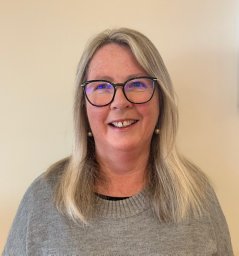 Virginia A Dickson-Swift合作论文数La Trobe University;University of Newcastle;La Trobe University, University of Newcastle6
 Amanda Kenny合作论文数4
 Steven Baker合作论文数3
 Nicole Johnson合作论文数1La Trobe Rural Health School, La Trobe University3
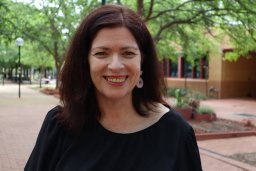 Suzanne Hodgkin合作论文数Cambridge University3Jeni Warburton合作论文数3
 Rob Townsend合作论文数Federat Univ2
 David Nelson合作论文数Lincoln Int Inst Rural Hlth, Univ Lincoln2McGonagle Ian合作论文数2
 Ros Kane合作论文数London School of Hygiene and Tropical Medicine, London WC1E 7HT, UK2
 Neil Thompson合作论文数Newcastle General Hospital2
 Robert Hagan合作论文数1Joanne Adams合作论文数1
 Fiona Dangerfield合作论文数Inst Phys Act & Nutr, Deakin Univ1Nicole L. Johnson合作论文数1Endacott Ruth合作论文数1
 Brian Taylor合作论文数Department of Social Work, Ulster University1
 John Mallett合作论文数1Pam Mcgrath合作论文数Central Queensland University1R. Trainor合作论文数1
 Kathleen Tori合作论文数Bendigo Health1Roger Manktelow合作论文数1
 Carol Mckinstry合作论文数1Isabelle Ellis合作论文数1




