Let X and Y be locally compact normal spaces and let u is an element of X* and v is an element of Y*. In this paper we will show that if X-u and Y-v are lp-equivalent then u is omega-near if and only if v is. This result does not necessarily hold for spaces that are not locally compact. We will also show for locally compact normal spaces X and Y, that if u is an element of X* and v is an element of Y* are omega-near and X-u and Y-v are l(p)-equivalent, then omega((u) over cap) and omega((v) over cap) are homeomorphic for some 'unique' (u) over cap, (v) over cap is an element of omega* 'good' for u and v. These results allow us to find an isomorphic classification of function spaces C-p(alpha(u)), where alpha < omega(omega) is a limit ordinal and u is an element of alpha*. This extends a result due to Gul'ko for alpha = omega. We will also indicate that the proof for this isomorphic classification can only partly be extended for alpha >= omega(omega). (c) 2025 Elsevier B.V. All rights are reserved, including those for text and data mining, AI training, and similar technologies.
We show that there are locally compact spaces that can be condensed on separable spaces, but not on compact separable spaces. We also show that for every cardinal $\kappa ,$ there is a locally compact topological group of cardinality $2<^>\kappa $ that can be condensed on a compact space but not on a compact topological group. These answer some questions of Arhangel'skii and Buzyakova.
A well-known theorem of Noble states that each Tychonoff space X is homeomorphic to a closed subspace of a pseudocompact k_ℝ -space. We strengthen this result by showing that any Tychonoff space X is homeomorphic to a closed subspace of an abelian pseudocompact k_ℝ -group G such that w(G)≤ℵ _1· w(X) , and if, in addition, X is a precompact group, then X is topologically isomorphic to a closed subgroup of G. It is constructed the first examples of pseudocompact groups G_1 and G_2 (in fact, they are even countably compact and of weight ℵ _2 ) such that G_1 is Ascoli but not a k_ℝ -space, and G_2 is a k_ℝ -space but not a k-space. Under MA+¬ CH , we show that any pseudocompact group of weight ℵ _1 is Ascoli. These results are proved using topological properties of pseudocompact spaces X of weight ℵ _1 and of Σ -products in products of compact spaces. Being motivated by these results and the countably compact part of Noble’s theorem, it is shown by a well-known technique that each countably compact infinite group has a separable countably compact subgroup of cardinality continuum.
We investigate closed copies of N in powers of R with respect to C & lowast;- and Cembedding. We show that R omega 1 contains closed copies of N that are not C & lowast;- embedded. (c) 2025 The Author(s). Published by Elsevier B.V. This is an open access article under the CC BY license (http://creativecommons.org/licenses/by/4.0/).
We show that under the Continuum Hypothesis, the topological group of all homeomorphisms of the Cech-Stone remainder of omega with the G(delta)-topology is a universal object for all P-groups of weight at most c.
We provide partial solutions to two problems posed by Shehtman concerning the modal logic of the Čech–Stone compactification of an ordinal space. We use the Continuum Hypothesis to give a finite axiomatization of the modal logic of , thus resolving Shehtman's first problem for . We also characterize modal logics arising from the Čech–Stone compactification of an ordinal provided the Cantor normal form of satisfies an additional condition. This gives a partial solution of Shehtman's second problem.
Sets on the boundary of a complementary component of a continuum in the plane have been of interest since the early 1920's. Curry and Mayer defined the buried points of a plane continuum to be the points in the continuum which were not on the boundary of any complementary component. Motivated by their investigations of Julia sets, they asked what happens if the set of buried points of a plane continuum is totally disconnected and non-empty. Curry, Mayer and Tymchatyn showed that in that case the continuum is Suslinian, i.e. it does not contain an uncountable collection of non-degenerate pairwise disjoint subcontinua. In an answer to a question of Curry et al, van Mill and Tuncali constructed a plane continuum whose buried point set was totally disconnected, non-empty and one-dimensional at each point of a countably infinite set. In this paper we show that the van Mill-Tuncali example was best possible in the sense that whenever the buried set is totally disconnected, then it is one-dimensional at each of at most countably many points. As a corollary we find that the buried set cannot be almost zero-dimensional unless it is zero-dimensional. We also construct locally connected van Mill-Tuncali type examples.
We prove that there is a continuum that is not the union of countably many homogeneous G delta sigma-sets. We also make some remarks about coverings by strongly locally homogeneous subspaces. (c) 2025 The Author(s). Published by Elsevier B.V. This is an open access article under the CC BY license (http://creativecommons.org/licenses/by/4.0/).
This is an update on, and expansion of, our paper Open problems on beta omega in the book Open Problems in Topology. (c) 2024 The Author(s). Published by Elsevier B.V. This is an open access article under the CC BY license (http://creativecommons.org /licenses /by /4 .0/).
We show that every infinite crowded space can be mapped onto a homogeneous space of countable weight, and that there is a homogeneous space of weight continuum that cannot be mapped onto a homogeneous space of uncountable weight strictly less than continuum.
Answering a question raised by V.V. Tkachuk in [10], we present several examples of σ -compact spaces, some only consistent and some in ZFC, that are not countably tight but in which the closure of any discrete subset is countably tight. In fact, in some of our examples the closures of all discrete subsets are even first countable.
The set $dd(X)$ of densities of all dense subspaces of a topological space $X$ is called the double density spectrum of $X$. In this note we present a couple of results that imply $\lambda \in dd(X)$, provided that $X$ is a compact space and $\lambda$ is a cardinal satisfying certain conditions. As a consequence of these results, we prove that $dd(X) = [d(X), w(X)]$ holds for any polyadic space $X$. This, in turn, implies that $dd(G) = [d(G), w(G)]$ for any locally compact topological group $G$.
We show that in the class of Lindelöf Čech-complete spaces the property of being C-embedded is quite well-behaved. It admits a useful characterization that can be used to show that products and perfect preimages of C-embedded spaces are again C-embedded. We also show that both properties, Lindelöf and Čech-complete, are needed in the product result.
If $X$ is a topological space and $Y$ is any set then we call a family $\mathcal{F}$ of maps from $X$ to $Y$ nowhere constant if for every non-empty open set $U$ in $X$ there is $f \in \mathcal{F}$ with $|f[U]| > 1$, i.e. $f$ is not constant on $U$. We prove the following result that improves several earlier results in the literature. If $X$ is a topological space for which $C(X)$, the family of all continuous maps of $X$ to $\mathbb{R}$, is nowhere constant and $X$ has a $\pi$-base consisting of connected sets then $X$ is $\mathfrak{c}$-resolvable.
We investigate closed copies of ℕ in powers of ℝ with respect to C^*- and C-embedding. We show that ℝ^ω_1 contains closed copies of ℕ that are not C^*-embedded.
It is known that for each continuous image of N⁎, there is a nowhere dense weak P-set of N⁎ that maps irreducibly onto it. We generalize this for every compact space of weight at most c. This allows us to show that there is a weak P-set in N⁎ which is homeomorphic to N⁎. This generalizes a result of the first-named author and answers a problem posed before 1990.
"Special Issue Dedicated to the Memory of Professor Horst Herrlich Guest Editors’ Introduction." Quaestiones Mathematicae, 46(sup1), p. 1
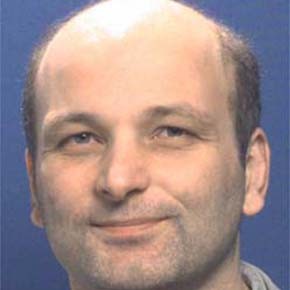 Klaas Pieter Hart合作论文数Department of Applied Mathematics, Delft University of Technology30
 Jan J. Dijkstra合作论文数19
 Istvan Juhasz合作论文数Department of Dermatology, University of Debrecen14Guram Bezhanishvili合作论文数13Nick Bezhanishvili合作论文数University of Amsterdam13
 Joel Lucero-Bryan合作论文数New Mexico State University13Alan Dow合作论文数13A.V. Arhangel'skii合作论文数10Roman Pol合作论文数10
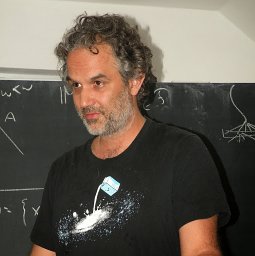 Michael Hrusak合作论文数Ctr Ciencias Matemat, Univ Nacl Autonoma Mexico9W.W. Comfort合作论文数8Charles F. Mills合作论文数6G. J. Ridderbos合作论文数6Vladimir V. Tkachuk合作论文数6S.D. Iliadis合作论文数5Eric K. Van Douwen合作论文数5Andrea Medini合作论文数4Anthony W. Hager合作论文数4
 Vitaly V. Fedorchuk合作论文数4
 Teun Koetsier合作论文数4Jan Baars合作论文数4Yasunao Hattori合作论文数3
 Lajos Soukup合作论文数Alfréd Rényi Institute of Mathematics3Jan Pelant合作论文数3Henno Brandsma合作论文数3
 Lyubomyr Zdomskyy合作论文数3
 Tadeusz Dobrowolski合作论文数3
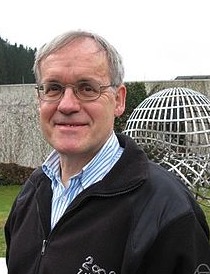 Alexander Schrijver (Lex)合作论文数Korteweg-de Vries-Institute of Mathematics, University of Amsterdam/Department of Management, Networks and Optimization, Centrum voor Wiskunde en Informatica3Richard G. Wilson合作论文数3Mohammad Abry合作论文数3Joost de Groot合作论文数2D. Basile合作论文数2stavros iliadis合作论文数2J. West合作论文数2
 Krzysztof R. Apt合作论文数Institute for Language, Logic and Computation, University of Amsterdam;Department of Networks and Optimization, Centrum Wiskunde & Informatica;University of Warsaw2Inderasan Naidoo合作论文数School of Mathematics, University of the Witwatersrand2Kenneth Kunen合作论文数2
 M. Tuncali合作论文数2Pietro Ursino合作论文数Dipartimento di Matematica e Informatica, University of Catania2Kirsten I. S. Valkenburg合作论文数2
 Themba Dube合作论文数Department of Mathematical Sciences, University of South Africa2
 Zoltan Szentmiklossy合作论文数2Helma Gladdines合作论文数2Miroslav Husek合作论文数Mathematics Institute, University Bremen2
 Mikhail Tkachenko合作论文数Departamento de Matemáticas, Universidad Autónoma Metropolitana2Michael Van Hartskamp合作论文数2Witold Marciszewski合作论文数University of Białystok2Désirée Basile合作论文数2
 Vesko Valov合作论文数Department of Mathematics, University of Swaziland2




