The overall purpose of this study was to examine the degree to which retirement is a contextually embedded, family decision rather than an individualized, male-centric one. Using data from a 2010 survey of married pre-retirees ages 35–70 in Michigan, US, we created a General Linear Model to predict expected retirement age. The model incorporated the effect of spousal and family variables on expected retirement age, and because the work/family interface is highly gendered, we explored interactions with gender. The study used a life course perspective in its framing and analysis, and found that expected retirement age was related to both personal and family characteristics and that the relationship of spousal and family factors were gendered and complex.
Financial planning for retirement is a lifelong process constrained by financial literacy, resources, and competing demands for resources across the life course. Further, social structure shapes the availability of options for funding retirement. The social and economic frameworks surrounding retirement planning are changing, and policy makers and researchers question whether retirement expectations have adapted. To explore this question, this research used k-means cluster analysis of a 2010 survey data set to identify natural groupings of Michigan adult preretirees based on their expectations of income sources for retirement. The cluster analysis identified six distinct groups that hold very different expectations. Most had expectations that are not consistent with projected changes in social structure and resource availability and those that did were more likely to occupy traditionally privileged statuses including being White, male, and married.
This study looks at how gender relates to a critical economic behavior—savings activity. We start with the proposition that gender is not merely an additional variable to explain savings choices. Gender is the primary type of social categorization in the U.S. today. Therefore, other variables will be differently relevant to savings depending on gender. We use a national survey, the 2006 Economic Decision Making Survey conducted by Michigan State University’s Institute for Public Policy and Social Research, to examine the proposition. Basic frequencies reveal nonsignificant differences in savings participation across gender, but regression analysis including interactions of gender with other key variables reveals that multiple aspects of individuals’ lives are influenced by gender to predict savings plan participation.
A bstract Individual savings are critical for retirement as government and employer‐based provisions fade or become less secure. Rural communities are vulnerable given their higher proportion of elderly and more who rely on Social Security. Using a telephone survey of working‐age residents in Michigan's rural Upper Peninsula, this research investigates factors associated with participation in tax‐advantaged retirement plans that have largely replaced defined‐benefit pension plans for earmarked retirement savings. The project also identifies factors predictive of making maximum contributions to those retirement plans. We consider several distinct categories of variables to reflect the social embeddedness of economic action. In addition, the research included community variables describing aspects of respondents' social context, a new component of the savings discourse, which we show to be significantly related to saving outside a tax‐advantaged retirement plan and making maximum contributions to a tax‐advantaged retirement plan.
Journal of Regional ScienceVolume 50, Issue 4 p. 858-871 ARE ALL DISCOUNT RATES EQUAL? A NOTE ON TIME PREFERENCES ACROSS PUBLIC AND PRIVATE BENEFITS IN MICHIGAN'S UPPER PENINSULA Scott Loveridge, Scott Loveridge Department of Agricultural, Food and Resource Economics, Michigan State University, 202 Agriculture Hall, East Lansing, MI 48824. E-mail: [email protected]Search for more papers by this authorJanet Bokemeier, Janet Bokemeier Department of Sociology, Michigan State University, 317 Berkey Hall, East Lansing, MI 48824. E-mail: [email protected]Search for more papers by this authorPeter Kakela, Peter Kakela Department of Community, Agriculture, Recreation and Resource Studies, Michigan State University, 327 Natural Resources, East Lansing, MI 48824. E-mail: [email protected]Search for more papers by this authorElan Satriawan, Elan Satriawan Faculty of Economics and Business, Universitas Gadjah Mada, Yogyarkarta, Indonesia. E-mail: [email protected]Search for more papers by this author Scott Loveridge, Scott Loveridge Department of Agricultural, Food and Resource Economics, Michigan State University, 202 Agriculture Hall, East Lansing, MI 48824. E-mail: [email protected]Search for more papers by this authorJanet Bokemeier, Janet Bokemeier Department of Sociology, Michigan State University, 317 Berkey Hall, East Lansing, MI 48824. E-mail: [email protected]Search for more papers by this authorPeter Kakela, Peter Kakela Department of Community, Agriculture, Recreation and Resource Studies, Michigan State University, 327 Natural Resources, East Lansing, MI 48824. E-mail: [email protected]Search for more papers by this authorElan Satriawan, Elan Satriawan Faculty of Economics and Business, Universitas Gadjah Mada, Yogyarkarta, Indonesia. E-mail: [email protected]Search for more papers by this author First published: 09 June 2010 https://doi.org/10.1111/j.1467-9787.2010.00673.xCitations: 3Read the full textAboutPDF ToolsRequest permissionExport citationAdd to favoritesTrack citation ShareShare Give accessShare full text accessShare full-text accessPlease review our Terms and Conditions of Use and check box below to share full-text version of article.I have read and accept the Wiley Online Library Terms and Conditions of UseShareable LinkUse the link below to share a full-text version of this article with your friends and colleagues. Learn more.Copy URL Share a linkShare onEmailFacebookTwitterLinkedInRedditWechat REFERENCES D. Barkely, ed. 1993. Economic Adaptation: Alternatives for Nonmetropolitan Areas. Boulder , CO : Westview. Bartik, T. 1990. “Economic Development Incentive Wars,” Employment Research, 2(1), 1–4. Bartik, T. 2005. “Solving the Problems of Economic Development Incentives,” Growth and Change, 36(2), 139–166. Brandenburg, A. M. and M.S. Carroll. 1995. “Your Place or Mine? The Effect of Place Creation on Environmental Values and Landscape Meanings,” Society and Natural Resources 8, 381–398. Burnstein, M. L. and A. J. Rolnick. 1995. “ Congress Should End the Economic War among the States,” 1994 Annual Report Essay. Minneapolis , MN : Federal Reserve Bank of Minneapolis. Caplin, Andrew and John Leahy. 2004. “The Social Discount Rate,” Journal of Political Economy, 112, 1257–1268. Cooke, P., C. D. Laurentis, F. Tödtling, and M. Trippl. 2007. Regional Knowledge Economies: Markets, Clusters and Innovation. Series: New Horizons in Regional Science. Cheltenham , UK and Northampton , MA : Edward Elgar. Cordes, S., J. Allen, R. C. Bishop, G. P. Lynne, L. J. Robison, V. D. Ryan, and R. Shaffer. 2003. “Social Capital, Attachment Value, and Rural Development: A Conceptual Framework and Application of Contingent Valuation,” American Journal of Agricultural Economics, 85(5), 1201–1207. Dalehite, E. G., J. L. Mikesell, and C. K. Zorn. 2005. “Variation in Property Tax Abatement Programs Among States,” Economic Development Quarterly, 19(2), 157–173. Duncan, C. M. 1992. “ Understanding Persistent Poverty in Appalachia: Scarce Work and Rigid Stratification,” in C.M. Duncan (ed.), Rural Poverty in America. New York : Auburn House, pp. 97–109. Fitchen, J. M. 1991. Endangered Spaces, Enduring Places: Change, Identity, and Survival in Rural America. Boulder , CO : Westview. Flora, C. B., J. L. Flora, and S Fey. 2004. Rural Communities: Legacy and Change. 2nd ed. Boulder , CO : Westview. Florida, R. 2002. The Rise of the Creative Class. New York : Basic Books. Frederick, S., G. Lowenstein, and T. O’Donoghue. 2002. “Time Discounting and Time Preference: A Critical Review,” Journal of Economic Literature, 40, 351–401. Gollier, C. and R. Zeckhauser. 2005. “Aggregation of Heterogeneous Time Preferences,” Journal of Political Economy, 113(4), 878–896. Greene, W. H. 2003. Econometric Analysis. 5th ed. Upper Saddle River , NJ : Prentice Hall. Kretzmann, J. P. and J. L. McKnight. 1993. Building Communities from the Inside Out: A Path Toward Finding and Mobilizing Community Assets. Chicago : ACTA Publications. Lopez-Bazo, Enrique, and R. Moreno. 2007. “Regional Heterogeneity in the Private and Social Returns to Human Capital,” Spatial Economic Analysis, 2(1), 23–44. Loveridge, S. 1996. “On the Continuing Popularity of Industrial Recruitment,” Economic Development Quarterly, 10(2), 151–158. Lowe, N. J. 2007. “Job Creation and the Knowledge Economy: Lessons From North Carolina's Life Science Manufacturing Initiative,” Economic Development Quarterly, 21(4), 339–353. Loy, B. A. 1998. Willingness to Pay for Industrial Recruitment: A Look at Local Decision-Maker Activity versus Citizen Preferences. Master's Thesis. Morgantown , WV : West Virginia University. Loy, B. A. and S. Loveridge. 1996. Local Economic Developers’ Preferences For Industrial Recruitment: A Contingent Valuation Approach. Regional Research Institute Working Paper No. 9623. Morgantown: West Virginia University. A. M. Markusen, ed. 2007. Reining in the Competition for Capital. Kalamazoo : MI .: W.E. Upjohn Institute for Employment Research. Nazareth, L. 2007. The Leisure Economy: How Changing Demographics, Economics, and Generational Attitudes Will Reshape Our Lives and Our Industries. Mississauga , Ontario : John Wiley and Sons Canada. Pannell, D. M. 2006. “ Avoiding Simplistic Assumptions in Discounting Cash Flows for Private Decisions,” in D. M. Pannell and S. G. M. Schilizzi (eds.), Economics and the Future: Time Discounting in Private and Public Decision Making. Cheltenham , UK : Edward Elgar, pp. 25–36. Partridge, M. and D. S. Rickman. 2008. “Distance from Urban Agglomeration Economies and Rural Poverty,” Journal of Regional Science, 48(2), 285–310. Pender, J. L. 1996. “Discount Rates and Credit Markets: Theory and Evidence from Rural India,” Journal of Development Economics, 50(2), 257–296. Rao, J. N. K. and A. J. Scott. 1984. “On Chi-Squared Tests for Multiway Contingency Tables with Cell Proportions Estimated from Survey Data,” The Annals of Statistics 12(1): 46–60. Reese, L. and G. Sands. 2008. “Creative Class and Economic Prosperity: Old Nostrums, Better Packaging Economic Development Quarterly, 22(1), 3–7. Rosentreter, R. L. 2001a. “The Unique U.P.,” Michigan History Magazine, 85(6), 3. R. L. Rosentreter ed. 2001b. “Why the Upper Peninsula is So Special,” Michigan History Magazine 85(6), 92–106. Schaeffer, Peter, and S. Loveridge, eds. 2000. Small Town and Rural Economic Development: A Case Studies Approach. Westport , CT : Praeger. Strangleman, T. 2001. “Networks, Place and Identities in Post-Industrial Mining Communities,” International Journal of Urban and Regional Research, 25(2), 253–267. Teitz, M. 1994. “Changes in Economics Development Theory and Practice,” International Regional Science Review. 16(1), 101–106. The American Association for Public Opinion Research. 2008. Standard Definitions: Final Dispositions of Case Codes and Outcome Rates for Surveys. 5th ed. Lenexa , KS : AAPOR. Available online at http://www.aapor.org/Content/NavigationMenu/ResourcesforResearchers/StandardDefinitions/Standard_Definitions_07_08_Final.pdf. Accessed April 19, 2010. Troldahl, V. C. and R. E. Carter. 1964. “Random Selection of Respondents Within Household Phone Surveys,” Journal of Marketing Research, 1, 71–76. Citing Literature Volume50, Issue4October 2010Pages 858-871 ReferencesRelatedInformation
We combine a telephone survey of working-aged adults in the continental US with Census 2000 county and zip code tabulation area data to explore attachment to place. Using results of the 2000 US Census, we define cultural and economic regions. Our modified "Great Plains" area is that portion of the region that is experiencing population decline. We explore how attachment to place is different between the Great Plains and other regions of the US. Our measure of attachment to place is a question on the amount of additional income respondents would require to move to a similar community 500 miles away. We identify three respondent groups: unconditional migrants, conditional migrants, and unconditionally rooted. Basic tabulations and regression analysis reveal differences between the Great Plains and other regions. Natural amenities present in the community appear to play a role in shaping respondent attitudes towards relocation.
Members of the research team report findings from a telephone survey of residents of Michigan's Upper Peninsula. The survey asked residents about their preferences for job creation if a computer software company would relocate in their community. Respondents chose to create jobs among several options: (1) to create ten jobs now, (2) to create 16 jobs in five years, (3) indifference between now or in five years, or (4) never. Although the majority of the respondents viewed the software company as a social good, a substantial minority (18.3 percent) preferred that the company never move to their community. Reasons for respondents' resistance to a seemingly attractive (high technology, nonpolluting) employer are explored with logistic regression. Those who are less well educated, younger, or Native American are more likely to choose the "never" option. A reason for resistance may be fear of cultural change associated with the arrival of others, especially newcomers familiar with high technology. In contrast, those who are less attached to community are more likely to prefer that the firm arrive in the community. Implications are that investments in education may make communities more open to change, and individuals considering out-migration may require a faster pace of change to remain in the community.
We employ a multi-method approach to more fully explore determinants of greater than expected rural county-level increases and decreases in the proportion of working poor in four states. An econometric model by Anderson, Goe, and Weng (2007) using 1990 and 2000 Census data in the North Central region of the U.S. supplies the error terms to identify our outlier counties. We show that counties performing better than expected may be more self-reliant than counties performing worse than expected (Michigan), that regional attributes contribute greatly to overall performance (Ohio), that the structure of local employment patterns also influences outcomes (Missouri), while devolution of federal government and long-term commuting patterns may also affect outcomes (South Dakota). Future efforts should attempt to replicate these research strategies and may serve to inform the direction of best practice in federal data collection efforts.
A university-wide coalition at Michigan State University called Families and Communities Together (FACT) offers a model for university-community engagement that is responsive to increasing public demand for relevance in higher education through a novel institutional arrangement that drives scholarship, catalyzes multidisciplinary collaboration, and addresses press¬ ing social issues and community needs. In implementing this model, the coalition is working through challenges and issues related to effective community engagement, such as identifying new avenues for linking faculty and communities, supporting diverse outreach methods, addressing faculty rewards and incen¬ tives, maintaining long-term institutional commitment, and de¬ veloping meaningful roles for communities that sustain their in¬ volvement. This article examines how the coalition is addressing these issues and offers our lessons learned from putting this en¬ gagement vision into practice. Land-grant universities historically have shared a strong legacy of applied research, outreach, and extension. The agricultural model, in particular, has been successful in linking cut¬ ting-edge, problem-oriented research with industry needs through a process that is informed and directed both by scientific advances and stakeholder input. At Michigan State University (MSU), we wanted to create a similar integration of university functions in the areas of family and community studies—an initiative that could dismantle departmental silos and invest in multidisciplinary schol¬ arship as well as bridge the gap between university research on children and families and the extension programs that are deliv¬ ered to the people of Michigan. The timing was right—beginning in the early 1990s, MSU’s administrative leadership initiated institution-wide efforts that aimed to formally embed a definition of outreach scholarship into university procedures, policies, and programs. Informed by the pio¬ neering work of Ernest Boyer and others, these efforts to foster a IJ4 Journalo^Higher Edvcatton Outrea* ajdEggagenuM 2TMiTfhip °fengagemein” not only were responsive to the public demand for relevance and accountability in higher education b n a so purposefully worked in tandem with the Kellogg Commission’s slmonim L^ inStitUtions (Fear and Sandmann 2001; In S ZZ Z r’l0n m8; Kell°g8 C°TMTMion 1999). leamin V A tan ^ C'mate of 1exploring approaches to discovery earning, and engagement with communities, Michigan State Umver’ fiScniff 3 Cr«ht,°n Cared FamiKeS and Communities Together ( ACT). The coalition was formed with a three-part mission to foster and SfUpport research, information, and collaboration for children youth and fanu y work From its inception, it was a dynamic pron to required the establishment of a cross^ampus collaborative effort f wrfaCUlty neSdS’alld continual elution and the le« n / T2 dlscusses the evolution of the coalition .,le lessons lenmed along the way—how FACT offers a viable model of engagement in higher education as well as how it reveals the allenges and gaps that still need to be bridged in order to fulfill the vision of an engaged university. A New Model of Engagement nitv ILeImCICnaliti°n *MSU Was designed to address commupartnerships with diverse sectors —--___ such as philanthropy, education, „ T7A TM business, and government to gen, C1 PromOtes erate children, youth, and family Partnerships with diverse research and outreach that is apsectors such as plied to community problems philanthropy; education, and shaped by specific commubusiness, and government mty needs. The *.«««, s. to generate chUdren youth, andfamily ni coalition is a multidisciplinary and multifunc¬ tional program that challenges and informs knowledge and best practices about children, youth, and families. The coalition supports and promotes innovative approaches to science and to understanding families—generating knowledge research and outreach that is applied to community problems and shaped by specific community needs. ” Families ancl Communities Together Coalition 155 that is relevant and valid and that benefits, challenges and informs the community. When new questions arise in the community and are connected to MSU research, we have an opportunity to drive scholarship and help children and families. FACT recognizes that human behavior is complex and that by building work teams across colleges we are able to integrate knowledge from different disci¬ plines to best serve the community and address its concerns (Younglove-Webb, Abdalla, and Thurow 1999). FACT encourages campus-community collaboration by strate¬ gically investing in competitive and targeted grants, and disseminat¬ ing information on research and funding for children, youth, and family work. To focus the coalition’s efforts and direct its resources, the FACT Advisory Board targets three Areas of Distinction (AoD). Our current focus areas are: 1. youth development: communities and schools; 2. family engagement and community vitality; and 3. children, youth, and nutrition. Multidisciplinary teams and community partners who play a signifi¬ cant role in the design and implementation of projects lead most projects. FACT has unique features that distinguish it from traditional grant programs or outreach efforts. These features have created new opportunities for partnerships at MSU. Shared ownership and commitment: One of FACT’S unique fea¬ tures is that we are a cross-campus coalition, not based in any one unit or department. This allows for shared credit, ownership, and com¬ mitment across the university. Guided by key university administra¬ tors, deans, faculty, extension staff, and community partners, the coalition is a high-profile hub that champions and funds collabora¬ tive research efforts; involves research, outreach, and extension functions of the university; and provides needed focus for engage¬ ment efforts. Although we are not akin to interdisciplinary centers or similar units that house and coordinate research (Lerner and Miller 1998), we partner and work actively with them. As a collaborative, university-wide entity, FACT is able to build on and leverage the important work of such institutes, centers, and academic departments for everyone’s mutual benefit. This approach is proving to be more effective in that the funds invested in the coalition go directly to programmatic and operational support for engagement—rather than for building infrastructure. 156 Journal of Higher Education Outreach and Engagement Investing in collaborative research: FACT supports a university¬ wide competitive grant process that requires faculty to build an interdisciplinary research team and demonstrate shared responsi¬ bility with a community-based partner. FACT projects have created novel pairings between faculty from diverse departments and colleges and have focused on a variety of child and family issues such as kinship care, youth asset development, nutrition and health, neighborhood revitalization, and violence prevention. A research effort on kinship care, for example, paired faculty from the School of Social Work and the College of Nursing, as well as key commu¬ nity organizations. The initial pi¬ lot study has led to the growth of a long-term project on kinship care as well as the development of a statewide kinship care resource center sustained with government and foundation funding. In addition to our grant program, the coalition sponsors other activities that call on faculty to be involved in research and outreach in different ways than they might be in their own departments. For example, faculty are invited to participate in panels, self-directed work groups, learning communities, and other pursuits that both encourage scholarship and promote partnerships with communities. Bringing faculty from different disciplines together around an issue has encouraged them to re-examine traditional methods and explore innovative research approaches. Information and access: FACT supports a communications system that works as an outlet for disseminating research, bringing partners together, advancing scholarship, and raising awareness. Through quarterly newsletters, e-mail discussion lists, a new magazine/ webzine and a Web site (http://www.fact.msu.edu), FACT serves as a source of information on research, best practices, and policy issues as well as a point of access to university resources. By tar¬ geting diverse audiences, from researchers, practitioners, and policymakers to the general public, FACT is raising the visibility of children, youth, and family work, recognizing faculty accomplish¬ ments, and promoting a collaborative spirit on campus and with community partners. By sharing stories about this type of research. “[F]acuity are invited to participate in . . . learning communities, and other pursuits that both encourage scholarship and promote partnerships with communities. ” Families and Communities Together Coalition 157 we are helping to increase recognition of how university knowl¬ edge is contributing to the well-being of the state. Wo-sponsorshtp: FACT is sponsored by a unique collaboration of three units on campus that brings the strengths of each to support the integration of research, outreach, and extension. Funding for the FACT Coalition is provided by the Michigan Agricultural Ex¬ periment Station (MAES), MSU Extension (MSUE), and the Office of the Provost. This successful co-sponsorship builds on each unit’s Strengths—such as MAES’s focus on generating research for family and community well-being, MSUE’s statewide network of sciencebased, educational programs and informational resources, and the provost’s institutional commitment to research and outreach schol¬ arship (high standards of scholarship that address critical societal needs; Simon, 1999). The collabo¬ ration has supported multidiscipli¬ nary projects that integrate research, outreach and extension in unique ways. FACT-initiated projects have generat
Social capital is a resource increasingly recognized as having important economic and social consequences. Robison and Siles (1999) examined some of these consequences at the U.S. state level and this study extends their efforts. Their 1999 study found important connections between the distributions of social capital and the distributions of household incomes. This study asks if the relationships between social capital and household incomes discovered at the state level are also present at the community level.
The debate on rural restructuring is extended by redefining families and households and their study; by considering the contributions of family scholarship to rural sociological issues; by assessing the methodological implications and challenges of integrating a family focus in rural sociology; and by reengaging rural sociology around important policy issues. The structure and dynamics of family and household shape explanations of rural experiences. By integrating and building on family studies, rural sociology can enrich its knowledge base and further its relevance and power of explanation.
Abstract: Campus Affirmative Action officers are conspicuously absent from the research literature on the impact of Affirmative Action/Equal Employment Opportunity mandates in higher education. This study reports opinions of AA/EEO directors in research and doctorate-granting institutions concerning the impact of AA/EEO officers on the professional ranks of the academy and investigates the influence of various organizational, program, and individual variables on those views.
 richard c maurer合作论文数6
 Scott Loveridge合作论文数Dept Agr Food & Resource Econ, Michigan State Univ6Whitaker Elizabeth A合作论文数5Ann R. Tickamyer合作论文数Department of Sociology, University of Kentucky Lexington4Wb Lacy合作论文数2Shruti J. Vaidya合作论文数2Peter Kakela合作论文数2michael mccurry合作论文数1John L. Tait合作论文数1carol p fimmen合作论文数1
 Richard R Clayton合作论文数1Leslie A. Whitener合作论文数1
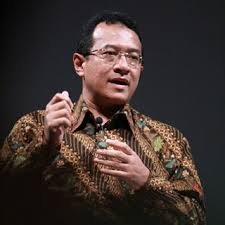 Elan Satriawan合作论文数1W. Richard Goe合作论文数1Pamela Thomas合作论文数1Marcelo E. Siles合作论文数1
 Lindon j Robison合作论文数1
 Linda Lobao合作论文数Department of Sociology, College of Arts and Sciences, The Ohio State University;School of Environment and Natural Resources, The Ohio State University1Pamela A. Monroe合作论文数1W. Trevor Brooks合作论文数1Jon M Shepard合作论文数1Constance Hardesty合作论文数1Nicole A. Bradshaw合作论文数1Donna Hess合作论文数1Dale Yi合作论文数1




