Language resources for studying doctor–patient interaction are rare, primarily due to the ethical issues related to recording real medical consultations. Rarer still are resources that involve more than one healthcare professional in consultation with a patient, despite many chronic conditions requiring multiple areas of expertise for effective treatment. In this paper, we present the design, construction and output of the Patient Consultation Corpus , a multimodal corpus of simulated consultations between a patient portrayed by an actor, and at least two healthcare professionals with different areas of expertise. As well as the transcribed text from each consultation, the corpus also contains audio and video where for each consultation: the audio consists of individual tracks for each participant, allowing for clear identification of speakers; the video consists of two framings for each participant—upper-body and face—allowing for close analysis of behaviours and gestures. Having presented the design and construction of the corpus, we then go on to briefly describe how the multi-modal nature of the corpus allows it to be analysed from several different perspectives.
This book is an introduction to the linguistic concepts of argumentation relevant for argument mining, an important research and development activity which can be viewed as a highly complex form of information retrieval, requiring high-level natural language processing technology. While the first four chapters develop the linguistic and conceptual aspects of argument expression, the last four are devoted to their application to argument mining. These chapters investigate the facets of argument annotation, as well as argument mining system architectures and evaluation. How annotations may be used to develop linguistic data and how to train learning algorithms is outlined. A simple implementation is then proposed. The book ends with an analysis of non-verbal argumentative discourse. Argument Mining is an introductory book for engineers or students of linguistics, artificial intelligence and natural language processing. Most, if not all, the concepts of argumentation crucial for argument mining are carefully introduced and illustrated in a simple manner. ISBN: 978-1-119-67104-6
The Argument Web is maturing as both a platform built upon a synthesis of many contemporary theories of argumentation in philosophy and also as an ecosystem in which various applications and application components are contributed by different research groups around the world. It already hosts the largest publicly accessible corpora of argumentation and has the largest number of interoperable and cross compatible tools for the analysis, navigation and evaluation of arguments across a broad range of domains, languages and activity types. Such interoperability is key in allowing innovative combinations of tool and data reuse that can further catalyse the development of the field of computational argumentation. The aim of this paper is to summarise the key foundations, the recent advances and the goals of the Argument Web, with a particular focus on demonstrating the relevance to, and roots in, philosophical argumentation theory.
While several taxonomies of meta-discourse exist, none clearly explains speakers’ strategies in mediation. Mediators, however, seem to rely a lot on meta-discourse to manage the argument while preserving their neutrality. This article proposes corpus analyses to detect mediation participants’ discourse strategies and highlight the role and function of a meta-discourse element – the verb ‘to say’. This article is a first step towards the elaboration of a taxonomy for the analysis of argumentative meta-discourse and brings new insights into meta-discourse in argumentative dialogues and mediation discourse in general.
Dispute mediation is a growing activity in the resolution of conflicts, and more and more research emerge to enhance and better understand this (until recently) understudied practice. Corpus analyses are necessary to study discourse in this context; yet, little data is available, mainly because of its confidentiality principle. After proposing hints and avenues to acquire transcripts of mediation sessions, this paper presents the Dispute Mediation Corpus, which gathers annotated excerpts of mediation dialogues. Although developed as part of a project on argumentation, it is freely available and the text data can be used by anyone. This first-ever open corpus of mediation interactions can be of interest to scholars studying discourse, but also conflict resolution, argumentation, linguistics, communication, etc. We advocate for using and extending this resource that may be valuable to a large variety of domains of research, particularly those striving to enhance the study of the rapidly growing activity of dispute mediation.
Illocutionary structure in real language use is intricate and complex, and nowhere more so than in argument and debate. Identifying this structure without any theoretical scaffolding is extremely challenging even for humans. New work in Inference Anchoring Theory has provided significant advances in such scaffolding which are helping to allow the analytical challenges of argumentation structure to be tackled. This paper demonstrates how these advances can also pave the way to automated and semi-automated research in understanding the structure of natural debate.
This work investigates the role of semantic clause types and modality in argumentative texts. We annotate argumentative microtexts with Situation Entity (SE) classes and additionately label the segments that contain modal verbs with their modal senses. We analyse both the correlation of SE classes and of modal verbs and senses with components of argument structures (such as premises and conclusions) and their functions (such as support and rebuttal). We find interesting tendencies in the correlations between both argument components and argumentative functions with SE types. We also see interesting distribution di↵erences of modal verbs and senses within argumentative components and functions, as well as evidence that modal senses can be helpful to distinguish conclusions and premises. We conclude that both semantic clause types as well as modal senses can be deployed for automatic recognition and fine-grained classification of argumentative text passages. NOTE: some of the material presented in this paper overlaps with [1].
We propose a dialogue game for mediation and its formalization in DGDL. This dialectical system is available as software through Arvina for automatic execution. This work expands the literature in dialectical systems, in particular those for more than two players, and shows the practical impact on mediation activity through the opportunity offered to mediators once implemented.
The contribution of this paper is theoretical foundations for dialogical argument mining, as well as initial implementation in software for dialogue processing. Automatically identifying the structure of reasoning from natural language is extremely demanding. Our hypothesis is that the structure of dialogue can yield additional clues as to argument structures that are created and cocreated. Our work has been performed using the MM2012 corpus in OVA+.
The PROSBOT project aims to improve the clinical gesture of prostate biopsy sampling through a pedagogic simulator and a robotic assistance system. The objective of the simulator is to improve the learning curve of systematic and targeted prostate biopsy acquisition through realistic simulations of the gesture and a multitude of pedagogic modules. This paper reports the developed versions of the simulator and their evaluation. The robotic assistance system, called Apollo, is a co-manipulated robotic probe holder that aims at improving the clinical gesture through several functions, amongst which are: a) locking the probe in a target position, b) providing haptic feed-back to reduce gland deformation and c) gravity compensation. Two cadaver studies have shown that the device does not negatively impact or disturb the clinical gestures (transparency), but that gravity compensation improves the ergonomics of the gesture and that the locking function helps considerably at maintaining a stable position during puncture. A clinical study is currently ongoing with the objective to prove that biopsy accuracy can be improved with the robot, both for systematic and targeted sampling. Finally, the Apollo project is in an advanced stage of industrialization and will become commercially available. The possibilities for industrialization of the simulator are currently evaluated through a follow-up study.
Mediation is an alternative dispute resolution process that is becoming more and more popular particularly in English-speaking countries. In contrast to traditional litigation it has not benefited from technological advances and little research has been carried out to make this increasingly widespread practice more efficient. The study of argumentation in dispute mediation hitherto has largely been concerned with theoretical insights. The development of argumentation theories linked to computational applications opens promising new horizons since computational tools could support mediators, making sessions quicker and more efficient. For this, we need tools for close analysis of mediation discourse in order to explore the argumentative activity in depth, and ultimately get an accurate image of how dialogues unfold in this particular context. This paper therefore aims at laying the foundations of a theory of close analysis for discourse in dispute mediation. Theories provided by the literature serve as a basis for argumentative analyses of transcripts of mediation sessions in order to deliver a clear image of the argumentative structure. Analyses of the argumentative strategies in mediation discourse will allow for the development of a dialogue protocol that can be used to develop operational models which can be embodied in software to help make the mediation process easier and more effective.
In this paper, we briefly present the objectives of Inference Anchoring Theory (IAT) and the formal structure which is proposed for dialogues. Then, we introduce our development corpus, and a computational model designed for the identification of discourse minimal units in the context of argumentation and the illocutionary force associated with each unit. We show the categories of resources which are needed and how they can be reused in different contexts.
This paper introduces OVA+, an on-line interface for the analysis of arguments. It is the result of an attempt to provide a tool relying on the Argument Interchange Format theory and Inference Anchoring Theory schemes.
Argument mining has started to yield early results in automatic analysis of text to produce representations of reason-conclusion structures. This paper addresses for the first time the question of automatically extracting such structures from dialogical settings of argument. More specifically, we introduce theoretical foundations for dialogical argument mining as well as show the initial implementation in a software for dialogue processing, and the application in corpus analysis. We combine analysis of illocutionary structure with structured argumentation frameworks as our scaffolding, and apply a combination of statistical and grammatically based analytical techniques.
Katarzyna Budzynska, Martin Pereira-Fariña, Dominic De Franco, Rory Duthie, Núria Franco-Guillén, Annette Hautli-Janisz, Mathilde Janier, Marcin Koszowy, Luana Marinho, Elena Musi, Alison Pease, Brian Plüss, Chris Reed, Jacky Visser Centre for Argument Technology, Polish Academy of Sciences, Poland Centre for Argument Technology, University of Dundee, UK Universidade de Santiago de Compostela, Spain, Griffith University, Australia University of Konstanz, Germany, University of Braśılia, Brasil Columbia University, US
AIFdb Corpora provides a facility to group Argument Interchange Format (AIF) argument maps and search for maps that are related to each other (for example, analyses of related texts.) Users can create and share corpora containing any number of argument maps from within AIFdb. By integrating with the OVA+ analysis tool, AIFdb Corpora allows for the creation of corpora compliant with both AIF and Inference Anchoring Theory, a philosophically and linguistically grounded counterpart to AIF.
 Chris Reed合作论文数Department of Computing, School of Science and Engineering, University of Dundee;Aidos Ltd;Arg Technica Ltd12
 Patrick Saint-Dizier合作论文数8
 Katarzyna Budzynska合作论文数Cardinal Stefan Wyszynski University in Warsaw6Manfred Stede合作论文数Department of Applied Computational Linguistics, Potsdam University4
 John Lawrence合作论文数3
 Juyeon Kang合作论文数3
 Mark Snaith合作论文数University of Dundee3
 Dominic De Franco合作论文数2Rory Duthie合作论文数Centre for Argument Technology,University of Dundee,Dundee,UK2
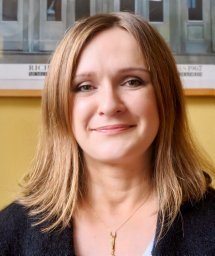 Barbara Konat合作论文数Centre for Argument Technology, University of Dundee, UK2
 Olena Yaskorska-Shah合作论文数Instytut Filozofii, University of Warmia and Mazury in Olsztyn2
 Alison Pease合作论文数School of Science and Engineering, University of Dundee2
 Pierre Mozer合作论文数1
 Gaelle Fiard合作论文数1Sonia Yuki Selmi合作论文数1Reshmashree B. Kantharaju合作论文数Institute for Intelligent Systems and Robotics, Sorbonne Université1
 Annette Hautli-Janisz合作论文数University of Konstanz1
 Brian Pluss合作论文数Univ Dundee, Ctr Argument Technol, Dundee, Scotland1
 Gerwin Huizing合作论文数University of Twente1
 Tessa Beinema合作论文数Telemed Grp, Roessingh Res & Dev, Enschede, Netherlands1
 elena musi合作论文数Univ Liverpool, England/Univ Liverpool1David Reversat合作论文数UMR 7222 INSERM U1150, Sorbonne Univ1
 Nicholas Conway合作论文数School of Medicine, University of Dundee1
 Guillaume Morel合作论文数Institut des Systèmes Intelligents et Robotique Paris France 750051
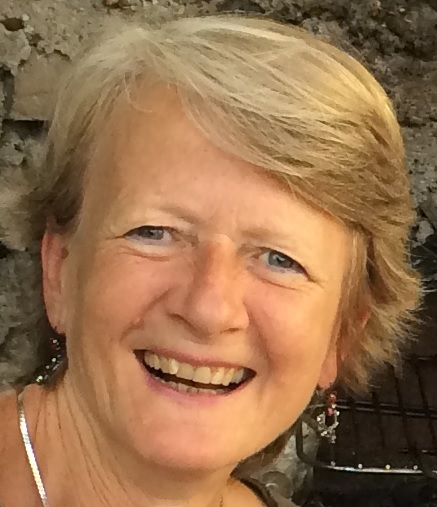 Catherine Pelachaud合作论文数Centre National de la Recherche Scientifique, Institut des Systemes Intelligents et de Robotique, University of Pierre and Marie Curie1
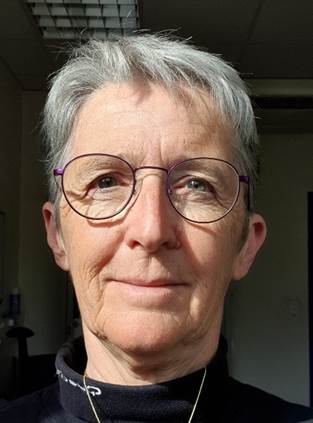 Jocelyne Troccaz合作论文数TIMC-IMAG Laboratory, CNRS1Camille Albert合作论文数1Corinne Grosse合作论文数1
 Emmanuel Promayon合作论文数Universite Joseph Fourier;Ecole Polytechnique de l'Universite Grenoble I1
 Marcin Koszowy合作论文数University of Białystok1
 Miriam Butt合作论文数University of Konstanz1
 Harm op den Akker合作论文数Roessingh Research and Development1Olena Yakorska合作论文数1Cecile Poquet Torterotot合作论文数1
 Jacky Visser合作论文数University of Amsterdam1
 Martin Pereira合作论文数Centro de Investigación en Tecnoloxías da Información (CITIUS),, Universidade de Santiago de Compostela1
 Alexandre Moreau-Gaudry合作论文数Grenoble Medical School;Center of Technological Innovation, Grenoble University Hospital;Computer-Assisted Medical Interventions Research Team, Techniques for Biomedical Engineering and Complexity Management-IMAG Laboratory, University Joseph Fourier1
 M.-A. Vitrani合作论文数Laboratoire de Robotique de Paris (LRP) 18, University of Paris 61Johan Sarrazin合作论文数1Flore Barcellini合作论文数Research Center on Work and Development1Michael Baumann合作论文数1
 Antoine Leroy合作论文数1




