This study focuses on counting the greenhouse gas emissions of the most common Finnish fish products. The selected fish species were rainbow trout (Oncorhynchus mykiss), Baltic herring (Clupea harengus membras), pikeperch (Sander lucioperca), perch (Perca fluviatilis) and vendace (Coregonus albula). Rainbow trout was farmed, and all the other fish species were captured wild fish. At the product level, this study was limited to cover fresh fillets and gutted fish (vendace). The data were collected by surveys from typical enterprises from fisheries sector, like fishermen, aquaculture and fish processing companies. The LCA methodology was used to assess the greenhouse gas emissions. Farmed rainbow trout had the highest greenhouse gas emissions with 3.7 kg CO2 eq/kg/functional unit and Baltic herring caught with fish trap had the lowest emissions with 0.7 kg CO2 eq/kg/functional unit. In average, the farmed product (rainbow trout) had higher greenhouse gas emissions than the captured species. Gillnet fishing had higher greenhouse gas emissions than the action of trawling, seine and fish traps. The main reason for the higher impact for farmed fish was feed consumption. The differences between captured fish species were caused by different distance to fishing areas and volumes of the catch. According to the results, the carbon footprint of the consumption of Finnish citizens can be lowered by using domestic captured fish.
This paper applies cost-benefit analysis to assess social and private net benefits from rainbow trout and European whitefish aquaculture under recirculating aquaculture system (RAS) and marine net cage technologies. In addition to private investment and operational costs, we include eutrophication damage from nutrients and value the fish produced by its producer price. The assessment is made in terms of annualized present value of net benefits. We find that net cage production outperforms RAS by a wide margin for rainbow trout production. For the European whitefish, RAS narrows this gap considerably, but net cage production still receives higher net benefits. We extend our discussion to the specific challenge of the Weser ruling of the EU’s Water Framework Directive, which effectively hinders expansion of aquaculture production, and examine whether one-time offsets would provide aquaculture the possibility to expand production. We find that one-time offsetting provides higher net benefits compared to not offsetting with both technologies but is easier to execute for RAS.
This article analyses the role of small-scale fisheries in the era of crises that increase fisheries’ vulnerability. Crises may also trigger a reconsideration of the value of small-scale fisheries. Thus, our main research questions are twofold: 1) How do the recent crises directly affect small-scale fisheries? and 2) What are the opportunities for reinventing the societal and environmental benefits of small-scale fisheries? Answers to the research questions are based on a selection of interviews, email inquiry, research articles and reports in the context of Finnish small-scale fisheries. By focusing on these fisheries, operated in a Northern European welfare state, we study the potential that the new turbulent and uncertain circumstances could lead to acknowledgement of the multifunctional character of small-scale fisheries. The results show that climate change, Covid-19 pandemic and Russian invasion of Ukraine have challenged the resilience of Finnish small-scale fishing livelihood, albeit moderately. The prospects for new policies triggered by these crises stem from acknowledgement of small-scale fisheries’ contribution to food security, environmental benefits and short supply chains. The best way to secure fish-based food security and sustainability during crises, is to keep the fishing sector and the production and distribution chains vital in normal conditions. We conclude that in a society like Finland the rediscovery of small-scale fisheries’ future necessitates wide societal and political discussion about the pros and cons of the livelihood, together with inclusive governance that recognizes the multifunctional roles of small-scale fisheries in the era of crises.
This study aimed to produce bioactive protein hydrolysates from undervalued fish, namely Baltic herring, and its filleting by-products. Protein hydrolysates were produced with Alcalase and Flavourzyme to achieve effective hydrolysis. The hydrolysates were evaluated for chemical composition, molecular weight distribution, antioxidant capacity, dipeptidyl-peptidase 4 (DPP4) inhibitory activity, effects on cell proliferation and surface hydrophobicity. The protein content of the hydrolysates was high, from 86% to 91% (dm), while the fat content was low, from 0.3% to 0.4% (dm). The hydrolysates showed high DPP4 inhibition activities with IC50 values from 5.38 mg/mL to 7.92 mg/mL. The scavenging activity of the hydrolysates towards DPPH was low, but an intermediate Folin–Ciocalteu reducing capacity and Cu2+ chelating ability was observed. The solid phase extraction with Sep-Pak C18 cartridges increased the DPP4 inhibition activity and antioxidant capacity, indicating peptides’ crucial role in the bioactivities. The cytotoxicity of the hydrolysates was evaluated on the HCT8, IMR90, and A549 cell lines. The hydrolysates inhibited cell growth in the cancer and normal cells, although they did not reduce cell viability and were not lethal. Overall, our results indicate that protein hydrolysates from Baltic herring have potential as health-promoting foods and nutraceuticals, especially for enhancing healthy blood glucose regulation.
Economic values of different fish traits are needed to direct breeding programs to optimize economic benefits for aquaculture industry. The aim of this article is to highlight and calculate how different traits affect the value of farmed fish supply chain. Supply chain approach is needed to calculate economic impact of fish traits because several fish traits affect costs and returns not only in fish farming but also at the processing and retail level. In this article, economic values are calculated for 14 productivity and product quality traits in European whitefish (Coregonus lavaretus). Productivity affecting traits, such as growth, mortality and different yields, are included in the study. In addition, economic values are calculated for several quality traits like fillet gaping, appearance and fat content of flesh. Productivity traits had the highest economic importance if the traits could be improved. However, quality traits may cause even higher economic losses, if the quality decreases. Thus, the management of the breeding program should pay simultaneous attention to both quality and productivity traits.
 Kaija Saarni合作论文数28Asmo Honkanen合作论文数23markus kankainen合作论文数Aquat Prod Syst, Nat Resources Inst Finland Luke22Jarno Virtanen合作论文数21
 Max Nielsen合作论文数Section for Environment and Natural Resources, Department of Food and Resource Economics, Faculty of Science, University of Copenhagen11
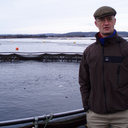 Jouni Vielma合作论文数Laukaa Fisheries Research and Aquaculture, Finnish Game and Fisheries Research Institute10Heidi Pokki合作论文数7
 Juha Koskela合作论文数Laukaa Fisheries Research and Aquaculture, Finnish Game and Fisheries Research Institute7jari niukko合作论文数6
 Rasmus Nielsen合作论文数Department of Food and Resource Economics, Faculty of Science, University of Copenhagen6
 Ayoe Hoff合作论文数Department of Food and Resource Economics, Faculty of Science, University of Copenhagen6Cecilia Hammarlund合作论文数6Susanna Airaksinen合作论文数6Staffan Waldo合作论文数6Heri a Rógvi合作论文数5
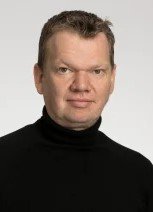 Hans Ellefsen合作论文数Univ Faroe Isl5
 Frank Asche合作论文数School of Forest, Fisheries, and Geomatics Sciences, University of Florida;School of Forestry Resources and Conservation, University of Florida;Department of Industrial Economics, University of Stavanger;Institute for Sustainable Food Systems, University of Florida5Chris Noble合作论文数5
 Dadi Kristofersson合作论文数Institute of Economic Studies, University of Iceland5
 Kristin H. Roll合作论文数Department of Industrial Economics, University of Stavanger5
 Pirjo Mattila合作论文数Natural Resources Institute Finland5ville tarkki合作论文数4Peder Andersen合作论文数4Jukka Laitinen合作论文数4Iain K Berrill合作论文数4Kari Ruohonen合作论文数4Pentti Moilanen合作论文数3Pekka Salmi合作论文数Bioeconomy and Environment Natural Resources Institute3Sunil Kadri合作论文数Aberdeen Royal Infirmary3
 Juha Grönroos合作论文数Department of Surgery, University of Turku;Division of Digestive Surgery and Urology, Turku University Hospital3Riitta Savolainen合作论文数2Unto Eskelinen合作论文数2
 Kirsi Silvennoinen合作论文数2Juhani Mellanoura合作论文数2Jaakko Hiidenhovi合作论文数2Anna-Liisa Välimaa合作论文数2Børge Damsgård合作论文数2
 Antti Kause合作论文数Natural Resources Institute Finland (Luke)2Jari Raitaniemi合作论文数2
 Oliver Schneider合作论文数2
 Hilde Toften合作论文数2
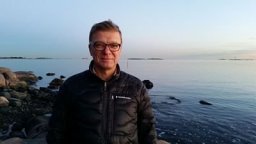 Anssi Ahvonen合作论文数Finnish Game and Fisheries Research Institute2
 Pasi Rikkonen合作论文数Agrifood Research Finland;Economic Research;Economic Research, Agrifood Research Finland2
 Timo Mäkinen合作论文数Laukaa Fish Culture Research Station, Finnish Game and Fishcries Research Institute2
 Frans Silvenius合作论文数2
 Hanna Mari Miettinen合作论文数VTT2
 James F. Turnbull合作论文数Institute of Aquaculture;University of Stirling;Institute of Aquaculture, University of Stirling2
 Cecilie Marie Mejdell合作论文数Department of Animal Health, National Veterinary Institute2Hannu Harjunpää合作论文数1




