Background and objectives: Some blood centers provide health screening as a public health measure and to encourage donation. The goal of the current study was to provide cardiovascular disease (CVD) screening to donors using high-throughput testing and web-based communications.Materials and methods: CVD risk screening was offered to donors at selected mobile drives in a large metropolitan area. Risk factors were determined by donor questionnaire, laboratory testing (total cholesterol, HDL levels and hemoglobin A1c), and blood pressure measurement.Results were reported to participants via mail and website. A 60-day follow up web-based survey was sent to participants via email to assess the impact of the program on donor's behavior. Results: 9435 donors, 17-75 years old participated with the following risk factors: 61.3% BMIs > 25, 28.8% high total cholesterol, and 31.4% lower than recommended HDL levels. 25.3% of donors that responded to the follow up survey went to see their health care provider based on screening results and 9% of these received new or modified treatment.Conclusion: In our sample, blood donors are healthier than the general population, but many still have CVD risk factors, particularly obesity. CVD screening can be successfully used to make donors aware of this important health information and some donors act on this information. (C) 2013 Elsevier Ltd. All rights reserved.
BACKGROUND: Blood centers have implemented public health initiatives, including cardiovascular disease (CVD) screening, to improve donor and community health and serve as an incentive to donate.STUDY DESIGN AND METHODS: CVD risk screening and counseling were performed at mobile blood drives in diverse neighborhoods. Risk factors were determined by point‐of‐care testing (total cholesterol, high‐density lipoprotein, and hemoglobin A1c levels), interviews, and physical examinations (body mass index, waist circumference, and blood pressure). Results were confidentially relayed to participant by health counselors. A 60‐day follow‐up survey was sent to some participants.RESULTS: Over 11 months, 2406 participants (44% male; mean age 28 ± 16; 67% minority racial/ethnic group) were screened at 290 mobile drives. A total of 92% of participants had medical insurance. A total of 14% had none, 26% one, 33% two, and 27% three or more risk factors. A total of 72% of teenage participants had at least one risk factor. A total of 18% of participants who were taking medications for risks were poorly controlled. A total of 15% had newly identified risks. A total of 711 participants completed follow‐up survey: 21% sought medical care, 51% were motivated to change their lifestyle, 81% were pleased with screening, 48% were more likely to donate, and 62% recommended donation to friends and family because of the screening.CONCLUSION: CVD risk screening and counseling can occur during a mobile blood drive. A majority of participants screened had risk factors. Follow‐up surveys showed that the program was well received. Further studies are planned to evaluate long‐term effects of the program on donor health and donor return rates.
We have developed an economical, high-throughput nucleic acid amplification test (NAT) for blood-borne viruses, suitable for use in the screening of plasma samples from individual blood donors. This assay system includes a semiautomated procedure, using 96-well glass fiber plates for the extraction of viral nucleic acids from plasma and "universal beacon" technology which permits the detection of all genotypes of highly variable viruses (e.g., human immunodeficiency virus and hepatitis C virus). In this detection system, two fluorescent- detection technologies were employed successfully in a single tube: molecular beacon for West Nile virus (WNV) detection using a 6-carboxyfluorescein fluorophore and TaqMan for internal control detection using a VIC fluorophore. To establish proof of concept, we focused on the development of a robust individual donor NAT for WNV. The assay showed no reactivity to 15 other viruses tested or to 420 blood donor samples from the WNV pre-epidemic season. No cross-contamination was observed on an alternating positive-/negative-well test. The sensitivity (limit of detection, 95%) of the assay for WNV is between 3.79 and 16.3 RNA copies/ml, depending on which material was used as a standard. The assay detected all positive blood donation samples identified by the Roche WNV NAT. The assay can be performed qualitatively for screening and quantitatively for confirmation.
Serum from 387 chimpanzees (Pan troglodytes verus), caught in the wild or bred in captivity, was tested for antibody to HIV-1 and HIV-2, using second- and third-generation enzyme immunoassays. Six samples were repeatedly positive; however, only one of these was Western blot positive. Serial sera drawn before and after the Western blot-positive samples were seronegative, and thus we conclude that this sample represented specimen contamination, or mislabeling. Thus, none of the 387 Pan troglodytes verus from West Africa were spontaneously infected with SIVcpz. Chimpanzees are known to be exquisitely susceptible to infection with HIV-1 when experimentally inoculated, and thus our findings suggest that HIV-1-related viruses do not exist in Pan troglodytes verus in the wild. As it has been convincingly shown that SIVcpz exists in wild Pan troglodytes troglodytes in Central Africa, this suggests that HIV-1 arose in Central Africa, but not in West Africa.
 C BIANCO合作论文数23D Kessler合作论文数21Strauss D合作论文数19
 Maria Fernanda Rios Manrique Rios合作论文数and the Science and Technology Laboratory, New York Blood Center9
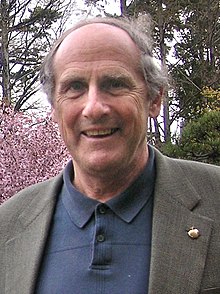 Ralph M. Steinman合作论文数Rockefeller University8E Reich合作论文数6
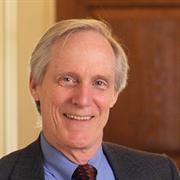 Robert Kimberly合作论文数Center for Clinical and Translational Science, School of Medicine, University of Alabama at Birmingham6
 Bernard Horowitz合作论文数Horowitz Consultants, LLC6WL Marsh合作论文数5
 Debra A Kessler合作论文数5
 James B. Bussel合作论文数Department of Pediatrics, Weill Cornell Medical College, Cornell University5Thomas G. Easton合作论文数5Bolanle Williams合作论文数5G Anderson合作论文数4T Delman合作论文数4J C Unkeless合作论文数4Sb Clarkson合作论文数4R Davey合作论文数4RL NACHMAN合作论文数4Harsha Jayakar合作论文数4C delValle合作论文数3Edward Nygren合作论文数3JL Gallarda合作论文数3
 Robert Y Lin合作论文数3PV Holland合作论文数3MJ ANZEL合作论文数3W Olivier合作论文数3
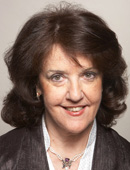 Helen Vlassara合作论文数Division of Experimental Diabetes and Aging, Icahn School of Medicine, Mount Sinai3Y Katz合作论文数3K. Hue-Roye合作论文数3
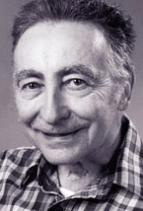 Robert Abeles合作论文数Brandeis University3Ralph H合作论文数3
 Harvey Schaffler合作论文数3
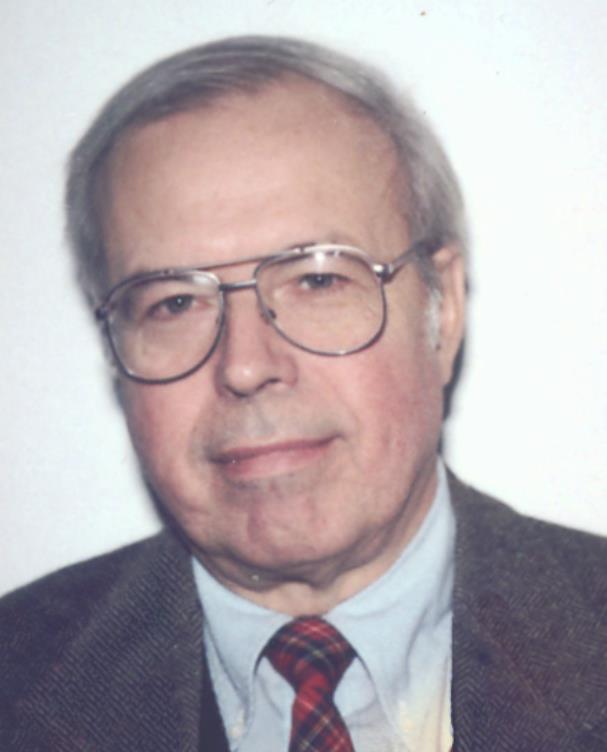 Nicholas E. Geacintov合作论文数College of Arts and Science, New York University3Michael Brownlee合作论文数3Margit D. Witmer-Pack合作论文数3Margit D. Witmer合作论文数3S Rywkin合作论文数3A Cerami合作论文数2S Galel合作论文数2S Martin-Prendergast合作论文数2J Luban合作论文数2Ns Gutgsell合作论文数2Wc Vanvoorhis合作论文数2Oc Ferreira合作论文数2Pd Issitt合作论文数2DM Strong合作论文数2Nm Ledouarin合作论文数2FG LORENZANA合作论文数2




