Existing recognition systems mostly consider the closed-set assumption, where all testing classes are to be present in the training data. Open-vocabulary learning alleviates this problem by considering test data from any class present in the vocabulary. However, it cannot recognize classes beyond vocabulary, hence it is closed in the vocabulary space. To address this problem, we propose Incomplete Vocabulary Learning, which is capable of handling novel classes beyond vocabulary by leveraging the advantages provided by the large language models. To this end, we propose IVLNet that uses a ViT backbone along with the proposed hybrid feature selection block and cross-modal attention fusion block to capture fine-grained features. For inference, we have proposed a novel pipeline to perform incomplete vocabulary learning. The performance on two large-scale fine-grained datasets showcase its ability to detect and recognize classes in and beyond vocabulary.
Electroencephalogram (EEG) representation learning facilitates automated assessment of neuro-degenerative disorders such as dementia. Deep learning models require large amounts of training data to generalize to unseen test data, which is challenging for use cases with limited annotated data. This work presents a deep network to learn generic spatio-temporal EEG representations from a large corpus with only normal or abnormal labels, to be adapted for a separate, more specialized downstream task of identifying dementia related abnormality, in a low-data regime. The proposed network comprises an encoder with multiple layers of graph convolutions to obtain graph embedding sequences, which are passed through multiple transformer layers to encode temporal context, thereby learning patterns of dynamic EEG connectivity. Experiments show that the proposed model effectively learns meaningful EEG features during pre-training, and is generalizable to the separate dementia identification task by tuning only a selected set of network weights.
Image editing using generative models has recently advanced through GAN- and diffusion-based techniques. While the current image manipulation methods shows considerable performance in general image editing, their effectiveness drops when extended to fashion attribute editing. This is due to multiple challenges such as category-specific and overlapping attributes, inherent entanglement in real-world datasets that leads to degraded editing quality and unintended attribute shifts. To address these challenges, we propose FAE-Net (Fashion Attribute Editing Network), a latent diffusion framework that leverages disentangled latent projections for precise and reliable attribute manipulation. Our method first disentangles the latent projections to mitigate the inherent entanglement in the data and then conditions the diffusion model with those projections to improve the manipulation control in the presence of overlapping attributes. The attribute presence detector in FAE-Net handles category-specific attributes and prevents invalid attribute manipulations during inference. Extensive experiments on three large-scale datasets demonstrate that our proposed method achieves more controllable, disentangled, and faithful attribute editing compared to state-of-the-art methods.
We present BrainRead, a multimodal earable system designed for continuous physiological sensing through an integrated architecture spanning signal acquisition, on-device storage and processing, and wireless communication. The platform incorporates EarEEG, EarECG, EarPPG, a 6-axis IMU, and a IR temperature sensor within earbuds, supported by a modular neckband and chestbud subsystem housing dual MCUs, power management, storage, audio interfaces, and a BLE communication module. Hardware and functional validation confirms reliable neural, cardiac, and vascular signal acquisition, including alpha attenuation response during eyes-open or closed conditions and consistent ECG and PPG morphology. These results establish BrainRead as a versatile platform for continuous, multimodal physiological assessment, suitable for non-clinical tracking with potential applications in clinical settings and research.
Multiple Instance Learning (MIL) is a useful method for extracting information from Gigapixel images using weakly supervised learning. Traditionally, it was approached with the hypothesis of considering each instance as an independent and identically distributed entity. Recently, it has been suggested that correlations between different instances would yield better results for classification. In this study, we propose that by selecting features for enhanced correlation, we aim to identify optimal characteristics that capture tumor regions both locally and from distant areas within a Whole Slide Image (WSI). This approach is designed to improve classification performance significantly. The proposed method facilitates binary classification with enhanced insights into more aggressive tumor regions. We conducted various experiments on three different computational pathology problems out of which one is classification between normal tissue and tumor and other is between different types of tumor. We achieved better results than state-of-the-art methods for tumor sub-classification. The test accuracy for tumor sub-classification on the TCGA-NSCLC dataset was 88.03
Ear-EEG offers a discreet, wearable alternative to scalp EEG, but its development is limited by the scarcity of annotated datasets. In this study, we explore deep learning models to synthesize Ear-EEG from scalp EEG. For both scalp and ear referenced Ear-EEG, we evaluate four architectures- CNN, VGG, LSTM, and a transformer-based Masked AutoEncoder (MAE)- under subject-dependent training. Performance is assessed through time-domain, frequency-domain, and correlation metrics. The MAE model achieves the highest reconstruction accuracy with scalp referencing, while LSTM best preserves spectral features. Visual and quantitative analyses confirm that scalp referencing improves prediction quality across all models. A lobe-wise ablation further reveals the temporal lobe's dominant contribution to Ear-EEG synthesis. These findings demonstrate the feasibility of data-driven Ear-EEG generation and offer a scalable strategy to augment limited datasets, supporting future development of earable neurotechnologies.
The growing prevalence of AI solutions in high-stakes decision domains, like healthcare, necessitates forgoing traditional black-box models in favor of inherently interpretable models. Self-explaining prototype-based models are an exciting research direction, and transparency is an essential desideratum for such models. However, current methods either rely on an ambiguous step of replacing learned prototypes with the nearest training data points (part prototypebased models) or are limited by relying on the joint optimization of a decoder along with the classifier to enable visualization of the actual learned prototypes (global prototype-based models). Addressing existing gaps, we propose ProtoPatchNet, an interpretable model that elucidates the model's reasoning process, traceable in terms of visualization of the 'parts' of the learned prototypes that contribute to the final prediction. We evaluate the approach for glaucoma detection on the benchmark RIM-ONE DL dataset. Results show that ProtoPatchNet achieves performance comparable to uninterpretable black-box models and global prototype-based models while surpassing existing part prototype-based baselines.
The growing use of wearable devices requires accurate and compact representations of high dimensional physiological signals. This work presents a UNet inspired autoencoder to represent and reconstruct multiple neuro-physiological signals from single channel data. The architecture comprises single-encoder/dual-branched decoders to obtain self-attention enabled compact embeddings of mixed ExG (EEG /ECG) signals through decaying encoder-decoder skip connections, for improved representation capability. The embeddings are separable into individual ExG components enabling simultaneous reconstruction of high fidelity EEG and ECG sources. The pretrained encoder can be used for a complex downstream task with minimum fine-tuning. Using the proposed method on a large corpus of single-channel mixed ExG generated from overnight Polysomnography (PSG) recordings, we show subject- and class- independent EEG/ECG reconstructions validated by multiple domain-specific metrics, and evaluate the classification performance of the encoded EEG embeddings into five sleep stages as a downstream task.
Complementary item retrieval is an important problem in e-commerce platforms that gives compatible suggestions based on pre-selected items. The user preferences are subjective and there is no ground truth label for this. Hence, this is an ill-posed problem where the definition of compatibility is specific to context. However, existing works consider datasets labelled by one-or-more annotators; hence these models are biased towards annotators preference. To address this problem, we aim to generate compatible images of target category and then perform retrieval based on user's preference without using the ground-truth positive and negative images to avoid annotator's preference. To this end, we propose a novel fashion item generation network conditioned on target category and outfit compatibility. The proposed solution enforces the generator to create the compatible latent representation of the target item. To alleviate the conditioning of target categor and outfit compatibility, we have incorporated classifier guidance and compatibility prediction module with generator. The proposed solution does not require positive and negative target image annotations and hence can be free from annotator's preference, while maintaining its variation. Use of our proposed method on two subsets of large Polyvore dataset demonstrates high image quality, variability and compatibility.
In order for an earable to function, it is necessary for the sensor electrodes within the ear to remain in constant contact with the skin. However, body movements tend to disrupt the extent of contact, leading to noisy signals being captured, which are often difficult to distinguish from a valid EEG signal. It is, therefore, important to identify which channels are capturing EEG when the data is being recorded. In this work, we present an innovative method for channel identification using the manifolds of an EEG signal. Furthermore, we test the ability of these manifolds using a clustering algorithm to classify EEG and non-EEG channels and achieve an accuracy of 87.09% for the classification. The proposed method will help enhance the performance of various applications pertaining to EEG monitoring and processing.
Segmentation and anatomical landmark detection are important tasks needed for digital planning of surgery. The accuracy of the output from these tasks greatly influence the outcome of downstream tasks such as digital templating and implant size selection. Most of the existing methods treat these tasks separately. However, they are inherently inter-related and can benefit when handled together. In this work, we propose a multi-task network which simultaneously segments and detects the anatomical landmarks in 3D images. The proposed global context aware multi-task network allows for excellent predictions even under limited data. We apply our method on 3D CT volumes of pelvis and through experimental results show that each of the tasks benefit from joint learning, thus providing better performance when compared to dedicated network for each task.
Amyloid deposition is considered as a viable biomarker for Alzheimer’s Disease(AD). It is an expensive and less used modality in clinics to study amyloid spatial distribution in brain as the purpose of amyloid imaging is limited to early detection of AD. In this work, we are proposing a novel approach to synthesise amyloid PET images from more commonly used FDG-PET. The proposed method explores the connection between amyloid deposition and associated alteration in glucose metabolism for synthesising amyloid PET using a diffusion model inspired architecture. In addition to the biological connection, proposed network is designed to learn the underlying amyloid deposition patterns with respect to age, gender and status of the disease. The proposed network synthesizes high-quality images and outperforms existing baselines. When tested on classifier trained with real images for Alzheimer’s detection, the synthesized images demonstrate only a marginal decrease in accuracy compared to the classifier tested with real images. This work validates the biological connection between the glucose metabolism and amyloid deposition.
Retail taxonomy classification provides hierarchical labelling of items and it has widespread applications, ranging from product on-boarding, product arrangement and faster retrieval. It is fundamental to both physical space as well as e-commerce. Manual processing based on meta-data was adopted and more recently, image based approaches have emerged. Traditionally, hierarchical classification in retail domain is performed using feature extractors and using different classifier branches for different levels. There are two challenges with this approach: error propagation from previous levels which affects the decision making of the model and the label inconsistency within levels creating unlikely taxonomy tree. Further, the training frameworks rely on large datasets for generalized performance. To address these challenges, we propose PMTL, a progressive multi-level training framework with logit-masking strategy for retail taxonomy classification. PMTL employs a level-wise training framework using cumulative global representation to enhance and generalize output at every level and minimize error propagation. Also, we have proposed logit masking strategy to mask all irrelevant logits of a level and enforce the model to train using only the relevant logits, thereby minimizing label inconsistency. Further, PMTL is a generalized framework that can be employed to any full-shot and few-shot learning scheme without bells and whistles. Our experiments with three datasets with varied complexity in full-shot and few-shot scenario demonstrates the effectiveness of our proposed method compared to the state-of-the-art.
Electrocardiogram (ECG) is one of the most widely used physiological signal for clinical diagnosis. It has found itself integrated in the space of wearables with capabilities to detect cardiac abnormalities. An emerging field of wearables is the concept of earables, which has gained significant traction in recent years as the ear proves capable of capturing diverse physiological signals. In this study, we design a system and validate the capture of ECG from the ear at various locations using different configurations. We further assess its usefulness in analyzing heart rate variability (HRV). We compared the ECG captured from the ear with simultaneously captured standard limb leads. Results show that ECG captured using the ears and the left hand is very similar to ECG captured using the Lead V2. HRV parameters in the spectral and non-linear domain show no significant differences between the Ear and Lead V2.
Automatic fashion attribute recognition enables retailers to address an array of applications. Usually, fashion attributes are manually input in the system by retailers, which is a time-consuming and an error prone process. To alleviate this, several existing works use traditional CNN-based backbones to recognize attributes. These backbones generate attribute embeddings that are entangled in the feature space. Existing methods that generate disentangled attribute embedding do not explicitly specify the location of attributes, and often extract features from irrelevant regions. This directly impacts the quality of downstream tasks. To alleviate this problem, we have proposed a novel framework to extract location-aware attribute representation using localization maps created from fashion landmarks. These localization maps highlight regions of interest in an image, aiding localized attribute feature extraction. Moreover, we have proposed a novel fusion module to effectively select important features from the global representation of an image to enhance the local features of the attribute. These attribute embeddings are then used in downstream applications such as attribute recognition, hierarchical taxonomy classification, and retrieval with two large-scale datasets. Using the proposed model, we observe improvement in performance from the state-of-the-art by a significant margin.
Glaucoma remains one of the leading causes of irreversible blindness, its timely detection being imperative to avoiding permanent visual impairment. Deep learning methods offer a solution for early detection of Glaucoma by reducing the need for manual labor at screening stages. Hence, numerous automated methods have been proposed to assist experts in diagnosing Glaucoma from fundus images. However, the sole focus on increasing the accuracy of predictions has resulted in a lack of trust due to the blackbox nature of such models. Similar sentiment across multiple high-stakes decision domains has led to a growing demand for replacing black-box models with glass-box ones. In this work, we propose an inherently explainable model that 1.) learns class-specific prototypes, which capture the general characteristics or concepts of the pathology, 2.) uses the actual visualized prototypes in the decision-making process by computing the similarity between them and the query image, as a result revealing the underlying model’s reasoning process, 3) is end-to-end optimizable. Moreover, the proposed approach does not require joint training of the classification models with decoders for visualization of the prototypes, simplifying the overall training process. Experimental results demonstrate that our proposed approach achieves comparable performance with its black-box counterparts and outperforms the state-of-the-art baseline, both quantitatively and qualitatively, on the benchmark RIMONE DL dataset.
Scientific objectives from earth observation to astronomy require high-resolution observations from space-based platforms. However, designing space telescopes with large primary apertures to achieve high-resolution and high Signal-to-Noise Ratio observations, especially for those operating in longer wavelengths (like Thermal Infrared, TIR), is not feasible due to difficulties in manufacturing, launching, and post-deployment stabilizing. This work proposes three novel lightweight, optically-sparse (also known as partially-filled) mirrors with non-uniform sub-aperture sizes. These designs reduce the mass of the primary mirror and its supporting framework. The crux of these designs is, however, significant suppression of sidelobes in the resulting Point Spread Functions (PSFs). The study includes restored images and image quality indices, demonstrating the effectiveness of such lightweight unequal sub-apertures as replacements for large monolithic mirrors with only a marginal loss in performance.
Tracking of inventory and rearrangement of misplaced items are some of the most labor-intensive tasks in a retail environment. While there have been attempts at using vision-based techniques for these tasks, they mostly use planogram compliance for detection of any anomalies, a technique that has been found lacking in robustness and scalability. Moreover, existing systems rely on human intervention to perform corrective actions after detection. In this paper, we present Co-AD, a Concept-based Anomaly Detection approach using a Vision Transformer (ViT) that is able to flag misplaced objects without using a prior knowledge base such as a planogram. It uses an auto-encoder architecture followed by outlier detection in the latent space. Co-AD has a peak success rate of 89.90% on anomaly detection image sets of retail objects drawn from the RP2K dataset, compared to 80.81% on the best-performing baseline of a standard ViT auto-encoder. To demonstrate its utility, we describe a robotic mobile manipulation pipeline to autonomously correct the anomalies flagged by Co-AD. This work is ultimately aimed towards developing autonomous mobile robot solutions that reduce the need for human intervention in retail store management.
 Marimuthu Palaniswami合作论文数Department of Electrical and Electronic Engineering, Melbourne School of Engineering, University of Melbourne66
 Balamuralidhar Purushothaman合作论文数35
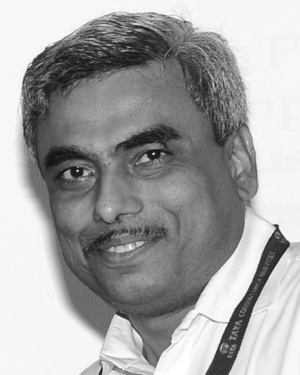 Arpan Pal合作论文数30
 Aravinda Sridhara Rao合作论文数Department of Electrical and Electronic Engineering, School of Electrical, Mechanical and Infrastructure Engineering, Faculty of Engineering and Information Technology, The University of Melbourne22
 Slaven Marusic合作论文数Aurecon19
 Aparna Kanakatte合作论文数TCS Res & Innovat12Akshaya Ramaswamy合作论文数Tata Consultancy Services11Reddy, K.P.K.合作论文数Dept. of Electr. Eng., Indian Inst. of Technol. Madras;c;Dept. of Electr. Eng., Indian Inst. of Technol. Madras11
 Bernard Yan合作论文数Department of Radiology, The Royal Melbourne Hospital9
 Ahsan H. Khandoker合作论文数Department of Electrical & Electronic Engineering, The Universityof Melbourne9
 Gaurab Bhattacharya合作论文数Embedded Devices and Intelligent Systems, TCS Research, India8
 Kartik Muralidharan合作论文数Software Engineering and Technology Labs, Infosys Technologies Ltd8
 Vartika Sengar合作论文数TCS Res, Embedded Devices & Intelligent Syst, Gurgaon, India7Bagya Lakshmi V合作论文数7
 Michael Parker合作论文数Department of Biochemistry and Pharmacology, The University of Melbourne;St Vincent’s Institute of Medical Research7Viswanath P. Sudarshan合作论文数6A Adarsh合作论文数6
 Karthik Seemakurthy合作论文数Applied AGI Limited6
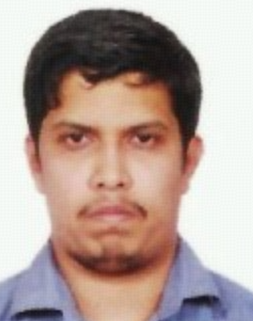 B.S. Vivek合作论文数Tata Consultancy Services6Alistair Shilton合作论文数Applied Artificial Intelligence Institute, Deakin University6Nikhil Kilari合作论文数5
 Ashley Varghese合作论文数tata consultancy services5
 Prabhakar Krishnamurthy合作论文数Rajah Muthiah Medical College and Hospital, Annamalai University5
 Chandan Karmakar合作论文数Department of Electrical and Electronic Engineering, University of Melbourne5
 Avik Ghose合作论文数TCS Research Innovation5
 Ramesh Kumar Ramakrishnan合作论文数TCS Research and Innovation4
 Tomas Kron合作论文数Peter MacCallum Cancer Centre4
 Murali Poduval合作论文数4
 Terry O’Brien合作论文数Department of Medicine, Faculty of Medicine, Dentistry and Health Sciences, Monash University;Department of Neuroscience, School of Translational Medicine, Monash University4
 David Binns合作论文数European Bioinformatics Institute4
 Sutharshan Rajasegarar合作论文数Deakin Cyber Research and Innovation Centre, School of Information Technology, Faculty of Science Engineering and Built Environment, Deakin University;Data Analytics Research Lab, School of Information Technology, Faculty of Science Engineering and Built Environment, Deakin University4Nallasamy Mani合作论文数4
 Achanna Anil Kumar合作论文数3Veera Harikrishna Nukala合作论文数TCS Innovat Labs, Bengaluru, India3
 Nijil George合作论文数Indian Institute of Technology Bombay3Mohana Singh合作论文数3
 Vighnesh Vatsal合作论文数Cornell Univ, Sibley Sch Mech & Aerosp Engn, Ithaca, NY 14850 USA3
 Aditya Kapoor合作论文数Robotics Institute, Carnegie Mellon University3Fu-Chun Hsu合作论文数3
 Shitanshu Kusmakar合作论文数3
 Dheeraj Kumar合作论文数Department of Mining Engineering, Indian Institute of Technology Dhanbad3
 Rajkumar Buyya合作论文数Cloud Computing and Distributed Systems Laboratory, School of Computing and Information Systems, The University of Melbourne3
 Tuan Ngo合作论文数Department of Infrastructure Engineering, Faculty of Engineering and Information Technology, The University of Melbourne3
 Yee Wei Law合作论文数Department of Electrical and Electronic Engineering, The University of Melbourne3Divya Bhatia合作论文数2Kuruvilla Abraham合作论文数2Amagond Biradar合作论文数2
 Abhranila Das合作论文数TCS Res, Embedded Devices & Intelligent Syst, Bengaluru, India2Meghana S合作论文数2