We present test data for a solid ZnSe air gapped etalon with free spectral range 3 cm-1 and finesse >70 (i.e., spectral resolution <0.043 cm-1). We present an instrument concept, the Tropopsheric Ozone Sounding (TOS) Dual Etalon Cross Tilt Order Sorting Spectrometer (DECTOSS), that would use an etalon like this to acquire nadir data at resolution <0.06 cm-1 and signal to noise the order 1000 on a range from 1036 to 1071 cm-1 in footprints with crosstrack dimension selectable (e.g., the order tens to hundreds of km), and with along track dimension the order 17 km. Instrument accommodation is the order 25 kg, 110 W and 1 mbps. We present linear error analysis for retrieval of tropospheric ozone from the data acquired by the TOS-DECTOSS. Indication is that more than 2.5 vertical layers of information on tropospheric information are retrievable. An example of the deployment of the TOS-DECTOSS would be as an instrument of opportunity (IOO) add on to the US National Polar-orbiting Operational Environmental Satellite System (NPOESS). The huge advantage of the TOS-DECTOSS as compared with UV techniques for tropospheric ozone measurement is that it the can be used both day and night, the latter is not possible in the UV. The considerable advantage in signal to noise compared with a Fourier Transform Spectrometer (FTS) for tropospheric ozone measurement, on considering that for a given footprint the DECTOSS and FTS integration times are comparable, is that the DECTOSS noise per spectral sample is dominated by statistical fluctuations of signal photons that are passed through its narrow 0.06 cm-1 bandpass, while for a similar FTS spectral sample the noise is due to fluctuations of the signal photons through the FTS bandpass of tens of cm-1. The TOS-DECTOSS signal to noise advantage on the FTS is also enhanced in that the spectral sample density of the TOS-DECTOSS data is more than one hundred times larger than for the FTS.
The Dual Etalon Cross Tilt Order Sorted Spectrometer (DECTOSS) uses relatively inexpensive off the shelf components in a small and simple package to provide ultra high spectral resolution over a limited spectral range. For example, the modest first try laboratory test setup DECTOSS we describe in this presentation achieves resolving power similar to 10(5) on a spectral range of about 1 nm centered near 760 nm. This ultra high spectral resolution facilitates some important atmospheric remote sensing applications including profiling cirrus and/or aerosol above bright reflective surfaces in the O-2 A-band and the column measurements of CO and CO2 utilizing solar reflectance spectra. We show details of the how the use of ultra high spectral resolution in the O-2 A-band improves the profiling of cirrus and aerosol. The DECTOSS utilizes a Narrow Band Spectral Filter (NBSF), a Low Resolution Etalon (LRE) and a High Resolution Etalon (HRE). Light passing through these elements is focused on to a 2 Dimensional Array Detector (2DAD). Off the shelf, solid etalons with airgap or solid spacer gap are used in this application. In its simplest application this setup utilizes a spatially uniform extended source so that spatial and spectral structure are not confused. In this presentation well show 2D spectral data obtained in a desktop test configuration, and in the first try laboratory test setup. These were obtained by illuminating, a Lambertian screen with (1) monochromatic light, and (2) with atmospheric absorption spectra in the oxygen (O-2) A-. band. Extracting the 1D spectra from these data is a work in progress and we show preliminary results compared with (1) solar absorption data obtained with a large Echelle grating spectrometer, and (2) theoretical spectra. We point out areas for improvement in our laboratory test setup, and general improvements in spectral range and sensitivity that are planned for our next generation field test setup.
The Waves middle class Explorer mission (WE) is proposed to observe and quantify the effects of small-scale internal Gravity Waves (GW) in the Earth's atmosphere from source regions in the troposphere and lower stratosphere to the mesosphere, lower thermosphere, and ionosphere (MLTI) where the GW have their most dramatic effects. These are now understood to be a key element in defining large-scale circulation, thermal and constituent structures, and variability of the stratosphere and MLTI. The WE instrumentation consists of 5 nadir and limb viewing sensors of the wave perturbed emission structure due to GW throughout the source and affected regions. The WE PI is Prof. G.R. Swenson. This paper addresses the measurement strategy and implementation for two of these instruments, the Source Wave And Propagation Imager (SWAPI), and the Hydroxyl Airglow Wave Imager (HAWI). The SWAPI uses multi-spectral sublimb imaging measurements in the CO2 nu(3) band near 4210 nm to identify GW sources, and their propagation through the stratosphere. Its measurement strategy is driven by data, particularly sublimb images in the CO2 nu(3) band that were obtained by instrumentation deployed on the Midcourse Space Experiment (MSX) satellite, and by the WE team member's data analysis and models. Similarly team member's ground based observational experience and data analysis drives the HAWI measurement strategy.
For IR detectors that require cooling to temperatures lower than viable by passive radiative cooling, the mechanical refrigerator is an attractive alternative to expendable cryogen. It provides dramatic reduction in mass, and increased lifetime. For very low noise detectors, there may be some concern that mechanical cooler operation could provide an additional significant detector noise source. Here at LMAATC we have developed a mini-cooler for space borne application, a Stirling compressor driving a pulsetube, and have conducted test to determine if it would induce significant additional noise no cooling a low noise Mie HgCdTe 2D detector array with 3800 nm cutoff. We set up to cool the detector with our mini-cooler, and measure the noise with the cooler running, and with it turned off. We found that cooler operation increased noise barely perceptibly over the cooler off case. We will present implications for our planned space borne instrument, the Source Wave and Propagation Imager. It is an imaging spectrometer that will obtain measurements just below the limb in the 4180 to 4250 nm region of the CO2 band. Tropospheric production of atmospheric internal gravity waves, and their subsequent propagation through stratospheric will be retrieved from these data.
Passive radiative cooling is desirable for space borne detectors because it is generally cheaper, less massive and power consumptive than cooling by a mechanical refrigerator or expendable cryogens. Our interest is space borne nadir imaging the OH airglow in Q-branch features of the 9->6 band at similar to 1382.3 rim, and the 2->0 band at similar to 1434.4 nm with sufficient signal to noise (S/N) to quantitatively retrieve wave structure. Low noise 256 X 256 - 40 micrometer pitch HgCdTe detector arrays are available for our application. E.g., the Rockwell Science Center (RSC) standard 2.5 mum PACE(1) product bonded on to the PICNIC read out mux satisfies our high sensitivity and low read noise requirements, but would require a mechanical refrigerator or expendable cryogen to cool sufficiently (to about 80K) to satisfy our dark current requirement (< 50e/s/pixel). To demonstrate an option that would provide our required performance at viable passive radiative cooling temperature, we have procured examples of the more recent RSC double layer planar heterogeneous (DLPH) HgCdTe 2-D arrays with shorter wavelength cutoff and produced by molecular beam epitaxy (MBE) on a CdZnTe substrate, and bonded to the PICNIC mux. Here we describe our test procedures and results that these at relatively warm temperature, the order 160 to 170K, satisfy the requirements for our OH airglow wave imaging application. We describe an instrument model and observational operations to observe the OH airglow wave structure with signal to noise (S/N) > 100.
 Ae Roche合作论文数88J. L. Mergenthaler合作论文数65
 Richard L. Rairden合作论文数19John C Gille合作论文数18Joe W. Waters合作论文数17
 Steven Massie合作论文数Laboratory for Atmospheric and Space Physics, University of Colorado Boulder;Atmospheric Chemistry Division, National Center for Atmospheric Research15L. W. Sterritt合作论文数12Peter L Bailey合作论文数12
 Lucien Froidevaux合作论文数Jet Propulsion Laboratory, National Aeronautics and Space Administration11W. G. Uplinger合作论文数11
 F.W. Taylor合作论文数University of Oxford10roger w nightingale合作论文数9T. C. James合作论文数8M. R. Gunson合作论文数8J. F. Potter合作论文数8
 Gloria Manney合作论文数NorthWest Research Associates;Department of Physics, New Mexico Institute of Mining and Technology8G. A. Ely合作论文数8thomas c james合作论文数7
 James M. Russell III合作论文数Center for Atmospheric Sciences, Hampton University7
 Robert B. Chatfield合作论文数NASA Ames Research Center7William Lahoz合作论文数Department of Meteorology, University of Reading;The Data Assimilation Research Centre, University of Reading7
 David Edwards合作论文数Atmospheric Chemistry Observations & Modeling Lab, National Center for Atmospheric Research7rs harwood合作论文数6a oneill合作论文数6Geoffrey C. Toon合作论文数6Peter S. Connell合作论文数6S. R. Kawa合作论文数6
 William G. Read合作论文数6Mc Abrams合作论文数5
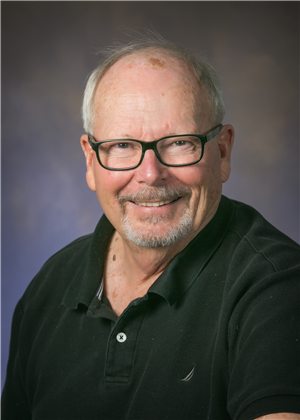 Gary R Swenson合作论文数Department of Electrical and Computer Engineering, The Grainger College of Engineering, University of Illinois at Urbana-Champaign5
 Andrew Dessler合作论文数Texas Center for Extreme Weather, Texas A&M University;Department of Atmospheric Sciences, College of Arts & Sciences, Texas A&M University5David B. Considine合作论文数Joint Center for Earth System Science, University of Maryland5Alyn Lambert合作论文数5
 Don Grainger合作论文数Department of Physics, University of Oxford5J.J. Remedios合作论文数5
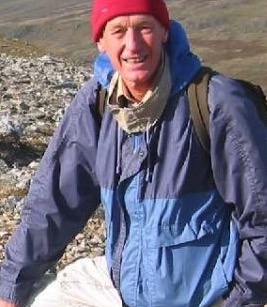 Clive D. Rodgers (Clive Rodgers)合作论文数Jesus College, University of Oxford5w e shenk合作论文数5
 Richard Swinbank合作论文数5bruce steakley合作论文数4
 Richard Zurek合作论文数Jet Propulsion Laboratory, Earth and Space Sciences Division, California Institute of Technology4A. Goldman合作论文数Department of Physics and Astronomy University of Denver4B. Sen合作论文数4A. T. Stair合作论文数4J.-F. Blavier合作论文数4M. Y. Danilin合作论文数4Robert D. Sears合作论文数4T.C. Nast合作论文数4L. V. Lyjak合作论文数4joel susskind合作论文数3




