Les systèmes vivants, y compris les végétaux, peuvent être une source d'inspiration pour concevoir des robots. Quels sont les apports de cette bio-inspiration mais quelles en sont également les limites ?
We describe a novel algorithm for texture discrimination which we tested on a robot using an artificial whisker system. Experiments on both fixed head and mobile platform have shown that this system is efficient and robust, with greater behavioral capacities than previous similar approaches, thus, demonstrating capabilities to complement or supply vision. Moreover, results tends to show that the length and number of whiskers may be an important parameter for texture discrimination. From a more fundamental point of view these results suggest that two currently opposing hypotheses to explain texture recognition in rats, namely the "kinetic signature hypothesis" and the "resonance hypothesis", may be, in fact, complementary.
We endowed a whiskered robot with a simple algorithm allowing to discriminate textures. Its efficiency and robustness have been demonstrated using both a fixed head and a mobile platform. Comparatively to previous similar approaches, this system affords greater behavioral capacities and proves to be able to complement or supply vision in simple navigation tasks. The corresponding results suggest that the length and number of the whiskers involved play a role in texture discrimination. They also suggest that two hypotheses that are currently considered as mutually exclusive to explain texture recognition in rats - i.e., the "kinetic signature hypothesis" and the "resonance hypothesis" - may be, in fact, complementary.
Humans have modeled their technology on nature for centuries. The inventor of paper was inspired by a wasps nest; Brunelleschi demonstrated the principles of his famous dome with an egg; a Swiss company produced a wristwatch with an alarm modeled on the sound-producing capabilities of a cricket. Today, in the era of the new bionics, engineers aim to reproduce the speed and maneuverability of the red tuna in a submarine; cochlear implants send sound signals to the auditory nerve of a hearing-impaired person; and robots replicate a babys cognitive development. How to Catch a Robot Rat examines past, present, and future attempts to apply the methods and systems found in nature to the design of objects and devices. The authors look at natural technology transfers: how the study of nature inspired technological breakthroughsincluding the cricket-inspired watch; Velcro, which duplicates the prickly burrs of a burdock flower; and self-sharpening blades that are modeled on rats self-sharpening teeth. They examine autonomous robots that imitate animals and their behaviorsfor example, the development of an unmanned microdrone that could fly like an albatross. And they describe hybrids of natural and artificial systems: neuroprostheses translating the thought of quadriplegics; and a nanorobot controlled by muscle cells. Some of the ideas described have outstripped technologys capacity to realize them; nature has had more than three billion years to perfect its designs, humankind not quite so long.
We propose an integrated model of the saccadic circuitry involved in target selection and motor command. It includes the Superior Colliculus and the Basal Ganglia in both cortical and subcortical loops. This model has spatial and feature-based learning capabilities which are demonstrated on various saccade tasks on a robotic platform. Results show that it is possible to learn to select saccades based on spatial information, feature-based information and combinations of both, without the necessity to explicitly pre-define eye-movement strategies.
Audition and touch endow spectral processing abilities allowing texture recognition and discrimination. Rat whiskers sensory system exhibits, as the cochlea, resonance property decomposing the signal over frequencies. Moreover, there exists strong psychophysical and biological interactions between auditory and somatosensory corteces concerning texture analysis. Inspired by these similarities, this paper introduce a ”supramodal” model allowing both vibrissa tactile and auditory texture recognition. Two gammatone based resonant filterbanks are used for cochlea and whiskers array modeling. Each filterbank is then linked to a feature extraction algorithm, inspired by data recorded in the rats barrel cortex, and finally to a multilayer perceptron. Results clearly show the ability of the model for texture recognition in both auditory and tactile tuning. Moreover, recent studies suggest that this resonance property plays a role in texture discrimination. Experiments presented here provide elements in the direction of this resonance hypothesis.
According to experimental evidence, spatial navigation planning is likely to rely upon a distributed neural network spanning limbic and cortical brain structures. This network includes (i) the hippocampus, which mediates robust spatial representations, and (ii) neocortical structures, such as the prefrontal cortex, which participate to the elaboration of more abstract contextual descriptions (e.g., accounting for motivation-dependent memories and action cost/risk constraints). In order to investigate this working hypothesis, we model the interaction between the hippocampus [1] and the prefrontal cortex [2]. We focus on the cortical columnar organisation to study a neuromimetic architecture suitable for spatial navigation planning. We validate the system’s learning performance on a classical spatial behavioural task, the Tolman & Honzik’s detour protocol [3], which suggests that rodents can plan flexible goal-directed trajectories in the presence of blocked pathways. We also put forth a set of statistical analysis to assess the spatial coding properties of the model hippocampal place and cortical column cells. Here, we couple our hippocampal place cell [1] and columnar cortical [2] models to provide a better understanding of the dynamics of the action planning neural network. We also improve the biological plausibility of the cortical model, by explicitly identifying the subpopulations of (rate code) neurones that encode different information (e.g., current spatial state, goal-related and prospective memory signals, local actions). This approach has several advantages: (i) the response of each subpopulation being more specific, it makes it possible to perform a series of analyses of multiple neural activity correlates; (ii) the functioning of the columnar assembly can be formalised within the reinforcement learning framework, which proved to be relevant to the understanding of goalrelated neural activities [4]; (iii) the biological plausibility of the model being enhanced, the discharges of formal units can be compared against experimental data (e.g., electrophysiological recordings [5,6]), and give rise to testable predictions. The spatial planning model reproduces the experimental results by Tolman & Honzik [3]. It also unravels the possible links between the single unit level and the behavioural level relevant to the learning of the task (e.g., to the selection of the shortest path to the reward, and to the prediction of future state sequences). Finally, our neural response analysis suggests how the interplay between the model hippocampus and the prefrontal cortex can yield to the encoding of manifold information pertinent to the spatial planning function (e.g., prospective and distance-togoal correlates).
This article describes the elastomer-based whisker system that has been implemented in the artificial rat Psikharpax. The corresponding system calls upon two arrays of 33 whiskers each, which mimic as closely as possible the organization of a rat's vibrissae. The capacity of each whisker to perform texture discrimination is demonstrated. However, it is suggested that such task and others like object recognition should be performed in a much more efficient and robust manner should the whole whisker array be called on.
Visual localization and mapping for mobile robots has been achieved with a large variety of methods. Among them, topological navigation using vision has the advantage of offering a scalable representation, and of relying on a common and affordable sensor. In previous work, we developed such an incremental and real-time topological mapping and localization solution, without using any metrical information, and by relying on a Bayesian visual loop-closure detection algorithm. In this paper, we propose an extension of this work by integrating metrical information from robot odometry in the topological map, so as to obtain a globally consistent environment model. Also, we demonstrate the performance of our system on the global localization task, where the robot has to determine its position in a map acquired beforehand.
The Animals to Animats Conference brings together researchers from ethology, psychology, ecology, artificial intelligence, artificial life, robotics, engineering, and related fields to further understanding of the behaviors and underlying mechanisms that allow natural and synthetic agents (animats) to adapt and survive in uncertain environments. The work presented focuses on well-defined models--robotic, computer-simulation, and mathematical--that help to characterize and compare various organizational principles or architectures underlying adaptive behavior in both natural animals and animats.
In robotics, appearance-based topological map building consists in infering the topology of the environment explored by a robot from its sensor measurements. In this paper, we propose a vision-based framework that considers this data association problem from a loop-closure detection perspective in order to correctly assign each measurement to its location. Our approach relies on the visual bag of words paradigm to represent the images and on a discrete Bayes filter to compute the probability of loop-closure. We demonstrate the efficiency of our solution by incremental and real-time consistent map building in an indoor environment and under strong perceptual aliasing conditions using a single monocular wide-angle camera.
After having stressed the difference between bio-inspired and biomimetic robots, this chapter successively describes bio-inspired morphologies, sensors, and actuators. Then, control architecture that, beyond mere reflexes, implement cognitive abilities like memory or planning, or adaptive processes like learning, evolution and development are described. Finally, the chapter also reports related works on energetic autonomy, collective robotics, and biohybrid robots.
 Agnès Guillot合作论文数Laboratoire d'Informatique de Paris;Université Paris;Laboratoire d'Informatique de Paris, Université Paris28
 Stephane Doncieux合作论文数ISIR/UPMC23
 Stewart W Wilson合作论文数21
 Maja J Matarić合作论文数Department of Computer Science, Viterbi School of Engineering, University of Southern California;Embodied13
 Pattie Maes合作论文数Media Laboratory, School of Architecture and Planning, Massachusetts Institute of Technology13
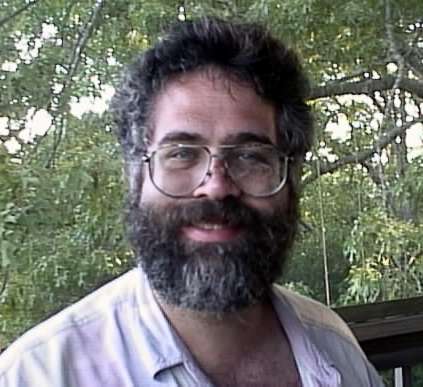 Jordan B. Pollack合作论文数Computer Science Department, Volen Center for Complex Systems, Brandeis University13
 David Filliat合作论文数Agence Ministérielle pour l'IA de Défense12
 Dario Floreano合作论文数Laboratory of Intelligent Systems, Swiss Federal Institute of Technology Lausanne9Jérôme Kodjabachian合作论文数Boulevard de l'Hôpital9
 Jean-Baptiste Mouret合作论文数Institut National de Recherche en Informatique et en Automatique8
 Patrick Pirim合作论文数8Gillian Hayes合作论文数6
 Alain Berthoz合作论文数Laboratoire de Physiologie de la Perception et de l'Action6
 Benoit Girard合作论文数Institut des Systèmes Intelligents et de Robotique, Université Pierre et Marie Curie-Paris 66
 Aude Billard合作论文数Learning algorithms and systems Laboratory, EPFL5
 Auke Jan Ijspeert合作论文数Institute of Bioengineering, Ecole Polytechnique Fédérale de Lausanne5
 Sethu Vijayakumar合作论文数School of Informatics, University of Edinburgh;Edinburgh Centre for Robotics5
 Stefan Schaal合作论文数Intrinsic;SKS Autonomous Systems5
 Adrien Angeli合作论文数5Laurent Muratet合作论文数5Bruce Blumberg合作论文数4
 Steve N'Guyen合作论文数Institut des Systèmes Intelligents et de Robotique, Université Pierre et Marie Curie-Paris 64
 Rolf Pfeifer合作论文数Artificial Intelligence Laboratory, Department of Informatics, University of Zurich4Olivier Trullier合作论文数3
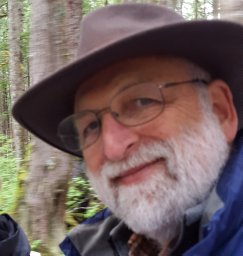 Herbert Roitblat合作论文数University of Hawaii3
 John Hallam合作论文数Embodied Systems Unit, Centre for BioRobotics, Maersk Institute, University of Southern Denmark3
 Angelo Arleo合作论文数UMR, UPMC Univ Paris 63
 Louis-Emmanuel Martinet合作论文数UMR 7102, UPMC Univ Paris 6;UMR 7102, CNRS;ISIR, UPMC Univ Paris 6;UPMC Univ Paris 6, UPMC Univ Paris 63Pr Territo合作论文数2D. McKinzie合作论文数2J. Horn合作论文数2monique laberge合作论文数2
 James A Monn合作论文数2
 Emmanuel de Margerie合作论文数Univ Rennes 1, CNRS, UMR Ethol Anim & Humaine 6552, Rennes, France2
 Paul Territo合作论文数Department of Radiology and.2
 R.B Benosman合作论文数Meta2Loic Lacheze合作论文数2
 Mehdi Khamassi合作论文数CNRS, Collège de France2S. Gourichon合作论文数2Benjamin Fouque合作论文数2
 Jean Yves Donnart合作论文数2
 Alexis Dragoul合作论文数Institute of Research for Development;ACROSS International Joint Laboratory2
 Samuel Landau合作论文数ZenIT Consulting2Renaud Barate合作论文数2
 Jean-Baptiste Passot合作论文数UMR 7102, UPMC Univ Paris 62Jaime Peters合作论文数2A. R. Masters合作论文数1suzanne menzel合作论文数1c m siedell合作论文数1




