InGaAs/InP-based negative-feedback avalanche diodes (NFADs) have been demonstrated to be an excellent option for photon detection at telecom wavelengths in quantum communication applications, where photon arrival times are random. However, it is well-known that the operation of NFADs at low temperatures (193 K or below) is crucial to minimize the effects of afterpulsing and high dark count rates (DCRs). In this work, we present a new versatile readout electronics system with active afterpulse suppression that also offers flexible cooling options. Through the characterization of two NFAD detectors from Princeton Lightwave, Inc. and a thorough evaluation of our electronics’ performance under various operating conditions, we demonstrate the effectiveness of this readout system in improving the performance of NFAD-based photon detectors. At the optimal bias for NFADs, our electronics were able to significantly reduce the afterpulsing probability by a factor of 200 for dead times ranging from 5 to 20 µs following each detection event. This helps to keep the total DCRs at around 100 counts per second or less for a 20 µs hold-off time. The versatility of our detection system makes NFADs a cost-effective alternative to more complex detectors, such as superconducting nanowire single-photon detectors, in the research of long-distance quantum communications and low-noise single photon detectors at telecommunication wavelengths.
For quantum communications, the use of Earthorbiting satellites to extend distances has gained significant attention in recent years, exemplified in particular by the launch of the Micius satellite in 2016. The performance of applied protocols such as quantum key distribution (QKD) depends significantly on the transmission efficiency through the turbulent atmosphere, which is especially challenging for ground-to-satellite uplink scenarios. Adaptive optics (AO) techniques have been used in astronomical, communication, and other applications to reduce the detrimental effects of turbulence for many years, but their applicability to quantum protocols, and their requirements specifically in the uplink scenario, is not well established. Here, we model the effect of the atmosphere on link efficiency between an Earth station and a satellite using an optical uplink and how AO can help recover from loss due to turbulence. Examining both low Earth orbit and geostationary uplink scenarios, we find that a modest link transmissivity improvement of about 3 dB can be obtained in the case of a coaligned downward beacon, while the link can be dramatically improved, up to 7 dB, using an offset beacon, such as a laser guide star. AO coupled with a laser guide star would thus deliver a significant increase in the secret key generation rate of the QKD ground-to-space uplink system, especially as reductions of channel loss have a favourably nonlinear key-rate response within this high-loss regime.
Abstract Owing to physical orientations and birefringence effects, practical quantum information protocols utilizing optical polarization need to handle misalignment between preparation and measurement reference frames. For any such capable system, an important question is how many resources – for example, measured single photons – are needed to reliably achieve alignment precision sufficient for the desired quantum protocol. Here, we study the performance of a polarization-frame alignment scheme used in prior laboratory and field quantum key distribution (QKD) experiments by performing Monte Carlo numerical simulations. The scheme utilizes, to the extent possible, the same single-photon-level signals and measurements as for the QKD protocol being supported. Even with detector noise and imperfect sources, our analysis shows that only a small fraction of resources from the overall signal – a few hundred photon detections, in total – are required for good performance, restoring the state to better than 99% of its original quality.
The Hong-Ou-Mandel (HOM) effect ranks among the most notable quantum interference phenomena, and is central to many applications in quantum technologies. The fundamental effect appears when two independent and indistinguishable photons are superimposed on a beam splitter, which achieves a complete suppression of coincidences between the two output ports. Much less studied, however, is when the fields share coherence (continuous-wave lasers) or mode envelope properties (pulsed lasers). In this case, we expect the existence of two distinct and concurrent HOM interference regimes: the traditional HOM dip on the coherence length time scale, and a structured HOM interference pattern on the pulse length scale. We develop a theoretical framework that describes HOM interference for laser fields having arbitrary temporal waveforms and only partial overlap in time. We observe structured HOM interference from a continuous-wave laser via fast polarization modulation and time-resolved single photon detection fast enough to resolve these structured HOM dips.
Despite its widespread use in fiber optics, encoding quantum information in photonic time-bin states is usually considered impractical for free-space quantum communication as turbulence-induced spatial distortion impedes the analysis of time-bin states at the receiver. Here, we demonstrate quantum key distribution using time-bin photonic states distorted by turbulence and depolarization during free-space transmission. Utilizing a novel analyzer apparatus, we observe stable quantum bit error ratios of 5.32 %, suitable for generating secure keys, despite significant wavefront distortions and polarization fluctuations across a 1.2 km channel. This shows the viability of time-bin quantum communication over long-distance free-space channels, which will simplify direct fiber/free-space interfaces and enable new approaches for practical free-space quantum communication over multi-mode, turbulent, or depolarizing channels.
The ability of an eavesdropper (Eve) to perform an intercept-resend attack on a free-space quantum-key-distribution (QKD) receiver by precisely controlling the incidence angle of an attack laser has been previously demonstrated. However, such an attack could be ineffective in the presence of atmospheric turbulence due to beam wander and spatial mode aberrations induced by the air's varying index of refraction. We experimentally investigate the impact turbulence has on Eve's attack on a free-space polarization-encoding QKD receiver by emulating atmospheric turbulence with a spatial light modulator. Our results identify how well Eve would need to compensate for turbulence to perform a successful attack by either reducing her distance to the receiver or using beam wavefront correction via adaptive optics. Furthermore, we use an entanglement-breaking scheme to find a theoretical limit on the turbulence strength that hinders Eve's attack.
We demonstrate two approaches for unbalanced interferometers as time-bin qubit analyzers for quantum communication, robust against mode distortions and polarization effects as expected from free-space quantum communication systems including wavefront deformations, path fluctuations, pointing errors, and optical elements. Despite strong spatial and temporal distortions of the optical mode of a time-bin qubit, entangled with a separate polarization qubit, we verify entanglement using the Negative Partial Transpose, with the measured visibility of up to 0.85$\pm$0.01. The robustness of the analyzers is further demonstrated for various angles of incidence up to 0.2$^{\circ}$. The output of the interferometers is coupled into multimode fiber yielding a high system throughput of 0.74. Therefore, these analyzers are suitable and efficient for quantum communication over multimode optical channels.
Poompong Chaiwongkhot, 2, ∗ Katanya B. Kuntz, 2 Jean-Philippe Bourgoin, 2 Norbert Lütkenhaus, 2 Vadim Makarov, 2 and Thomas Jennewein 2, 4 Institute for Quantum Computing, University of Waterloo, Waterloo, ON, N2L 3G1 Canada Department of Physics and Astronomy, University of Waterloo, Waterloo, ON, N2L 3G1 Canada Russian Quantum Center and MISIS University, Moscow Quantum Information Science Program, Canadian Institute for Advanced Research, Toronto, ON, M5G 1Z8 Canada (Dated: June 29, 2018)
Quantum key distribution (QKD) promises information theoretic secure key as long as the device performs as assumed in the theoretical model. One of the assumptions is an absence of information leakage about individual photon detection outcomes of the receiver unit. Here we investigate the information leakage from a QKD receiver due to photon emission caused by detection events in single-photon detectors (backflash). We test commercial silicon avalanche photodiodes and a photomultiplier tube, and find that the former emit backflashes. We study the spectral, timing and polarization characteristics of these backflash photons. We experimentally demonstrate on a free-space QKD receiver that an eavesdropper can distinguish which detector has clicked inside it, and thus acquire secret information. A set of countermeasures both in theory and on the physical devices are discussed.
Single-photon detectors in space must retain useful performance characteristics despite being bombarded with sub-atomic particles. Mitigating the effects of this space radiation is vital to enabling new space applications which require high-fidelity single-photon detection. To this end, we conducted proton radiation tests of various models of avalanche photodiodes (APDs) and one model of photomultiplier tube potentially suitable for satellite-based quantum communications. The samples were irradiated with 106 MeV protons at doses approximately equivalent to lifetimes of 0.6, 6, 12 and 24 months in a low-Earth polar orbit. Although most detection properties were preserved, including efficiency, timing jitter and afterpulsing probability, all APD samples demonstrated significant increases in dark count rate (DCR) due to radiation-induced damage, many orders of magnitude higher than the 200 counts per second (cps) required for ground-to-satellite quantum communications. We then successfully demonstrated the mitigation of this DCR degradation through the use of deep cooling, to as low as -86 degrees C. This achieved DCR below the required 200 cps over the 24 months orbit duration. DCR was further reduced by thermal annealing at temperatures of +50 to +100 degrees C.
We demonstrate the viability of components of a quantum receiver satellite payload by successfully performing quantum key distribution in an uplink configuration to an airplane. Each component has a clear path to flight for future satellite integration.
Poompong Chaiwongkhot, 2, ∗ Katanya B. Kuntz, 2 Anqi Huang, 3 Jean-Philippe Bourgoin, 2 Shihan Sajeed, 3 Norbert Lütkenhaus, 2 Thomas Jennewein, 2, 4 and Vadim Makarov 3 Institute for Quantum Computing, University of Waterloo, Waterloo, ON, N2L 3G1 Canada Department of Physics and Astronomy, University of Waterloo, Waterloo, ON, N2L 3G1 Canada Department of Electrical and Computer Engineering, University of Waterloo, Waterloo, Ontario, N2L 3G1 Canada Quantum Information Science Program, Canadian Institute for Advanced Research, Toronto, ON, M5G 1Z8 Canada (Dated: April 26, 2017)
Nigar Sultana, 2, ∗ Jin Gyu Lim, 2 Jean-Philippe Bourgoin, 3 Vadim Makarov, 2 and Thomas Jennewein 3, 4 Institute for Quantum Computing, University of Waterloo, Waterloo, ON, N2L 3G1 Canada Department of Electrical and Computer Engineering, University of Waterloo, Waterloo, ON, N2L 3G1 Canada Department of Physics and Astronomy, University of Waterloo, Waterloo, ON, N2L 3G1 Canada Quantum Information Science Program, Canadian Institute for Advanced Research, Toronto, ON, M5G 1Z8 Canada
Avalanche photodiodes (APDs) are a practical option for space-based quantum communications requiring single-photon detection. However, radiation damage to APDs significantly increases their dark count rates and thus reduces their useful lifetimes in orbit. We show that high-power laser annealing of irradiated APDs of three different models (Excelitas C30902SH, Excelitas SLiK, and Laser Components SAP500S2) heals the radiation damage and several APDs are restored to typical pre-radiation dark count rates. Of nine samples we test, six APDs were thermally annealed in a previous experiment as another solution to mitigate the radiation damage. Laser annealing reduces the dark count rates further in all samples with the maximum dark count rate reduction factor varying between 5.3 and 758 when operating at \({-}80^{\circ}\mathrm{C}\). This indicates that laser annealing is a more effective method than thermal annealing. The illumination power to reach these reduction factors ranges from 0.8 to 1.6 W. Other photon detection characteristics, such as photon detection efficiency, timing jitter, and afterpulsing probability, fluctuate but the overall performance of quantum communications should be largely unaffected by these variations. These results herald a promising method to extend the lifetime of a quantum satellite equipped with APDs.
Shihan Sajeed,1 Sarah Kaiser,1 Poompong Chaiwongkhot,1 Mathieu Gagné,2 Jean-Philippe Bourgoin,1 Carter Minshull,1 Matthieu Legré,3 Thomas Jennewein,1, 4 Raman Kashyap,2 and Vadim Makarov1 Institute for Quantum Computing, University of Waterloo, Waterloo, ON, N2L 3G1 Canada Department of Engineering Physics and Department of Electrical Engineering, École Polytechnique de Montréal, Montréal, QC, H3C 3A7 Canada ID Quantique SA, Chemin de la Marbrerie 3, 1227 Carouge, Geneva, Switzerland Quantum Information Science Program, Canadian Institute for Advanced Research, Toronto, ON, M5G 1Z8 Canada (Dated: April 29, 2016)
Practical quantum communication (QC) protocols are assumed to be secure provided implemented devices are properly characterized and all known side channels are closed. We show that this is not always true. We demonstrate a laser-damage attack capable of modifying device behaviour on-demand. We test it on two practical QC systems for key distribution and coin-tossing, and show that newly created deviations lead to side channels. This reveals that laser damage is a potential security risk to existing QC systems, and necessitates their testing to guarantee security.
Quantum key distribution (QKD) has the potential to improve communications security by offering cryptographic keys whose security relies on the fundamental properties of quantum physics. The use of a trusted quantum receiver on an orbiting satellite is the most practical near-term solution to the challenge of achieving long-distance (global-scale) QKD, currently limited to a few hundred kilometers on the ground. This scenario presents unique challenges, such as high photon losses and restricted classical data transmission and processing power due to the limitations of a typical satellite platform. Here we demonstrate the feasibility of such a system by implementing a QKD protocol, with optical transmission and full post-processing, in the high-loss regime using minimized computing hardware at the receiver. Employing weak coherent pulses with decoy states, we demonstrate the production of secure key bits at up to 56.5 dB of photon loss. We further illustrate the feasibility of a satellite uplink by generating secure key while experimentally emulating the varying channel losses predicted for realistic low-Earth-orbit satellite passes at 600 km altitude. With a 76 MHz source and including finite-size analysis, we extract 3374 bits of secure key from the best pass. We also illustrate the potential benefit of combining multiple passes together: while one suboptimal "upper-quartile" pass produces no finite-sized key with our source, the combination of three such passes allows us to extract 165 bits of secure key. Alternatively, we find that by increasing the signal rate to 300 MHz it would be possible to extract 21570 bits of secure finite-sized key in just a single upper-quartile pass.
In free-space quantum key distribution (QKD), the sensitivity of the receiver's detector channels may depend differently on the spatial mode of incoming photons. Consequently, an attacker can control the spatial mode to break security. We experimentally investigate a standard polarization QKD receiver and identify sources of efficiency mismatch in its optical scheme. We model a practical intercept-and-resend attack and show that it would break security in most situations. We show experimentally that adding an appropriately chosen spatial filter at the receiver's entrance may be an effective countermeasure.
The security of quantum communication using a weak coherent source requires an accurate knowledge of the source's mean photon number. Finite calibration precision or an active manipulation by an attacker may cause the actual emitted photon number to deviate from the known value. We model effects of this deviation on the security of three quantum communication protocols: the Bennett-Brassard 1984 (BB84) quantum key distribution (QKD) protocol without decoy states, Scarani-Acin-Ribordy-Gisin 2004 (SARG04) QKD protocol, and a coin-tossing protocol. For QKD we model both a strong attack using technology possible in principle and a realistic attack bounded by today's technology. To maintain the mean photon number in two-way systems, such as plug-and-play and relativistic quantum cryptography schemes, bright pulse energy incoming from the communication channel must be monitored. Implementation of a monitoring detector has largely been ignored so far, except for ID Quantique's commercial QKD system Clavis2. We scrutinize this implementation for security problems and show that designing a hack-proof pulse-energy-measuring detector is far from trivial. Indeed, the first implementation has three serious flaws confirmed experimentally, each of which may be exploited in a cleverly constructed Trojan-horse attack. We discuss requirements for a loophole-free implementation of the monitoring detector.
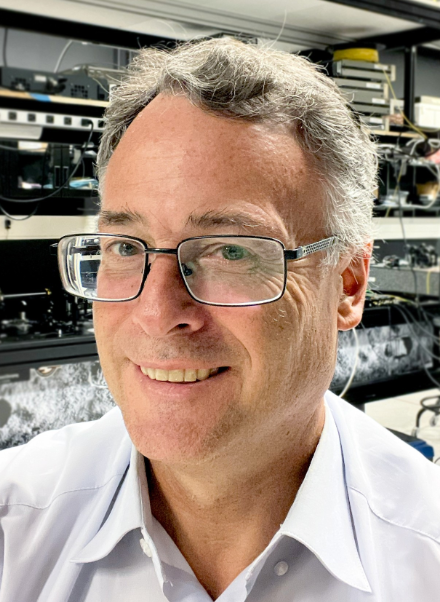 Thomas Jennewein合作论文数Department of Physics, Simon Fraser University;QEYNet;Universal Quantum Devices Inc.28
 Vadim Makarov合作论文数Russian Quantum Center;Quantum Hacking & Certification Lab, Vigo Quantum Communication Center, University of Vigo16
 Brendon L. Higgins合作论文数QEYnet14
 Shihan Sajeed合作论文数10
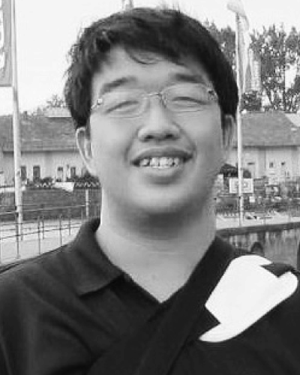 Poompong Chaiwongkhot合作论文数8
 Sarah Kaiser合作论文数7
 Norbert Lutkenhaus合作论文数Institute for Quantum Computing, University of Waterloo;Department of Physics & Astronomy, University of Waterloo;evolutionQ7
 Evan Meyer-Scott合作论文数Photonic Inc.7
 Katanya B Kuntz合作论文数Sch. of Eng. & Inf. Technol., Univ. of New South Wales;c;Sch. of Eng. & Inf. Technol., Univ. of New South Wales6
 Matthieu Legre合作论文数5
 Sascha Agne合作论文数4
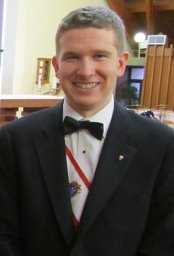 Christopher J. Pugh合作论文数Dept Phys & Astron, Brandon Univ4
 Zhizhong Yan合作论文数The Edward S. Rogers Sr. Department of Electrical & Computer Engineering (ECE),, University of Toronto4
 Gigov, N.合作论文数4
 Elena Anisimova合作论文数4
 Jeongwan Jin合作论文数4Igor Radchenko合作论文数3Eric Choi合作论文数3
 Nigar Sultana合作论文数Deparment of Pediatric, Rajshahi Medical College & Hospital3Laurent Monat合作论文数3Roy Vincent合作论文数3Holloway Catherine合作论文数Dept Phys Astron, Univ Waterloo Inst3
 Miles Cranmer合作论文数Department of Applied Mathematics & Theoretical Physics, University of Cambridge3
 Krister Shalm合作论文数National Institute of Standards and Technology3Louis P. Piche合作论文数2Danya Hudson合作论文数2
 Paulo Pinheiro合作论文数2
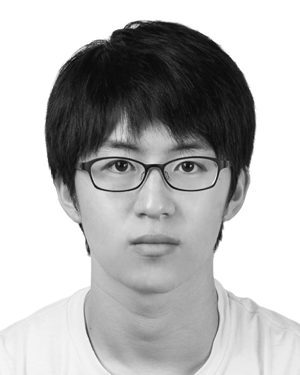 Jin Gyu Lim合作论文数2
 Carter Minshull合作论文数Inst Quantum Comp, Univ Waterloo2
 Anqi Huang合作论文数Coll Comp Sci & Technol, Natl Univ Def Technol2
 Chris Erven合作论文数2
 Anna Pappa合作论文数2Allison Macdonald合作论文数Department of Physics, University of Alberta2Horn Rolf合作论文数2
 Hannes Hübel合作论文数2
 Mathieu Gagné合作论文数School of Engineering, the University of Montreal2
 Yanbao Zhang合作论文数2
 Raman Kashyap合作论文数Department of Engineering Physics, Polytechnique Montreal;Department of Electrical Engineering, Polytechnique Montreal2
 Alan Scott合作论文数2
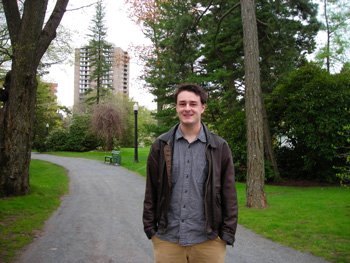 John Doucette合作论文数2Ramy Tannous合作论文数Institute for Quantum Computing, University of Waterloo1
 Amir Khandani合作论文数Department of Electrical and Computer Engineering, University of Waterloo1
 Filippo M. Miatto合作论文数Department of Physics;University of Strathclyde;Department of Physics, University of Strathclyde1




