NOTE: The first page of text has been automatically extracted and included below in lieu of an abstract Session 1526 Capstone Mechanical Engineering Laboratory Uses Racecar Jed Lyons, Edward F. Young, Jeffrey Morehouse University of South Carolina Abstract A capstone mechanical engineering laboratory course is being implemented at the University of South Carolina that develops the student's abilities to analyze complex mechanical and thermal systems, to design experiments, and to develop their professional skills. The course is based upon an integrated sequence of laboratory experiments on a Legends-class racecar. This vehicle is chosen as the system of study because it provides opportunities for the students to apply the spectrum of their mechanical engineering knowledge. It's also exciting to the students. As the students progress through the series of experiments, they are increasingly involved in experimental design (selecting sensors, sensor locations and experimental operating conditions). The course culminates in a truly open-ended design of an experiment of their choosing. This course development project is supported by the National Science Foundation’ Instrumentation s and Laboratory Improvement Program, the NSF’ Course, Curriculum and Laboratory s Improvement Program, and the University of South Carolina. This paper describes the work in progress. I. Motivation and Context for this Project An integral part of the undergraduate mechanical engineering curricula at the University of South Carolina is sequence of four mechanical engineering laboratory courses. The capstone senior laboratory course, Mechanical Systems Laboratory is a two-credit hour course that includes one hour of lecture and three hours of lab each week. Laboratories are offered to sections of about eight students. A major function of this course is to illustrate upper-level mechanical engineering topics. Historically, the experiments were selected primarily to do this and, as a result, they were not directly related to one another. As a result, there were a large number of relatively expensive laboratory equipment items to be maintained, which occupied laboratory space, yet were used only once a semester. Because the students went from one unrelated experiment to another throughout the semester, they did not have the opportunity to develop the “system level” perspective necessary to analyze and understand complex thermal and mechanical systems. Further, because the students were required to run a different experiment each week, many of the laboratories were “canned” in that they did not require any design of the experiment. In 1997 the department began implementing an outcomes-based assessment process in preparation for ABET accreditation under Engineering Criteria 2000. As part of that processes, it was determined that the capstone Mechanical Systems Laboratory should support several of the program’ outcomes, including: s • The graduates shall have the ability to analyze, design and realize mechanical and thermal systems.
The broad objective of this research is to contribute to our understanding of how mechanical engineers learn to design and conduct experiments.Specifically, this study investigated undergraduate student attitudes towards the design of open-ended experimental projects, and how these attitudes are different among freshmen, juniors and seniors.Freshman, junior, and senior mechanical engineering students all were given the same open-ended experimental design problem as part of required laboratory courses.The objective of the assignment was to design, construct, and conduct an experiment to determine the relationships between factors that affect the forces on a wooden beam that supports the weight of a person.Pre-and post-surveys were administered regarding student attitudes towards the problem.The surveys were statistically analyzed to identify similarities and differences within and between the student groups.Focus groups were also conducted to supplement the survey data.
NOTE: The first page of text has been automatically extracted and included below in lieu of an abstract Main Menu Session 1566 Formative Assessment of the University of South Carolina’s Graduate Teaching Fellows in K-12 Education Program Jed Lyons, Maryanne Banich, John Brader and Christine Ebert University of South Carolina Abstract With support from the NSF GK-12 Program, students and faculty in the College of Engineering and Information Technology and the College of Education are working together to (a) improve the teaching and communication skills of engineering graduate students and (b) improve science education in South Carolina schools. This paper describes the project and presents assessment results that are being used to improve the program. Introduction The University of South Carolina (USC) received an award from the National Science Foundation’s Graduate Teaching Fellows in K-12 Education (GK-12) Program1 to support fellowships and associated training that will enable graduate students in engineering to serve as resources in K-12 schools. USC is one of over 50 institutions funded by NSF through this program. Some of these awards have been described2-4, and have provided guidance for the development, implementation and assessment of USC’s efforts. The primary objective of the University of South Carolina’s Engineering Fellowships project is to help prepare today's engineering graduate students to be the engineering faculty of tomorrow. To succeed, these graduate students must be prepared to teach to a generation of students that has grown up in a global, high-tech society. To teach these students, tomorrow's engineering faculty needs better communication and teaching skills, and greater knowledge of cognitive processes that enhance student learning, than today's faculty possesses. This program develops these abilities. Another objective of this GK-12 project is to improve science learning of students and assist in the professional development of teachers in grades 3-8. These groups are targeted because this is the time when most young people are either turned-on, or turned-off, to science. Too often, science and mathematics are viewed by the students as facts and figures to memorize, with little significance to the world around them. Engineering (the art of applying scientific and mathematical principles, experience and judgment to make things that benefit people) can provide the applications that make science real to the novice learner. “Proceedings of the 2002 American Society for Engineering Education Annual Conference & Exposition Copyright Ó 2002, American Society for Engineering Education” Main Menu
NOTE: The first page of text has been automatically extracted and included below in lieu of an abstract Session 2364 Composites in Construction: A Research Experience for Teachers Jed Lyons, Associate Professor Department of Mechanical Engineering University of South Carolina Abstract A grant to the University of South Carolina from the National Science Foundation’s Research Experiences for Teachers (RET) program supported five high school science teachers to conduct engineering research on the university campus during the summer of 2002. The goal was to increase the teacher’s knowledge of engineering materials and to enhance their inquiry skills. The teachers also developed several laboratory modules that were derived from their research to take back and use in their classroom. The teachers conducted research on the use of fiber reinforced composite materials to strengthen and stiffen the components of bridges. For the past two decades, composites have been introduced to the construction industry as a practical way to improve the load carrying capacity of existing concrete, steel and wooden structures. Wood was chosen for the RET research due to the availability of wood beams, the limited duration of their summer research experience, and the ease in creating easily transportable in-class laboratory modules. Specifically, the teachers investigated the factors affecting the strength of the bond between epoxy-glass composites and southern yellow pine. During the six-week program, the teachers learned to conduct literature research in the library, to design experiments, to fabricate composite material overlays on wood beams, to test the beams to determine strength and stiffness improvements and to test the bond strength after various environmental exposures. Through these experiences, the teachers gained increased content knowledge, design of experiments skills, and useful instructional materials. Introduction This project was made possible by a Research Experience for Teachers (RET) Supplement1 to the University of South Carolina’s Graduate Teaching Fellows in K-12 Education (GK-12) grant from the National Science Foundation. The objective of the RET was to enhance the ability of selected high school teachers to teach ENGR 101 - Introduction to Engineering in their schools for college credit. This project was designed to increase the teacher’s content knowledge and inquiry skills through a complete engineering research experience, from experimental design to final reporting. The participating teachers also developed several laboratory modules that were derived from their research and could easily be taken back and used in their classroom. The participants were recruited from a pool of 14 high school science teachers who had passed the University of South Carolina’s course ENGR 701 - Introduction to Engineering for Teachers. This course qualifies them to teach ENGR 101 in their schools. The demographics of the five teachers were 1 white female, 1 black male and 3 white males. Each teacher had earned Proceedings of the 2003 American Society for Engineering Education Annual Conference & Exposition Copyright © 2003, American Society for Engineering Education
The Graduate STEM Fellows in K-12 Education (GK-12) program was established by the National Science Foundation in 1999. This paper is based on work at a GK-12 site that received continuous funding from the NSF, the State, and the institution from 2000 to 2011, and supported a total of 96 GK-12 Fellows. A study was conducted to investigate the long-term impact of participating in the program on the GK-12 Fellows. In 2011, former Fellows were contacted and asked to take an online survey about their program experience, and how it affected their career path after graduation. The majority of survey respondents indicated that they felt the GK-12 experience had a large or very large impact on their career path. The time spent actively teaching in classrooms led to large impacts on teaching, communication, and presentation skills. In addition, other skills such as leadership, teamwork, and time management were also reported to have been improved. Participants ranked teaching K-12 students - the primary activity in the GK-12 program - to be equally helpful as their thesis/dissertation and graduate coursework. The results indicate that the GK-12 program had important long-term positive influences on Fellows' careers and job-related skills.
The broad objective of this study is to determine the expectations that potential Ph.D. candidates have of engineering doctoral programs. This objective was accomplished by surveying over 150 potential engineering Ph.D. candidates, including undergraduate engineering students and engineers who had completed their undergraduate degree. Participants were asked to rate how well they thought a Ph.D. program would prepare them in a number of areas. Participants were also asked to rate the extent that they were interested in various components of typical and non-typical Ph.D. degree programs. Results indicated that participants felt that doctoral programs would be prepared to do almost everything on the survey, including things not typically taught. In response to a question about challenges to pursuing a Ph.D., potential Ph.D. candidates frequently mentioned financial concerns, and often stated that they "did not want to teach" reflecting a lack of understanding that the doctoral degree is relevant to industrial jobs. Results from this study can be used to inform doctoral programs and enhance the recruitment efforts of engineering doctoral students in the United States.
Currently, the majority of engineering Ph.D.s in the United States work in for-profit organizations, ranging from large corporations to small businesses. The goal of this study is to investigate both the research environment and the skills needed by engineering Ph.D.s who work in such organizations. The approach involved semi-structured phone surveys with six Ph.D. engineers working in large corporations and six Ph.D. engineers working in small businesses. The surveys were examined to uncover themes. Findings suggest that engineering Ph.D.s frequently work in teams. In order for teams to be successful each team member should possess a unique technical skill set and good communication skills. The need to have critical and analytical thinking skills was also a common theme. This paper presents the summaries of case studies, discusses common themes, and suggests implications for engineering doctoral degree programs.
The broad objective of this study is to contribute to the understanding of the skills needed by engineering Ph.D. s in industry and how well doctoral degree programs prepare graduates in these areas. A survey was administered to Ph.D. s in industry to understand the level of each skill needed in their organization, and the amount of preparation they received as doctoral students. Results indicate that learning and working independently, working in teams, written and oral communication, and solving problems are the most important skills for a Ph.D. engineer in industry. Also found, was that the essential skills for industry and the level of doctoral preparation are in general, well aligned. However, the survey results indicate that there are a few skills for which the needed level of ability is not correlated with the level of preparation that the graduates received. Results suggest that one of the most significant areas for improvements in preparing doctoral students is related to teamwork. These findings and others are discussed in this paper.
The broad objective of this research was to investigate middle school students' attitudes towards, and perceptions of, engineering and science. Additionally, the research investigated what impact, if any, long-term school-based collaboration with graduate level students from STEM disciplines had on middle school student attitudes and perceptions of engineering and science. To capture student attitudes, two surveys were designed. The first assessed student attitudes towards, and perceptions of, engineering while the second assessed attitudes towards, and perceptions of, science. Surveys were administered to middle school students in science classrooms taking part in a NSF-funded Graduate STEM Fellowship in K-12 Education program. In this program graduate students in engineering or science (Fellows) worked one-two days a week in middle school science classrooms, enhancing science education through inquiry and design projects that support state education standards. Students in classrooms with engineering graduate students were given the engineering survey; students in classrooms with science graduate students were given the science survey. In both cases, pre-surveys were administered to the middle school students before the graduate student's first visit to the classroom and post-surveys were administered at the end of the school year. Approximately 1000 pre-post surveys could be matched for analysis in this study. The findings suggest that students with engineering Fellows showed significant pre to post change in their attitudes towards engineering and perceptions of engineers. Conversely, students with science Fellows did not exhibit significant pre to post change in their perceptions of scientists or attitudes towards scientists. This paper discusses the differences and similarities in how the middle school students reacted to their interactions with engineering and science GK-12 Fellows.
Engineering doctoral programs in the United States are frequently designed to prepare graduates to become original researchers and work in academia. However, the majority of engineering Ph.D. graduates are being employed in industry, this leads to the question of how well doctoral programs are preparing students to meet the needs of industry. The purpose of this exploratory study discussed in this paper is to determine the skills and skill levels needed by engineering Ph.D.s working in industry so that effective strategies may be developed to align student preparation with industry needs. A review of a sample of job solicitations was performed to create a list of possible skills that are essential for engineering Ph.D.s working in industry. A survey was administered to a sample of Ph.D.s in industry to understand the level of different skills needed in their organization and the amount of preparation they received as doctoral students. Survey results indicated that learning and working independently, working in teams, written and oral communication, and solving problems are the most important skills for Ph.D. engineers in industry. Marketing products/processes, managing others, identifying customer needs and writing peer reviewed papers are some of the least important skills for entry-level engineering Ph.D.s. The essential skills for industry and the level of doctoral preparation are, in general, well aligned. Results suggest that one of the most significant areas for improvement in preparing doctoral students is related to teamwork.
The broad objective of this research is to investigate how engineering doctoral programs can better prepare graduates for careers in industry. Currently, less than 20% of engineering Ph.D. graduates work in academia. Preliminary results indicate that industry values research and leadership skills in their Ph.D. employees. Research skills can be categorized as experimental, computational or general research skills. In order to conduct research groups, Ph.D.s need interpersonal, visionary and lifelong learning leadership skills. With lifelong learning leadership skills, Ph.D.s can learn the business skills and discipline specific technical knowledge that is also valued by industry. Future work will indicate how doctoral programs are developing the knowledge, attributes and skills valued by industry and the attitudes and perceptions of potential Ph.D. candidates towards industry valued knowledge, attributes and skills.
The surface modification from laser and shot peening was used to introduce compressive residual stresses into friction stir welded (FSW) Aluminum Alloy (AA) 7075-T7351. Their influence on the fatigue crack growth of FSW was characterized and evaluated for two different crack configurations. The results indicate a significant decrease in fatigue crack growth rates resulting from using laser peening compared to shot peening versus their native
This paper investigates the long term involvement of graduate level engineering students in middle school science classrooms and reports the impact on participating graduate students and the middle school students they taught. Four years of pre and post data were collected from a total of 19 graduate students, their research advisors, and over 1200 middle school students. Key findings for the graduate students included enhanced communication, teaching, and research abilities. Key findings for students included enhanced perceptions and understandings of engineering.
Aboudi's micromechanics based unit cell model for the effective elastic properties of two-phase composites has been extended to three-phase composites to include the effect of an interphase coating. Instead of Aboudi's displacement approach, a cell-stress approach associated with complimentary energy has been employed. Effective elastic constants of three-phase composite, with degraded interphase coating, have been calculated for the graphite/epoxy composite system. The effect of the degree of degradation of the coating interphase has been found to be significant for the transverse Young's modulus, shear modulus, and Poisson's ratio. The axial shear modulus and Poisson's ratio are also affected. The axial Young's modulus is, of course, not affected.
NOTE: The first page of text has been automatically extracted and included below in lieu of an abstract A Survey of Middle Schoolers’ Attitudes towards Engineers and Scientists Abstract Do middle school students think they could become engineers, or think that engineering is boring? A set of surveys was used to assess the attitudes of 1010 middle school students about engineering and science. In general, the students perceived that engineers are more likely to do boring things, make peoples’ lives easier, and be good at math. Scientists were perceived as more likely to discover new knowledge, agree on the best way to solve problems, do many kinds of work, be creative, use lots of ways to communicate, and work with their brains. Responses also differed by gender. Female students indicated that scientists are more likely to make a lot of money, work alone, work with their hands, and get to be the boss. In contrast, the male students were more likely to associate these qualities with engineers. Analysis of constructed responses indicates both misconceptions and a lack of conceptions about engineering among the population surveyed. Introduction The broad objective of this research is to contribute to our understanding of middle school students’ attitudes towards engineering and science. Improving student awareness of engineering and science contributes to technological literacy among the general public and also helps students make informed career path decisions. A significant body of literature exists on the attitudes of K-12 students and teachers towards science and scientists. This literature has informed the development of science education outreach programs. However, a comparable body of literature about K-12 student attitudes towards engineering and engineers is not yet fully developed. Some work has been done in this area. Yasar1 developed a survey to study K-12 teacher perceptions of engineering, primarily to determine their interest in and comfort level for teaching design, engineering and technology in their classrooms. Cunningham2 surveyed teachers to determine their conceptions of what engineers do. Recent research on K-12 student perceptions of engineers has been based upon student drawings3-9. Drawings can be used to infer what a student believes engineers and their work environments look like. However, in the authors’ experiences, student drawings of engineers look a lot like people, and it is difficult to determine a student’s attitude towards the drawn engineer. For example, does the student think she or he could become an engineer, or think that engineering is boring? The study reported in this paper addresses questions such as these. Specifically, a survey was used to assess middle school student attitudes about engineers and engineering. The results are compared to a similar survey assessing student attitudes about scientists and science. Study Design To capture student attitudes, two surveys were designed. The first assessed student attitudes towards engineering while the second assessed attitudes towards science. The surveys were
The perceptions young students have of engineers and scientists are often populated with misconceptions and stereotypes. Although the perceptions that young people have of engineers and of scientists have been investigated separately, they have not been systematically compared. The research reported in this paper explores the question “How are student perceptions of engineers and scientists similar and how are they different?” Approximately 1,600 middle school students from urban and suburban schools in the southeastern United States were asked to draw either an engineer or a scientist at work. Drawings included space for the students to explain what their person was doing in the picture. A checklist to code the drawings was developed and used by two raters. This paper discusses similarities and differences in middle school perceptions of scientists and engineers. Results reveal that the students involved in this study frequently perceive scientists as working indoors conducting experiments. A large fraction of the students have no perception of engineering. Others frequently perceive engineers as working outdoors in manual labor. The findings have implications for the development and implementation of engineering outreach efforts.
This research explores the interrelationship between the fracture mechanisms of short fiber-reinforced ceramic composites and the properties of the fiber and of the fiber-to-matrix interface. A two-dimensional finite element model for crack growth is developed, in which fiber orientation, residual stress state, and interface bond strength are varied. This approach permits the isolation of the effects of individual features on the fracture behavior and the strain energy release rate after each increment of crack growth. Fracture paths are predicted for individual fibers at discrete locations with respect to the primary crack plane. Increases in material toughness are determined by calculating the strain energy release rate after each increment of crack growth. Results of the model compare well with experimental observations of the fracture behavior of Nextel© fiber-reinforced slip cast fused silica matrix composites.
A Draw an Engineer Test was used to capture the perceptions of engineering held by two similar groups of 6th grade African-American students. Forty-four students who had graduate level engineers in their classrooms during a prior school year as part of a GK-12 project were matched to 44 students who had not. Matching criteria included race, gender, and academic standing. Using perceptions of common engineering artifacts, fields, tasks and processes as measures, student perceptions were quantified using a Draw an Engineer Test Scoring Guide. Additional descriptive analysis was also conducted. Control group students’ perceptions centered on engineering as physical work and portrayed engineers primarily in construction or building trades. Experimental group students were more likely to perceive engineering as involving mental tasks such as designing, presenting and experimenting. Experimental group students also displayed greater awareness and understanding of various engineering fields.
 Stephen Thompson合作论文数11
 Joy Watson合作论文数8
 Michael Sutton合作论文数Department of Biomedical Engineering, College of Engineering and Computing, University of South Carolina8Edward F. Young合作论文数6
 Victor Giurgiutiu (Jurjutzu)合作论文数Department of Mechanical Engineering, Molinaroli College of Engineering and Computing, University of South Carolina;Laboratory for Active Materials and Smart Structures, University of South Carolina5
 Omar Hatamleh合作论文数5
 Michael F. Petrou合作论文数Department of Civil and Environmental Engineering, University of South Carolina5Hanadi G. Salem合作论文数Department of Mechanical Engineering, American University in Cairo5Priyanka Upadhyay合作论文数5Xiaomin Deng合作论文数McNAIR Center, University of South Carolina4Jeffrey H. Morehouse合作论文数4
 Anthony P. Reynolds合作论文数Department of Mechanical Engineering, College of Engineering and Computing, University of South Carolina4John Brader合作论文数3Fralick, B.合作论文数3Dorothy Laub合作论文数3Royce Forman合作论文数3CRAIG ROGERS合作论文数2
 A. P. Reynolds合作论文数Department of Mechanical Engineering, University of South Carolina2Veronica Addison合作论文数2
 Theodor Richardson合作论文数South College2Steven M. Fisher合作论文数2
 Sandip Dutta合作论文数Department of Mechanical Engineering, Clemson University2Jennifer Kearn合作论文数2Thomas L. Starr合作论文数Chemical Engineering Department;University of Louisville;Chemical Engineering Department, University of Louisville2Srinivas Jonna合作论文数2Shannon Whitley合作论文数2r g forman合作论文数1Edgardo G. Tinio合作论文数1Christian Hipp合作论文数1Bsj Kang合作论文数1Lei Yang合作论文数1Shengyi Liu合作论文数1
 Roger A. Dougal合作论文数Department of Electrical Engineering, College of Engineering and Computing, University of South Carolina1
 Yuh J. Chao合作论文数College of Engineering and Computing, University of South Carolina1Weiping Liu合作论文数1Stephen R Mcneill合作论文数1Robert a Montgomery合作论文数1David Klett合作论文数1James D. Clawson合作论文数1Gang Han合作论文数1
 Linda S. Schadler合作论文数College of Engineering and Mathematical Sciences, University of Vermont;Gund Institute for the Environment, University of Vermont1E.G. Han合作论文数1
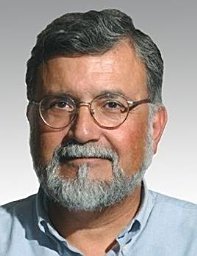 Philip C. Perdikaris合作论文数Department of Structural Engineering, Cornell University1David Rocheleau合作论文数1
 Michael A. Matthews合作论文数Department of Chemical Engineering, College of Engineering and Computing, University of South Carolina;CarboNix LLC1
 Iris V. Rivero合作论文数Texas Tech University1
 Philip A. Voglewede合作论文数1Joacim Beek合作论文数1Thomas a Davis合作论文数1




