Homeopathy is a medical system originating in Germany more than 200 years ago. Based on prior investigations, mainstream health agencies and medical research communities indicate that there is little evidence that homeopathy can be an effective treatment for any specific health condition. However, it continues to be practiced as a popular form of alternative medicine in many countries, even during the ongoing COVID-19 pandemic. In this paper, we mine opinions on homeopathy for COVID-19 expressed in Twitter data. Our experiments are conducted with a dataset of nearly 60K tweets collected during a seven month period ending in July 2020. We first built text classifiers (linear and neural models) to mine opinions on homeopathy (positive, negative, neutral) from tweets using a dataset of 2400 hand-labeled tweets obtaining an average macro F-score of 81.5% for the positive and negative classes. We applied this model to identify opinions from the full dataset. Our results show that the number of unique positive tweets is twice that of the number of unique negative tweets; but when including retweets, there are 23% more negative tweets overall indicating that negative tweets are getting more retweets and better traction on Twitter. Using a word shift graph analysis on the Twitter bios of authors of positive and negative tweets, we observe that opinions on homeopathy appear to be correlated with political/religious ideologies of the authors (e.g., liberal vs nationalist, atheist vs Hindu). To our knowledge, this is the first study to analyze public opinions on homeopathy on any social media platform. Our results surface a tricky landscape for public health agencies as they promote evidence-based therapies and preventative measures for COVID-19.
Drug discovery is an expensive, lengthy, and sometimes dangerous process. The ability to make accurate computational predictions of drug binding would greatly improve the cost-effectiveness and safety of drug discovery and development. This study incorporates ensemble docking, the use of multiple protein conformations extracted from a molecular dynamics trajectory to perform docking calculations, with additional biomedical data sources and machine learning algorithms to improve the prediction of drug binding. We found that we can greatly increase the classification accuracy of an active vs a decoy compound using these methods over docking scores alone. The best results seen here come from having an individual protein conformation that produces binding features that correlate well with the active vs. decoy classification, in which case we achieve over 99% accuracy. The ability to confidently make accurate predictions on drug binding would allow for computational polypharamacological networks with insights into side-effect prediction, drug-repurposing, and drug efficacy.
Protein kinases generate nearly a thousand different protein products and regulate the majority of cellular pathways and signal transduction. It is therefore not surprising that the deregulation of kinases has been implicated in many disease states. In fact, kinase inhibitors are the largest class of new cancer therapies. Understanding polypharmacology within the full kinome, how drugs interact with many different kinases, would allow for the development of safer and more efficacious cancer therapies. A full understanding of these interactions is not experimentally feasible making highly accurate computational predictions extremely useful and important. This work aims at making a machine learning model useful for investigating the full kinome. We evaluate many feature sets for our model and get better performance over molecular docking with all of them. We demonstrate that you can achieve a nearly 60% increase in success rate at identifying binding compounds using our model over molecular docking scores.
Heart sound analysis is a preliminary procedure performed by a physician and involves examining the heart beats to detect the symptoms of cardiovascular diseases (CVDs). With recent developments in clinical science and the availability of devices to capture heart beats, researchers are now exploring the possibility of a machine assisted heart sound analysis system that can augment the clinical expertise of the physician in early detection of CVD. In this paper, we study the application of machine learning algorithms in classifying abnormal/normal heart sounds based on the short ( ≤ 120 s) audio phonocardiogram (PCG) recordings. To this end, we use the largest public audio PCG dataset released as part of the 2016 PhysioNet/Cardiology in Computing Challenge. The data comes from different patients, most of who have had no previous history of cardiac disease and some with known cardiac diseases. In our study, we use these audio recordings to train three different classification algorithms and discuss the effects of class imbalance (normal vs. abnormal) on the precision-recall trade-off of the prediction task. Specifically, our goal is to find a suitable model that takes into account the inherent imbalance and optimize the precision-recall trade-off with a higher emphasis on increasing recall. Bagged random forest models with majority (normal) class under sampling gave us the best configuration resulting in average recall over 91
 Fatemah Alghamedy合作论文数Community College, Imam Abdulrahman Bin Faisal University2
 Derek Jones合作论文数Lawrence Livermore National Laboratory2
 Sally R Ellingson合作论文数Center for Molecular Biophysics, University of Tennessee2
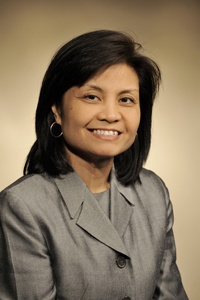 Heidi L. Weiss合作论文数Markey Cancer Center, University of Kentucky2
 Ramakanth Kavuluru合作论文数Department of Internal Medicine, University of Kentucky Lexington2
 Michael Bowie合作论文数1Xiaofei Zhang合作论文数Department of Computer Science, University of Kentucky, Lexington, KY1
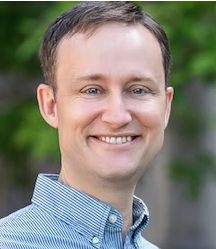 Nathan Jacobs合作论文数Department of Computer Science and Engineering, McKelvey School of Engineering, Washington University in St. Louis;Multimodal Vision Research Laboratory, Washington University in St. Louis;Division of Computational and Data Sciences, Washington University;AI for Health Institute, Washington University;Taylor Geospatial Institute;Center for the Environment, Washington University;Multidomain Vision Research, LLC1Byung-Hoon Park合作论文数Oak Ridge National Laboratory1
 Kiran Garimella合作论文数School of Communication and Information, Rutgers University;Sloan School of Management, Massachusetts Institute of Technology1
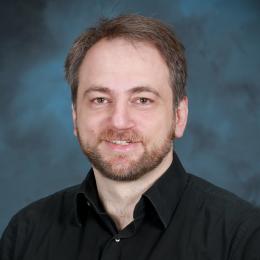 Edmon Begoli合作论文数Oak Ridge National Laboratory1




