This Element introduces the basics of Bayesian regression modeling using modern computational tools. This Element only assumes that the reader has taken a basic statistics course and has seen Bayesian inference at the introductory level of Gill and Bao (2024). Some matrix algebra knowledge is assumed but the authors walk carefully through the necessary structures at the start of this Element. At the end of the process readers will fully understand how Bayesian regression models are developed and estimated, including linear and nonlinear versions. The sections cover theoretical principles and real-world applications in order to provide motivation and intuition. Because Bayesian methods are intricately tied to software, code in R and Python is provided throughout.
This work first describes Bayesian Partially-Protected Lasso (BPL), which combines the power of Bayesian Lasso with the ability to protect key theoretical explanatory variables from shrinkage to a zero effect in the model. This approach allows researchers to identify protected and non-protected variables so that data with many explanatory variables can be efficiently machine-explored without sacrificing theoretically important predictors. We provide the statistical background, algorithms, examples, and easy to use tools in an R package. We then introduce BPEN - Bayesian Protected Elastic Net estimation process that builds on the idea of the Bayesian Partially-Protected Lasso. Since the Elastic Net adds a second penalty term to the standard Lasso it provides a more flexible regularization process. This is a novel approach that combines the robustness of the Elastic Net in sifting through potentially large sets of variables while simultaneously safeguarding the integrity of those grounded in theoretical principles.
To understand how behaviors arise in animals, it is necessary to investigate both the neural circuits and the biomechanics of the periphery. A tractable model system for studying multifunctional control is the feeding apparatus of the marine mollusk Aplysia californica. Previous in silico and in roboto models have investigated how the nervous and muscular systems interact in this system. However, these models are still limited in their ability to match in vivo data both qualitatively and quantitatively. We introduce a new neuromechanical model of Aplysia feeding that combines a modified version of a previously developed neural model with a novel biomechanical model that better reflects the anatomy and kinematics of Aplysia feeding. The model was calibrated using a combination of previously measured biomechanical parameters and hand-tuning to behavioral data. Using this model, simulated feeding experiments were conducted, and the resulting behavioral metrics were compared to animal data. The model successfully produces three key behaviors seen in Aplysia and demonstrates a good quantitative agreement with biting and swallowing behaviors. Additional work is needed to match rejection behavior quantitatively and to reflect qualitative observations related to the relative contributions of two key muscles, the hinge and I3. Future improvements will focus on incorporating the effects of deformable 3D structures in the simulated buccal mass.
Adaptive behavior is critical for animals' survival. A multifunctional nervous system is crucial to generate behaviors that respond effectively to the changing environment. Multiple mechanisms behind a multifunctional neural circuit have been found in vertebrate and invertebrate systems: the change in the nervous system can occur at the cellular level, the synaptic level and at the circuitry level. Aplysia's feeding circuit is a multifunctional system capable of producing different modes of behavior. In Aplysia, B4/B5 are two electrically coupled multiaction neurons that have wide inhibitory synaptic outputs to multiple key motor neurons, mediating an important component of rejection behavior. However, B4/B5 also fire at a lower frequency during ingestion, generating a limited inhibitory effect on their synaptic followers. To further understand the role of B4/B5 in different behaviors, we investigated the functions of B4/B5 and their firing patterns in freely feeding animals. As previous studies suggested that B4/B5 have sensory and motor functions, we further characterized the sensory response and the motor effect of B4/B5 and related these functions to different behaviors. We found that B4/B5 receive direct sensory inputs from different receptive fields within the feeding apparatus, and they innervate and alter forces in the retractor muscles and reduce forces induced by a motor neuron (B3) for the retractor muscles. Their sensory signaling may be related to contact with food during ingestion. Studies on the B4/B5 neurons demonstrated how a neural circuit can be influenced by multifunctional neurons, suggesting another way that adaptive behaviors can be generated. NEW & NOTEWORTHY The B4/B5 neurons in Aplysia californica have multiple functions. In this study, we further characterized B4/B5's sensory responses to mechanical stimuli at different locations in the feeding apparatus and identified their direct motor effect on the muscles. The bidirectional signaling of B4/B5, which was also observed in freely feeding animals, suggests that these neurons may play a role in detecting nociceptive or proprioceptive information and regulating the movements that facilitate particular feeding behaviors.
Online hate speech proliferation has created a difficult problem for social media platforms. A particular challenge relates to the use of coded language by groups interested in both creating a sense of belonging for its users and evading detection. Coded language evolves quickly and its use varies over time. This paper proposes a methodology for detecting emerging coded hate-laden terminology. The methodology is tested in the context of online antisemitic discourse. The approach considers posts scraped from social media platforms, often used by extremist users. The posts are scraped using seed expressions related to previously known discourse of hatred towards Jews. The method begins by identifying the expressions most representative of each post and calculating their frequency in the whole corpus. It filters out grammatically incoherent expressions as well as previously encountered ones so as to focus on emergent well-formed terminology. This is followed by an assessment of semantic similarity to known antisemitic terminology using a fine-tuned large language model, and subsequent filtering out of the expressions that are too distant from known expressions of hatred. Emergent antisemitic expressions containing terms clearly relating to Jewish topics are then removed to return only coded expressions of hatred.
Changes caused by learning that a food is inedible inAplysiawere examined for fast and slow synaptic connections from the buccal ganglia S1 cluster of mechanoafferents to five followers, in response to repeated stimulus trains. Learning affected only fast connections. For these, unique patterns of change were present in each follower, indicating that learning differentially affects the different branches of the mechanoafferents to their followers. In some followers, there were increases in either excitatory or inhibitory connections, and in others, there were decreases. Changes in connectivity resulted from changes in the amplitude of excitation or inhibition, or as a result of the number of connections, or of both. Some followers also exhibited changes in either within or between stimulus train plasticity as a result of learning. In one follower, changes differed from the different areas of the S1 cluster. The patterns of changes in connectivity were consistent with the behavioral changes produced by learning, in that they would produce an increase in the bias to reject or to release food, and a decrease in the likelihood to respond to food.
Political polarization has become an increasingly salient issue worldwide, but a systematic examination of the variation and sources of mass polarization across countries is limited by current measurement methods. This work proposes a nonparametric, entropy-based measure of mass political polarization. It exploits the specific structure of ordinal distributions in public opinion data, makes no prior assumptions about the form and spacing of the data, and can still draw reliable measures of issue-based polarization. We demonstrate the theoretical and practical superiority of the measure with analytical comparisons and simulations. We then apply the proposed measure to questions about mass polarization in the USA, the relationship between radical parties and polarization in Europe, and cross-country trends in affective and ideological polarization.
During this period he was committed to promoting substantive and methodological innovation in the study of elections and public opinion.One of the most rewarding things about working with Harold on an academic project was his unbounded enthusiasm for research in political science, together with his wideranging interests in the discipline.This of course made him a great editor as well.He was interested in many questions, but two broad topics took pride of place in his research interests.The first was theoretical and empirical innovation in the study of elections and public opinion.The second was his interest in methodological innovation applied to elections and to public opinion research.He enthusiastically followed new methodological
Studying the nervous system underlying animal motor control can shed light on how animals can adapt flexibly to a changing environment. We focus on the neural basis of feeding control in Aplysia californica. Using the Synthetic Nervous System framework, we developed a model of Aplysia feeding neural circuitry that balances neurophysiological plausibility and computational complexity. The circuitry includes neurons, synapses, and feedback pathways identified in existing literature. We organized the neurons into three layers and five subnetworks according to their functional roles. Simulation results demonstrate that the circuitry model can capture the intrinsic dynamics at neuronal and network levels. When combined with a simplified peripheral biomechanical model, it is sufficient to mediate three animal-like feeding behaviors (biting, swallowing, and rejection). The kinematic, dynamic, and neural responses of the model also share similar features with animal data. These results emphasize the functional roles of sensory feedback during feeding.
Certain animal species use the Earth's magnetic field (i.e. magnetoreception) alongside their other sensory modalities to navigate long distances that include continents and oceans. It is hypothesized that several animals use geomagnetic parameters, such as field intensity and inclination, to recognize specific locations or regions, potentially enabling migration without a pre-surveyed map. However, it is unknown how animals use geomagnetic information to generate guidance commands, or where in the world this type of strategy would maximize an animal's fitness. While animal experiments have been invaluable in advancing this area, the phenomenon is difficult to study in vivo or in situ, especially on the global scale where the spatial layout of the geomagnetic field is not constant. Alongside empirical animal experiments, mathematical modeling and simulation are complementary tools that can be used to investigate animal navigation on a global scale, providing insights that can be informative across a number of species. In this study, we present a model in which a simulated animal (i.e. agent) navigates via an algorithm which determines travel heading based on local and goal magnetic signatures (here, combinations of geomagnetic intensity and inclination) in a realistic model of Earth's magnetic field. By varying parameters of the navigation algorithm, different regions of the world can be made more or less reliable to navigate. We present a mathematical analysis of the system. Our results show that certain regions can be navigated effectively using this strategy when these parameters are properly tuned, while other regions may require more complex navigational strategies. In a real animal, parameters such as these could be tuned by evolution for successful navigation in the animal's natural range. These results could also help with developing engineered navigation systems that are less reliant on satellite-based methods.
The mechanical forces experienced during movement and the time constants of muscle activation are important determinants of the durations of behaviors, which may both be affected by size-dependent scaling. The mechanics of slow movements in small animals are dominated by elastic forces and are thus quasistatic (i.e., always near mechanical equilibrium). Muscular forces producing movement and elastic forces resisting movement should both scale identically (proportional to mass⅔), leaving the scaling of the time constant of muscle activation to play a critical role in determining behavioral duration. We tested this hypothesis by measuring the duration of feeding behaviors in the marine mollusc Aplysia californica whose body sizes spanned three orders of magnitude. The duration of muscle activation was determined by measuring the time it took for muscles to produce maximum force as Aplysia attempted to feed on tethered inedible seaweed, which provided an in vivo approximation of an isometric contraction. The timing of muscle activation scaled with mass0.3. The total duration of biting behaviors scaled identically, with mass0.3, indicating a lack of additional mechanical effects. The duration of swallowing behavior, however, exhibited a shallower scaling of mass0.17. We suggest that this was due to the allometric growth of the anterior retractor muscle during development, as measured by micro computed tomography scans (microCT) of buccal masses. Consequently, larger Aplysia did not need to activate their muscles as fully to produce equivalent forces. These results indicate that muscle activation may be an important determinant of the scaling of behavioral durations in quasistatic systems.
We know very little about the women who testify before congressional committees. Here we present data on the women who appeared as witnesses out of the 36,950 persons who gave testimony before 7,750 subcommittees and committees. We consider the roles of political party, party control, gender of chiefs of staff, location of hearings, and chamber rules among other factors to explain the underrepresentation of women witnesses. We find that women are dramatically underrepresented. Ultimately, the presence of Democratic women staff directors and women committee chairs, as well as initiatives to track witness diversity, increase the likelihood of women testifying.
In this Element, the authors introduce Bayesian probability and inference for social science students and practitioners starting from the absolute beginning and walk readers steadily through the Element. No previous knowledge is required other than that in a basic statistics course. At the end of the process, readers will understand the core tenets of Bayesian theory and practice in a way that enables them to specify, implement, and understand models using practical social science data. Chapters will cover theoretical principles and real-world applications that provide motivation and intuition. Because Bayesian methods are intricately tied to software, code in both R and Python is provided throughout.
The coordination of complex behavior requires knowledge of both neural dynamics and the mechanics of the periphery. The feeding system of Aplysia californica is an excellent model for investigating questions in soft body systems’ neuromechanics because of its experimental tractability. Prior work has attempted to elucidate the mechanical properties of the periphery by using a Hill-type muscle model to characterize the force generation capabilities of the key protractor muscle responsible for moving Aplysia’s grasper anteriorly, the I2 muscle. However, the I1/I3 muscle, which is the main driver of retractions of Aplysia’s grasper, has not been characterized. Because of the importance of the musculature’s properties in generating functional behavior, understanding the properties of muscles like the I1/I3 complex may help to create more realistic simulations of the feeding behavior of Aplysia, which can aid in greater understanding of the neuromechanics of soft-bodied systems. To bridge this gap, in this work, the I1/I3 muscle complex was characterized using force-frequency, length-tension, and force-velocity experiments and showed that a Hill-type model can accurately predict its force-generation properties. Furthermore, the muscle’s peak isometric force and stiffness were found to exceed those of the I2 muscle, and these results were analyzed in the context of prior studies on the I1/I3 complex’s kinematics in vivo.
This work examines the application of regularization methods in political science, both theoretically and practically. The focus of the study is on the use of regularization to specify models for predicting political outcomes. Specifically, what is the predictive price for protecting theoretically important variables from shrinkage? While many machine learning applications prioritize maximizing predictive accuracy, political science relies on reliable prior findings as a theoretical foundation. The literature shows that regularization methods can shrink crucial theoretically-driven variables to insignificance. To address this, we propose a protected Lasso approach in a Bayesian framework that safeguards these variables, balancing theoretical robustness and predictive power. Our analyses, applied to the American National Election Study, demonstrates the effectiveness of this approach.
Online hate speech proliferation has created a difficult problem for social media platforms. A particular challenge relates to the use of coded language by groups interested in both creating a sense of belonging for its users and evading detection. Coded language evolves quickly and its use varies over time. This paper proposes a methodology for detecting emerging coded hate-laden terminology. The methodology is tested in the context of online antisemitic discourse. The approach considers posts scraped from social media platforms, often used by extremist users. The posts are scraped using seed expressions related to previously known discourse of hatred towards Jews. The method begins by identifying the expressions most representative of each post and calculating their frequency in the whole corpus. It filters out grammatically incoherent expressions as well as previously encountered ones so as to focus on emergent well-formed terminology. This is followed by an assessment of semantic similarity to known antisemitic terminology using a fine-tuned large language model, and subsequent filtering out of the expressions that are too distant from known expressions of hatred. Emergent antisemitic expressions containing terms clearly relating to Jewish topics are then removed to return only coded expressions of hatred.
When analyzing data, researchers are often less interested in the parameters of statistical models than in functions of these parameters such as predicted values. Here we show that Bayesian simulation with Markov-Chain Monte Carlo tools makes it easy to compute these quantities of interest with their uncertainty. We illustrate how to produce customary and relatively new quantities of interest such as variable importance ranking, posterior predictive data, difficult marginal effects, and model comparison statistics to allow researchers to report more informative results.
The Synthetic Nervous System (SNS) is a biologically inspired neural network (NN). Due to its capability of capturing complex mechanisms underlying neural computation, an SNS model is a candidate for building compact and interpretable NN controllers for robots. Previous work on SNSs has focused on applying the model to the control of legged robots and the design of functional subnetworks (FSNs) to realize dynamical systems. However, the FSN approach has previously relied on the analytical solution of the governing equations, which is difficult for designing more complex NN controllers. Incorporating plasticity into SNSs and using learning algorithms to tune the parameters offers a promising solution for systematic design in this situation. In this paper, we theoretically analyze the computational advantages of SNSs compared with other classical artificial neural networks. We then use learning algorithms to develop compact subnetworks for implementing addition, subtraction, division, and multiplication. We also combine the learning-based methodology with a bioinspired architecture to design an interpretable SNS for the pick-and-place control of a simulated gantry system. Finally, we show that the SNS controller is successfully transferred to a real-world robotic platform without further tuning of the parameters, verifying the effectiveness of our approach.
Motor systems show an overall robustness, but because they are highly nonlinear, understanding how they achieve robustness is difficult. In many rhythmic systems, robustness against perturbations involves response of both the shape and the timing of the trajectory. This makes the study of robustness even more challenging. To understand how a motor system produces robust behaviors in a variable environment, we consider a neuromechanical model of motor patterns in the feeding apparatus of the marine mollusk Aplysia californica (Shaw et al. in J Comput Neurosci 38(1):25-51, 2015; Lyttle et al. in Biol Cybern 111(1):25-47, 2017). We established in (Wang et al. in SIAM J Appl Dyn Syst 20(2):701-744, 2021. https://doi.org/10.1137/20M1344974 ) the tools for studying combined shape and timing responses of limit cycle systems under sustained perturbations and here apply them to study robustness of the neuromechanical model against increased mechanical load during swallowing. Interestingly, we discover that nonlinear biomechanical properties confer resilience by immediately increasing resistance to applied loads. In contrast, the effect of changed sensory feedback signal is significantly delayed by the firing rates' hard boundary properties. Our analysis suggests that sensory feedback contributes to robustness in swallowing primarily by shifting the timing of neural activation involved in the power stroke of the motor cycle (retraction). This effect enables the system to generate stronger retractor muscle forces to compensate for the increased load, and hence achieve strong robustness. The approaches that we are applying to understanding a neuromechanical model in Aplysia, and the results that we have obtained, are likely to provide insights into the function of other motor systems that encounter changing mechanical loads and hard boundaries, both due to mechanical and neuronal firing properties.
 Hillel J Chiel合作论文数Professor, Departments of Biology and Neurosciences
Department of Neurosciences
Case Western Reserve University27
Hillel J Chiel合作论文数Professor, Departments of Biology and Neurosciences
Department of Neurosciences
Case Western Reserve University27 Kenneth J. Meier合作论文数Department of Public Administration and Policy, School of Public Affairs, American University;School of Business, Cardiff University;Institute of Public Administration, Leiden University12
 George Casella合作论文数Department of Statistics, College of Agriculture, University of Florida12Kendrick M. Shaw合作论文数10
 Victoria Webster-Wood合作论文数Department of Biomedical Engineering, College of Engineering, Carnegie Mellon University8
 Minjung Kyung合作论文数8
 Peter J Thomas合作论文数7
 Michael P. McDonald合作论文数George Mason Univ7
 Jose Pineda合作论文数7
 Allan Doctor合作论文数Departments of Pediatrics and Biochemistry & Molecular Biophysics, Washington University in St. Louis7
 Micah Altman合作论文数Harvard University7Jeffrey M McManus合作论文数6
 Benjamin Stuart Thomas合作论文数6
 Jafarzadeh S Reza合作论文数Department of Medicine and Epidemiology, University of California, Davis6
 Miranda J. Cullins合作论文数Biology, Case Western Reserve University6
 David K. Warren合作论文数Division of Infectious Diseases, John T. Milliken Department of Medicine, Washington University School of Medicine in St. Louis;Barnes-Jewish Hospital;Clinical Research Training Center, Washington University6
 Victoria J. Fraser合作论文数Division of Infectious Diseases, John T. Milliken Department of Medicine, School of Medicine, Washington University in St. Louis;Clinical Research Training Center, Washington University in St. Louis;Barnes-Jewish Hospital;Barnes-Jewish West County Hospital6
 Gregory Sutton合作论文数School of Biological Sciences,University of Bristol5
 Ravesh Sukhnandan合作论文数4
 Hui Lu合作论文数4Yanjun Li合作论文数3
 Graham A. Colditz合作论文数Division of Public Health Sciences, Department of Surgery, School of Medicine, Washington University in St. Louis3
 Sarah Gehlert合作论文数3Lee Jung Ae合作论文数Division of Public Health Sciences, Washington University in St. Louis3
 Roger D. Quinn合作论文数Case School of Engineering, Case Western Reserve University3David Lyttle合作论文数HRC Virology Research Unit, University of Otago3
 Jonas Marschall合作论文数3Martin S. Keller合作论文数3
 Richard Traunmüller合作论文数Universität Konstanz Lehrstuhl für Vergleichende Politik3Jeffrey R. Leonard合作论文数3
 Nathalie Japkowicz合作论文数Department of Computer Science, College of Arts & Sciences, American University3
 Gary King合作论文数Institute for Quantitative Social Science, Harvard University;Department of Government, Faculty of Arts and Sciences, Harvard University3O C H Kwok合作论文数2Peter H. Michelson合作论文数2
 Tsung-Han Tsai合作论文数2
 Michael Bennington合作论文数Univ Calif San Diego2Yu Huan合作论文数2
 Raza Ul Mustafa合作论文数UNICAMP2j neurophysiol合作论文数2
 Yangyang Wang合作论文数Univ Iowa, Dept Math, Iowa City, IA 52242 USA2Jonathan Homola合作论文数2
 Dominik Hangartner合作论文数Department of Government, London School of Economics and Political Science2Mazotas Ioanna G合作论文数2
 Zois Boukouvalas合作论文数Department of Computer Science, College of Arts & Sciences, American University2Zhang Zidong合作论文数College of Public Health and Social Justice, Saint Louis University2
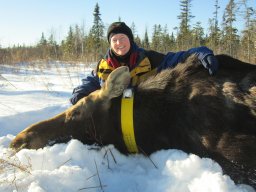 Carstensen Michelle合作论文数Wildlife Health Program, Minnesota Department of Natural Resources2
 Roberto Corizzo合作论文数Department of Computer Science, College of Arts & Sciences, American University2
 Steve Rogers合作论文数Department of Zoology, University of Cambridge2
 Jitender Dubey合作论文数Animal Parasitic Diseases Laboratory, Beltsville Agricultural Research Center, Agricultural Research Service, U.S. Department of Agriculture2




