Demand for Energy Transition Minerals and Metals (ETMs) for clean energy technologies is driving a new wave of investment in mining. Many African countries contain significant reserves of ETMs and are eager to exploit their mineral wealth for economic benefits. However, extracting these minerals comes with social and environmental costs, including the degradation of high biodiversity habitats. Without learning from the past and anticipating possible futures, the potential benefits from ETMs could be offset by harms to vulnerable people and nature. In this paper, we draw from experience in the resource-rich Western Congo Basin forests to consider lessons and opportunities for anticipatory governance of ETM extraction to contribute to just and sustainable development pathways. We identify and build on four existing initiatives in which practitioners, policy-makers, and researchers can proactively engage in to enhance capabilities in foresight, networked decision-making, learning mechanisms, and open mindsets to guide responsible investment. By drawing on lessons and anticipating futures, decision-makers can strengthen institutional capability to guide and benefit from the impending wave of mine and infrastructure development. We call for greater attention to anticipatory governance for responsible investment in ETMs that aligns with environmental stewardship and community wellbeing in the Western Congo Basin.
Not all good intentions lead to effective and fair policy designs, as their implementation creates new problems. The European Union Deforestation Regulation (EUDR) may be an example. In targeting ‘deforestation‐free’ trade, it forces a complex social–ecological reality into an oversimplified forest–non‐forest representation. The forest definition used refers to tree cover but excludes farmer‐managed agroforestry (AF). Not all tree cover indicates forest, as forest‐like forms of agriculture (AF) exist, for example producing much of the worlds' cacao, coffee and rubber. The EUDR design trusts maps and relies on detailed spatial data to verify the deforestation‐free claims needed for access to EU markets. Tree cover is observable in remote sensing; the intended exclusion of AF is not. No map is perfect but for global forest maps prepared for EUDR use there is 18% chance a forest pixel is considered non‐forest in other data, all supposedly based on the same forest definition and cut‐off date. Map errors imply two types of risk: non‐compliant imports to the EU (that ‘fraud prevention’ tries to avoid) or unjustified exclusion (collateral damage). Globally, the EUDR maps claim 12% more forest in 2020 than national data compiled by FAO suggests; in specific countries, the gap is wider. The probability that an AF garden producing coffee cocoa or rubber is (erroneously) mapped as forest is two‐thirds for a study in Indonesia. Elsewhere similar problems have been noted. Data sources beyond direct earth observation will be needed to legally establish pre‐2021 agroforestry as a source of EUDR‐compliant commodity trade. We present a typology for such evidence. Evidence can be based on direct observations on the ground or remotely, based on what people say and on accounts of what they did. Read the free Plain Language Summary for this article on the Journal blog.
Swidden agriculture has been practiced historically by communities in SE Asia, but as the population grows and other land uses expand, the areas available to swidden farmers are decreasing. Government environmental policies discriminate against swidden farming. Opportunities for off-farm employment are increasing, and this is attracting young people to abandon swidden farming. We explored the link between access to land and migration in three forest landscapes in Indonesia, Lao, and Vietnam. We analyzed the impacts of the push factors within the swidden systems and the pull factors from non-agricultural activities on young people’s decisions to migrate or continue in swidden agriculture. We found that stable cash incomes from non-farm jobs were a major driver of young people’s out-migration. Other factors included the desire to have broader experience, better education, as well as peer influences. We also found that land was becoming less accessible to young swidden farmers, but this was not a major reason to migrate as suggested by many studies. Government and private sector investments in plantations, mining, or infrastructure are reducing land availability. Government restrictions on land clearing also reduce areas available for swidden farming.
1. New policies for deforestation-free trade policies, such as the European Deforestation Regulation (EUDR), critically depend on the definition of forest, as mappable land cover and/or as rights-related land use type. Areas with a high tree cover combined with agricultural use and agroforestry are excluded from the official forest definition but are not separately mapped. Based on the definitional confusion and publicly available maps traders (and EUDR control agents?) erroneously perceive high risks of deforestation for EUDR-compliant forest-margin farmers practicing agroforestry. Laudable objectives and perceived rights to act do not prevent collateral damage to ‘bystanders’ in a contested space. 2. Designed to reduce the shared responsibility for demand-driven deforestation associated with seven ‘forest-risk’ commodities, the regulation requires a detailed account of production locations, to be checked against existing spatial information on deforestation. However, the ‘non-mandatory’ EU-forest map for the 2020 reference date claims, for example, 25% more forest than what the government of Indonesia reports internationally. In Indonesia the risk of misrepresentation as forest on the ‘indicative’ EU forest map was 31% for tree crop monocultures (other than oil palm) and 63% for agroforests (rubber, cacao or coffee). The EUDR maps are not fit for the purpose for which they were designed. 3. In our analysis expected collateral damage is due to: Oversight (of social impacts on smallholders), Overconfidence (ignoring the considerable gap between the forest definition and available tree cover data), Overkill (the high precision of required production data is not aligned with capacities for valid interpretation) and Overreach (through a forest definition that has exclusion of agricultural use as key element). 4. Options respecting the common-but-differentiated responsibility of local and national governments (Far together instead of fast alone) have been discarded. A focus on old-growth forest (primary or naturally regenerated forest of high conservation value) could leave regulation of other tree cover to more local institutions. EUDR design flaws can still be corrected if collateral damage is recognized and taken seriously by the EU authorities.
Forestry is becoming more complex as a result of diverging societal demands. Indigenous Peoples' reconciliation and the challenges of climate change call for research that embraces transdisciplinarity, reciprocity, and problem-focused learning at the landscape scale. Both globally and in Canada, forestry and forest research are struggling to keep pace with this grow-ing complexity. Place-based collaborative research and learning initiatives, described here as "learning landscapes," offer an under-explored approach to meeting diversifying goals for forest landscapes. We describe recent progress in Quesnel, British Columbia, where researchers and local institutions are engaging to strengthen resilience and innovation in the forest sector. We first define the concept of learning landscape in the context of transdisciplinary sustainability science, and then illus-trate this approach using the case study of Quesnel. We describe a process of systems diagnosis, including asset mapping and analysis of potential forestry pathways through a "best bets" framework. We propose a Theory of Change as a way forward, out-lining opportunities for government, industry, and communities in developing regional capacity for integrated management and high-value forest products. We reflect on the contributions of learning landscapes to knowledge generation, experiential learning, and institutional development, and discuss implications for steering decision-making in locally driven sustainability transitions.
The Convention on Biological Diversity (CBD) has been a pivotal international instrument for global biodiversity conservation since 1992. The recent Kunming-Montreal Global Biodiversity Framework (GBF) aims to provide a pathway for the CBD for the present decade. However, the practicalities of land use and biodiversity conservation pose significant challenges. Drawing from diverse literature and reports, we identify nine implementation challenges for the GBF. These encompass harmonising conservation with sustainable development, integrating local values and indigenous knowledge, adopting a holistic landscape approach, and prioritising effective local governance. A shift from broad targets to explicit conservation metrics is vital. We propose strategies emphasising building institutional capacity for localised, participatory conservation and policy-making processes. This article offers suggestions for improving the GBF’s implementation and shaping future policy frameworks.
Forestry in British Columbia, Canada, is in transition. Social and environmental concerns, such as the conservation of old growth forests, reconciliation with indigenous peoples, increasing wildfires, climate change, and tree diseases are driving changes in forest management, production, stewardship, and tenure. Government, industry, and local communities are seeking ways to achieve a resilient, diverse, and innovative forest sector that reflects local and indigenous values. We explore the role of small-scale forestry in contributing to this objective. Drawing from an online survey of small-scale foresters, discussions, relevant literature, and policy documents, we examine the management priorities, definitions of success, opportunities, and challenges of small-scale forestry in British Columbia. We find a wide range of views among survey respondents, but some consensus on key policy and management issues. Small-scale foresters would like to see greater opportunities for diversification, increased revenues, opportunities for partnerships, and the removal of barriers that inhibit innovation and local decision-making. The diverse range of local perceptions demonstrates the richness of British Columbia's forestry communities, and the problems of a one-size-fits-all forest policy. A long-term vision accommodating diverse preferences of small-scale forestry in British Columbia is missing from provincial forest policy. We summarize emerging opportunities for small-scale forestry and the ways in which governments, communities, industry, research institutions, and indigenous rights-holders can contribute towards resilient forest systems.
Agricultural expansion has led to a significant loss of habitat and biodiversity in Ghana and throughout West Africa and the tropics generally. Most farmers adopt both organic and inorganic inputs to boost production, with the potential to slow agricultural expansion, but with relatively little consideration of related environmental impacts. In Ghana, where high-input modern farming is rapidly overtaking traditional organic agricultural practices, we examined five stakeholder groups in regard to their perceptions of the environmental, economic, and social costs and benefits of modern, mixed-input, and traditional farming systems. The stakeholder groups included farmers adopting different agricultural practices, as well as governmental and non-governmental natural resource managers. Our findings indicate that the overall perceived costs of modern farming, attributable to large quantities of inorganic inputs, are higher than the overall perceived benefits. Farmers are, however, still motivated to practice modern farming because of perceived higher returns on investment, regardless of environmental impacts, which they tend to discount. Traditional farmers do not use inorganic inputs and instead rely on swidden ‘slash-and-burn’ practices, resulting in declining productivity and soil fertility over time. Since traditional farmers are ultimately forced to encroach into nearby forests to maintain productivity, the perceived environmental sustainability of such farming systems is also limited. Mixed-input farming is not significantly different from modern farming with respect to its perceived environmental and economic traits, because it incorporates agro-chemicals alongside organic practices. Stakeholders’ perceptions and the apparent environmental outcomes of different farming systems suggest that reducing the use of inorganic inputs and promoting the adoption of organic inputs could minimise the negative impacts of agro-chemicals on the forest environment without necessarily compromising productivity. Campaigns to promote low-input or organic agriculture on environmental grounds in West Africa may falter if they fail to recognise farmers’ relatively favourable perceptions of the environmental implications of modern farming practices.
Regular assessment of progress on the implementation of Sustainable Development Goals (SDGs) is crucial for achieving the goals by 2030 yet such assessments often require extensive resources and data. Here, we describe a method using performance auditing as a novel approach for assessing the implementation of SDGs that would be useful for countries with limited resources and data availability but might also provide an alternative to choosing particular goals and implementing them one at a time, for all countries. We argue that, instead of monitoring all 169 targets and 242 indicators, a country could assess the effectiveness of its governance arrangement as a way of ensuring that progress on implementing SDGs is on track, and hence improve the likelihood of achieving the SDGs by 2030. Indonesia is an archipelagic upper-middle-income country facing challenges in data availability and reliability, which limits accurate assessments of SDG implementation. We applied a standardized performance audit to assess the effectiveness of current governance arrangements for the implementation of SDGs. We used the Gephi 0.9.2 software (Open sourced program by The Gephi Concortium, Compiègne, France) to illustrate the regulatory coordination among public institutions. We found that Indonesia’s governance arrangements are not yet effective. They might be improved if Indonesia: (1) synchronize its SDG regulations; (2) redesigns its governance structure to be more fit for purpose; and (3) involves audit institutions in the SDG governance arrangements. These findings would likely apply to many other countries striving to implement the SDGs.
Conflicting policies relating to the management of multi-sectoral, multi-level and multi-actor forest uses often result in ineffective policy implementation. Methods for assessing policy coherence, however, are limited and often require an extensive evidence base which is not always available. In Indonesia, this has often led to conflicts between government agencies and other forest stakeholders. Businesses, NGOs and local communities struggle to comply with all of the conflicting or overlapping regulations that relate to the use of forested landscapes. Even if they succeed, the cost of implementation can be excessive. Improved methods for assessing policy coherence could assist governments and other stakeholders to navigate policy complexity and to avoid the potentially high costs of policies that are antagonistic to one another. We propose an audit of policy coherence at the landscape scale as a way of addressing this problem. We test this idea with an experimental policy audit on the Kampar Peninsula, a peat landscape in Pelalawan district, Riau Province, Indonesia. Indonesia has participated in the UN global peat initiative since 2015 and has created a peat protection policy to control the exploitation of peat with regulation No 57/2016. This regulation and the various instruments devolved from it has been a source of confusion and conflict among stakeholders. We applied commonly accepted performance auditing standards to assess the coherence, effectiveness and efficiency of regulations from other sectors and in different jurisdictions with the new peat regulation No 57/2016 and its derivatives. To aid our audit assessment, we overlaid radar and Landsat images to depict delineations of peat protection and cultivation zones according to different legislation. Our audit revealed incoherent mapping of peat protection zones on the Kampar Peninsula, which has led to ineffective and inefficient implementation of policies. We then propose three alternative protection and cultivation scenarios to that proposed by the government. Our results show that any of these alternative scenarios would provide a policy that is not only more coherent, but that also would result in more effective and efficient policy implementation. This policy audit method should have wide potential application for auditing best practice and policy effectiveness in complex landscapes across the globe and should have immediate application in helping to resolve the current issues on the Kampar Peninsular.
In 2013, China launched its ‘Belt and Road Initiative’ (BRI) as a major effort to enhance international trade and economic development. An important feature of the BRI is that it supports free trade regimes and a world economy based upon open regional cooperation. The concept of BRI involves establishing a transport route between China and participating countries to provide more profitable trade and investment corridors. There are few comprehensive studies examining the social and environmental impact on development in recipient countries. To address this gap, this study gathered empirical evidence on railroad projects in three key countries: Indonesia, Ethiopia, and Kenya. The comparative analysis revealed that while political leaders signed agreements that welcomed China’s BRI in support of their national transport development plans, the implementation of these ambitious infrastructure projects faced significant management and operational challenges that had not been foreseen by the Chinese partners. More effective implementation of BRI infrastructure projects in the future will require better understandings of governance, specifically through harmonization with the cultural, institutional and political contexts in partner countries. Social and cultural characteristics of the countries where Chinese firms are working need to be well understood if sustainable and inclusive benefits from the BRI infrastructure projects are to be delivered. Further research on the benefits gained by local people living in the areas affected by the BRI investments is needed.
Fifty years have elapsed since the first publication of Ambio. Throughout this period, fundamental changes have occurred in societal attitudes to biodiversity conservation. Ambio has published numerous papers that have aligned with these new approaches. High citations numbers suggest that Ambio papers have had a significant impact on conservation strategies. We review these publications and find that they align well with changed societal perspectives on biodiversity. Ambio papers have called for greater contributions of local and indigenous peoples and for conservation in multi-functional landscapes. The 1992 Convention on Biological Diversity built on these principles. Negotiations are now underway for a post-2020 framework for biodiversity. Ambio papers have argued for a stronger scientific basis for conservation and for the need to adapt to changing conditions and to the rich diversity of societal preferences for conservation. International processes favor simple, generalizable approaches to conservation but we call for recognition of the diversity of ecological and human conditions in which conservation occurs. There is a need to build capacity to support a diversity of conservation approaches that are adapted to changing local conditions and to the priorities of diverse human societies.
Context We describe how large landscape-scale conservation initiatives involving local communities, NGOs and resource managers have engaged with landscape scientists with the goal of achieving landscape sustainability. We focus on two landscapes where local people, practitioners and landscape ecologists have co-produced knowledge to design conservation interventions. Objective We seek to understand how landscape ecology can engage with practical landscape management to contribute to managing landscapes sustainably. Methods We focus on two large tropical landscapes: the Sangha Tri-National landscape (Cameroon, Republic of Congo and the Central African Republic) and the Batéké-Léfini Landscape (Gabon and Republic of Congo). We evaluate (1) a participatory method used in the Sangha Tri-National landscape that embeds interdisciplinary researchers and practitioners within a landscape to apply transdisciplinary learning to landscape conservation and (2) a participatory landscape zoning method where interdisciplinary teams of conservation practitioners analyse local land and resource use in the Batéké-Léfini landscape. Results We find that landscape ecology’s tradition of understanding the historical context of resource use can inform landscape conservation practice and natural resource mapping. We also find that the Sangha Group provides an example for landscape ecology on how to integrate local people and their knowledge to better understand and influence landscape processes. Conclusions Place-based engagement as well as the uptake of co-produced knowledge by policy makers are key in enabling sustainable landscapes. Success occurs when researchers, local communities and resource managers engage directly with landscape processes.
•Indonesia’s annual area of forest degradation is equal to deforestation.•Numerous forest restoration initiatives exist but with varying levels of success.•Government control provides a disincentive to restoration initiatives.•Partnerships across multiple scales can enhance FLR learning opportunities.
Two-thirds of rural Ghanaians are farmers, and farming is almost the only income source for Ghana's forest-fringe communities. Some farmers adopt some agricultural practices to augment their operations while others do not. We examined the factors that influence farmers' adoption and intensity of adoption of agricultural practices, namely, chemical fertilizers, pesticides, herbicides, improved seeds, animal manure, and crop rotation. We surveyed the agricultural systems and livelihoods of 291 smallholder households in forest-fringe communities and developed a multivariate model (canonical correlation analysis) to test the degree to which social, economic, and institutional factors correlate with adoption and intensity of adoption of the above practices. We found that 35.4% of the farmers do not adopt any of the practices because they perceive them to be expensive, not useful, and difficult to adopt. The rest (64.6%) adopt at least one of the practices to control weeds, pests and diseases, and consequently increase crop yields. Our results indicate that farmers that perceive the aforementioned practices to be more beneficial, cultivate multiple plots, and have access to extension services adopt more of the practices. Farmer age and distance to source of inputs negatively correlate with adoption and intensity of adoption of agricultural practices. Almost two-thirds each of adopters and non-adopters do not have access to agricultural extension services and this could pose threats to the sustainability of the forest reserves within and around which the farmers cultivate. Educating farmers on agricultural practices that are forest-friendly is critical in the forest-fringe communities of Ghana. The correct application of practices could double outputs and minimize threats to forests and biodiversity through land-sparing.
Fifty years have elapsed since the first publication of Ambio. Throughout this period, fundamental changes have occurred in societal attitudes to biodiversity conservation. Ambio has published numerous papers that have aligned with these new approaches. High citations numbers suggest that Ambio papers have had a significant impact on conservation strategies. We review these publications and find that they align well with changed societal perspectives on biodiversity. Ambio papers have called for greater contributions of local and indigenous peoples and for conservation in multi-functional landscapes. The 1992 Convention on Biological Diversity built on these principles. Negotiations are now underway for a post-2020 framework for biodiversity. Ambio papers have argued for a stronger scientific basis for conservation and for the need to adapt to changing conditions and to the rich diversity of societal preferences for conservation. International processes favor simple, generalizable approaches to conservation but we call for recognition of the diversity of ecological and human conditions in which conservation occurs. There is a need to build capacity to support a diversity of conservation approaches that are adapted to changing local conditions and to the priorities of diverse human societies.
We present a new framework that allows understanding those we deem irrational in the climate debate. Realizing if the issue is one of information, beliefs, values or means opens the door for more constructive dialogue. Decision-makers diverge in their responses to the urgent need for action on climate and biodiversity. Action gaps are fueled by the apparent inability of decision-makers to respond efficiently to the mounting threats described by scientists-and increasingly recognized by society. Surprisingly, with the growing evidence and the accumulation of firsthand experiences of the impacts of environment crises, the gap is not only a problem of conflicting values or beliefs but also a problem of inefficient strategies. Bridging the gap and tackling the growing polarization within society calls for decision-makers to engage with the full complexity of the issues the world is facing. We propose a framework characterizing five archetypes of decision-makers to help us out of the current impasse by better understanding the behavior of others. Dealing with the complexity of environmental threats requires decision-makers to question their understanding of who wins and who loses, and how others make decisions. This requires that decision-makers acknowledge complexity, embrace uncertainty, and avoid falling back on simplistic cognitive models. Understanding the complexity of the issue and how people make decisions is key to having a fighting chance of solving the climate crisis.
 Agni Klintuni Boedhihartono合作论文数Department of Forest & Conservation Sciences, Faculty of Forestry, The University of British Columbia47
 Chris R. Margules (Chris Margules)合作论文数Research Center for Climate Change, Faculty of Mathematics and Natural Sciences, University of Indonesia20
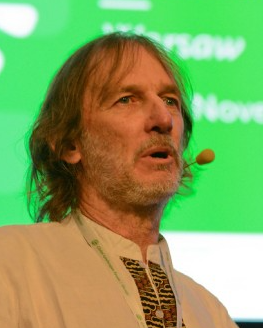 Bruce Morgan Campbell合作论文数Clim-Eat;Global Center on Adaptation;University of Copenhagen19
 Manuel Ruiz Pérez合作论文数Departamento de Ecologia, Facultad de Ciencias, Universidad Autonoma de Madrid18
 James Douglas Langston合作论文数Fac Forestry, Univ British Columbia17
 Nicholas Mark Collins合作论文数16
 s maginnis合作论文数15
 Rebecca Riggs合作论文数College of Science and Engineering, James Cook University15Timothy C. Whitmore合作论文数14
 Neil Byron合作论文数Center for International Forestry Research14
 William Laurance合作论文数Centre for Tropical Environmental and Sustainability Science, James Cook University8
 Douglas Sheil合作论文数Department of Forest Ecology and Forest Management Group, Wageningen University & Research;Center for International Forestry Research8
 Sean Sloan合作论文数Department of Resource Management and Geography, The University of Melbourne8Dwi Amalia Sari合作论文数7d endamana合作论文数7
 Terry Sunderland合作论文数Department of Forest and Conservation Sciences, Faculty of Forestry, University of British Columbia;Center for International Forestry Research7
 Colin Macgregor合作论文数Gatty Marine Laboratory;University of St;Gatty Marine Laboratory, University of St7
 Lingfei Weng (翁凌飞)合作论文数School of Public Policy and Administration, Chongqing University6
 Marieke Sassen合作论文数6norbert gami合作论文数5Benjamin Toirambe合作论文数5
 Jeffrey Mcneely合作论文数5
 Allan Dale合作论文数Cairns Inst, James Cook Univ5Yves Yalibanda合作论文数5
 Claude A. Garcia合作论文数CIRAD, French Institute of Pondicherry5
 Alain Karsenty合作论文数Xerox Research Centre;Cambridge Laboratory, Europe;Europe Cambridge Laboratory, Xerox Research Centre5
 Marieke Sandker合作论文数5C Angoue合作论文数5C. Elliott合作论文数4c ndikumagenge合作论文数4
 Robert Nasi合作论文数4
 Emmanuel Opoku Acheampong合作论文数Div Trop Environm & Soc, James Cook Univ4
 Gary Bull合作论文数Department of Forest Resources Management, Faculty of Forestry, The University of British Columbia4
 Jaboury Ghazoul合作论文数Utrecht University;Department of Environmental Systems Science, ETH Zurich4
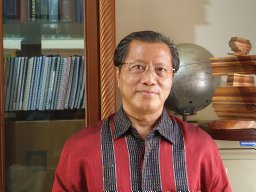 Petrus Gunarso合作论文数4
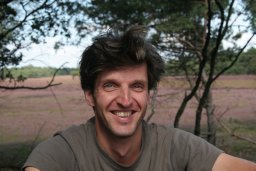 Pieter A Zuidema合作论文数Utrecht University, University of Utrecht4G Ngono合作论文数4
 John A. Parrotta合作论文数4
 Laurene Feintrenie合作论文数CIFOR4
 Patrice Levang合作论文数CIFOR4Ousseynou Ndoye合作论文数Food and Agriculture Organisation of the United Nations (FAO), 281 Yaoundé, Cameroon4Han She Lim合作论文数3r nasi合作论文数3c s harcourt合作论文数3Zacharie Nzooh合作论文数3jeanclaude nguinguiri合作论文数3
 Mercy M. F. Rampengan合作论文数Univ Negeri Manado3
 Sven Wunder合作论文数European Forest Institute3
 John Innes合作论文数Department of Office of The Dean, Faculty of Forestry, The University of British Columbia;Forest Carbon Research Lab, Faculty of Forestry, The University of British Columbia;Department of Sustainable Forest Management, Faculty of Forestry, The University of British Columbia3




