Increasingly, ungrading practices are utilized by instructors to reduce student anxiety associated with grade achievement and increase the impact of feedback as a driver of academic achievement. Studies exploring the impact of ungrading practices largely focus on the instructor's perspective and are discipline-specific. This study sought to expand upon existing ungrading literature by focusing on student perceptions of ungrading within the gerontology field. Students in two graduate gerontology courses utilizing ungrading strategies shared their experiences through an end of semester survey. A thematic analysis of the results presented consistent conversations focused on academic risk taking, stress and anxiety, and instructor feedback. The study results are in line with previous research, providing further support for ungrading practices to be considered across academic disciplines as tools that empower students to confidently take ownership over their learning experience.
Riverside Health has developed a new palliative care pathway to serve as an innovative standard of person-centered care for persons living with dementia (PLWD) and their care partners. Building on an existing interdisciplinary palliative care team (PCT) of a physician, nurse practitioner, and intake/nurse navigator, the positions of social worker, geriatric pharmacist, and spiritual care advisor were added to the team. The PCT have completed extensive training in dementia-specific palliative care, including risks for those who live alone, and those with developmental disabilities. Further, educational programs, in the form of microlearning lessons, have been designed and delivered to PLWD, their care partners, the PCT, and community-based partners. These microlearning lessons (brief bursts of targeted educational content) highlight the key elements of palliative care, which are often inaccurately equated with hospice care, and ways to address stigma associated with both a dementia diagnosis and enrolling in palliative care. The enhanced PCT has served more than 175 PLWD and their family caregivers, with resulting increases in quality of life and well-being for both PLWD and care partners. PLWD and care partners have expressed gratitude for social work support in connecting to resources, as well as the meaning that is provided through engaging with a spiritual care advisor. Additionally, comprehensive medication reviews provided by the geriatric pharmacist have resulted in a decrease in medication burden and an increase in adherence. Application of palliative care principles and lessons learned will be referenced for other health systems to consider.
Ageism includes discrimination toward both younger and older individuals. Discrimination based on generational cohorts can serve as a proxy for discrimination based on age and, therefore, can be argued as a form of ageism. This study examined the occurrence of generational ageism and its relationship to internalized and relational ageism. This cross-sectional study surveyed 913 individuals recruited through ResearchMatch. Analyses found that those in the Millennial and Gen Z groups reported experiencing the highest levels of discrimination based on generational cohort and reported feeling that their generational groups were viewed as less capable, more opinionated, and more selfish than other generations. Millennial and Gen Z groups also reported experiencing higher internalized and relational ageing anxiety levels than older cohorts. As our collective understanding of the manifestation and perpetuation of ageism grows, it is imperative to explore the impact and consequences of generational bias as a form of ageism.
Background and Objectives Aging includes multidimensional and multidirectional changes in biology, psychology, and social roles. With aging, individuals experience physiological changes that affect ability, stamina, and reserve capacity. Given the natural occurrence of physical decline accompanying aging, it is essential to understand if fear and prejudice toward disability (ableism) intersect and influence fear and anxiety about aging (ageism). Research Design and Methods A cross-sectional survey study was conducted using ResearchMatch for study recruitment, 913 individuals responded to questions regarding 3 types of ageism, including affinity for older people, internalized ageism, and relational ageism, as well as internalized and relational ableism. Results Internalized ageism was significantly associated with relational ageism, fear of physical disability, fear of cognitive disability, and affinity for older people. Relational ageism was associated with internalized ageism, relational ableism, fear of physical disability, fear of sensory disability, fear of cognitive disability, and affinity for older people. Discussion and Implications Examining the intersection of ageism and ableism represents the next pivotal juncture to developing effective anti-ageism interventions that address the root anxieties influencing negative attitudes about aging and fears of growing older. Public policy initiatives to address community-level interventions and targeted training to inform discourse that addresses the intersection between ageism and ableism are critical to addressing these issues and promoting age and ability inclusivity.
Purpose To measure radiologic science professionals' current attitudes toward older adults. Methods The Geriatrics Attitude Scale (GAS) paper survey was distributed to radiology and radiation oncology personnel in a large, single teaching hospital system. The GAS provides a global measure of ageist attitudes using 14 questions and 4 subscales. Demographic information also was collected. Results The total sample (N 5 74) comprised radiology and radiation oncology practitioners from rural and nonrural facilities in the health system. Of the 14 questions, 3 yielded significant differences between medical imaging and radiation therapy practitioners. There were no significant effects for gender, race, years of experience, or facility type. Discussion Although significant differences were found between medical imaging and radiation therapy professionals for some of the constructs, both groups had positive attitudes overall toward older adults as measured by the GAS and subscales. Interventions to disrupt ageism should be introduced to make positive shifts in attitudes. Conclusion The United Nations has declared 2021 to 2030 the Decade of Healthy Ageing; people are challenged to change how they think, feel, and act toward aging and older adults. This pilot study provides a timely baseline for further research as older adults continue to challenge the U.S. health care system for the near future.
Background and Objectives Senior Mentoring programs have been developed to expose students to older adults, increase knowledge of geriatrics, and prepare them to provide patient-centered care. However, even while participating in a senior mentoring program, health professions students demonstrate discriminatory language toward older adults and the aging process. In fact, research suggests ageist practices occur, intentionally or not, among all health professionals and within all healthcare settings. Senior mentoring programs have primarily focused on improving attitudes about older people. The current study evaluated a different approach to anti-ageism by examining medical students’ perceptions of their own aging.Research Design and Methods This qualitative, descriptive study explored medical students’ beliefs about their own aging at the beginning of their medical education using an open-ended prompt immediately before beginning a Senior Mentoring program.Results Thematic analysis identified six themes: Biological, Psychological, Social, Spiritual, Neutrality and Ageism. Responses suggest that students enter medical school with a complex view of aging that goes beyond biological considerations.Discussion and Implications Understanding that students enter medical school with a multi-faceted view of aging provides an opportunity for future work to explore senior mentoring programs as a way to tap into this complex view of aging by changing the way students think not just about older patients but about aging more broadly, and specifically about themselves as aging individuals.
Ungrading is a constellation of pedagogical practices that seek to recenter the educational experience of learners as individuals by using detailed feedback rather than grades to assess the achievement of learning competencies. Ungrading practices have been employed in multiple disciplines in response to various concerns about traditional grading, including the tendency of grades to signal the end of learning, the ineffectiveness of grades in assessing competencies, and equity concerns. While the use of ungrading in gerontological teaching and learning appears to be largely unknown, it may offer a potentially powerful and innovative way to support students in attaining and demonstrating AGHE's gerontological competencies. This should be a key concern of all gerontology educators as the main goal is to develop a qualified workforce who can be employed across the aging services sector. A form of ungrading known as grade anarchy was piloted in three master's level gerontology courses and student and instructor feedback was gathered to assess reactions to the pilots. Students were mostly supportive, reporting that they felt less stressed and more motivated to learn, while some preferred traditional grading as they perceived its structure was clearer. The instructor experienced a steep learning curve followed by the observation that ungrading was freeing for the instructor as well, allowing a more individualized approach to student learning that resulted in greater clarity with regard to learners' mastery of the selected AGHE competencies and the course learning objectives.
Abstract Ageism represents discrimination based on age, while ableism represents discrimination toward people with disabilities. Given the natural occurrence of physical decline accompanying aging, it is essential to explore how prejudice toward disability intersects with fear about aging. 913 individuals responded to a survey on ageism and ableism. Multiple regression with internalized ageism as the criterion variable was significant F(7, 705) = 81.71, p <.001. Overall, the regression model explained 44.8% of the variance in internalized ageism with significance for age (t(705) = -5.45, p < .001), relational ageism (t(705) = 11.72, p < .001), affinity for older people (t(705) = -2.77, p = .006), ableism for physical disability (t(705) = 6.88, p < .001), and ableism for cognitive disability (t(705) = -2.86, p = .004), Multiple regression with relational ageism as the criterion variable was significant F(7, 705) = 88.12, p <.001. Overall, the regression model explained 46.7% of the variance in relational ageism with a significant for affinity for older people (t(705) = -3.80, p < .001), internalized ageism (t(705) = 11.72, p < .001), relational ableism (t(705) = 6.73, p < .001), ableism for cognitive disability (t(705) = 2.15, p = .007), and ableism for sensory disability (t(705) = -2.78, p = .006). Examining the intersection between ageism and ableism represents the next critical juncture to increasing our understanding of developing effective anti-ageism interventions that address the root anxieties influencing attitudes about aging.
Abstract Ungrading is an innovative pedagogical practice in which instructors give frequent, detailed feedback on students’ work and/or encourage self-evaluation rather than assigning them points or letter grades. Ungrading has been shown to increase students’ intrinsic motivation to learn, their willingness to take intellectual risks, and the quality of their thinking. Prior to the introduction of advanced artificial intelligence (AI) writing in academia, grades were shown to be a motivating factor for cheating. Ungrading removes the pressure of grades, thus making the use of AI and other services including paper writing and test answer sharing less enticing. Ungrading could be key to pushing back against the potential for the advent of artificial intelligence tools, which have many universities “alarmed.” Educators at Virginia Commonwealth University College of Health Professions, supported by their Director of e-Learning, planned and piloted ungrading in one undergraduate and two graduate gerontology courses. Twenty-five students completed pre and post-surveys asking for their reactions to ungrading, if their views had changed as a result of the ungrading pilot, as well as their perceptions of traditional grading schemes. They also completed scaffolded assignments with multiple opportunities for receiving in-depth instructor feedback, rather than grades, at various points during the semester. Faculty journaled their ungrading experience in order to recognize how it can be a disruptive, and at times, uncomfortable practice and as a result, educators can better guide themselves and students through the transition. This presentation will include an Implementation Guide for gerontology faculty who wish to implement ungrading.
Research has shown that ageism can act as a barrier to both quality of life and quality of care delivery within the continuum of residential care settings. Anti-ageism interventions have the hefty task of improving attitudes and behaviors toward aging and older adults. The purpose of this study was to examine whether a one-hour video-based intervention designed to address ageism could decrease self-reported ageist attitudes and behaviors among staff members of long-term service and support settings. This cross-sectional study used data collected from 265 staff members of aging services organizations. The study examined ageist attitudes and behaviors at pre-intervention, and at two follow-up points: immediately after the intervention and three-month post-intervention. Results demonstrated that internalized aging anxiety significantly decreased from pre-intervention to the immediate follow-up and stayed stable at the 2nd follow-up. Results showed that ageist behaviors significantly decreased over the three-month study period and that participants were able to identify specific actions they had taken as a result of the video intervention. The study suggests that a low-cost, short video-based intervention on ageism can improve ageism-related attitudes and behaviors among staff in long-term services and supports settings.
Abstract The emerging discourse around elderhood hints at the possibility of a later life stage characterized by a focus on balancing development and decline, with potential to empower elders. However, little agreement exists about whether elderhood is a valid and useful construct. The first presenter questions the aging “mystique” through an analysis of the concepts of elderhood, sageing, croning, and eldering in popular and academic literature, underscoring the importance of avoiding othering and critically thinking beyond labels, even if positive. The second presenter explores the concept of agency in later life through a feminist philosophical lens, arguing that confrontations with one’s existential vulnerability need not be an obstacle to agency in elderhood, but rather can inspire alternative conceptualizations of it. The third presenter contrasts his personal and professional experiences of studying cultural aspects of aging, concluding that elderhood is neither a stage of a life nor a rite of passage but rather an individual, voluntaristic process. The fourth presenter explores 943 texts written by Finnish older adults, finding that the writers creatively position themselves as a group of older persons with a special contribution to make to society, even where elderhood is not explicitly mentioned, and potentially offer an alternative view to countering ageism. The fifth and final presenter explores a novel elderhood video intervention among first-year medical students (N = 585). Thematic findings of neutrality, elderhood as development, elderhood as othering, and elderhood as an opportunity to reframe stigma suggest that elderhood may be a viable and productive anti-ageism strategy.
Abstract Ageism is a complex, multi-layered phenomenon impacting feelings, thoughts and behaviors toward self and others. Due to the complexity of ageism, evidence-based anti-ageism interventions have proved challenging and costly. To date, using the concept of elderhood as a mechanism to mitigate the negative impacts of ageism has not been explored. As an anti-ageism strategy, elderhood reframes later life as a stage that encompasses growth and development and expected loss and decline. The current study evaluated a brief video intervention among first-year medical students before participating in a year-long senior mentoring program. First-year medical students (N = 585) from 2018-2021 responded to open-ended questions after viewing the video. Thematic analysis revelated four themes: neutrality, elderhood as development, reframing stigma and elderhood as othering. Findings suggest that elderhood may be a viable and productive anti-ageism strategy.
The aim of this study was to develop and pilot a 52-week Microlearning curriculum on person-centered dementia care in nine nursing homes. The goal was to evaluate the usability and application of Microlearning as a tool to increase staff knowledge and improve perceptions of people with dementia, thus increasing their ability to deliver person-centered care and their job satisfaction. Findings indicate that participants enjoyed the flexible, 24/7 access to training and found that the immediacy of the format encouraged them to apply their learning directly to practice. Staff knowledge and attitudes toward people with dementia were positively impacted by the training, as was job satisfaction. Further research to test the efficacy of Microlearning compared to usual training is warranted, as are coordinated policy development efforts that can guide the implementation of best practices in the use of Microlearning as an innovative training modality in nursing homes.
This gem of a book by Hanne Laceulle centers around an intriguing question: Can the late modern discourse of selfrealization be framed in such a way that it can serve as a resource for meaning-generating cultural narratives about later life in modern circumstances? Asked another way, Laceulle seeks to understand how we can live our best lives as we grow older, and whether we are properly supported in this endeavor by a culture and society that fears and shuns aging, and thus provides us with a stony soil in which to grow, develop, and flourish throughout the later years of our lives. In fact, Laceulle uses the metaphor of a garden throughout this sometimes dense and often complex volume to make her points about what would encourage and support human flourishing in the later years of our lives. In the preface, Laceulle, a moral philosopher, explains that Aging and Self Realization is the distillation of her 5 years of PhD research conducted within the multidisciplinary Aging Well group at the University of Humanistic Studies in Utrecht, The Netherlands. The research focus of this eclectic group, comprising philosophers, social scientists, historians, and anthropologists, is a desire to understand what makes a good life, seen through a social-existential, rather than biomedical, lens. Laceulle has taken the thrust of this broader research agenda and honed it specifically to the age old question, “What does it mean to age well?” Laceulle suggests that this book adds value to the fields of humanistic and cultural gerontology by drawing on the rich philosophical vein of self-realization, and on the literature and intellectual traditions of gerontology, sociology, and psychology. The book is organized into a preface and nine chapters, beginning with an introduction that positions the book’s thesis within the fields of moral philosophy and gerontology, proceeding in an orderly manner through the details of Laceulle’s argument in Chapters 2 through 8, and ending with a concluding chapter which draws the threads together and suggests a future research agenda, followed by references. Each chapter has a predictable structure in which Laceulle uses the device of outlining for the reader what she is going to tell them, then telling them, and finally reminding the reader what she has told them. The simplicity and reliability of this structure is no small thing given the “abstract and analytical, philosophical perspective” (p. 12) with which Laceulle approaches the subject of how one can age well in the late modern world. The book’s consistently organized structure becomes the reader’s wayfinding system, providing reassurance when the going gets tough (or deep) that all will become clear if one is willing to trust the process by which the chapters unfold. Chapter 1 begins with a brief anecdotal prologue about Laceulle’s great aunt, serving as an illustration of how the concept of aging well connects three underlying themes: aging in general, self-realization, and cultural narratives about later life. The essence of Laceulle’s problem statement is that we are all expected to personally construct our best life (self-realization) while living in a society that does not particularly value old age and is often hostile to it. Laceulle outlines her hermeneutic approach to the subject matter, making it clear that she sees herself in dialogue with the philosophical and other texts upon which she draws rather than wishing to present an objective reality about aging well. After defining, at some length, some key terms (“aging,” “existential dimension,” “meaning”) and positioning the study in terms of moral philosophy and gerontology, Chapter 1 ends by setting out the “argumentative steps” that Laceulle uses in each remaining chapter. These involve clarifying background assumptions and concepts, providing philosophical underpinnings to these concepts, and developing the concepts further to make them more fit for purpose with regard to aging in a late modern context. Chapter 2 sets the scene with regard to aging in the late modern period, opening with a sketch of the late modern interpretation of self-realization as explicated by influential sociological and moral philosophy thinkers, including Giddens, Beck, Bauman, C. Taylor, and MacIntyre. It then proceeds to connect these general observations to the specific context of aging. Laceulle concludes that in the context of “an insecure, complex, globalized world” (p. 58), it is a struggle to lead a good life, unmoored as we have become from traditional sources of meaning and morality that previously provided orienting structures to our lives and identities. These general challenges are deepened by the negative cultural imaginaries and narratives about aging that are 959920 JAGXXX10.1177/0733464820959920Journal of Applied GerontologyBook Reviews book-review2020
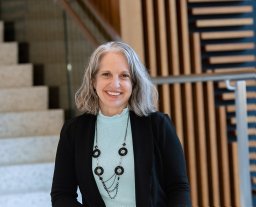 Tracey L Gendron合作论文数a Department of Gerontology, Virginia Commonwealth University10
 Sarah Marrs合作论文数Virginia Ctr Aging, Virginia Commonwealth Univ5
 Christine J Jensen合作论文数3
 Leland Waters合作论文数College of Health Professions, Virginia Commonwealth University3
 Gigi Amateau合作论文数2Sonya Barsness合作论文数2Shannon Arnette合作论文数2Maddie McIntyre合作论文数2Alyssa M. Van Camp合作论文数Vanderbilt Univ2Nic Palmarini合作论文数1
 Melanie C Dempsey合作论文数1
 Timmerie Cohen合作论文数1Alexandra Hennessa合作论文数1
 Carol Manning合作论文数1Madeline McIntyre合作论文数1
 Annie Rhodes合作论文数1Marshall Brooks合作论文数From Virginia Commonwealth University;STT, University of Washington;University of Washington, From Virginia Commonwealth University1
 Daniel S Brown合作论文数OSF HealthCare Illinois Neurol Inst1
 Mary S. Mittelman合作论文数Department of Psychiatry, Grossman School of Medicine, New York University1
 Jeffrey S Legg合作论文数1Scott Sperling合作论文数1
 Verena Cimarolli合作论文数1
 Robyn Stone合作论文数LeadingAge1




