In this paper, we present a textured point-based rendering scheme that takes into account the masking properties of the human visual system. In our system high quality textures are mapped to point-based models. Given one texture, an importance map is first computed using the visual masking tool included in the JPEG2000 standard. This importance map indicates the masking potential of the texture. During runtime, point-based models are simplified and rendered based on this computed importance. In our point simplification method, called Simplification by Random Numbers (SRN), each point in the model is pre-assigned a random value. During rendering, the preassigned value is compared with the preferred local point density (derived from importance) to determine whether this point will be rendered. Our method can achieve coherent simplification for point models.
A visual difference metric was implemented on a commodity graphics card to take advantage of the increased processing power available today in a Graphics Processing Unit (GPU). The specific algorithm employed was the Sarnoff Visual Discrimination Metric (Sarnoff VDM). To begin the implementation, the typical architecture of a contemporary GPU was analyzed and some general strategies were developed for performing image processing tasks on GPUs. The stages of the Sarnoff VDM were then mapped onto the hardware and the implementation was completed. A performance analysis showed that the algorithm's speed had been increased by an order of magnitude over the original version that only ran on a CPU. The same analysis showed that the energy stage was the most expensive in terms of both program size and processing time. An interactive version of the Sarnoff VDM was developed and some ideas for additional applications of GPU based visual difference metrics were suggested.
 Gary Meyer合作论文数University of Minnesota2
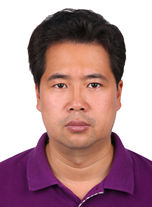 Xiaoru Yuan (袁晓如)合作论文数School of Intalligence Science and Technology, Peking University;School of Electronics Engineering and Computer Science, Peking University1
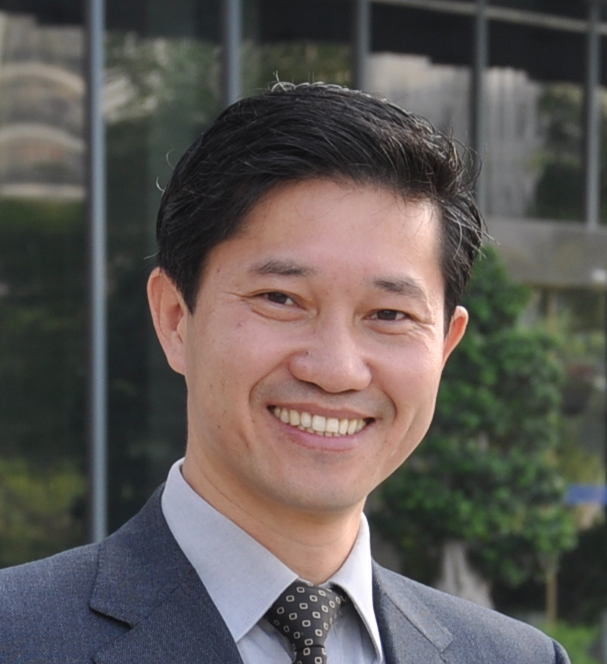 Baoquan Chen (陈宝权)合作论文数School of Intelligence Science and Technology, Peking University1
 Lijun Qu (曲利军)合作论文数1
 Minh Nguyen合作论文数University of Minnesota1




