The field of computer vision has progressed rapidly over the past ten years, with noticeable improvements in techniques to detect, locate, and classify objects. Concurrent with these advances, improved accessibility through machine learning software libraries has sparked investigations of applications across multiple domains. In the areas of fisheries research and management, efforts have centered on the localization of fish and classification by species, as such tools can estimate the health, size, and movement of fish populations. To aid in the interpretation of computer vision for fisheries research management tasks, a survey of the recent literature was conducted. In contrast to prior reviews, this survey focuses on employed evaluation metrics and datasets as well as the challenges associated with applying machine learning to a fisheries research and management context. Misalignment between applications and commonly used evaluation metrics and datasets mischaracterizes the efficacy of emerging computer vision techniques for fisheries research and management tasks. Aqueous, turbid, and variable lighted deployment settings further complicate the use of computer vision and generalizability of the reported results. Informed by these inherent challenges, culling surveillance data, exploratory data collection in remote settings, and selective passage and traps are presented as opportunities for future research.
Recent advances in fish transportation technologies and deep machine learning-based fish classification have created an opportunity for real-time, autonomous fish sorting through a selective passage mechanism. This research presents a case study of a novel application that utilizes deep machine learning to detect partially dewatered fish exiting an Archimedes Screw Fish Lift (ASFL). A MobileNet SSD model was trained on images of partially dewatered fish volitionally passing through an ASFL. Then, this model was integrated with a network video recorder to monitor video from the ASFL. Additional models were also trained using images from a similar fish scanning device to test the feasibility of this approach for fish classification. Open source software and edge computing design principles were employed to ensure that the system is capable of fast data processing. The findings from this research demonstrate that such a system integrated with an ASFL can support real-time fish detection. This research contributes to the goal of automated data collection in a selective fish passage system and presents a viable path towards realizing optical fish sorting.
OBJECTIVES:These data enable the development of machine learned models to detect unintended passage of salmonids over in-stream barriers. Such models are key to fully characterizing the effectiveness of selective passage systems, as they detect and quantify fish passage which occurs outside of the intended transit passage and selection mechanism. These data were used to construct custom surveillance tools for FishPass ( https://www.glfc.org/fishpass.php ), a 20-year restoration project to provide selective up- and down-stream passage of desirable fishes while simultaneously blocking or removing undesirable fishes. DATA DESCRIPTION:The datasets contain over 2300 annotated images of emerged salmonids collected in a natural riverine environment. The images stem from surveillance video collected during 2022 and 2023 fall runs of several pacific salmonid species introduced to the Laurentian Great Lakes on the Boardman (Ottaway) River in Traverse City, MI, USA. In addition to images of fully emerged salmonids, datasets are provided containing images of partially emerged salmonids, fully submerged fish, and other wildlife present in a riverine environment. The environmental conditions represented by most of the images were clear or partly cloudy. These datasets could be used to develop custom object detection models for emerged fish in riverine environments.
This research paper presents a novel approach to fish surveillance, specifically detecting fish jumping out of water, by leveraging deep learning-based object detection techniques. The study focuses on the use of an EfficientDet-Lite model, a lightweight and efficient model suitable for edge computing devices. The model was trained using a machine learning pipeline that significantly reduces the amount of data requiring manual review. The performance of the model was evaluated using standard average precision (AP) metrics and manual image- and clip-based evaluation. For the TFLite model running on the GPU, the precision derived from the manual evaluation was 0.841 and the recall was 0.279. For the same model compiled for and run on the Coral Edge TPU, the precision was slightly lower at 0.838 with a recall of 0.274. In the clip-based evaluation, the Edge TPU in the Frigate environment achieved a precision of 0.030 and a recall of 0.11. Although the AP metrics appear relatively low, the model demonstrated a high capacity to accurately detect and approximate the location of fish, which is the primary objective of this research. The model was further evaluated in a simulated production environment, demonstrating its potential for real-time fish detection during jumping events. Overall, this study contributes to the field of fish surveillance by introducing an efficient and effective method for fish detection. This research serves as a proof of concept for fish emergence observation using object detection.
This study investigated the leap characteristics of rainbow trout (also known as steelhead) (Oncorhynchus mykiss) present in the Laurentian Great Lakes. To aid in the collection and annotation of leaps, a custom web application was developed and through the labeling of key markers, the launch speed, launch angle, and length of the fish were calculated. Data collection took place during migratory runs in the spring of 2022 and 2023 that resulted in 173 total leaps annotated with mean launch angles of 58.73 and 68.2 degrees, in 2022 and 2023, respectively. The mean launch speed normalized by body length was consistent across years at 8.6 body lengths per second. The integration of leaping data with computational fluid dynamics simulations revealed steelhead launch angle aligns closely with the water velocity direction as the velocity magnitude increases. Applications of this study include hazard analyses for unintended escapement and informed design of intelligent migratory barriers such as those to be developed at FishPass, an instream research facility under design for the Boardman (Ottaway) River in Traverse City, MI, USA.
The recent advancement of the Internet of Things (IoT) in the fields of smart vehicles and integration empowers all cars to join to the internet and transfer sensitive traffic information. To enhance the security for the Internet of Vehicles (IoV) and maintain privacy, this paper proposes an ultralight authentication scheme. Physical unclonable function (PUF), supervised machine learning (SML), and XOR functions are used to authenticate both server and device in a two message flow. The proposed framework can authenticate devices with a low computation time (3 ms) compared to other proposed frameworks while protecting against existing potential threats. Furthermore, the proposed framework needs low overhead (21 bytes) that avoids adding to the IoV network’s workload. Moreover, SML makes weak PUF responses as random numbers to provide the functionality of a strong PUF for the framework. In addition, both formal (Burrows, Abadi, Needham (BAN) logic) and informal analysis are presented to show the resistance against known attacks.
Student-facing learning analytics dashboards (LADs) provide visualizations of course-related information to help students understand and personalize their educational practices. As such, they can be viewed as a meta-cognitive tool that enables awareness, self-reflection and sensemaking of academic performance. While student-facing LADs are becoming a standard feature in educational software, questions have been raised about students’ willingness to adopt LADs and their ability to interpret feedback provided by student-facing LADs. The extent to which student-facing LADs can broadly improve educational outcomes depends, in part, on students’ ability to readily incorporate LAD usage in their educational workflows.This study investigates the use of a student-facing LAD, My Learning Analytics (MyLA), over the span of one semester in a university introductory science course. MyLA draws data from the campus learning management system (Canvas) and displays three visualizations designed to provide students with actionable information. Adoption and use of MyLA was voluntary. As an exploratory study of MyLA’s use in an introductory science course, this work addresses three research questions: i) What are the characteristics of students that use MyLA?, ii) How do students make use of MyLA in their coursework?, and iii) What patterns of use are exhibited by more frequent MyLA users? The results indicate that given the opportunity to use a student-facing LAD, 33% of students made repeated use of the tool. Demographic data (e.g., gender, domestic/international student) did not predict MyLA usage but significant differences in mean cumulative GPA were found between non-MyLA users and MyLA users. Broad patterns of MyLA use were aligned with major assessments in the course (e.g., MyLA was used more often around exam dates) and the grade distribution view was the most commonly accessed. Among the most highly active MyLA users, two distinct profiles were identified: aware and sensemakers. Aware users made use of the dashboard on more than 12 distinct days across the course, primarily around exam dates, and stated that they accessed the dashboard to compare their performance with others. Sensemakers made frequent use of all three MyLA views multiple times over the semester to monitor their own progress, compare their grades to others, and check what materials other students had viewed.LADs such as MyLA allow students to leverage what they already know about course assessment in their interpretation of the data presented, easing adoption and deployment of a student-facing LAD in higher education. As MyLA does not require that students have any additional training to interpret the visualizations they provide, LADs can readily be employed by students in introductory computing and engineering courses to provide them with feedback to help them plan for, monitor, and evaluate their academic progress.
Reliable and efficient avian monitoring tools are required to identify population change and then guide conservation initiatives. Autonomous recording units (ARUs) could increase both the amount and quality of monitoring data, though manual analysis of recordings is time consuming. Machine learning could help to analyze these audio data and identify focal species, though few ornithologists know how to cater this tool for their own projects. We present a workflow that exemplifies how machine learning can reduce the amount of expert review time required for analyzing audio recordings to detect a secretive focal species (Sora; Porzana carolina). The deep convolutional neural network that we trained achieved a precision of 97% and reduced the amount of audio for expert review by ~66% while still retaining 60% of Sora calls. Our study could be particularly useful, as an example, for those who wish to utilize machine learning to analyze audio recordings of a focal species that has not often been recorded. Such applications could help to facilitate the effective conservation of avian populations.
Contribution: Practical active learning stations (PALSs)-equipped classrooms function similar to prototypical active learning classrooms (ALCs). They support student collaboration and active learning pedagogies but at a fraction of the cost. Background: Active learning pedagogies and active learning technology are revitalizing STEM education and their use has led to an increase in student performance and satisfaction with the learning environment in postsecondary settings. An obstacle to increasing access to ALCs is the cost of constructing such learning environments. To address this challenge, a means to retrofit an existing computer laboratory into an ALC by making use of economy hardware and open-source software was devised. Intended Outcomes: In the context of an introductory sequence of programming courses (i.e., CS1 and CS2), students in a PALS-equipped classroom would perform as well as students in a prototypical ALC. Application Design: A quasi-experimental study was employed to compare the overall student performance across learning environments. Student performance was measured by the final exam score and overall course score. Throughout the study, the PALS-equipped classroom was paired five different times in head-to-head comparisons with either a prototypical ALC or a traditional classroom. Findings: The focus of the study was the potential effects of classroom type on students' final exam score and the overall course score. A statistically significant effect was found for only one measure, which was that students in the PALS classroom in CS1 scored higher on their overall course score even when accounting for demographic differences and the pretest measure. There were no other significant effects for classroom type, either on the final exam score for either course or the overall course score in CS2.
Rechargeable batteries provide crucial energy storage systems for renewable energy sources, as well as consumer electronics and electrical vehicles. There are a number of important parameters that determine the suitability of electrode materials for battery applications, such as the average voltage and the maximum specific capacity which contribute to the overall energy density. Another important performance criterion for battery electrode materials is their volume change upon charging and discharging, which contributes to determine the cyclability, Coulombic efficiency, and safety of a battery. In this work, we present deep neural network regression machine learning models (ML), trained on data obtained from the Materials Project database, for predicting average voltages and volume change upon charging and discharging of electrode materials for metal-ion batteries. Our models exhibit good performance as measured by the average mean absolute error obtained from a 10-fold cross-validation, as well as on independent test sets. We further assess the robustness of our ML models by investigating their screening potential beyond the training database. We produce Na-ion electrodes by systematically replacing Li-ions in the original database by Na-ions and, then, selecting a set of 22 electrodes that exhibit a good performance in energy density, as well as small volume variations upon charging and discharging, as predicted by the machine learning model. The ML predictions for these materials are then compared to quantum-mechanics based calculations. Our results reaffirm the significant role of machine learning techniques in the exploration of materials for battery applications.
Learning analytics aims to collect and analyze data to improve learning outcomes. Several tools for learning analytics exist and have been successfully used in the context of higher education but their cost and related institutional challenges can be limiting factors. To complement larger, institutional efforts for learning analytics adoption, we have developed a tool to support smaller scale applications. The tool ingests raw, student assessment data and produces a rich, learning analytics enabled spreadsheet. The spreadsheet calculates descriptive statistics and relative performance and contains pair-wise correlation metrics of assessment items and individual student reports. The reports and comparative performance measures help students monitor their relative performance. The low-cost and course-specific nature of the tool supports increased access to learning analytics in more classrooms.
Correctly predicting the complex three-dimensional structure of a protein from its sequence would allow for a superior understanding of the function of specific proteins with many applications. We propose a novel method aimed to tackle a crucial step in the protein prediction problem, assessing the quality of generated predictions. Unlike traditional methods, our method, to the best of our knowledge, is the first to analyse the topology of the predicted structure. We found that our new representation provided accurate information regarding the location of the protein's backbone. Using this information, we implemented a novel algorithm based on convolutional neural network (CNN) to predict GDT_TS score for given protein models. Our method has shown promising results - overall correlation of 0.41 on CASP12 dataset. Future work will aim to implement additional features into our representation. The software is freely available at GitHub: https://github.com/caorenzhi/TopQA.
The classrooms used by Computer Science students come in all shapes and sizes, from large lecture halls to small computer labs to collaborative active learning classrooms. Does our teaching style need to match the space? Are particular classroom environments more effective than others and might the types of artifacts generated by Computer Science students lend themselves better to one space over the other? As many students come to class with their own personal computer, development environment and opinions about effective instruction, does the classroom and supporting technology even matter? What effect does the space have on the instructional choices made? This BOF will provide a platform for a discussion around individual teaching styles and preferences and how they relate to the classroom space. Access and awareness of active learning pedagogy and active learning classrooms can create both tension (e.g., not wanting to teach in an active learning classroom) and challenges (e.g., desire to have access to an active learning classroom despite the costs associated, how working specific techniques into a given space). Shared experiences will help participants better leverage their classroom spaces to their desired pedagogy.
Invasive species negatively affect enterprises such as fisheries, agriculture, and international trade. In the Laurentian Great Lakes Basin, threats include invasive sea lamprey (Petromyzon marinus) and the four major Chinese carps. Barriers have proven to be an effective mechanism for managing invasive species but are detrimental in that they also limit the migration of desirable, native species. Fish passage technologies that selectively pass desirable species while blocking undesirable species are needed. Key to an automated selective barrier passage system is a high precision fish classifier to assign fish to be passed or blocked. Presented is an evaluation of two classifiers developed using images of partially dewatered fish captured from a commercial, high-speed camera array. For a lamprey vs. non-lamprey classification task, an ensemble prediction approach achieved near perfect accuracy on both a validation and test dataset. For a species classification task for 13 species found in the Great Lakes region, an ensemble prediction approach achieved accuracies of 96% and 97% on a validation and test dataset, respectively. Both prediction approaches were based on deep convolutional neural networks constructed using transfer learning and image augmentation. The study provides an important proof-of-concept for the viability in fully automated, selective fish passage systems.
This work-in-progress in the Innovative Practice Category describes the use of multimodal data capture to inform instructors’ awareness of their activities in the classroom. Broadly construed, learning analytics is the collection and analysis of data in an educational context with the aim of improving educational outcomes. To capture a more wholistic characterization of an educational context, there has been increased interest in multimodal data such audio, gestures, positioning and movement. These data can characterize the content delivered and teaching techniques employed by the instructor. Instructor reflection on both may lead to improvements in instruction.Presented here is IATracer, a lightweight system for multi-modal instructor data capture consisting of a lavalier microphone paired with a positioning badge. The microphone captures classroom audio and using Google Cloud’s Speech-to-Text API with diarization, the instructor’s speech can be isolated and transcribed. Analysis of this text can provide insights into what topics were covered, for how long and what questions were asked. Additional analysis could provide the instructor feedback on the delivery (e.g., long monologues) and the level of student interaction (e.g., dialogue, questions directed towards students). Novel aspects of this work-in-progress include the lightweight, economical nature of the system and its use of Google Cloud services. The insights generated by the system will enable faculty to reflect upon their employed teaching techniques and the content of their interaction with students. Such reflection ensures alignment of employed technique with intent.
Abstract Simple biometric data of fish aid fishery management tasks such as monitoring the structure of fish populations and regulating recreational harvest. While these data are foundational to fishery research and management, the collection of length and weight data through physical handling of the fish is challenging as it is time consuming for personnel and can be stressful for the fish. Recent advances in imaging technology and machine learning now offer alternatives for capturing biometric data. To investigate the potential of deep convolutional neural networks to predict biometric data, several regressors were trained and evaluated on data stemming from the FishL™ Recognition System and manual measurements of length, girth, and weight. The dataset consisted of 694 fish from 22 different species common to Laurentian Great Lakes. Even with such a diverse dataset and variety of presentations by the fish, the regressors proved to be robust and achieved competitive mean percent errors in the range of 5.5 to 7.6% for length and girth on an evaluation dataset. Potential applications of this work could increase the efficiency and accuracy of routine survey work by fishery professionals and provide a means for longer‐term automated collection of fish biometric data.
Active learning has gained significant traction in the past decade and implementations can be found across all institutions of higher learning. While large costs are incurred to modify available spaces to technology-supported active classrooms, economy-based active learning systems that provide similar functionality could be employed instead. In this paper, we provide initial results for a comparison of second-semester programming course student learning outcomes. Students for an economy-based active learning system and a high-cost active learning classroom indicate through pre- and post-test results that there is little difference between delivery modes. This supports the emerging research that the activity, not the space is the dominant factor for active learning gains, which can alleviate some of the pressures for budgetarily challenged institutions of higher learning.
This Work in Progress in the Research to Practice Category advocates for new evidence-based training opportunities for potential future faculty to increase student access to active learning. Active learning has been used in the classroom for years and demonstrated its effectiveness in terms of enhancing students' performance. In spite of the reported benefits of active learning, a sizable gap exists between faculty that are aware of active learning as a teaching style and those that adopt it for their classrooms. In response, the broader community has developed several successful aids to overcome often cited barriers to adoption. Nevertheless, this gap remains and indicates the need for further interpretation of existing research as well as additional avenues of research and training to advance adoption. These avenues should augment existing initiatives to increase adoption and further understanding of faculty reticence. Based on the current topography of active learning and its adoption, we argue for new training mechanisms to be offered at the graduate level that would have broad appeal and provide a foundation for evidence-based techniques. We also argue for research that is more inclusive and qualitative in nature to specifically explore faculty attitudes, beliefs, and backgrounds as they pertain to instruction.
 Jianlin (Jack) Cheng合作论文数Bioinformatics and Machine Learning Lab, Department of Electrical Engineering and Computer Science, College of Engineering, University of Missouri19
 Patrick Seeling合作论文数Department of Electrical Engineering, Arizona State University11
 Zheng Wang合作论文数Dept Comp Sci, Univ Miami9
 Xin Deng合作论文数Department of Computer Science, University of Missouri8
 Jonathan Gregory合作论文数4
 Daniel P. Zielinski合作论文数Great Lakes Fishery Commission4
 Lisa M. Gandy合作论文数Intelligent Information Laboratory;Electrical Engineering and Computer Science;Northwestern University;Intelligent Information Laboratory, Northwestern University4Liling Li合作论文数3Quentrese Hinton合作论文数3Quentrese Cole合作论文数3
 Jilong Li合作论文数3
 Veronica Barone合作论文数Department of Physics;Central, Michigan University;Department of Physics, Central Michigan University3
 Rajendra Prashad Joshi合作论文数High-Field Magnetic Resonance Center, Max Planck Institute for Biological Cybernetics, Tübingen, Germany3Dylan Kelly合作论文数2Janine Bryan合作论文数2Erin McCann合作论文数2
 Scott M. Miehls合作论文数US Geol Survey, Great Lakes Sci Ctr2Karki, S.合作论文数2Kevin L. Pangle合作论文数Department of Forestry and Natural Resources, Purdue University2
 Juan E. Peralta合作论文数Department of Physics, College of Science and Engineering, Central Michigan University2
 Allison N. Tegge合作论文数Department of Animal Sciences, University of Illinois2
 Renzhi Cao合作论文数Department of Computer Science and Technology, USTC2Neeraj Kumar合作论文数1Tyler Danner合作论文数1
 Matthew Stanley Johnson合作论文数Department of Chemistry, University of Copenhagen1
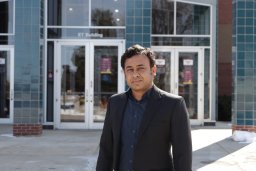 Pintu Kumar Sadhu合作论文数Coll Sci & Engn, Cent Michigan Univ1
 Isaiah A. Moses合作论文数1
 Dustin E Brewer合作论文数1Sharad Shrestha合作论文数1
 Jordan Gumm合作论文数Ecol & Evolutionary Biol, Univ Michigan1
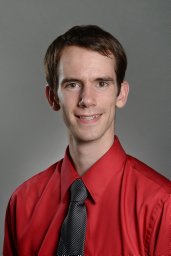 Matt Spencer合作论文数Ctr Interdisciplinary Methodol, Univ Warwick1
 Yiheng Wang合作论文数1
 Burak Ozdemir合作论文数Inst Mat Sci & Nanotechnol, Bilkent Univ1
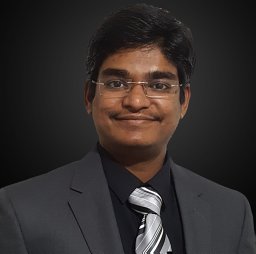 Venkata Prasanth Yanambaka合作论文数1Taeho Jo合作论文数1
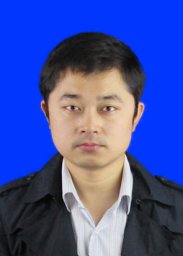 Tong Liu合作论文数National University of Defense Technology, National Univ. of Defense Technology1
 Adhikari Badri合作论文数Department of Computer Science, University of Missouri1
 Jie Hou合作论文数Department of Computer Science, School of Science and Engineering, Saint Louis University1Liu Ming合作论文数1
 Miao Sun合作论文数1Edward J. Mirielli合作论文数1
 Thomas M. Gehring合作论文数Department of Biology, Central Michigan University1
 Marco Fornari合作论文数Naval Research Laboratory, Washington DC George Mason University1
 Jennifer Weible合作论文数Penn State University1
 Stephanie Teasley合作论文数School of Information, University of Michigan;Learning, Education and Design Lab, University of Michigan1
 Si Dong (董思)合作论文数Department of Computer Science,Old Dominion University1
 Ahmed Abdelgawad合作论文数1
 Debswapna Bhattacharya合作论文数Department of Computer Science, Virginia Tech1




